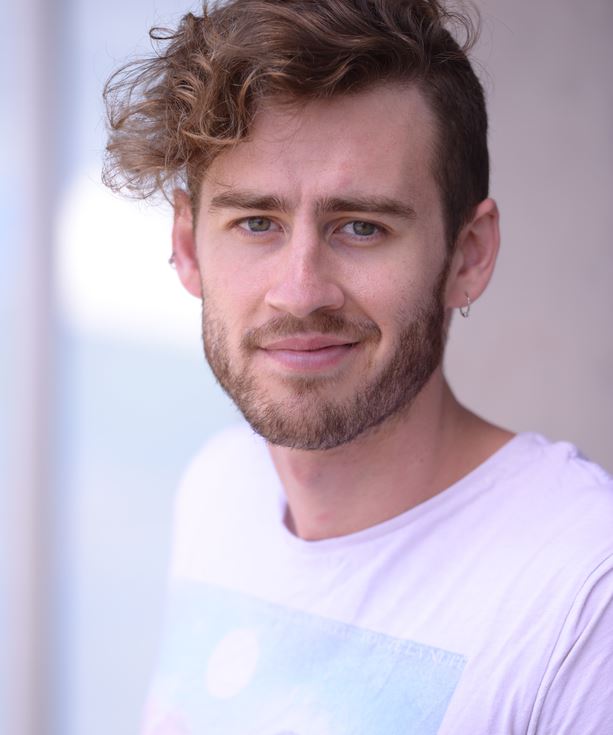
 I used to write for a daily television show, which meant that work was seasonal. Because the Roast was only on for eight months of the year, I only worked for eight months of the year. The remaining four months, while it may sound like free time, could more accurately be described as unemployment.
When I returned to work in February of 2014, my co-workers were talking about the things that they did in their break; beach days, holidays, music festivals and quiet times, then they asked me what I’d been up to and I replied, I wrote a book.
This sounded impressive at first, but what I quickly explained was, ‘yes, I wrote the thing during summer unemployment, but I had already done a lot of work before then; years and years ago.’
A Fistful of Clones – my debut novel about an apathetic young man who submits himself to scientific testing, gets cloned, then, when the clones escape is tasked with the job of hunting them down and killing them – started its life as a feature length screenplay. Pretty much the opposite of the current trend of most films starting out as a book or graphic novel.
When I initially wrote Fistful as a spec script back in 2009/2010, I spent months and months working out the characters, the plot, the dialogue, the themes, and had completed the screenplay for what I thought would be a movie, back in 2011. (Or at least a draft that was 70% there, in terms of what the story ended up being). I had even submitted it to Sundance: Table Read My Screenplay Competition in 2011, where it was shortlisted and even received an honourable mention.
However, after that minor success, I didn’t know what to do with it. God knows nothing came of the honourable mention apart from a few likes on Facebook and favourite or two on Twitter. Somebody might have said, “Nice one, that’s great news.” but that was it. But now, I had this screenplay for a film which would probably cost a few million dollars to make, which is roughly a few million more dollars than I’ve ever seen.
I’d read lots of books about filmmaking and screenwriting, but they were all US-centric and provided no information for an aspiring screenwriter in Australia. So what was I to do with this thing I’d spent so much time writing?
Side note: I have a feature in development with a large production company at the moment. In fact, it was in development before I turned Fistful into a book, but even then, I didn’t know how I was going to get this film made and it was just sitting on my laptop in a bunch of ones and zeros like some kind of binary asshole.
Then, one day, I decided I was going to do something about it. I decided to turn it into a book. Which I did, in the great unemployment of 2013/2014.
I used the screenplay as a skeleton and I just sort of added flesh to it. I had all the scenes, I had all the dialogue, I had the characters, all I had to do was read the screenplay and imagine what I’d see in the film, then write it down as though I were explaining it, like some kind of hideously over-detailed treatment.
I had spent so much time with the main character in the past and new who he was, so it was easy to get into his head and explain it from his angle, to think the things he thought.
I read the novelisation of Ghostbusters when I was a kid, I’d read the Buffy the Vampire Slayer book series, I knew this turning a film or television show into a book could be done. And so that’s what I did. I followed the lead of a book series that explains what a vampire looks like by saying, “His face was a vampires face”.
And whether it was because of this process that I used when writing A Fistful of Clones, or because I have a bit more experience with screenplay writing (experience as in I’ve done it at home, alone, by myself with little to no financial benefit) than I do with written prose, I find it immensely useful to take the time and write the script first before filling in the details and explaining the world.
This gives me a full idea of everything that happens and I can work out the pacing and the dialogue without getting bogged down in minutiae, if you will.
Even if I don’t write the entire screenplay before I start writing something, I’ll write the scene out in advance. Then I’ll go through the scene of dialogue and actions and I’ll just write down what I see.
Sometimes my partner speaks to me when I’m doing this and I give off an heir of “WHAT!?” even though I’m sure I’m much more polite than that, but I’m stuck in the scene just looking at stuff and writing it down.
Anyway, I’m not a pretentious wanker, that’s legitimately the way I find it easiest to write. Maybe it’s a fear of the unknown, wanting to know in it’s most basic format, dialogue and short action cues, what will happen next before I start fleshing out the prose, but it worked for me at least in this instance and hopefully it works next time, and if it does then we’ll know I’m onto something.
But if you’ve got a good idea and it’s not going anywhere in one format, why not chuck into a different format, because it might reach some people that way, and isn’t that the point? I don’t know… I’m not a doctor.
Seaton Kay-Smith
http://seatonkaysmith.com/