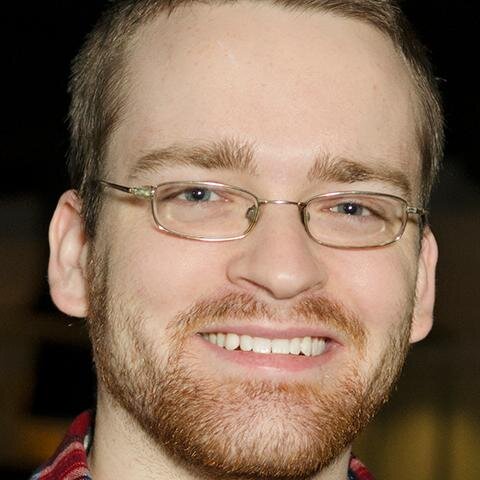
 Our latest SFFWorld interview is with Seth Dickinson, author of The Traitor (also known as The Traitor Baru Cormorant in the US). Our review is out at the weekend, but just before that, here’s an interview to introduce the writer to you.
Hello Seth. Thanks for joining us here at SFFWorld.
Q: We’re speaking as The Traitor, your first novel, is being published. Can you tell us a little about it?
I can! The Traitor Baru Cormorant is an epic fantasy about Baru Cormorant, a brilliant young woman who sees her home conquered and one of her fathers stolen by the viciously clever Empire of Masks.
Ruthless young Baru decides the only way to liberate her home is to join the Empire’s civil service, prove herself as an operative, gain power, and tear the Empire apart from the inside.
But the Empire doubts all loyalty, so they assign Baru a test: go to Aurdwynn, another conquered province. Draw out and destroy the rebellion there. Prove your trustworthiness, and we will reward you with the power you desire. Oh — and you won’t get an army or any political power. Do it all as an accountant.
So Baru faces a terrible conflict — made worse by the fact that she’s terribly attracted to the rebel duchess Tain Hu, who’s probably going to kill her.
Q: How did the writing of the book come about?
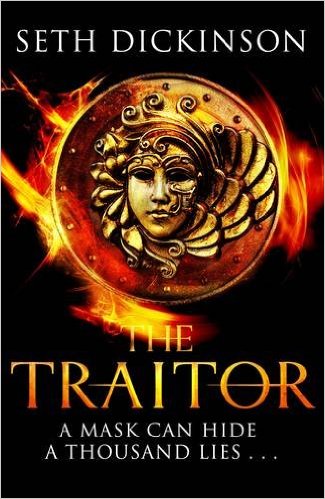
The very first grain of an idea came from an ancient Internet artifact called the Evil Overlord List. There was one item on there that struck me. I wanted to write about its emotional consequences. I can’t tell you which one!
And then I drew a lot on the grand discourse of the Internet — the ongoing argument about diversity and representation in media. I kept seeing this argument that certain people couldn’t be the protagonist of an epic fantasy story. “Women would be kept in the house,” I’d hear. “Racial minorities would be confined to their own homelands. Queer people were all persecuted. They can’t be the protagonists, they’d be too oppressed to do anything, that’s just the way it was!”
So I chose to write a counterargument, in which a woman targeted by intersecting racism, sexism, and homophobia refused to ever be bound. Her world tries to confine her to certain stories, but she subverts them, makes her own power, and finds a way to act. (And I don’t believe history actually worked like that, not at all.)
Or maybe you mean in the real world! I wrote a short story about Baru Cormorant back in 2011, and it was my very first professional sale. In 2013 I decided to expand that story into a novel, and I ended up dropping out of grad school to finish it.
Q: And where did Baru come from? Did you start with her, or was it with someone/somewhere/something else?
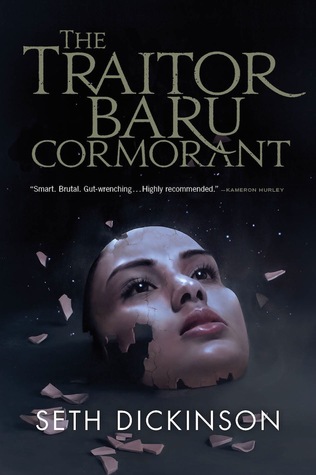
The very first thing I knew about the story was the premise. The second thing I knew was Baru, specifically her central choice. Everything else unfolded from that.
One really important moment came while I was writing the short story that introduced her. I had a critique from a friend, Rachel Sobel, who really helped me understand how Baru and Tain Hu approached conflict.
Baru’s operating principle is agency — in any situation she searches for a path forward, and if she cannot find it, she finds a way to make it. But that ruthlessness makes her lonely and cold. That momentum she has made her almost dizzying to write, as if I could barely keep up with her.
Q: Now that you have The Traitor written, what is the one thing that you’re most proud about it? (Or is it too early to say?)
Oh, goodness, I don’t know if I could peel it apart! I guess that’s what I’m proud of: the wholeness of it, the way in which the character and the setting and the prose style and the arc of the plot all echo each other. I’ve heard poets call this principle incarnation and it’s so important to me.
Q: How did you start writing? If I understand correctly, you are not a full-time writer?
I am a full-time writer right now! I have been for a couple years, although one of those years was spent working as a writer for Bungie Studios.
I got started as a tiny pre-literate child. I alarmed my parents with long elaborate stories, then I graduated to scrawling in crayon on big rolls of paper (we lived near a paper factory and sometimes we’d pick up free samples), and then I learned to type.
I’ve always found storytelling to be the most powerful way to understand the world. It’s intuitive to the human mind in a way that other systems often aren’t. Even when I was in the sciences I took a lot of joy in translating theory into narrative.
Q: Your writing routine must be incredibly disciplined to juggle everything. What is a typical day like for you?
I am going to let you down so hard: my routine is terrible.
When I’m going full power on a novel, I write in binges — I sit down, put on the music, drink too much coffee, and write until I crash. If I can get into a Csikszentmihalyi flow state, I’ll do two thousand, four thousand words a day. When I get stuck it’s awful and I have to back up and figure out what went wrong. If I stumble too hard I get blocked for weeks or months.
I still haven’t figured out a really healthy routine. I don’t understand why some months I’m on and some months I’m off. I don’t know how to force myself to write. I’ve tried jiggling all sorts of variables, sleep and diet and exercise, but the magic formula eludes me.
I just don’t know how to treat it as a dispassionate daily routine yet. It still feels a bit like peeling off pieces of myself. But when I do hit that zone it’s like nothing else.
Q: Am I right in thinking that you started writing short stories first?
Sort of! I started working in the novella/novel range when I was just writing for myself. I moved into short stories after attending the Alpha Workshop for Young Writers, because they offered a quicker iteration cycle. I could test new skills and get feedback much more rapidly.
So my first publications were definitely short stories.
Q: In your opinion, is it important to get a grounding in short stories before going for writing a novel?
No, I don’t think it’s vital. It’s definitely one path — I learned a lot from short stories, particularly about prose structure and defining characters, and a lot of the compactness in The Traitor Baru Cormorant comes from that skill set.
But I know many brilliant writers who aren’t interested in short stories at all.
Q: Which do you personally find harder to write: long novels or short stories?
They each have their own challenges! Short stories take far less work in total, but they have to be machined to finer standards. Every single sentence has to work. Building a short story is like building a virus — just a little protein jacket designed to inject its ideas into the reader, where they can replicate and grow.
A novel is a whole organism. You can afford to spend more words on structure, on subsystems, on limbs and plumage.
Q: And which do you enjoy most?
Oh, I couldn’t pick. I find it incredibly satisfying to write stories that work! I hate writing stories that don’t work: I feel this very physical sense of revulsion and discomfort, like my skin is caked in oil.
I love writing at any length as long as it comes out cool. I do a lot of experimental flash-length fiction for games (and as presents for fans), and that format has its own challenges
Q: What were your first interests in the genre?
My very, very first science fiction and fantasy stories as a child were…I think The Giver, by Lois Lowry, and 1984 by Orwell, which I could barely understand (I thought it had a happy ending!).
And then I got into space opera quite young, through David Brin’s Startide Rising and Vonda McIntyre’s work, particularly Starfarers and her Star Trek novelizations. I’d read absolutely anything.
Q: What kind of books do you read for pleasure now, any favourite authors? Can you read for pleasure? (I know a lot of authors who can’t!)
I can and I do! I’m still pretty omnivorous, although I’ve become more discerning about writing’s technical quality.
I have loads and loads of favorites. Lately I’ve loved Americanah by Chimamanda Ngozi Adichie, Wolf Hall by Hilary Mantel, and Declare by Tim Powers. I’m rereading Blindsight by Peter Watts (my inexplicable comfort read), and recently I did Blood Meridian by Cormac McCarthy. I’m about to start on Sorcerer to the Crown by Zen Cho and Uprooted by Naomi Novik. I’m looking forward to Empire Ascendant by Kameron Hurley.
I wish I could remember everything!
Q: What do you do when you’re not reading or writing, any other hobbies?
I write in a more casual way! I’m a writer and designer for the Blue Planet project on Hard Light Productions, an open-source space opera video game.
When I’m not writing I love to play board games with friends, although I am an insufferable snob about game design.
Q: Ha! Remind me not to tackle you about that one! And finally, what’s next? The Traitor does end on a cliff-hanger of sorts…
I’m working on another book about Baru! I disagree that the first book ends on a cliffhanger, but I agree that it’s obviously a point of great change.
In the next book I want to continue amping up the scope and tension of the thriller storyline. Baru will face conspirators who operate on her own level. At the same time, I’d also like to explore emotional territory that Baru neglected during the first book — friendship, trust, found family, unconditional love, and the importance of human connection to a fulfilling life.
That sounds great. I’m looking forward to it already! Many thanks for your time, Seth.
Thank you! You wrote a great interview.