The authoresses of Fight Like A Girl return! The first part can be found here. They couldn’t all answer at once so we just had to allow everyone a chance to have their say…
Going back to the theme of the Fight Like A Girl Anthology, Is it a matter of proving to the masses women are just as capable of writing in these genres, or is there more to this anthology?
Joanne Hall: The anthology is a celebration of female strength and female courage in all its forms. We’re hoping to show that female-dominated narrative is just as exciting, and in some cases just as brutal, as male-dominated narrative. I don’t think anyone with a working knowledge of the genre would dispute that women are just as capable of writing combative SFF as men, but it’s my hope that it will lead readers to discover a few female writers in genre that they might otherwise have overlooked.
Danie Ware: It actually started out as a bit of fun – what Jo and Roz will say to this question I don’t know… but when I started this, there was no secret agenda, and it had nothing to prove to anyone. We know that women can write – combat and/or anything else! I guess was writing a lot of combat scenes for my own book, and something that started as a giggle grew into something epic!
Roz Clarke: For years, there have been people arguing against the writing of female characters with agency in genre fiction because it would not be ‘realistic’. I’ll leave the idea of realism in speculative fiction just sitting on the table for your readers to think about for a minute, but even if you accept it, this idea that women are only to be lumped in with children as helpless victims of male violence is wrong. Lots of people have argued the case against, but in 2014, Kameron Hurley really nailed it in her essay ‘We Have Always Fought’, which discusses the fact that throughout history women have been generals and warriors. For good or ill, women have always played active roles in wars and acts of resistance. I wanted to read stories about those kinds of women.
Did you, as a writer, find the theme of Fight Like A Girl an inspiration, a challenge or a chance to rise to the call?
Gaie Sebold: An inspiration, really. I’ve written characters who are professional soldiers (Babylon Steel) and characters who fight in other ways, but this gave me the push to approach it from a different angle. I ended up doing something a lot darker and more elegiac than I expected.
Joanne Hall: I found it an inspiration. I rarely write short stories, and it’s even more rare that I write science fiction, but the story came together all in a rush and I felt it was a good fit for the anthology. Unfortunately I can’t say too much about the theme I was trying to explore here or it will spoil the twist, but Cay lives on a planet that is under occupation by a physically superior alien race, and is cage-fighting to raise the money to buy a ticket on one of the off-world orbiters that will allow her to escape.
Danie Ware: I like writing combat scenes – both one-one-one and larger battle scenes, plus I was a dozen years and Dark Age re-enactor and have very much done this stuff for real. I enjoyed the opportunity, though, to step away from the fantasy battles in my own books and write something a bit more dystopian future – a new monster in a classic/apocalyptic setting.
Juliet McKenna: I saw it first as a challenge; to find something worthwhile to say to rebut that inherent sneer, and then swiftly saw the opportunity to give fans of my Einarinn and Lescari series a new short story since highly effective female mercenary soldiers feature in those books.
Kelda Crich: I’ve got to be honest and say, not really. I tend to default to women characters. Writing male characters with agency and strength is very tricky! Men are the mystery. They’re just so difficult to portray realistically. Ha!
Roz Clarke: It was definitely an inspiration. I found the word limit a challenge… I cut around 30% from Sword Dancer of Azmai, which was a learning  experience in itself. I like to think that I always write strong female protagonists, but I have shied away from depictions of battle, so it was fun to stretch my writing in that direction.
I realise that the editors’ role is to bring together the submissions to suit the theme, but were you concerned that the theme of your story would be similar to everyone else’s?
K. T. Davies: No, not at all. The Quality of Light was an abstraction of something someone said in a documentary I saw about an unknown guy who committed suicide by drowning. I can’t imagine such an obscure seed sprouting two stories. It’s debatable that it spawned one that’s worth reading, but you have to reach for the handhold that might just be out of reach, don’t you?
Lou Morgan: There’s that old saying that there are no new stories. We’ve been telling new versions of the same narratives since time immemorial, and I think when you put a specific theme on top of that, it’s a bit of an exercise in futility assuming you’ve come up with something that will stand utterly apart from everybody else writing to the same theme. But to me, at least, that’s where the exciting part of an anthology like this lies. If everyone is writing their own individual story, and bringing their own individual experiences, emotions and personality to it, where do they overlap? The overlap is where the conversation happens.
Julia Knight: I was a little, so I tried to turn it on its head in a small way (I suspect we all did!) by showing it’s not always the insult it’s intended to be, and using it might get you a nasty surprise.
Dolly Garland: No. Worrying about that would be akin to thinking that all strong women are similar. Of course not. They may have similar traits, but each character – like each person, male or female – would be unique in herself, unique to the theme of her story and her environment.
 Sophie E. Tallis: Not really. In fact my only concern was that I wanted to stretch myself and write outside of my usual genre, which is epic fantasy. For some odd reason, I tend to find writing action scenes quite easy and have a tendency to be a little bloody on the page anyway. Then, I realised that I already had an awesome kick-ass character from my first but never completed sci-fi novel, ‘Beyond Cassini’s Division’, that would be a perfect fit for this anthology. So, using the characters I knew so well, I created an entirely new short story, ‘Silent Running’ (yes, I nicked the title from the seminal 70’s cult film) and my gritty sci-fi space opera was born!
Fran Terminiello: Kind of. I went quite swords and sorcery (though zero magic in the tale), but it’s set in my novel with the main character from that, so it is hopefully distinctive enough in that aspect. I wrote a fight scene and built the rest of the story around it.
Aside from your own story (naturally!) do you have a favourite within Fight Like A Girl?
Gaie Sebold: I only just got my copy, so I haven’t read the other stories yet! I plan to, though. It’s moved to the top of Mount To-be-read.
Joanne Hall: Oooh, tough question! Obviously I enjoyed all the stories we chose, and it would be hard to pick one above the others, but Julia Knight’s “Vocho’s Night Out” is enormous fun, and “The Quality of Light” by K T Davies is beautifully written. But they’re all good!
Lou Morgan: There’s a few I’m particularly looking forward to. I’m a huge fan of Danie Ware and Gaie Sebold in particular, because their writing is always so fresh and exciting. What I’m really interested to see, though, is everyone’s individual interpretations of the theme; the different settings and styles, as well as the ideas being bounced around.
Juliet McKenna: I’ve still got to read it! Life’s been remarkably hectic of late, so that’s a treat I’m promising myself after the launch.
Fight Like A Girl is already gaining great reviews, how does it feel to be part of an anthology that has been so well received?
Danie Ware: Being part of an anthology is always exciting, because there’s a great sense of team spirit and everyone rooting for the same cause. This one, particularly, I have kept a real personal interest in and have watched it go from strength to strength and really do well – very pleased to see everyone so excited and pleased, and what Kristell Ink had developed it into!
Joanne Hall: Uplifting and exciting! It’s really nice to see people discovering new writers through the anthology and adding them to their TBR lists. One of the things I’m really passionate about is switching people on to new writers, especially female writers, so every time someone goes “I must read more by this author!” it gives me a huge buzz. I’m really proud of what we’ve achieved with Fight Like A Girl.
Roz Clarke: Ditto everything Jo said. It’s really exciting and I’m genuinely honoured to have played a part in it.
K. T. Davies: I feel both lucky and honoured to be in such fine company.
Sophie E. Tallis: To be honest, I’ve been thrilled from the start just to be in such prestigious company and feel very honoured and more than a little humbled to be included in such a quality project like this. Fight Like A Girl is a fantastic showcase for the talents on offer in the SFF community in this country and eloquently displays that women writers can create awesome kick-ass SFF fiction to rival any on the market!
Fran Terminiello: It is an honour to be included amongst such great names. Roz and Jo are a great duo, and an all female ensemble especially including Sammy the publisher is a huge boost. We have achieved a great achievement, and I look forward to seeing where things go from here.
There is this perception that there is a difference in the gender a person recognises as and the quality of the narrative or tale told. Does this add pressure or influence your work in any way or is it just one more obstacle to deal with?
Gaie Sebold: Agh. Yes, and yes. I do sometimes feel as though everything I write Represents Womankind and accordingly has to be Completely Beyond Reproach in every possible way. This does not make for creative ease. I just want to tell the stories I want to tell, but I know that there is a strong possibility that they will be seen, reviewed, judged differently – or not seen, reviewed or judged at all – because of my gender. And of course the stories I tell are influenced by my gender. And my age. And everything else that goes towards making me the person and the writer that I currently am.
I know there are people who will simply not pick up a fantasy novel with a female name on the cover, because they are convinced they will not enjoy it – this isn’t a myth. I have heard people say this.
It’s desperately frustrating both as a writer who would really, really like to be read – (not to mention earning something resembling a living) but also as a reader, because why would you cut yourself off from all those stories you might enjoy? It seems so self-defeating. I have never yet rejected a book because of the author’s gender. The subject matter, opening pages, the fact that I’ve read that person before and know I don’t get on with their work, yes. But their gender? Never. Why would you? It tells you precisely nothing about whether you’ll enjoy the book. Writers, whatever their gender or race or background, are human beings, and therefore as individual as snowflakes, (special or otherwise).
Julia Knight: I try to ignore it. Quality of narrative is irrespective of the gender of the person writing – it’s not like we use our plumbing to put words together in a pleasing way. Well, I don’t anyway. That would be messy.
Dolly Garland: I don’t worry about it. As a writer, to start focusing on every little perception, means to be stunted. I focus instead on the story I’m trying to tell and the character who is central to it. It may work or it may not, and it certainly won’t ever please everyone, but that’s okay. It’s my story, and I’ve to tell it my way.
Lou Morgan: As a writer, I tend to ignore it. To be clear: I do think the perception’s there, and I think it’s deeply problematic. But when I sit down to write, I don’t put on a gendered head: the stories I tell aren’t “man” or “woman” stories – they’re just stories. They’re my stories and I don’t write them with anyone specific in mind – if other people enjoy them, that’s great. I don’t care what gender they identify as, and I don’t expect them to care about my gender either. I know perfectly well that there are people who believe the gender of an author makes a difference… but at the point where I’m writing, I can’t engage with that.
As someone who writes for young adults as well as adults, however, I do try to confront the idea as a reader: as part of school or festival events, I talk about the idea of “gendering books” – and what’s really interesting is that in my experience a teen audience (and younger, all the way down to KS1) don’t seem to naturally want to make that division. They pick it up from adults. They may choose certain stories (I’ve come across far fewer teenage boys who like romances than girls… but that’s not to say I’ve never met any!) but they’re basing their judgements on the content of the stories themselves and how well they’re written – not the gender of the author. So maybe there’s hope.
K. T. Davies: I’m not entirely sure what you mean, but gender, and more importantly, the perception of gender — not only of character(s), but often of writers  by readers, fascinates me. In fact, it interests me so much that it’s a major theme in a novel I wrote called Breed which features a protagonist of unknown gender.
Juliet McKenna: The notion that one gender, or race or any other distinct group has any intrinsic advantage when it comes to writing is so nonsensical that I ignore it, when it comes to my own work. Unfortunately the media, promotion and sales skew in favour of white male writers, which does no favours to anyone including them, is a fact of life. So I aim to counter it when I can by boosting the signal for good books by writers from under-represented groups, and by pointing out the bad business inherent in publishers and retailers limiting their customers’ choice.
You’ve received an invite to the Annual Battle of the Galaxies. An inter-dimensional cross time portal has opened (as they do), and you must nominate your champion. Who would you send, and why?
Roz Clarke: Princess Pingyang of the Tang Dynasty. I don’t know how good she was in hand-to-hand combat, but, from nothing, at the age of 20, she raised an army 70,000 strong to help her dad overthrow the Chinese Emperor. I reckon she’d have all the other fighters on her side by teatime.
Danie Ware: One of my favourite fantasy characters – Lord Mhoram from The Chronicles of Thomas Covenant. He’s always been a favourite because he discovers his strengths during the course of a battle, faced by massive odds and losing everything he loves – and he’s one of the only fantasy characters powered by pure passion, by his belief in the love and the Land he fights for.
Sophie E. Tallis: That’s tricky. Either my fictional Commander Adii Nakiri, who is so bad ass she’d win in any battle and likes to fight dirty, or my awesome publishers from Grimbold Books, Sammy HK Smith & Zoe Harris – who regularly do battle for their authors, so they would be fantastic champions.
Joanne Hall: It’s probably stating the obvious, but Ellen Ripley. She would fight like a tiger for the things she cares about, and she’s handy with a flamethrower too!
Fran Terminiello: Link: time travel, sword, lovely horse, ocarina.
Juliet McKenna: Temeraire, from Naomi Novik’s books. Intelligent, articulate and y’know, a dragon.
For the record, my money is on Temeraire. With World Book Night on the 23rd of April what SFF book would you like to give to a non-genre-reader and why?
Gaie Sebold: I’m going to be annoying and say ‘it depends’ again. What else do they like? Jane Austen? Then Mary Robinette Kowal’s Glamourist Histories. They’re beautifully done, note-perfect regency-style fiction with a lovely magic system. Sexy historicals? Jacqueline Carey’s Kushiel’s Legacy – excellently written alternative history with a pulse pounding plot and steamy erotica. Wodehouse? Anything by Terry Pratchett. Literary fiction? Erin Morgenstern’s The Night Circus. Subtle, hallucinogenic, disturbing. Folklore? Ursula Vernon. She’s too wonderful for me to describe in a single sentence. And so on.
Lou Morgan: To a more open-minded reader, I’d give a copy of Michael Marshall Smith’s “Only Forward”, because it’s so brilliantly written and is incredibly funny and sharp – and it’s the book that made me want to write. It is pretty genre, though, so for someone maybe a little more reluctant, I’d hand them a copy of Susanna Clarke’s “Jonathan Strange and Mr Norrell”. One of my favourite books, the characterisation is top-notch, and it imitates a period novel perfectly without ever tipping into pastiche. Besides all that, the story is absolutely wonderful – and I’d hope it’s the story rather than the label that would stick!
Danie Ware: That’s one of those questions that depends on the reader and who they are! For someone my age, Ernest Cline’s Ready Player One, because it’s pitched superbly well to remind us of our misspent youth. For someone younger, Cory Doctorow’s Little Brother. Which tackles some of the core concepts of modern SF in an easily readable fashion. In fantasy, for someone who wanted to tackle something longer then David Eddings’ classic Belgariad sequence, which sets a great ‘starting point’ from which everything else can grow. For someone who wanted something shorter, then Gaiman’s American Gods or Rob Holdstock’s 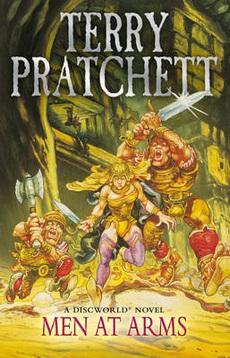 Mythago Wood – both beautiful eerie and haunting books that nevertheless remain very real and human.
Julia Knight: Something Pratchett. He’s like a gateway drug. My husband is badly dyslexic and didn’t used to read much (though he loved stories). I gave him Men at Arms….Now he nicks all my books.
Joanne Hall: I would give them Among Others by Jo Walton, which is a genre book about witches and broken twins, but also a book about how the love of reading SFF saves a teenage girl from despair. It’s a book that just brims over with love for genre novels, and hopefully it will inspire that same passion and interest in non-genre readers.
Sophie E. Tallis: Apart from Fight Like A Girl, of course, I’d probably go for Jen Williams ‘The Copper Promise’, she’s another fantastic author full of inventiveness and great writing prowess, hopefully she could turn even the most fervent anti-SFFer!
Of course! And finally, what other anthologies would you like to see published?
Juliet McKenna: Actually, there are so many great anthologies coming out at the moment, exploring SFF from so many viewpoints and angles that it’s hard to think of an area that’s not being covered. How about one exploring some of the classic creatures of British Isles folklore, in a modern setting. What do black shucks get up to these days?
Kelda Crich: I adore Philip K. Dick’s stories. And Do Androids Dream of Electric Sheep is my number two all-time favourite book. I’d love to see an anthology of original stories bouncing off his wonderful ideas.
Fran Terminiello: I think the concept of time could be interesting. So 24 stories each set at a different hour of the day. You could visit a different world at every strike of the clock.
K. T. Davies: All of them. It’s a big world, let’s fill it with fine words and great ideas.
Dolly Garland: I think an anthology where only women have magic would be interesting, and bring together an array of stories and dimensions.
Sophie E. Tallis: Perhaps a factual companion piece to Fight Like A Girl, featuring real stories from women warriors who kicked-ass through history?
Lou Morgan: The joy of anthologies, to me, is that they will often get me to read stories on a theme I might not have considered before, or they might introduce me to new authors I’ve never read. Introducing us to something is what anthologies are so good at – so, sadly, I couldn’t even begin to think what I’d like to see. All I know is that every now and again, one will cross my path and I’ll think, “Yes – this is exactly what I wanted to read.” Long may that continue.
Indeed. Thank you, in no particular order of greatness to Julia, Lou, Danie, Roz, Juliet, Sophie, Gaie, Kelda, K.T Davies, Joanne, Fran and Dolly for taking the time out to answer my questions.
Fight Like A Girl is available from Amazon and Kristell Ink. No matter what sub-genre of SFF you enjoy, there is something for you in this anthology and it’s a great introduction to some of the best current female writers in the genre. If you’d like to find out more about the contributing authors you can by following the links:
Roz Clarke, Kelda Crich, K T Davies, Dolly Garland, K R Green, Joanne Hall, Julia Knight, Kim Lakin-Smith, Juliet McKenna, Lou Morgan, Gaie Sebold, Sophie E Tallis, Fran Terminiello, Danie Ware, Nadine West.
*****
Interview by Shellie Horst – SFFWorld.com © 2016