
 My characters, I choose to think, are free to do as they please, within the confines of their stories. But of course, they don’t have absolute freedom. They are restricted by the choices I force them to make.
For instance, in my latest collection, I have a new cadet in a spaceship on her first solo drive who finds that she isn’t alone. She’s new; the stranger is a superior. Of course she’s been trained to obey superiors. What are her options as suspicions grow about her shipmate?
I remind myself here of the story “The Cold Equations” by Tom Godwin. In this one, a stowaway completely alters the possibility of survival. The pilot’s decision is completely tied to the pilot’s character—i.e., which way his moral and human reckonings are directed. He chooses what he can because he is made that way. As does my newbie space cadet. Suspicions may make us try to change our character (or not) but the choice is in some sense pre-ordained. Well, yes, you say, that’s what character is all about.
Of course writers have character as well. Can a writer get so far away from her own tendencies that the choices of her most sympathetic characters would be the choices she would not approve of? Of course. Of course. We can imagine things.
Is it possible for you to write something contrary to your character? Would you have the conviction to make your main character be different from your moral inclinations; someone who is at peace with all the things that you abhor?
I learned in a physics class I took recently that all particles have a natural spin to the left or to the right, as well as up or down. At the fundamental level, there is a compulsion to move in a certain direction. This creates four possibilities: left spin that goes up; left spin that goes down. Right spin that goes up; right spin that goes down.
I think that we have spin as well, and it’s not merely a physical direction. I think we spin in emotional/psychological/intellectual/spiritual directions as well. We are the result of our choices, which are the result of our tendencies. And I don’t know about you, but there are some choices I wish I hadn’t made. I console myself with thinking about spin and I’m convinced that there is no one particular choice that has determined the direction of my life. Even if I had chosen differently on some important occasion, I think I would have ended up in the same mental place anyway; the overall track of my choices would have led have me here.
I believe this works when creating characters as well.
One of my favorite literary characters is Bartleby, who famously refused to do as requested by his boss (and we can easily assume this was Bartleby’s attitude towards life). His response was always, “I prefer not to.” His boss was just as consistent; he was a man who preferred not to confront things. The two were at an impasse.
Bartleby had a spin that went nowhere, I suppose. But we have to a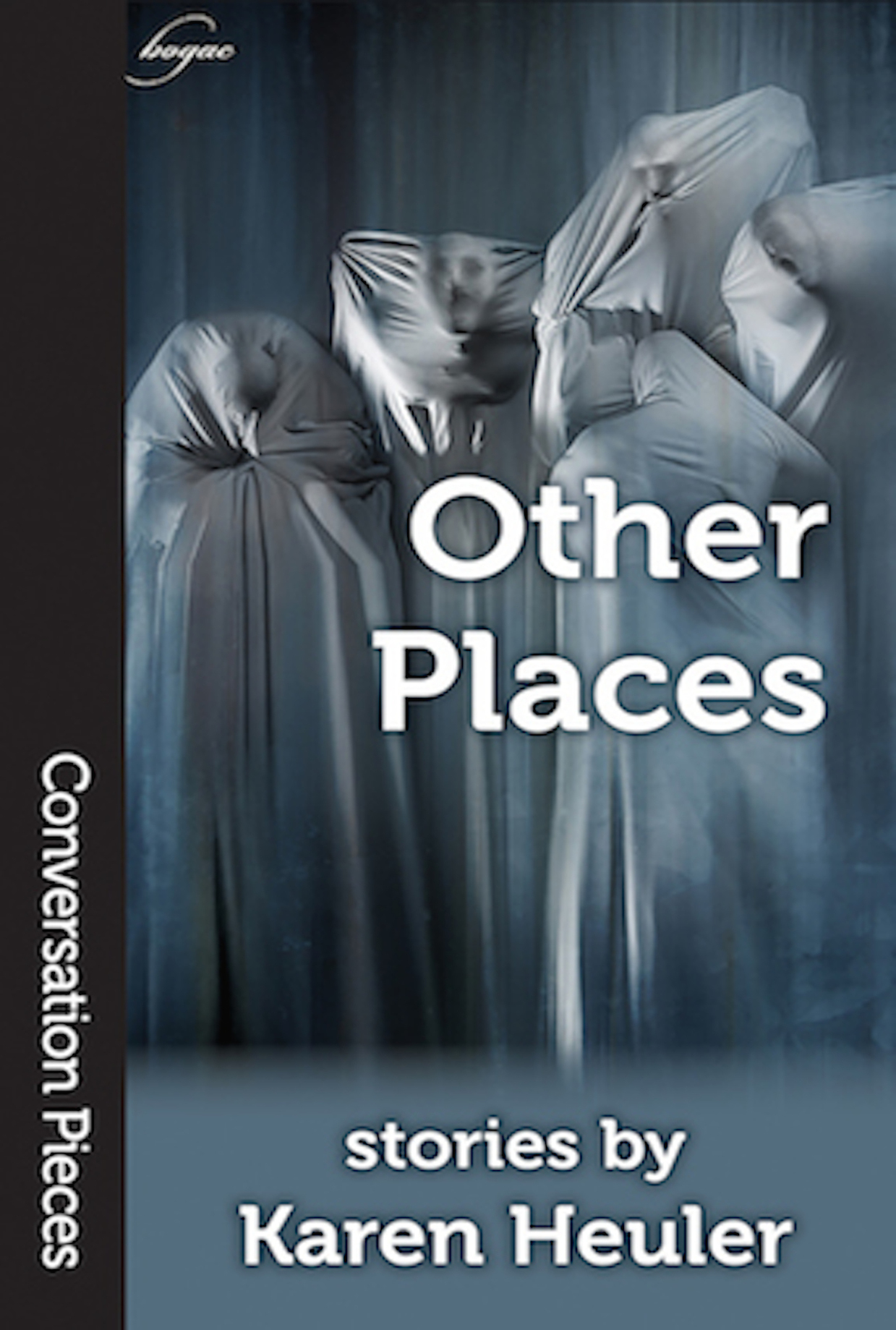 dmire his complete conviction in his lack of spin. Characters are like that—they believe that their opinion, their choice, is best, and everyone else is either stupid or wrong. This is very much like real life. So what spin has taught me about characters is that their choices are not random; their opinions reinforce themselves; they cannot really act against their tendencies without being forced to face the absurd pressure of maintaining the artificial act.
We like to believe in free will. We tend to see this as the ability to choose what we want. But what if choice is not the same as freedom? I can see that Bartleby chose to choose nothing; and I can also suppose that in war people choose to destroy, but is this a way of viewing free will? Perhaps instead of choice we might consider whether a particular life works or not, and get to our concept of freedom that way. If I let my characters live as they please, then the choices are not right or wrong, but merely characteristic. In this way, I might see that what my characters try for is not so much what I might see as a good choice, but what they have selected as their version of life. In war, people make choices but can you say their individual lives work?
Developing a character depends on imagining their individual preferences, their arcs. They want something, yes, but they also approach something. They approach themselves and their aspirations. It is their movement which matters, their ability to move in the direction they want unobstructed.
And physics can enlist an additional twist when you think about entangling particles. In this, particles can be affected over great distances by particles attached to them. Kind of like the old butterfly in Africa that causes a hurricane in the United States. Entanglement suggests what we all know from experience—no action is isolated. No thought is alone. What you decide has an unintended effect on someone else.
Our characters experience that. They face events that make them veer or confront, and in that action, they find the story they’re in. In one story in my collection, a world was filled with what appeared to be human ghosts, and everyone tried to find out what it meant. But did it really mean anything? My characters had been raised on action and decisions, and were attracted to the bonus they would earn if the contact was proven. There had to be a reason, even if it made more sense to see this as sheer coincidence. And, even presented with a world that didn’t make sense, they insisted on imposing sense.
Well, yes, of course they did. Whether you go right or left, or up or down, you’re heading somewhere. And you have no choice but to assume it’s what you want.
Bio:
Karen Heuler’s stories have appeared in over 90 literary and speculative magazines and anthologies, from Alaska Quarterly Review to Clarkesworld to Weird Tales, as well as in a number of Best Of anthologies. She has published four novels and three story collections with university and small presses, and her collection The Inner City was chosen for Publishers Weekly’s Best Books of 2013 list. She has received an O. Henry award, been a finalist for the Iowa short fiction award, the Bellwether award and the Shirley Jackson award for short fiction. Her new book, Other Places, is just out from Aqueduct Press. It follows women facing strange circumstances on this world and others.





Oh yes, definitely, characters behave in accordance with their personality. And readers, in turn, evaluate their behavior in accordance with their own personality, which is very interesting to see.
You have raised a very interesting question of whether the protagonist can have a system of moral value that differs drastically from that of the author. I have thought about this and I think that for me, this is impossible. My characters may differ from myself in all sorts of respects, they may behave quite differently from the way I would behave, but they still cannot be the kinds of people I hate or have moral values I strongly disapprove of.
Thank you for the post!