Current Non-Genre Reading III

After some awesome recent sf and fantasy, finished The Trouble with Secrets, the latest historical fiction/romance novel (and first in a new series) from Jean Grainger (am quite a fan of her Irish based novels and read quite a few across the years while I was planning to visit Ireland and see some of the places mentioned in her novels in 2020 as there was an opportunity to go there in that Spring and then we know what came- well, hopefully, will get the chance in 2023 now...); an excellent novel which I finished in one sitting; my Goodreads review below:

The Trouble With Secrets is another unputtable-down historical fiction/romance/secrets from Jean Grainger and it marks a return to the more emotional and intense storytelling of say Robinswood rather than the somewhat more detached one of Queenstown, so much so that when I opened it, I couldn't put it down until the great ending which is at a perfect point in the storyline.

The novel starts with a prologue in 1948 when eight year old Lena O'Sullivan watches her mother Maria- who has long spells of depression and psychological problems and needs monthslong sanatorium rests from time to time -threatening to commit suicide if her handsome and charming husband Paudie, farmer of his modest lands, and occasional handyman to the rich family Berger from the neighboring Kilteegan House estate/mansion, succumbs to the charms of the lady of that house, Hannah, whose husband Auguste Berger, supposedly a former Alsacian French resistance fighter returned paralyzed from the war after a long absence when he was presumed dead and now is confined to a wheelchair and attended by his childhood friend/servant Philippe who takes care of all his needs, but is unable or unwilling to help with the estate and the mansion's keeping

The prologue is quite dramatic and sets the tone for the book as is then followed by a 7-year leap when two tragedies happen at a few months' intervals, first the heart attack death of Hannah and then the accidental death by a malfunctioning shotgun of Paudie at only 41 with Maria pregnant with twins, that would take to five the children of the O'Sullivans, Lena having an older sister Emily and a younger brother Jack who at 12 must become the head of the family and take care of the farm...

Then the real action starts in 1958 when Lena who dropped out of school at 15 when her father died to help with the farm, now almost 18 and working as a secretary for the local doctor, her godfather and Paudie's best friend and keeper of secrets is growing into adulthood as a very pretty woman - the image of her father as everyone says - and has to deal with various issues, from her mother's on and off mental problems, to her sister's sort of engagement with a local boy who is maybe not the brightest bulb but is nice, loves Emily and has their future planned, except that his father and older brother, now absconded to London were not much better than thieves and wasters, and finally to the fact that Malachy Berger, her childhood friend and now a student at a posh boarding school in the capital and driving a Beetle given by his father, big admirer of german engineering despite his supposed past, is quite attracted to her as she is to him for that matter, while he is quite handosme and the spitting image of his mother as everyone says; of course Maria doesn't take this last piece of news well, even striking Lena for the first time in her life, Doc is skeptical though he wouldn't tell Lena why, but Malachy's father seems very polite and accepting of her...

And so it goes with the "the trouble with secrets" being that they can ruin everything and everyone involved if not aired at an appropriate time. But Lena is nothing but resourceful and strong-willed so one wouldn't bet against her regardless of what life and fate have in store...

Excellent novel and highly recommended with the sequel a huge asap in the fall.
 
At 0329 this morning, I concluded a possibly initial read of Mark Twain's The Adventures of Tom Sawyer, a (free) Project Gutenberg e-book. I'm still not sure if this is the book I read during my long ago school days. I had foreknowledge Tom and his whitewashing of the picket fence, but this might be something well ingrained in the American Mythos when I was a lad, known even by those who had not read the book. I remembered the character Injun Jim, not in any great detail, but knew he is/was a 'bad guy'. I sorta / kinda remembered caves. None of this convinces me. My decrepit mind still says it was Huckleberry Finn I read back in the day. We shall see, as it's what I hope to begin reading later today.
 
Last edited:
I'm not quite half-way through As I Lay Dying by William Faulkner. It's been years since the last time I read it, and I'm enjoying it when I get time to dig in for more than a few pages. I forgot there are passages that read almost like Mark Twain.

Here's Vernon Tull thinking about his wife's devout Christian belief.

"... Now and then a fellow gets to thinking. About all the sorrow and afflictions in this world, how it's liable to strike anywhere, like lightning. I reckon it does take a powerful trust in the Lord to guard a fellow, though sometimes I think Cora's a mite over-cautious, like she was trying to crowd the other folks away and get in closer than anybody else. ..."

Later,
"I reckon if there's ere a man or woman anywhere that He could turn it all over to and go away with His mind at rest, it would be Cora. And I reckon she would make a few changes, no matter how He was running it. And I reckon they would be for man's good. Leastways, we would have to like them. Leastways, we might as well go on and make like we did."
 
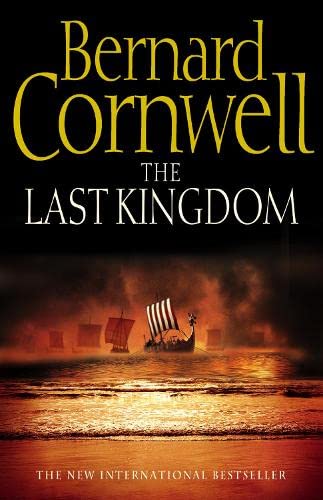
The Last Kingdom

410jX0R8rqL.jpg


Just finished the first in The Last Kingdom series by Bernard Cornwell, which chronicles the reign of King Alfred though told in the first person from the viewpoint of Uhtred, a young Northumbrian Ealdorman who is captured by invading Danes and raised among them. All this takes place in the latter half of the 9th century when the Danes were settling permanently in England and making plans to suborn the rest of the country. Only Wessex (the last kingdom) and Alfred stood in their way.

In style, it is similar to Arimnestos’s retelling in Christian Cameron’s The Long War series, and the series as a whole is also similar in that it charts Uhtred’s life through the key events and battles of the time - which is a good point in its favour. If anything, the only negative I found was that in the first half of the story Uhtred came across a tad distant, but this did lessen as the story progressed. As you would expect from an experienced historical writer such as Cornwell, the background detail was excellent and painted a convincing picture of life at that time, covering everything from laws, medicine, beliefs, housing and weapons to battle strategy and social hierarchy. Overall, I enjoyed it very much as a rousing 4 star read and will start the next book right away.

As for the TV series, I’ve only ever watched one of the early BBC episodes. To be honest I find most BBC series’ a little too sterile for my liking, and much prefer to read the books.
 
The Last Kingdom
Overall, I enjoyed it very much as a rousing 4 star read and will start the next book right away.
Huh, I've been reading it as well and am just about finished - agree it's a solid 4 star read. There's something fascinating about the savagery and toughness of the Northmen, but also reading about what it might have been like at that point in history.

I've watched the whole TV series, and found it very good - which lead me to read this book (the reverse of what I usually do). The series seems to stay fairly true to the book so far, except Uhtred grew up a lot quicker in the series. I also found it lessened the impact of the book to a degree, because of my familiarity with it.
 
Hehe...great minds think alike - or at least choose the same books to read. If I'd watched the series I probably wouldn't have chosen to read the books so I'm glad that I avoided it, and also because I read somewhere that the TV series diverges from the books at some point. The second book sees Uhtred as more of an angry young man and feels quite different to the first one, but it's still a good read.
Happy reading, Westy! ;)
 
The Pale Horseman

41HB1M9Q6RL.jpg


Following on from the events in The Last Kingdom Uhtred, angry at his treatment by Alfred and the conciliatory approach he takes with the Danes, retreats to his holding in Wessex. Joined by his friend Leofric, Uhtred decides to raid shipping for a while and ends up in Cornwall, one of the last bastions of the Britons. When the Danes once more prove untrustworthy by mounting another attack on Wessex, Uhtred finds himself holed up in the Somerset marshes with the king.

This book tells the story of what was probably the low point of Alfred’s reign. Through Uthred, Cornwell takes the view that Alfred preferred to rely on the advice of his priestly advisors and trusted too much in the power of prayer, and lacked the ruthless qualities needed to deal with the Danes. He was undoubtedly a clever leader and visionary in his ambitions for Britain, but his piety repeatedly led him into trouble with the Danes, who only had scorn and disregard for his notions of trust in others. Meanwhile, Uhtred becomes the warrior who is always in the thick it, despite being distrusted because of his pagan beliefs.

This was another great read and delivered action and intrigue in equal measure. Uhtred’s story was always at the forefront of things and was never overshadowed by the larger picture and, for me, The Pale Horseman was even better than the first book. I’ll stay with the series for another book then switch to something else for a time…or maybe not, I’ll see how it goes.
 
The Lords of the North

41JH4ZMYBZL.jpg


In this book Uhtred returns to Northumbria to make his claim as rightful heir to Bebbanburg, but events turn sour after he is betrayed by King Guthred, the ruler of Cumbraland, and is sold into slavery.

The events in the north are much more fictionalised than those set in Wessex, which Cornwell ascribes to the fact that surviving historical records for northern England are vague. Despite this, The Lords of the North is a good read with a decent amount of action and succeeds in tying off a few ends from the previous books. The story doesn’t quite reach the heights of The Last Kingdom or The Pale Horseman, but it fits into Uhtred’s timeline and is therefore a story that needed telling. As I’m still in the mood for a bit of Saxon and Danish Britain, I will stay with the series for a bit longer.
 
Sword Song

41K-jlF-6vL.jpg


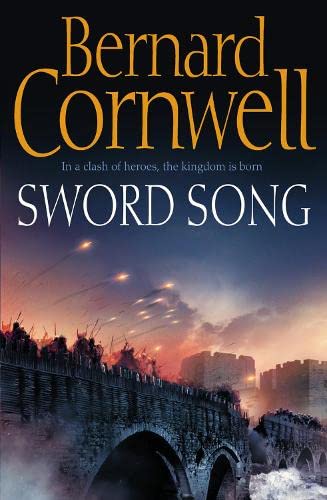
Lundene is the main setting for this the fourth book in The Last Kingdom series. The Thurgillson brothers and their Norsemen capture the city (then part of Mercia), stirring Alfred to demand its recapture so as to deny the Norsemen a base from which to attack Wessex, and to avenge their crucifixion of the city’s priests. All of which actually happened, though the second half of the story about the capture of Alfred’s daughter is pure invention.

Uhtred, of course, is central to everything that takes place and his role is skilfully woven into the story’s tapestry of truth and fiction. As in the other books he is still regarded with suspicion by Alfred and most of the priesthood, some of which is justifiable, but is mostly because of his refusal to give up his belief in the old gods. To someone as pious as Alfred this would have been a real concern and only adds credence to Uhtred’s constant battle with the clergy.

After the slight dip in enjoyment I experienced during the previous book (which wasn’t bad by any means), Uhtred is back on form in Sword Song and it was another great read. Interestingly, in the Historical Note at the end of the book Cornwell states that he is actually descended from the real Uhtred of Bebbanburg, which must have provided him with some real inspiration for the series. Anyway, all very good so far and there is nothing to discourage me from starting the next book.
 
Anyone ever read any of the "Poldark" series by Winston Graham? Opinions? Older series first published in 1945.
 
Anyone ever read any of the "Poldark" series by Winston Graham? Opinions? Older series first published in 1945.
Yes. I read the first seven books (up to The Angry Tide). The series is very good up to that point, especially if you love historical fiction. It does get a bit soapy (some of it would probably need content warnings galore by today’s standards), but is still very good evocation of the times, and the books are page turners. People behave and think like characters from that period, which makes them better in my eyes than a lot of what gets churned out today. Plus, I think Graham was a good writer.
 
  • Like
Reactions: Raf
Finished "Paradise Sky" by Joe R. Lansdale. Told in a first person style, the story is about Nat Love. An ex slave growing up in post civil war East Texas. The war is over, racism is rampant and brutal in many cases. Young Nat (known as Willie at a young age) is wrongly accused of assaulting a white woman and is on the run.

While hiding in a barn, he is discovered by the landowner who feeds him and offers him a job. Finding Willie to be an upstanding young man and after hearing the real story of why he is running. Loving begins training Willie to ride and shoot.

Taking the name "Nat Love" in honor of his former friend, Nat joins the army as a "Buffalo Soldier"(Black US Army Regiments serving at the end of the civil war and in Indian Territories).

From soldier to sharpshooter, farmer, livery stable hand, store sweeper and on to Federal Marshal the story of Nat Love's life in the American West is a tale to be reckoned with. In the face of grinding poverty, sorrow and racism Nat still maintains a sense of humor along with a sense of himself.

Really good story.


Now on the "The Radiant Apples Gang"...that takes place when Nat is in his 50's
 
Finished up "Radiant Apples" by Joe R. Lansdale. Short sequel and finish of the life and times of Nat Love of "Paradise Sky" in the first book. I should probably pay more attention to what I'm buying. 6 bucks for a 160 page..what? novella...short story?

Still it brought the saga of Nat Love to a satisfactory close. Nat is 50 yrs old and working as Porter for the railroad. The train is robbed by the Radiant Apple gang. Named for the rosy red cheeks of the gang
leaders. The Albright brothers.

Nate spies his youngest son Rufus riding with the gang. Following the killing of a wealthy passenger on the train, Nat and his old tracker friend "Choctaw" hire on for the railroad to find and bring in or kill the gang. Nate and Choctaw figure pretty quickly that they are not the men they were. But its good enough and they save the day.

It was a nice cap/ending to the saga of Nate Love. Wish it had been more in depth, but what the heck...good story nonetheless.
 
Back to Christian Cameron and greek wars. He wrote the "Tyrant" series. About the wars that followed the death of Alexander the Great. As his Generals fought each other for the lands conquered by Alexander.

First book up: Tyrant
 
The Burning Land

51mQMfv8O6L.jpg


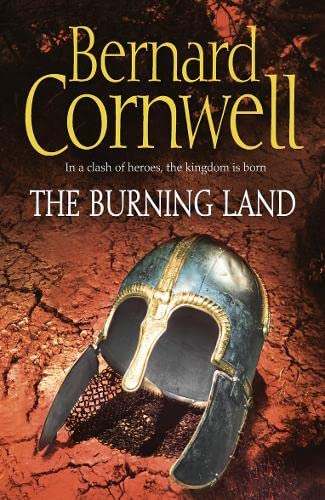
After a few years of relative calm in Wessex and Mercia word begins to circulate of Alfred’s death, mistakenly as it turns out, though for a time he is gravely ill and bedbound. Thinking Wessex to be in a weakened state without Alfred’s leadership, two armies of Danes from the continent converge on Wessex, and the Northumbrian jarls send a fleet to attack from the south coast. Meanwhile, after killing a priest for insulting his wife, Uhtred returns to the north and even considers joining the attack on Wessex, but an oath brings him back to the southern lands.

This was another very good read that covers two of the key battles between Wessex and the Danes during the early 890s. Edward, Alfred’s son and soon to be king, has a bigger role under the guidance of Uhtred in this one. The Burning Land continues the story of what was a desperate time in the history of the country, when it seemed as if England could easily have become Daneland. I have the next book in the series but after that one, with seven more books still to go, I’ll take a break for a while. It’s a great series and I’ll definitely be returning to it.
 
Death of Kings

51CPEmCs-iL.jpg


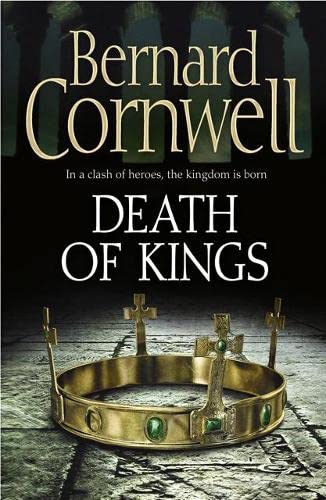
Uhtred, now around 40 years old, is finally rewarded with the holdings he deserves by the dying King Alfred. This comes at a price, however, and Uhtred pledges his loyalty to Alfred’s heir, Edward. With Alfred now dead, Uhtred expects the northern warlords to come sweeping into Wessex eager to take advantage of the situation, but he hears nothing, and decides to take matters into his own hands.

Death of Kings was another really good read that continued to drive Uhtred’s (and England’s) story forward. The action and intrigue never let up and it was another damn fine episode in this great series. Alas, it is time for me to have a break from the series now that I am about halfway through, though it won't be long before I return to it. Recommended.
 
Started a new series by Christian Cameron. New to me, that is. It is an older series written (it looks like) in tandem with the "Long War" series.

"Tyrant" is the tale of Kineas. Kineas served as a member of Greek cavalry in the wars of Alexander the Great. Now he along with his troop of Greek mercenaries are traveling to Olbia. A greek city on the Black Sea ruled by a Tyrant. The Tyrant wants Kineas and his men to train the nobles in cavalry tactics.

As Kineas and his men travel to the city they are attacked by the Getae. A tribe of Scythian Horse warriors. The Scythians of 330BC roamed the Ural plains of what is now Kazakstan. Tens of thousands of tribal warriors made their home in the unending grasslands of that area. Kineas and his men strike back and kill the entire raiding party. This action brings them to the attention and gratitude of one of the largest Horse clans...the Sakje. Who are bitter enemies of the Getae.

Drawn into the city politics, Kineas finds himself trying to balance the wishes of the Tyrant with what is best for a burgeoning city cavalry.

As Alexander continues his conquests in Asia, one of his generals in Macedonia has mounted a campaign to to take the city and lands of Olbia. Bracketed by factions, the Tyrant & Macedonian spies, Kineas forges the city forces into fighting troops and cavalry while working to get the Sakje to assist him in fighting the Macedonians.

The battle is based upon an actual historical event. Naturally the author is playing fast and loose with the story. But there are some historical characters in the story. As usual for anything Cameron writes, the battle scenes are brutal and realistic. But you really can't help but love his characters.

Another winner (as far as I'm concerned) for this author. Starting the 2nd book in the series tonight. "Tyrant: Storm of Arrows"
 
Sounds like another good read, Raf. I'm still gathering decent hardback copies of this series and is why I've yet to start it. Thanks for the review! ;)
 
  • Like
Reactions: Raf
Finished As I Lay Dying by William Faulkner. One of the great novels to come out of the 1930s, a dark comedy mock-epic of a family's odyssey to bury their dead wife and mother, full of real courage and perseverance but in the service of a quest so daft it leaves those who know them dismayed and exasperated. A good entry point to Faulkner's works.

Currently reading something much less rigorous, The Lady With the Gun Asks the Questions by Kerry Greenwood, a collection of stories about the redoubtable Phryne (rhymes with briny) Fisher, a detective by vocation rather than by profession, and 1920s independent woman of independent means. Written with the jauntiness and joie de vivre I expect from 1920s mysteries, think Agatha Christie and Dorothy L. Sayers. These are amusing stories for in between times.
 
Death of Kings

51CPEmCs-iL.jpg


Uhtred, now around 40 years old, is finally rewarded with the holdings he deserves by the dying King Alfred. This comes at a price, however, and Uhtred pledges his loyalty to Alfred’s heir, Edward. With Alfred now dead, Uhtred expects the northern warlords to come sweeping into Wessex eager to take advantage of the situation, but he hears nothing, and decides to take matters into his own hands.

Death of Kings was another really good read that continued to drive Uhtred’s (and England’s) story forward. The action and intrigue never let up and it was another damn fine episode in this great series. Alas, it is time for me to have a break from the series now that I am about halfway through, though it won't be long before I return to it. Recommended.
I greatly credit your dedication AC. Or perhaps I should regret it as we seem to share a tendency to put our nose(s) in a book and ignore the current world? ? Anyone with your dedication to a saga can but influence others who enjoy historical fiction. I read the Sharpe series but can only recall reading one Last Kingdom decades ago - and am not sure which.
Currently reading the Hilary Mantel, Mirror and the Light, on Thomas Cromwell. Servant and facilitator for Henry VIII. Third in a series. The BBC production of the first volume with Marc Rylance got me hooked. Also reading Marcus Didius Falco, investigator for Vespasian in Rome circa AD 70. Shadows In Bronze. Why go to the future when the past is so engrossing?
 
Last edited:

Sponsors


We try to keep the forum as free of ads as possible, please consider supporting SFFWorld on Patreon


Your ad here.
Back
Top