Current Non-Genre Reading III

Finished The Falcon of the Sea by Mark Kalina (who is mostly a sff writer with some books like the mil space opera Hegemony and the epic/grim fantasy Bitter Wind duology that I highly enjoyed, while his curent sf space adventure Liberator is among my current reads); a swashbuckling Meditarenean adventure in the early 1480's, highly entertaining and definitely recommended; the blurb and my Goodreads review below:

In the last decades of the 15th century, Dvorah Bat-Avraam is a woman who does not fit in. Accompanying her father, a Jewish merchant from Islamic Spain, on his voyages across the Mediterranean, she has no place among her own people, the Jews of Andalusia, nor among the Muslims who rule her land. The only place she belongs is aboard the ship her father serves.
Ser Xavier Fitz-Roland is a knight without a homeland. Burgundy, his home, has fallen to the French. Duke Charles the Bold, the sovereign he fought for, is dead. Forced to sell his sword as a mercenary to the Conde of Valencia, Ser Xavier tries to find a place for himself amid the ruins of the world he knew.
But both Xavier and Dvorah will find that their place in the world is more precarious than they know, and a single, desperate twist of fate will catapult both of them into a life they never imagined.


Historical swashbuckling adventure, mostly on the sea but not only, set in the early 1480's in the Mediterranean; new empires (Ottoman, Spain) are rising and old (Al Andalus, Egypt) empires are falling, the powerful maritime city-states (Genoa, Venice) are struggling to deal with the new geopolitical reality and religion is becoming more and more militant where the clashes of the new rising order happen, from Spain to Italy, Greece and North Africa.

While starting in life as somewhat privileged (Dvorah as the only daughter of a well-off Jewish trader who raised her like the son he never had especially after a childhood illness meant she never can have children, Xavier a Burgundian knight of middling rank and wealth who survived the destruction and partition of his kingdom by chance and now works as a mercenary officer wherever he finds employment) but at the whims of fate, the two main characters have their life upended quite suddenly when a conspiracy between a rival Jewish trader and a fanatical priest in Valencia destroys Dvorah's father and leaves her captive and on the brink of slavery or death, while ser Xavier - who regards himself as an honorable knight and has refused to cooperate with the French conquerors and retain his rank in Burgundy as a French province - is the one who is commanded to lead said destruction and recoils from it, so decides to rebel against his masters, release the surviving prisoners and find employment somewhere else.

And so it starts, with the unusual paths of Dvorah and Xavier as they rise in their new personas of "men" (one of course in a sort of a disguise) of the sea, diverging and then converging time and again. From the lush Malaga and Granada, the last vestiges of a besieged Andalus by the new rising power of united Castille and Aragon, to the Italian peninsula that is the new target for the rising Ottoman Empire, from the North African coast to the isles of the Mediterranean, the action moves fast and furious as both Dvorah and Xavier try and overcome the challenges, their unexpected fates have been throwing their way.

Action, energy, twists and turns, and of course interesting main characters. The novel finishes at a very good stopping point with a lot of scope for new adventures
 
Currently listening to audiobook, Blood’s Game, by Angus Donald (who has written fantasy as Angus Macallan). Set during the Restoration of Charles II, with real life historical figures Colonel Thomas Blood (who was quite the scoundrel) and his young son Holcroft, as main characters. Good so far.
 
For quick diversion, read two Elmore Leonords. When the Women Came Out To Dance (short stories) and Raylan. Both were pleasant light reading and I whipped through them. Neither was as good as his other adventures.
Raylan was his last book and it does maintain the character of Raylan Givens from earlier books and the series Justified (one of my favorites) but, as I said very light weight stuff. Try other Elmore Leanords if you want great characterization & language.
 
WITH A MIND TO KILL - Anthony Horowitz ends his Bond trilogy.

Met Anthony [ thoroughly nice chap ] this week at the Edinburgh book festival where he was in conversation with Kim Sherwood. She's just released the first of a trilogy set in the " double 0 " license to kill world.
 
Finished Master of Souls by Irene Nemirovsky, originally published in 1939 in France, with the Englsih translation being published yesterday (Aug 23, 2022) when I acquired it and read it as it really drew me in from the first page; when the author's work (born into a wealthy Jewish family in 1903 Kyiv, fled to France during the Revolution, studied hard and worked her way back to success and relative prosperity, trying to assimilate by converting to catholicism, and finally trying to find refuge in rural France after the Nazi occupation, she was still deported and murdered at Auschwitz in 1942) was 'rediscovered" and started being published in English not long ago, I read/started some of her books, but this was the first that truly resonated.

Short, dark, and almost cynical though with sprinkles of idealism and written in a way that reflects its times, this 2022 translation of Irene Nemirovsky's 1939 novel is quite interesting and stands well the test of time as well as being fairly relevant to current socio-political issues.

The main thing I liked - probably due to the perspective of the author as noted above, was the lack of illusions about success and wealth. Even the more idealistic characters, Clara the long-suffering wife of Dario is well aware of what goes on, both in how he is getting the money that enables their current extravagant life and how he spends them on multiple trophy European women to "revenge" himself for the contempt he received for so long from the westerners despite his being a naturalized French doctor, and Daniel his son who may start despising his father when growing up figures out the above and more, but won't refuse the large wealth that comes from that...

Powerful narrative energy, no illusions (and one of those books about "the beautiful people" that is really worth reading as it shows the ugliness behind the public facade of wealth and smiles) and quite highly recommended

Blurb:

France, 1920. A starving young doctor, Dario Asfar, is desperate for money to provide food and lodgings for his wife and their newborn son. As an immigrant to France with an Italian and Greek background, he is mistrusted - even though he has French qualifications to practice medicine and has lived in country for fifteen years. He implores his Russian landlady and money-lender to help him. At first, she refuses, then agrees, on the condition that he perform a secret medical procedure on her daughter-in-law who she believes is ruining her son’s life. The doctor agrees, however, his idealism plunges “into the hostile world of Western racism, so that he reemerges a cynical and corrupt creature, and a reluctant crook, determined to acquire honor”through any means necessary
 
finished another short novel by Irene Nemirovski, All Our Worldly Goods, this one serialized in 1941 in France and published posthumously in 1947, while the English translation I have is from 2008 - very good too and a fast read that kept me turning the pages, though I liked Master of souls a bit more as this one is more "traditional" showing us more of the facade, while master of Souls is more daring and hence interesting; my Goodreads review and blurb below:

Another short but insightful and full of happenings novel; focusing on the western French village of Saint Elme and a few important families from there, most notably the Hardelot clan whose patriarch Julien, is the local version of the "man" owning the main factory, the Florent family with lower status and the rich orphan Simone, a ward of the Hardelots.
Julien's life is the factory, so he has everything planned out - his grandson Pierre will marry the rich Simone and bring her considerable capital into the family to help run and expand the factory and Pierre eventually will succeed him in keeping the Hardelots "the family" in saint Elme, as Pierre's father Charles is kind of a nonentity and not really suitable to continue the tradition in Julien's view.
But Pierre loves Agnes, the beautiful Florent girl and his childhood companion and friend as the two families share by chance adjacent summer properties on the beach, while he dislikes the chubby and strong-willed Simone, so despite having a party to announce his engagement with Simone, Pierre sort of elopes with Agnes - not quite, but enough of a scandal ensues for him to have no choice but to marry Agnes which of course is what both wanted.
And from here the storyline follows the families and their offspring (Pierre and Agnes children, Simone's daughter as she eventually marries a handsome rake of a good family but with no money) through a war in which Julien (who disowns Pierre and kicks him out temporarily, while later after somewhat reconciling still keeps humiliating Agnes all the time) is shown as quite heroic in defense and later rebuilding of the factory as Saint Elme stays under German occupation from 1914 to 1918, then the sort of good times after the war, though punctuated by the loss of so many Frenchmen and the maiming, physical and psychological, of so many others, to the depression and the start of WW2.
While serialized in 1941, the novel was published posthumously in 1947, so given the circumstances we do not know if the author intended to add a coda about what happens after the second war, but the ending is still at a good stopping point, and with a small measure of optimism despite the darkness of 1940-1941 for France
Definitely recommended and with lots of narrative energy, interesting characters, and some twists and turns
Blurb:

In haunting ways, this gorgeous novel prefigures Irène Némirovsky’s masterpiece Suite Française. Set in France between 1910 and 1940 and first published in France in 1947, five years after the author’s death, All Our Worldly Goods is a gripping story of war, family life and star-crossed lovers. Pierre and Agnes marry for love against the wishes of his parents and his grandfather, the tyrannical family patriarch. Their marriage provokes a family feud that cascades down the generations. This brilliant novel is full of drama, heartbreak, and the telling observations that have made Némirovsky’s work so beloved and admired.
 
Just finished a long planned re-read of James Clavell's Shogun. It stood the test of time immensely well. 45-46 years as best I can remember since I originally read it. I'll refrain from reviewing it as it is a reread and a lot of us have read it before.

One thing that struck me though was how much my memories mixed the novel with the miniseries. Even though the TV show was very well done. It really never touched the complexities of the book. I thoroughly enjoyed the story.

I downloaded Tai-Pan to continue the Asian Cycle books, but set it aside for now. Going to read something else for a bit before getting back to the story.
 
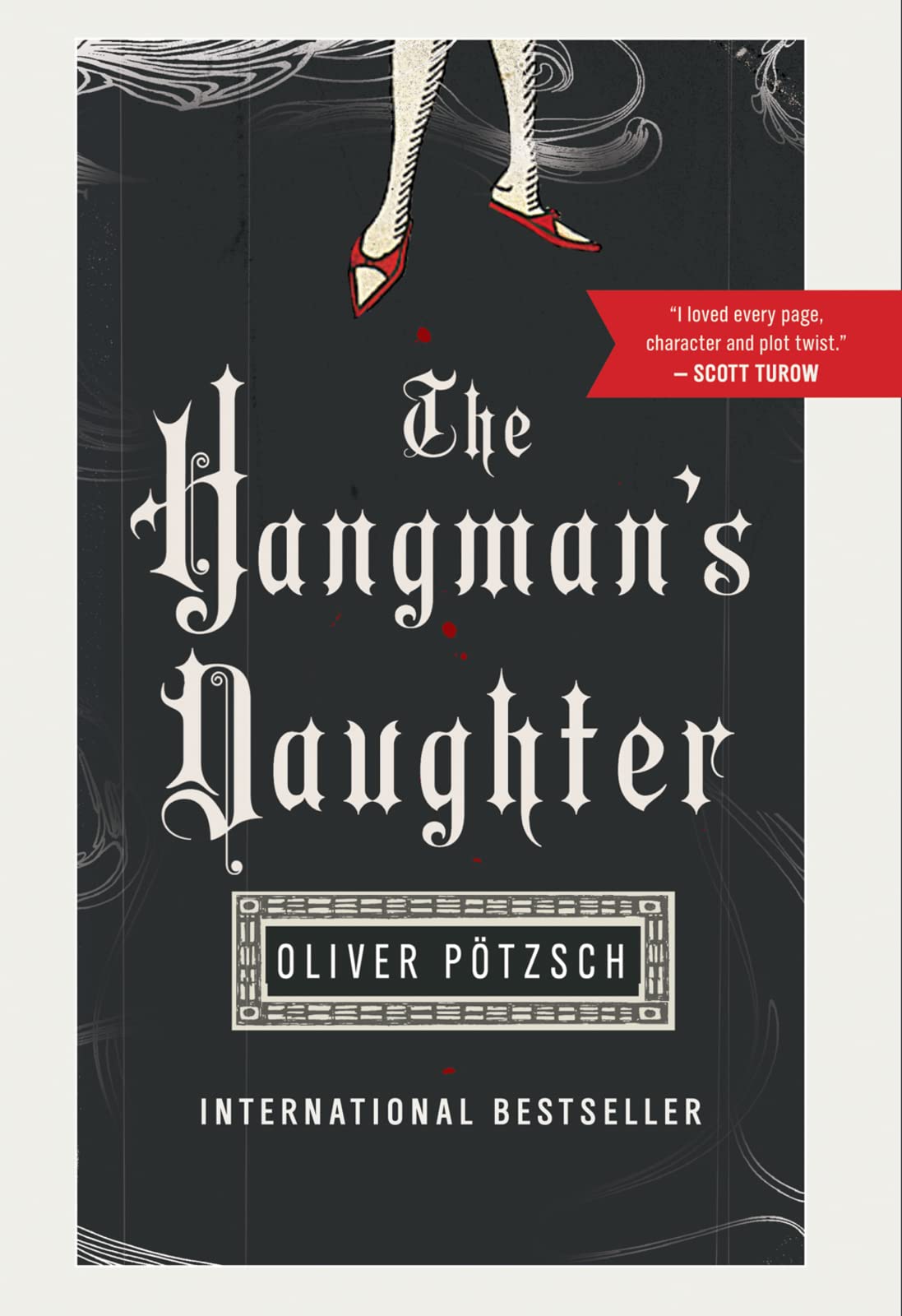
The Hangman’s Daughter

61yToSIEqnL.jpg


Many thanks to Decrepit&Senile for bringing this book to my attention. Set in 17th century Bavaria, it tells the story of murdered children bearing a witch’s mark, and the midwife accused and arrested for witchcraft. Only Kuisl, the town’s torturer and hangman, and Simon, the son of the local physician, are convinced of the midwife’s innocence. Both decide to get to the bottom of things.

What I liked most was the historical setting. The time saw many witch trials and, as you would expect, that part of the book doesn’t make for pleasant reading, so much so that I found myself angry at the injustice of it all. From a modern perspective the practice seems abhorrent, particularly so as 80% of the total accused were women. But putting this aside, it was a good read and I enjoyed the story. It seems that there are now six or more books in the series. I have a copy of the next one lined up in the TBR pile.
 
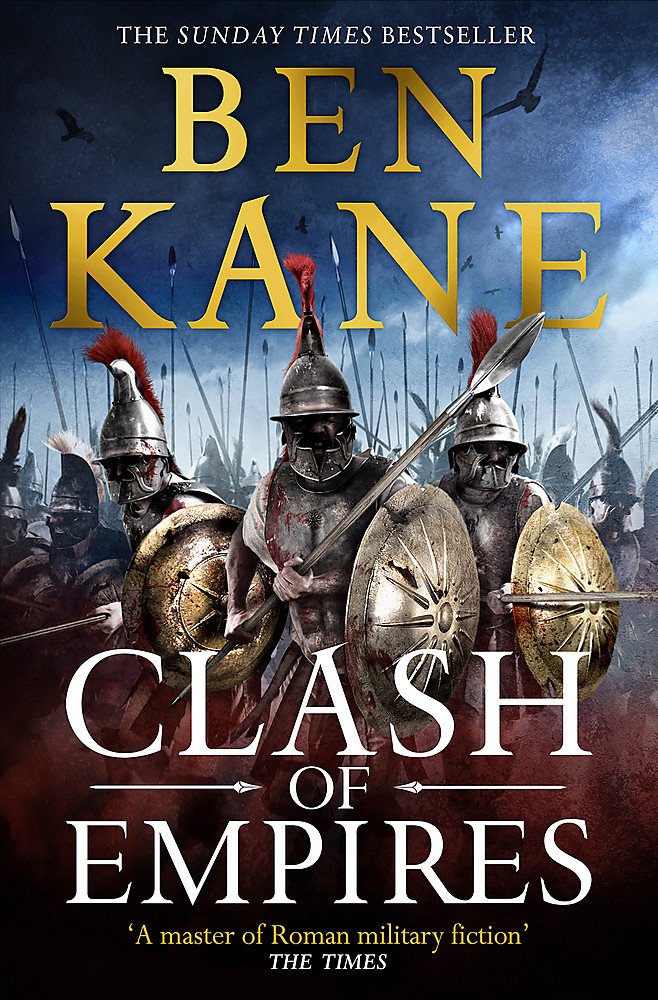
Clash of Empires

71aW2AXbbxL.jpg


Recommended to me several times over the past year, first by a friend and then by Amazon no less, I chose this more recent work by Ben Kane to test the waters. Set around 200 BC when Rome was just a regional power along with Macedon, Egypt, Syria and Carthage, the series charts the war between Rome and Macedon and the former’s rise to superpower. Beginning with the Battle of Zama and the defeat of the Carthaginian general Hannibal (who had long been a thorn in Rome’s side), events move on to King Philip V of Macedon’s campaign in the region, eventually leading to the involvement of the Romans.

Told from four viewpoints: King Philip; his opposite, Flamininus; Felix and Antonius, brothers who fought at Zama but who were then thrown out of their legion; and Demetrius, an oarsmen who becomes a phalangist in Philip’s army. Personally, I preferred the viewpoints of the soldiers to those of their leaders, although I did recognise the necessity for both. The book is well written and balances the action with the political manoeuvring that brings Rome to war with Macedon. Kane clearly knows his stuff, from the basics of legionary and phalanx life to the motivations and ambitions of those in charge. Overall, I found Clash of Empires a better than average read and I enjoyed reading it. I’ll definitely be reading the next in the series.
 
  • Like
Reactions: Raf
Clash of Empires

71aW2AXbbxL.jpg


Recommended to me several times over the past year, first by a friend and then by Amazon no less, I chose this more recent work by Ben Kane to test the waters. Set around 200 BC when Rome was just a regional power along with Macedon, Egypt, Syria and Carthage, the series charts the war between Rome and Macedon and the former’s rise to superpower. Beginning with the Battle of Zama and the defeat of the Carthaginian general Hannibal (who had long been a thorn in Rome’s side), events move on to King Philip V of Macedon’s campaign in the region, eventually leading to the involvement of the Romans.

Told from four viewpoints: King Philip; his opposite, Flamininus; Felix and Antonius, brothers who fought at Zama but who were then thrown out of their legion; and Demetrius, an oarsmen who becomes a phalangist in Philip’s army. Personally, I preferred the viewpoints of the soldiers to those of their leaders, although I did recognise the necessity for both. The book is well written and balances the action with the political manoeuvring that brings Rome to war with Macedon. Kane clearly knows his stuff, from the basics of legionary and phalanx life to the motivations and ambitions of those in charge. Overall, I found Clash of Empires a better than average read and I enjoyed reading it. I’ll definitely be reading the next in the series.

Adding this to the TBR pile.
 
At 1220 today, 07 Sep 2022, I concluded an initial read of Railway to the Grave, book seven in Edward Marston's The Railway Detective series. I was initially going to write this off as one of the series' weakest entries to date. It grew on me as the story progressed. By book end, I found myself rather taken with it. There is next to no railway trivia here, a disappointment that likely won't matter to others. As to how it stacks up against others of its ilk, I've no real basis for comparison. As has been pointed out before, I am not normally drawn to detective / who-done-it fiction. Then again, I certainly enjoyed my recent read of Poztsch's Hangeman's Daughter, which only after the fact did I realize is at core a who-done-it.
 
Anyone ever read anything by Valerio Massimo Manfredi? Opinions?

He has a trilogy out about Alexander the Great that looks really interesting.
 
At 1919 this evening, 11 Sep 2022, I concluded an initial read of Blood on the Line, book 8 in Edward Marston's The Railway Detective. It doesn't spoil things much to say that this entry isn't a who-done-it, but rather a hunting down of two known criminals, one of whose capture our protagonist has a personal, vested interest in due to a traumatic event from his pre-detective past. As has become the norm for this series beyond its first few entries, railway trivia is sparse. These are comfort reads for me. I enjoy them. And as I have discovered, I can read them while otherwise in a reading slump.
 
About halfway through a new-ish Christian Cameron series . "The New Achilles" taking place in the era of rising roman power as Greek society begins to crumble. One more in the series...called "The Last Greek".

Kind of a slow start, but I'm liking the story a little better at this point. We'll see.
 
About halfway through a new-ish Christian Cameron series . "The New Achilles" taking place in the era of rising roman power as Greek society begins to crumble. One more in the series...called "The Last Greek".

Kind of a slow start, but I'm liking the story a little better at this point. We'll see.

I read them and was a bit underwhelmed by The New Achilles on the first read but it got better on reread before reading The Last greek - they have a bit of scaterdness and incoherence as opposed to most of the author Greek world novels ( I think the first and second of the Tyrant the younger generation novels had that too) so the second read when you know roughly what happens picks up the details which are harder to get when you try and follow an action that jumps on occasion without rhyme and reason; the books have a lot of cool stuff, lots of compelling nuggets (for example having a description at a distance of the war between Rome and Hannibal, the seeming decisive defeats of the Romans and their consequence for the heroes etc) and great characters, most notably the main one, Rhodian exile, warrior, priest, councilor etc Alexanor. Definitely worth reading

And per the other post, I only read one book by Valerio Massimo Manfredi (the one that recreates the Anabasis and was quite good) and tried a few others (last legion, the first Alexander novel) but never felt them compelling enough to continue - this being said I may take a look at them again as they weren't laughingly bad like some others by popular authors (eg Conn Iguden which I have no idea why his highly inaccurate Hollywood style "historical fiction" novels which read like 3rd rate romances without anything of interest are so popular or Ben Kane with his juvenile writing style all of course imho)
 
Yes, that is a bit what I experienced in the early phases of the book. It was kind of scatterbrained. Like he couldn't decide on whose story to focus. Bouncing back and forth between Alexanor or Philopoemen. Some authors can handle that, some not.

It's interesting though that the author managed multiple characters & storylines so well in "The Long War" (a personal favorite). As well as his "Artifact Space" as Miles Cameron (which I really liked)

I've had mixed luck with his other books and several DNF series with him.
 
Yes, that is a bit what I experienced in the early phases of the book. It was kind of scatterbrained. Like he couldn't decide on whose story to focus. Bouncing back and forth between Alexanor or Philopoemen. Some authors can handle that, some not.

It's interesting though that the author managed multiple characters & storylines so well in "The Long War" (a personal favorite). As well as his "Artifact Space" as Miles Cameron (which I really liked)

I've had mixed luck with his other books and several DNF series with him.

I really liked The Long War (among best historical fiction imho) and liked quite a lot Tyrant (both the original 2 which were excellent and the younger generation ones which were a bit more hit and miss but still very good overall, while the companion Alexander novel was also farly absorbing even though quite revisionist), while his current Chivalry series is also among my favorites and one I get and read every volume asap.

Tom Swann first two parts (Head of St George and Siege of Belgrade) were serialized novellas I was looking forward too and got on publication and generally quite enjoyed, but did not yet get into the Last Spartans series so far (not sure why as I tried a few times but didn't really grab me, seemed a bit repetitive compared with the previous Tom Swann installments).

More mixed on the sff part, dropped both Traitor Son and Masters and mages at volume 2 (first series kind of struggled with book 1 as it was way too lengthy per content, though enjoyed it overall, but then lost interest, while I really liked Cold iron only to be bitterly disappointed by Dark Forge which really didn't read like the author's understanding of historical context and moved into the worst of woke garbage reinterpretation of history), but his sf Artifact Space was very good and almost excellent (2/3 awesome but then the heroine became way too godlike and there was some compensation with the rest of the action/new stuff but not enough) and Against all Gods was at least darkly funny and with awesome characters (most of the Gods and a few of the humans), though it reminded me here and there of same woke bs of the Master and mages series, so will see how book 2 goes
 
I didn't finish the Tyrant series. Read all of them except the last one in the series which began with a completely different plot than the last book ended up with. DNF at that point.

Satyrus won the siege of Rhodes and sent Demetrius & Co packing. But the last book started with all of Satyrus's friends & wife being held hostage by Demetrius? Wth is that about? Called it quits then.

I really liked the first book of that series, but Cameron killed off the 2 main protagonists (father and mother) to follow in the footsteps of their children. I thought parts of the children's stories were somewhat contrived.

Against All Gods is on my TBR list.
 
this being said I may take a look at them again as they weren't laughingly bad like some others by popular authors (eg Conn Iguden which I have no idea why his highly inaccurate Hollywood style "historical fiction" novels which read like 3rd rate romances without anything of interest are so popular or Ben Kane with his juvenile writing style all of course imho)

I respect your opinions about Iggulden and Kane, suciul, but you must have read different books to the ones I've read; 'like third rate romances' does not even come close to the three or four Conqueror books I've read, and 'juvenile writing style' for the Kane book I've read doesn't apply either. They're not literary classics by any means but both writers write competently, especially for this genre. Believe me, I'd have jumped all over them if anything was third rate or juvenile about them.
 
Last edited:

Sponsors


We try to keep the forum as free of ads as possible, please consider supporting SFFWorld on Patreon


Your ad here.
Back
Top