Countdown to Hallowe'en 2016

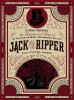
Thanks Randy: another October, another Otto Penzler book! I was looking at this one. I actually prefer the US cover to the UK one:
Jack Ripper.jpg

as the US covers for all of these tend to reflect the stories pulp origins. This one is more refined, but dull, IMO!

Having reread Zelazny's Lonesome October recently - where Jack is a hero, of sorts - this one looks like its worth a look - they're always big, these. Read the Bloch before (first in Dangerous Visions, I think!) and The Lodger, but will be interested to see where Penzler takes us, even if the subject matter, as you say, is a little controversial. His Sherlock Holmes book was last year, of course.

Thanks for the heads-up, Randy!
 
THE HOUSE NEXT DOOR by Anne Rivers Siddons (1978, Simon and Schuster)

[This house] commanded you, somehow, yet soothed you. It grew out of the penciled earth like an elemental spirit that had lain, locked and yearning for the light, through endless deeps of time, waiting to be released. It soared into the trees and along the deep-breasted slope of the ridge as though it had uncoiled, not as though it would be built, layer by layer and stone by stone ….I thought of something that had started with a seed, put down deep roots, grown in the sun and rains of many years into the upper air. … It looked—inevitable.
– from chapter 2, looking at the plans for a new house​

I wish we had left then. I wish it more than anything in the world. Perhaps it would have broken the chain if we had not seen. Perhaps by not seeing we could have escaped the strings and webs, the net that has reached out and caught us up. I doubt it, but perhaps it might have been possible, there at the beginning, to get free. Walter doesn’t think so. He thinks we had to see it. We had, after all, been a part of the house, of Buddy and Pie Harralson’s life, from the beginning. Present at the creation, as it were. He thinks we were woven into it then, at the start.
– from chapter 7​


Colquitt, our narrator, and Walter Kennedy, are a part of the local society and professional set, members of the club, and frequent hosts and guests of their neighbors, some of whom they number among their closest friends. They are a genteel Southern couple approaching middle-age in the late 1970s, as compatible as folded socks, living a contented upper middle-class life in a prosperous but not ostentatiously wealthy community, their home a sanctuary buffered on one side by an empty lot, home to birds and wild flowers the sight of which soothes them both.

For years the lot remained empty, its odd shape defeating local architects, and then along comes young, pushy, pregnant Pie Harralson and her husband Buddy and their young architect Kim Dougherty and suddenly the lot is infested with workmen and machines and they leave behind a house, a beautiful house that overcomes the Kennedy’s anxieties and even leavens somewhat Pie’s personality.

But as it’s built there are disquieting portents, not least the mangled, crushed bodies of small animals near the new house, and then Walter’s unprecedented jealousy over Kim, and the tragedy that follows is only the first as a force, malignant and subtle seeps into their lives and the lives of the families who own the house next door.


The House Next Door is a novel in four parts as the house has four owners over the course of the story with Colquitt and Walter as witnesses of the gradual destruction of each.

I believe I first heard of Siddons’ novel when reading Danse Macabre by Stephen King (1981) which, among other things, is a discussion of the history of horror in literature and film. In chapter nine King discusses ten novels representative of “the horror story as both literature and entertainment, a living part of twentieth-century literature …” and their impact on the genre. The House Next Door is one of the novels and he pairs it with Shirley Jackson’s The Haunting of Hill House.

Like many before and since, King praises Jackson’s novel. Concerning Siddons’ novel, he expresses reservations about Siddons’ characters, finding Colquitt vain and too class- and money-conscious for him to empathize with, which in the case of this novel he feels muddies character development. But he has some enthusiasm for Siddons’ handling of the historical context needed to make a haunted house work. In most haunted house novels the house is already present, it has a reputation the person entering either knows from the start or learns as the story continues. In The House Next Door the reader gets to see the haunted house built, to watch the events that lead to a reputation, to discover the beginnings of the nature and character of the haunted house. And, for me, that still makes for some powerful reading.

As for King’s reservations on character development, I understand his view (based to some extent on discussion and correspondence with Siddons), but I think there’s an ambiguity in the ending that might undermine his argument: Whatever haunts the house next door preys on the weaknesses of its owners and those who spend time there, and by the end, I’m not sure the Kennedys are the same people they were at the beginning or even exactly who they think they are.


The other novels King chose as, “worthy successors to such books as Frankenstein, Dr. Jekyll and Mr. Hyde, Dracula, and Chalmers’s The King in Yellow” (a mistake by King or the typesetter; should read, Chambers’s):
Ghost Story by Peter Straub
The Haunting of Hill House by Shirley Jackson
The House Next Door by Anne Rivers Siddons
Rosemary’s Baby by Ira Levin
The Body Snatchers by Jack Finney (usually reissued as Invasion of the Body Snatchers because of the movie’s success)
Something Wicked This Way Comes by Ray Bradbury
The Shrinking Man by Richard Matheson (usually reissued as The Incredible Shrinking Man because of the movie’s success)
The Parasite by Ramsey Campbell
The Fog by James Herbert
Strange Wine by Harlan Ellison (story collection)
 
First of a Halloween weekend two-fer:

“FENGRIFFEN” by David Case (1971; from Fengriffen & Other Gothic Tales, 2015, Valancourt Books)

My first impression of Fengriffen House was skeletal. I saw it from the carriage, rising against a stormy sundown like the blackened bones of some monstrous beast – not the fragile, bleached bones of decaying man, but the massive, arched columns of a primordial saurian who had wandered to this desolate moor and there lay down and died, perhaps of loneliness, long ages before. The spires and towers loomed up in sharp silhouette and the structure squatted beneath, sunken but not cowed, crouched ready to spring, so that the house seemed to exist on two planes at the same time – massive and slender, bulky and light, gross and fragile. It was a building that had aged through a series of architectural blunders, and it was awesome.
– first paragraph​


Charles Fengriffen, the current heir and twelfth master, is concerned by his pregnant wife’s behavior since coming to Fengriffen House; Catherine has become more and more distant as the time of her delivery approaches after learning of the Fengriffen curse placed on the family after a deed of one of Charles’ ancestors, a curse to which she is more vulnerable than any previous Fengriffen bride. Engaged to cure her of what Charles calls superstition, Doctor Pope, an early psychologist, must contend with events seeming to support her belief. Can he cure her or is she destined to be a victim of Fengriffen’s curse?

This novella would be easy to spoil by describing too closely since the plot isn’t especially complex or convoluted, but Case is a solid professional writer who captures the tone of late 19th century prose, and develops and deploys the Gothic feel of his setting effectively. Frankly, you will likely guess the ending, but much of the enjoyment comes from getting there and the final scenes still hold some of the shock value that has made Case a favorite of editor Stephen Jones, who introduces this volume and who included this novella in one of his anthologies (The Mammoth Book of Short Horror Novels).

I haven’t read Case before but apparently he is another American drawn to historical Gothic fiction set outside the United States, rather like Ray Russell, and like Russell mixes it with sex and sadism. (Just to note, sex and sadism were not exactly unheard of in Gothic fiction before them.) “Fengriffen” would make a good companion piece for reading before or after Russell’s collection, Haunted Castles. (Update: In the U.S. Haunted Castles has recently come out in a trade paperback edition.)
 
And now, number 2:

THE HAUNTED HOTEL by Wilkie Collins (1879; Dover Publications, 1982)

Still looking straight at the light, she said abruptly: 'I have a painful question to ask.'

'What is it?'

Her eyes travelled slowly from the window to the Doctor's face. Without the slightest outward appearance of agitation, she put the 'painful question' in these extraordinary words:

'I want to know, if you please, whether I am in danger of going mad?'
- From Chapter 1​

The Countess Narona visits a doctor, not the first doctor she has consulted. She feels afflicted, certain of doom hanging over her. The doctor, unable to help, is still intrigued by the Countess’ certainty and soon learns the recent circumstances of her life:

Lord Montbarry broke his engagement to Agnes Lockwood to marry the Countess. Agnes relinquished all claims on him and, aware the Countess only learned of Montbarry’s previous engagement after consenting to marry him, forgave her. His family, not as magnanimous, was scandalized by the breech of the code of conduct and rallied around Agnes, and never more so than after Montbarry’s unexpected illness and death while on honeymoon residing in a palace in Venice.

As the story proceeds, the circumstances surrounding his death come under scrutiny and questions arise: Why did the Countess consent to marry the middle-aged, balding, unlovely Montbarry in the first place? Why did Montbarry’s courier, Ferrari, disappear? And why did the lady’s maid quit the Countess and return to London?


I entered Wilkie Collins' The Haunted Hotel with moderate to low expectations – I haven't read anything by Collins except "A Terribly Strange Bed," a fine old tale of terror, Victorian writers tend to prolixity and sometimes a maudlin sentimentality, and I haven't really heard much about this novel except it's one of his later books, when illness and addiction were beginning to affect his writing. Still, I didn’t want to dive into one of his longer works directly.

I was entertained. Aristocracy misbehaving, love, betrayal, romance, a palace, an enigmatic prophesy, a visitation, a secret chamber, Collins deployed many of the fixtures of early Gothic fiction, but updated them in keeping with his time period (the novel is set in 1860), often with fine wit. For example, during the course of the story the palace is bought, renovated and becomes a hotel. Perhaps poking fun at Americans of the time, and maybe at Gothic fiction as well, one of the main characters acquires the room Lord Montbarry died in when the American originally assigned to it complains the hotel was insufficiently modernized and he would rather stay in a less beautiful room supplied with gas; thus Collins excuses the weak, flickering illumination of candle light in a room in an ancient Venetian palace in scenes to come.

Part of the entertainment comes from the setting of much of the story, Venice, part comes from the denouement which includes a summary of a play, part from Collins' deployment of Gothic trappings, and part from the mystery of just what happened and how, which Collins preserves until near the end. Further, Collins’ main characters, Agnes and the Countess, balance each other: Agnes is of her time but neither as idealized as some heroines of Victorian fiction nor a shrinking violet. Collins depicts Agnes as intelligent as well as sympathetic to those around her. Her antagonist, Countess Narona, is a more extravagant, theatrical creation, but believable within the story, her dramatic personality helping propel the plot.

I wouldn't put this on par with the best of Victorian or Edwardian ghost stories, like Oliver Onions' "The Beckoning Fair One" or Robert Hichen's "How Love Came to Professor Guildea," but it is well-written and if you don’t mind fiction told at a leisurely pace, worth seeking out.


More Venice:
“Don’t Look Now” by Daphne du Maurier (Echoes of the Macabre; Foundations of Fear)
The Stress of Her Regard by Tim Powers
 
Okay, so I tried a few times to add links in the last message. No go for some reason.

Anyway, if you'd like an on-line version of Collins' novel, check Project Gutenberg. (LINK).

And, if you're interested in more information about The Stress of Her Regard, check Countdown to Halloween 2012, 3rd page. (LINK.)


Randy M.
 
Last edited by a moderator:
Hi, Mark.

Interesting choices. I generally enjoy Le Fanu's short stories but haven't read his novel length works, so can't comment on that one. (I'm hoping to get to Uncle Silas this winter.)

"The Eyes" was by Edith Wharton; "Pirates" by E. F. Benson. I haven't read either, though I'm tempted to dig into The Ghost Stories of Edith Wharton and The Collected Ghost Stories of E. F. Benson sooner than later. Wharton's "Pomegranate Seed" and "Afterward" are among the best ghost stories I've ever read.


Randy M.
 
THE TURN OF THE SCREW by Henry James (Taplinger, 1980; first published in 1898)

The story had held us, round the fire, sufficiently breathless, but except the obvious remark that it was gruesome, as, on Christmas Eve in an old house, a strange tale should essentially be, I remember no comment uttered till somebody happened to say that it was the only case he had met in which such a visitation had fallen on a child. The case, I may mention, was that of an apparition in just such an old house as had gathered us for the occasion—an appearance, of a dreadful kind, to a little boy sleeping in the room with his mother and waking her up in the terror of it; waking her not to dissipate his dread and soothe him to sleep again, but to encounter also, herself, before she had succeeded in doing so, the same sight that had shaken him. It was this observation that drew from Douglas—not immediately, but later in the evening—a reply that had the interesting consequence to which I call attention. Someone else told a story not particularly effective, which I saw he was not following. This I took for a sign that he had himself something to produce and that we should only have to wait. We waited in fact till two nights later; but that same evening, before we scattered, he brought out what was in his mind.

“I quite agree—in regard to Griffin’s ghost, or whatever it was—that its appearing first to the little boy, at so tender an age, adds a particular touch. But it’s not the first occurrence of its charming kind that I know to have involved a child. If the child gives the effect another turn of the screw, what do you say to TWO children—?”

“We say, of course,” somebody exclaimed, “that they give two turns! Also that we want to hear about them.”
- From the first chapter​

Deep in the year, around a winter hearth several people sit listening to ghost stories. Among them, Douglas, a man with a story he has wanted to tell but only now feels he can with the passing of the person who told him, a charming woman, his sister’s governess, who first related it to him forty years previous and later sent him a letter recounting the details of her experience at her very first professional position

When their governess dies, Miles and Flora’s guardian hires a new governess, whose name is never told for from this point on Douglas’ correspondent is the narrator. The guardian, their uncle, has sent them to a distant estate, Bly, and when he hires her it is with the stipulation she is to make all decisions regarding her young charges and not to contact him about their care. Though their well-being weighs on him, as a confirmed bachelor and man about town in London, his attitude toward the children is one of duty rather than affection and his approach to their rearing one of benign, good-natured neglect.

On reaching Bly our narrator finds her charges beautiful and endearing, and the housekeeper, Mrs. Grose instantaneously a friend. The only trouble is, she wonders if she has quite won over the children, if they have given her their complete confidence, and then, too, there is the intrusion of a handsome man only she sees who, from her description, Mrs. Grose declares is Quint, the former valet, and like Miss Jessel, the former governess, dead.


It’s unlikely I can say anything about this that someone else hasn’t already said. It is a ghost story, I think, except James doesn’t commit to telling a ghost story. As with “Green Tea” by Joseph Sheridan Le Fanu, a writer James admired, the novel plays in that murky borderland between ghost story and mental delusion. How much of what the governess writes is real and how much the confabulation of a young woman stressed by the responsibilities of her first professional position? How much is this governess concerned for the welfare of these children in spite of their reticence and how much is she desperate for some overt signs of loyalty and a kind of ownership of her charges?

James leaves the answers to these questions to his reader. Told at a leisurely but not sluggish pace, James builds an atmosphere of uncertainty and anxiety throughout so that the novel is unsettling largely because of his restraint, his insistence on suggestion and inference, his building of narrative tension through the play between the story as told and intimations of a different story behind it, between the reader fearing a threat to the children from outside of Bly and anxiety that the threat is already within.

While James’ ghost stories may stem from his reading as a youth, the modern ghost story stems from the work of two James’s: M. R. and Henry. Where Montague Rhodes James influence stems from a body of work, Henry’s stems largely from this short novel though he wrote other very good ghost stories (“The Jolly Corner”; “The Romance of Certain Old Clothes”; “Sir Edmund Orme”; etc.), but The Turn of the Screw was the pinnacle for him and maybe for the ghost story itself.


Other … hauntings?
The Haunting of Hill House by Shirley Jackson
The Little Stranger by Sarah Waters
“Seaton’s Aunt” by Walter de la Mare
 
Hey, all.

"The Turn of the Screw" was my last entry for this year. I hope you all found something fun to read for October and Halloween, and if I contributed to that ... well, good.

Have happy, safe Halloween.

Randy M.
 
Here's one I'm almost finished with: House on the Borderlands by William Hope Hodgson. I'm about three-quarters of the way through but wanted to post on or before Halloween to get in this thread, rather than after.

Overall I really like it. It combines a creature horror story with a 2001-esque cosmological psychic journey in an unusual way. I look forward to seeing how Hodgson integrating the two as right now it doesn't make all that much sense.

My main, or only real problem with the book is Hodgson's excessive use of commas. Here's a random sample sentence:

Having secured these [doors], I went to my study, yet, somehow, for once, the place jarred upon me; it seemed so huge and echoey.

That 23-word sentence has five commas and one semi-colon. Take out the second clause after the semi-colon and it is five commas in 17 words. By my account it "should" be more like three or four. It is pretty much this way throughout most of the text: Hodgson seems to consistently use one or two too many commas per sentence. It is a bit distracting but doesn't ruin the otherwise excellent story.
 
And I've just posted Turn of the Screw onto the main website.

As ever, many many thanks for Randy's suggestions this year. I've added lots to the 'To be Read' pile myself (again) this year. I'm now off to a series of book readings with a certain theme. Hope your evening is everything you want/expect. Happy Hallowe'en, all!
 
Here's one I'm almost finished with: House on the Borderlands by William Hope Hodgson. I'm about three-quarters of the way through but wanted to post on or before Halloween to get in this thread, rather than after.

Overall I really like it. It combines a creature horror story with a 2001-esque cosmological psychic journey in an unusual way. I look forward to seeing how Hodgson integrating the two as right now it doesn't make all that much sense.

My main, or only real problem with the book is Hodgson's excessive use of commas. Here's a random sample sentence:

Having secured these [doors], I went to my study, yet, somehow, for once, the place jarred upon me; it seemed so huge and echoey.

That 23-word sentence has five commas and one semi-colon. Take out the second clause after the semi-colon and it is five commas in 17 words. By my account it "should" be more like three or four. It is pretty much this way throughout most of the text: Hodgson seems to consistently use one or two too many commas per sentence. It is a bit distracting but doesn't ruin the otherwise excellent story.

Even since I was a kid the use of commas has changed, minimizing the number per sentence. What I was taught seems excessive now to some readers. But, boy, that Hodgson, he really, really overdoes, it.


Randy M.
 

Sponsors


We try to keep the forum as free of ads as possible, please consider supporting SFFWorld on Patreon


Your ad here.
Back
Top