Non Fiction being currently read

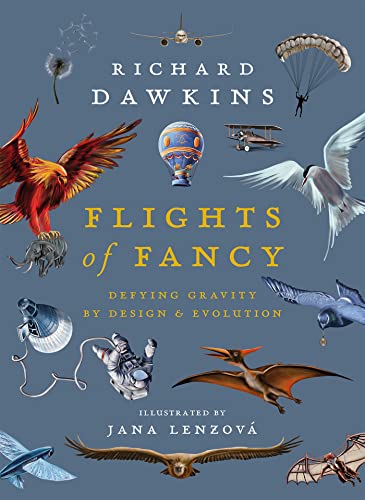
Ok this is my favorite non fiction book this year. Now the fact that I was a pilot from 1964 to 1984 colors my opinion quite a bit but this book while expensive even for kindle (it is a kindle unlimited title so far cheaper that way) it is a book that is full of beautiful illustrations and I have put the $30 version on my Xmas list highly recommended
51lDK1ErR2L.jpg

 
I am about 3/4 of the way through Jo Walton's An Informal History of the Hugos - - -1953-2000.
It is based on her TOR.com column and duplicates much of it. I implied earlier that I had read it. In fact I sampled the contents from the TOR column, but find it tedious to sit at a terminal and read a book length content so went out and got the book so I could sit or lie down and consume the whole magillah.
I did read her What Makes This Book So Great, which contains her enthusiasms about many of the same books mentioned here.
There is a list of each year's nominees and winners, in all catagories. The author (I'll call her Jo from here on) decided to cut off the years of coverage because the end on the millenium seemed an appropriate date. Also, Jo was starting to publish and it just seemed inappropriate to comment on an awards process where she herself was becomeing involved.
There are many striking features. Jo herself did not read a fair number of the selections. Going way back, some were hard to find, some just sparked no interest either due to reputation or her own previous experience with the authors. She comments on the novels and much of the other content briefly, singling out a large number of titles for longer analysis and personal reaction.
As someone who has been reading even further back than Jo, (but of course at nothing like her depth) I found of course that I disagreed about a fair number of he reactions. She states, with good humor in her discussions that her opinion is often in the minority. But she very much knows of what she speaks.
All of the other major awards are mentioned, often including their lists of nominees, first the Nebulas and then the Locus, Intl. Fantasy awards, Campbell and others as appropriate. Of course that adds to the bulk of coverage as the years go on and the awards multiply. It does illuminate (along with the commentary) the way multiple sources felt about what was being published.
A huge feature is to comment on the sometimes "interesting" choices and omissions. In this she is aided by long reactions by notable (and unknown) commentators, mostly from the original TOR postings. Comments from the peanut gallery might seem less interesting, but when you get long essays by Gardner Dozois and Rich Horton, as well as other recognizable names, the depth of coverage is almost overwhelming. Dozois and others are particularly interesting and valuable in their coverages of the nominees and what was published (and left out) in shorter form: novella, novelette and short story.
In addition to the fun of reading people writing about what they enjoy, this book has sparked a significant personal reaction. Titles that I barely remember. Books that I did not know of by authors that I loved or were perhaps strangers. Titles that I knew of but did not previously read. Short stories that I often own in collections stuffed upstairs that I may have read.
I was actually about a third of the way through when I went back to the start and began writing down a list. There are about 40 on it now, many are short stories. I am lucky in that I have direct access to one of the greatest public libraries in my country and they do not throw away old stuff. Also have borrowing access to almost every academic and public library in the state. There is little that I cannot find.
This run on post will be of little interest to those who find older stuff irretrvevably dated or for whom freshness is a virtue. Or who have more than they can consume now without delving retro. Others of my vintage may have covered older stuff to their satisfaction. - or not need more recommendations. I found myself enthused to go and consume many, many things from the past.
 
Last edited:
Thank you SP.
I had read Beard's SPQR: A History of Ancient Rome, so I was interested in what she had to say about more current affairs.
So I looked her up. According to the article linked below, from my favorite journal, she integrates her knowledge of history to current affairs very effectively. Interestingly she has shared a podium with both Boris Johnson and Hillary Clinton, discussing the content that she covers in the book and other topics.

LINK

I ordered it.
 
I am about 3/4 of the way through Jo Walton's An Informal History of the Hugos - - -1953-2000.
It is based on her TOR.com column and duplicates much of it. I implied earlier that I had read it. In fact I sampled the contents from the TOR column, but find it tedious to sit at a terminal and read a book length content so went out and got the book so I could sit or lie down and consume the whole magillah.
I did read her What Makes This Book So Great, which contains her enthusiasms about many of the same books mentioned here.
There is a list of each year's nominees and winners, in all catagories. The author (I'll call her Jo from here on) decided to cut off the years of coverage because the end on the millenium seemed an appropriate date. Also, Jo was starting to publish and it just seemed inappropriate to comment on an awards process where she herself was becomeing involved.
There are many striking features. Jo herself did not read a fair number of the selections. Going way back, some were hard to find, some just sparked no interest either due to reputation or her own previous experience with the authors. She comments on the novels and much of the other content briefly, singling out a large number of titles for longer analysis and personal reaction.
As someone who has been reading even further back than Jo, (but of course at nothing like her depth) I found of course that I disagreed about a fair number of he reactions. She states, with good humor in her discussions that her opinion is often in the minority. But she very much knows of what she speaks.
All of the other major awards are mentioned, often including their lists of nominees, first the Nebulas and then the Locus, Intl. Fantasy awards, Campbell and others as appropriate. Of course that adds to the bulk of coverage as the years go on and the awards multiply. It does illuminate (along with the commentary) the way multiple sources felt about what was being published.
A huge feature is to comment on the sometimes "interesting" choices and omissions. In this she is aided by long reactions by notable (and unknown) commentators, mostly from the original TOR postings. Comments from the peanut gallery might seem less interesting, but when you get long essays by Gardner Dozois and Rich Horton, as well as other recognizable names, the depth of coverage is almost overwhelming. Dozois and others are particularly interesting and valuable in their coverages of the nominees and what was published (and left out) in shorter form: novella, novelette and short story.
In addition to the fun of reading people writing about what they enjoy, this book has sparked a significant personal reaction. Titles that I barely remember. Books that I did not know of by authors that I loved or were perhaps strangers. Titles that I knew of but did not previously read. Short stories that I often own in collections stuffed upstairs that I may have read.
I was actually about a third of the way through when I went back to the start and began writing down a list. There are about 40 on it now, many are short stories. I am lucky in that I have direct access to one of the greatest public libraries in my country and they do not throw away old stuff. Also have borrowing access to almost every academic and public library in the state. There is little that I cannot find.
This run on post will be of little interest to those who find older stuff irretrvevably dated or for whom freshness is a virtue. Or who have more than they can consume now without delving retro. Others of my vintage may have covered older stuff to their satisfaction. - or not need more recommendations. I found myself enthused to go and consume many, many things from the past.

I'm over 450 pages into Walton's book, dipping into it occasionally rather than reading it through. As with What Makes this Book So Great, Walton doesn't think of herself as a critic, yet she provides interesting analysis of what she likes. Unfortunately for me a lot of what she likes are series and she's a voracious reader who reads very quickly -- check out her Tor.com monthly readings if you wonder just how much she can read in a month. Anyway, this one mostly focuses on stand alone novels and shorter works. I've already pulled out and read something she reminded me of -- Murder and Magic by Randall Garrett -- and I'm tempted to create a list like you have and see what I can tick off in the coming year.
 
Mary Beard, Women and Power. Thank you Stephen Palmer.
Read it. A little disappointing but worthwhile. And it is certainly worth 104 (small) pages, which reprint two essays from the London Review of Books.

When I looked up the title., I found commentary about Beard's interactions with Boris Johnson, Hillary Clinton, Angela Merkle and the behaviors of Donald Trump. Those all exist, but are not in the book. (Aw shucks). She is a public intellectual, often appearing on the BBC. I guess that I was looking for current connections a little too eagerly.

I am not any sort of classicist, but I am a history nerd. So the analysis of misogyny & female disempowerment that linked those trends to the wellsprings of western culture were interesting and (for me) to the point. Looking at current society Beard, mostly, in the first essay, talks about women and leadership now, (with classical links.)
In the second essay she pins down a continuity to today's politics.

She sees change as happening. But she is a realist. Attitudes and assumptions are deeply ingrained. Don't hold your breath.
 
Last edited:
I normally don't report on a book until I've finished it. I take exception here to say that I'm currently reading Poilu: The World War I Notebooks of Corporal Louis Barthas, Barrelmaker, 1914-1918, as translated by Edward M. Strauss. I spotted this title soon after acquiring my Paperwhite, and immediately added it to my want-to-buy list. Soon afterward it had a temporary, substantial price drop. That's when I bought it.

It's a quite impressive account of the War to End All Wars as experienced by the common soldier. You'll find no talk of grand strategies here, no glorious charges, though occasional accounts of honest bravery crop up from time to time. It can seem monotonous at times, because that's how life in the trenches was, a horrific monotony. That said, it's never dull.

I find it interesting that I feel a certain kinship with Barthas, if only in that he and I share the same general outlook on quite a number of, but not all, things. That said, he is easily the better man. (But then, I'm a pretty low bar.) I can't see myself, even in my long-ago prime, enduring the hardships he endures on an almost daily basis.

(The last time I noticed a similarity between a book character, this time fictional, and myself, it disturbed me so much I DNF'd the book. (The character was rather unsavory.) No, I'll not mention that book's title, though it is an acknowledged classic.}

At any rate, I recommend Poilu for those who enjoy military history, WWI in particular.
 
Not usually a big reader of factual history, but this one is quite interesting.

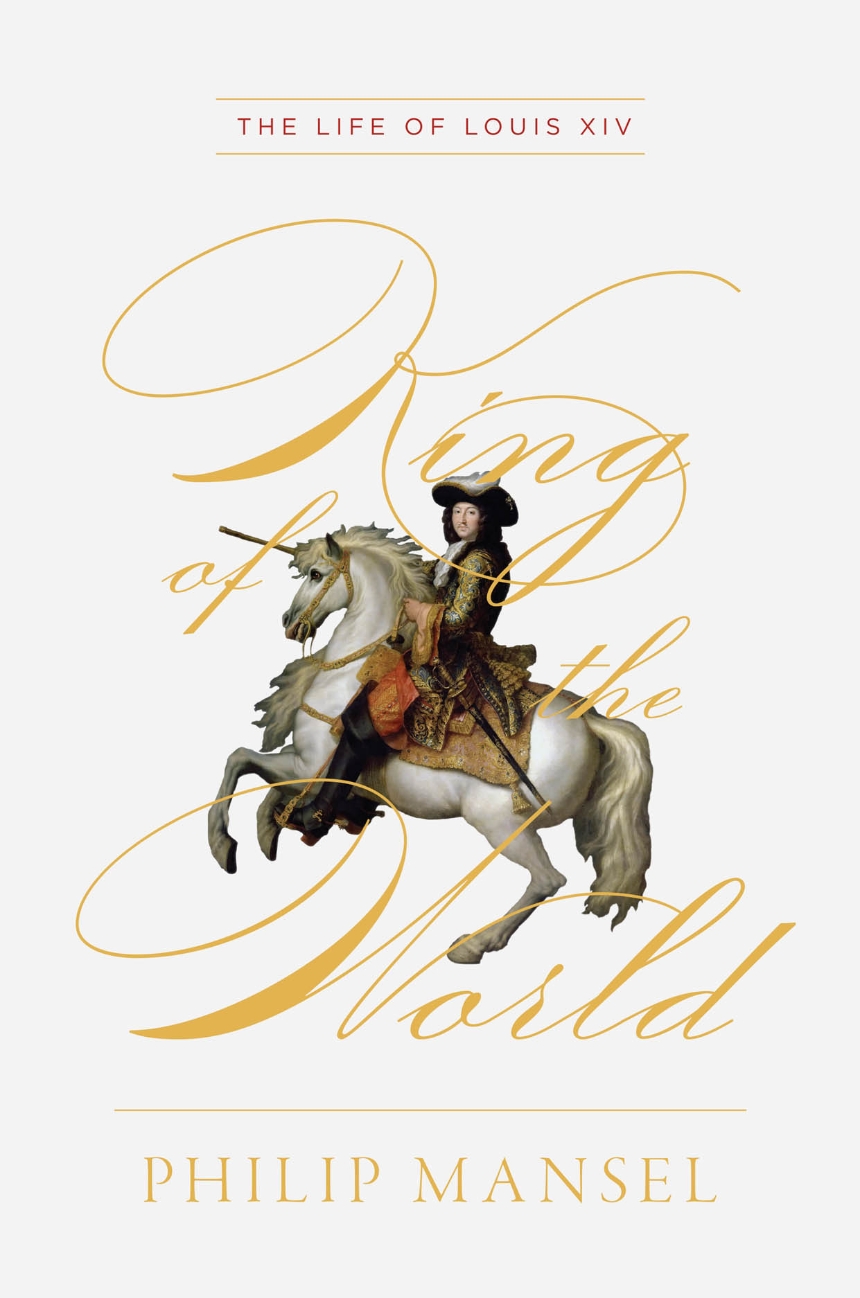
Read this one (King of the World: the Life of Louis XIV by P Mansel) a while ago when it was published and it was very good indeed; below I enclose my Goodreads review from 2019; while not quite actively reading any non-fiction now, from 2021 releases I highly recommend Dan Jones' Powers and Thrones A New History of the Middle Ages and Hero of Two Worlds (Marquis de Lafayette in the Age of Revolution) by M Duncan

Goodreads review for the Mansel book:

This was an excellent book and quite better than I expected; due to the vastness of its subject (the Sun King's reign lasted 72 years and for 50+ of them he was in true control at least in so far the administrative and technological development of the era allowed it) the book feels rushed here and there and I would have liked more on the crucial mid 1670'd to the mid 1680's in which he transformed from a young, bright, warlike but enlightened monarch to the one who persecuted, murdered and expelled the Huguenots and the Jansenists, impoverished his people who died in mass famines due to relentless war against almost all of Europe, war in which the armies under close control of the king burnt and pillaged their way through Western Germany, Northern Italy and Belgium - which was quite shocking for the day as after the 30 Years War, the rulers of Europe felt that war should be limited and even in the invasion of Holland in the early 1670's the king was much milder - and also which invited brutal retaliation when the fortunes of war turned against France.

Written with skill and reading almost like a novel, while pointing out various things connecting the era of Louis the XiV to today (not only Versailles which is the obvious inheritance of the modern era, but also the fact that the borders of France which were much enlarged under his reign remained pretty much the same until today with the exceptions of a few Belgian towns lost in the Spanish succession war and a few others, I really liked this one and highly recommend it
 
Last edited:
At 0435 this morning I concluded an initial read of Dana Stevens' recently published Camera Man: Buster Keaton, the Dawn of Cinema, and the Invention of the Twentieth Century. An enjoyable read, despite occasionally covering topics only nebulously related to the submit matter. For instance, Stevens devotes much space to Alcoholics Anonymous, an organization Keaton, while alcoholic, had no connection with whatsoever. While the beginnings of AA are interesting in their own right, imo they deserve little more than passing mention here. Those pages might have been better spent discussing those of Keaton's early shorts and features that the author chooses to give short shrift. But again, it's a worthwhile read for anyone interested in the subject.
 
Really enjoying this one. Very highly recommended

51r0q6nc-8L.jpg

Britain in seven burials Kindle Edition
by Alice Roberts (Author)
From the publishers blurb
An extraordinary exploration of the ancestry of Britain through seven burial sites. By using new advances in genetics and taking us through important archaeological discoveries, Professor Alice Roberts helps us better understand life today.

‘This is a terrific, timely and transporting book - taking us heart, body and mind beyond history, to the fascinating truth of the prehistoric past and the present’ Bettany Hughes

We often think of Britain springing from nowhere with the arrival of the Romans. But in Ancestors, pre-eminent archaeologist, broadcaster and academic Professor Alice Roberts explores what we can learn about the very earliest Britons, from burial sites and by using new technology to analyse ancient DNA.

Told through seven fascinating burial sites, this groundbreaking prehistory of Britain teaches us more about ourselves and our history: how people came and went and how we came to be on this island. It explores forgotten journeys and memories of migrations long ago, written into genes and preserved in the ground for thousands of years.

This is a book about belonging: about walking in ancient places, in the footsteps of the ancestors. It explores our interconnected global ancestry, and the human experience that binds us all together. It’s about reaching back in time, to find ourselves, and our place in the world
 
And what is not to like about a book about BOOZE in this case mostly Rum and the mixed drinks of the subtype TIKI lots of fun facts about fun drinks the foundation of TIKI once you get past the fresh fruit juice and different types of rum is that TIKI is FUN
51DPJ2dR1TL.jpg


At 0435 this morning I concluded an initial read of Dana Stevens' recently published Camera Man: Buster Keaton, the Dawn of Cinema, and the Invention of the Twentieth Century. An enjoyable read, despite occasionally covering topics only nebulously related to the submit matter. For instance, Stevens devotes much space to Alcoholics Anonymous, an organization Keaton, while alcoholic, had no connection with whatsoever. While the beginnings of AA are interesting in their own right, imo they deserve little more than passing mention here. Those pages might have been better spent discussing those of Keaton's early shorts and features that the author chooses to give short shrift. But again, it's a worthwhile read for anyone interested in the subject.
I remembered this book from a joint review in the NYT of two books about Keaton. The other:
BUSTER KEATON
A Filmmaker’s Life

By James Curtis
sticks more closely to Keaton's life. It seems that they both cover his brilliance and role as an innovator.
Here's the NYT LINK
 
Really enjoying this one. Very highly recommended

51r0q6nc-8L.jpg

Britain in seven burials Kindle Edition
by Alice Roberts (Author)
From the publishers blurb
An extraordinary exploration of the ancestry of Britain through seven burial sites. By using new advances in genetics and taking us through important archaeological discoveries, Professor Alice Roberts helps us better understand life today.

‘This is a terrific, timely and transporting book - taking us heart, body and mind beyond history, to the fascinating truth of the prehistoric past and the present’ Bettany Hughes

We often think of Britain springing from nowhere with the arrival of the Romans. But in Ancestors, pre-eminent archaeologist, broadcaster and academic Professor Alice Roberts explores what we can learn about the very earliest Britons, from burial sites and by using new technology to analyse ancient DNA.

Told through seven fascinating burial sites, this groundbreaking prehistory of Britain teaches us more about ourselves and our history: how people came and went and how we came to be on this island. It explores forgotten journeys and memories of migrations long ago, written into genes and preserved in the ground for thousands of years.

This is a book about belonging: about walking in ancient places, in the footsteps of the ancestors. It explores our interconnected global ancestry, and the human experience that binds us all together. It’s about reaching back in time, to find ourselves, and our place in the world
On my list now!
 
Currently reading David Abulafia’s The Boundless Sea: A Human History of the Oceans. I read and enjoyed the author’s book on the Mediterranean many years ago. This is just as good, though long, so it will take me several weeks to get through.
 
9780812988307


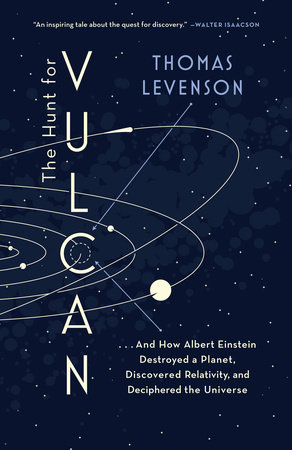
An interesting account of the search for planet Vulcan, thought to lie between Mercury and the sun, before Einstein's theory of general relativity changed everything.
 
I'm currently reading a short compilation of free sources on the ecological concept - Climax Community. A climax community is an ecological term used to denote an ecosystem or community of plants, animals, and other living organisms that has achieved equilibrium or become stable. Quite an interesting read.

7192753.jpg

Apart from that, I'm also reading The Buddha and the Borderline by Kiera Van Gelder. The book provides a peek into the mysterious and debilitating condition, an unblinking portrayal of one woman's fight against the emotional devastation of borderline personality disorder. Excellent read - highly recommend.
 

Sponsors


We try to keep the forum as free of ads as possible, please consider supporting SFFWorld on Patreon


Your ad here.
Back
Top