Non Fiction being currently read

Finished Chanel's Riviera: Glamour, Decadence, and Survival in Peace and War, 1930-1944 by Anne de Courcy.

Quite interesting but scattered and would have been much better with a tight edit; having Coco Chanel's life in general and her Riviera period (1930's and early 1940's) as a skeleton, the book is actually about Riviera as a home to celebrities (aristocrats, writers, artists etc) and their lives and affairs in the 1930's and early 1940's. Lots of tidbits about lots of famous people and lots of cool anecdotes and interesting personality sketches and fragments and of course extending beyond Riviera to follow various people in various settings, but the scattered nature of the book makes it more like a collection of magazine articles than a non-fiction book with a theme.
 
Not yet being "Currently Read". However there seems to be a strong interest here and even more on the non-genre reading thread for works that involve war, conflict and what humans do to each other in, before, and after war..
Todays NYT Book Review has a section "World War II Revisited" with short reviews of four books.

Nimitz At War by Craig Symonds. Quoting, "Symonds focuses on some notable qualities of Adm. Chester Nimitz, the senior (US) Navy officer in the Pacific in WWII." Mentioned are his ability to encourage rattled members of his staff after taking command shortly after Pearl Harbor, his ability to weigh ambiguous data, and his taking chances against his basically cautious nature.

Gavin at War. (Diary) Gavin dropped out of school at at 13, but after enlisting studied and was admitted to West Point. "He made brigadier general at the tender age of 36." Notable in the review was his skeptical assessments of his comrades and of the US Infantry's capabilities.

A Machine Gunner's War by Ernest Andrews Jr.
Notable is his account of the battles, survival and the not predictable experience of being on the line.

Prisoners of War: Europe, 1930-1956. by Bob Moore.
Of the 5.7 million Red Army soldiers captured in WWII 3.3 million died. "Russians (also) treated everyone badly, but most striking their own returned prisoners,"
Closing quote.
"Unfortunately much of it reinforces the hard lesson that there is no end to the ways in which human beings can abuse each other."
Here are the longer reviews.
LINK
 
Last edited:
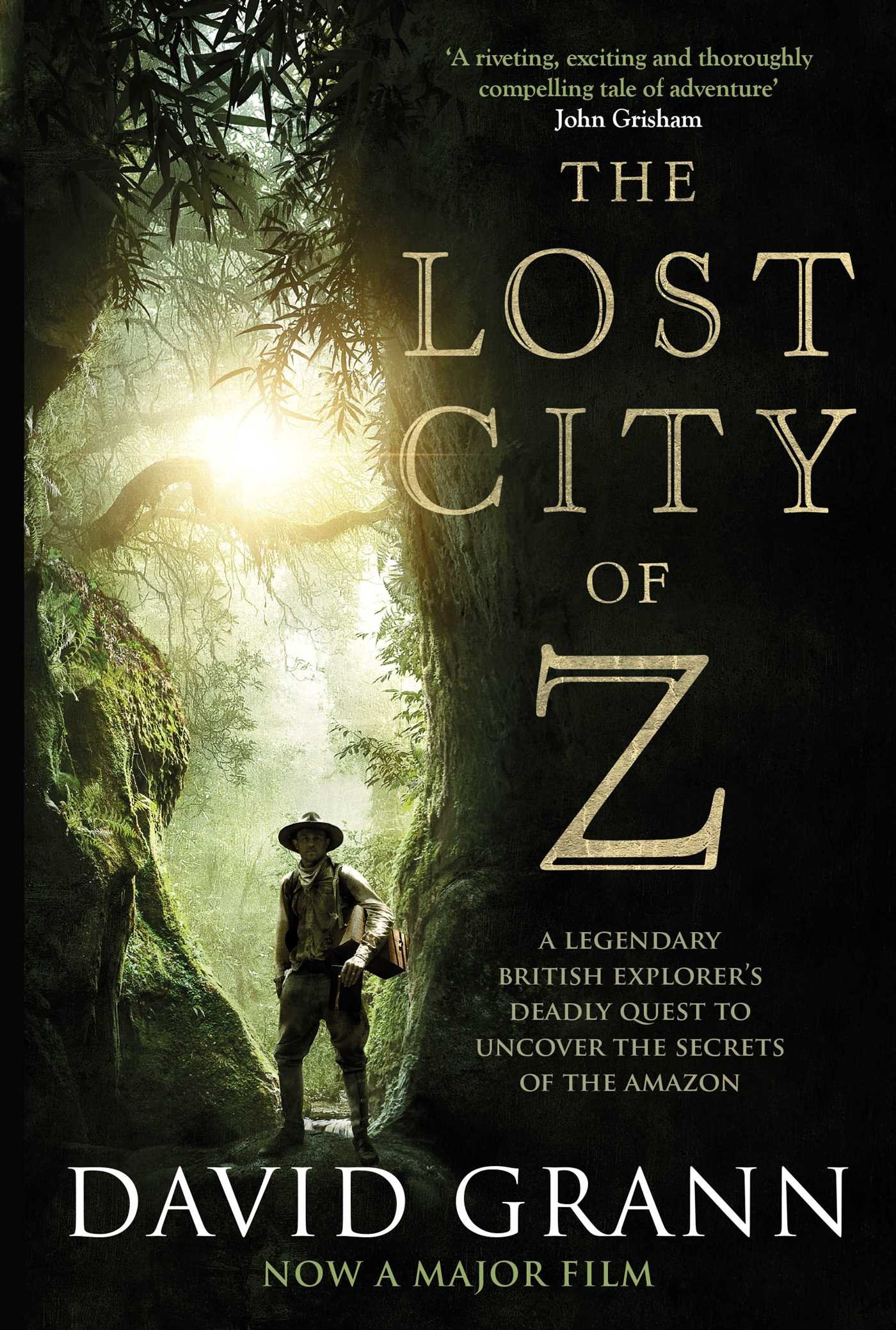
The Lost City of Z

81qF4q8nxqL.jpg


Fascinating read this, which tells the true story of Percy Harrison Fawcett and his obsession with a lost city hidden deep in the Amazon. Interspersed with this is the author’s own research, preparation and eventual journey to the Amazon to once and for all determine the fate of Fawcett’s final expedition, and the truth about the lost city he dreamed of.

The commentary took me back to a time when the world still contained undiscovered places, when anthropology was still wrapped up in notions of racial superiority, and when the supernatural helped to come to terms with the as yet unexplainable. Fawcett frequently corresponded with Arthur Conan Doyle, who drew on Fawcett’s Amazonian travels for the setting of his 1912 work The Lost World. Even the former president, Theodore Roosevelt, was swept up in the wave of exploration, along with expeditions mounted by newspapers and millionaires; the members of which suffered from starvation, parasite infestations, infections and hostility from the local tribes.

Overall, a very good read. I’ve seen the film and still have the DVD, which I’ll dig out for a more enlightened watch.
 
Currently reading Otherlands: A Journey Through Earth's Extinct Worlds by Thomas Halliday. Very interesting, but one may need more than a passing familiarity with biological taxonomy to keep up. The author is very descriptive, setting the scene, lavishly describing some of the animals, plants, and geography while treating others as though they are household names (and I'm just a layman, so some words are just big empty holes in my brain with no meaning and the kindle dictionary doesn't have the definitions for most of them if I want to quickly look up without abandoning the page I'm on to go down the rabbit hole looking for the info). I've had a lot of distractions reading this one, so I may have to re-read at some later point after I'm done.
 
At 1635 this afternoon, 21 Sep 2022, I concluded an initial read of Jan Swafford's Mozart, the Reign of Love, hardback print edition. This has been my kitchen-table read since the turn of the year. It's too big and bulky to read lying down, which is how I do almost the totality of my "serious" reading. Consuming it two-three pages at a sitting is no hindrance in this case. I've read one other Mozart bio, and numerous articles on him and/or his music. This book is far and away better than that other Mozart bio, which bordered on incomprehensible at times. On the other hand, I far prefer Swafford's Beethoven: Anguish & Triumph, read some years ago. Interesting as much of Mozart's life is, Beethoven is, for me, one of the most utterly fascinating individuals to have walked the face of the earth. Too, while I greatly enjoy much of Mozart's musical output, Beethoven has long been my musical god.

That aside, a good chunk of Mozart RoL is devoted to discussion of individual works. I found this tedious at times. He does this in Beethoven A&T too, though not as extensively. There, I had no issue with it, possibly because I'm quite familiar with most of B's output, so can hear individual passages in my head as Swafford describes them. I'm familiar with much of M's music too, but not always to the same degree. BTW, in both books these musical descriptions are relatively nontechnical in nature. A solid grounding in music theory is not needed.

It might seem as if I'm damning Mozart, Reign of Love with faint praise. I am not. It's a well written, comprehensive biography. I'm glad to have read it. It's simply not, for me, in the same league as his Beethoven bio.

(I am extremely lucky in finding Beethoven: Anguish & Triumph Kindle edition on sale for $3.99US some months ago! I scooped it up without hesitation. It is, to date, the only book I own both digitally and printed, discounting a few "classics" DL'd free off Project Gutenberg to give me alternative translations.)
 
Last edited:
At 1457 this afternoon, 28 Sep 2022, I concluded an initial read of the Project Gutenberg free ebook When the Movies Were Young, by Linda Arvidson, Mrs D.W. Griffith. Written in 1925, Mrs Griffith chooses to end her personal reminiscences with the 1915 release of Birth of a Nation, in a real sense when film came of age as a serious, respectable (and highly profitable) entertainment/art. What we read about is the time before that, when movie making was a much looser, more casual affair that didn't take itself over seriously. When movie cast and crew were, often as not, stage/vaudeville performers out to tide themselves over between "legit" engagements. When a film could be made in only a few days. As someone with a long held interest in silent cinema, I found the book entertaining and informative. As a free download, it's an obvious recommend.
 
At 1217 today, 10/10/2022, I concluded an initial read of International Cartoons of the War, by H. Pearl Adam. Published 1916, the title of course refers to WWI. It's a short, quick "read" once past the introduction. Sad to say, it is flawed on the Paperwhite, being mostly captioned illustrations as it is. A good number of images don't reproduce well enough to fully enjoy. A few I couldn't decipher well enough to grasp their intent. When all was said and done, I returned to Project Gutenberg and opened the book's Online version in my browser, which solved its Kindle image and formatting issues. If any of these images were originally colored, as I suspect a few might have been, that has been lost either during the original printing process or while scanning for e-book issue. It's an okay acquisition for those interested in the subject.
 
Last edited:
I am traveling for the holidays. The books that I chose to travel with on the plane and at my daughter/grandkids house were the last (fifth) volume of the second Amber series by Zelazny, described elsewhere and We Don't Know Ourselves: A Personal History Of Modern Ireland, by Fintan O'Toole.I ordered it from the library as I am both a history and political geek and because the editors of the New York Times picked it as one of the ten best books published in 1922. Not best of a certain category, but of all the books published (presumably in English in the USA) this year.
The years covered are 1958 through 2018. The author was raised a poor kid, in Crumlin, a mostly working class development outside Dublin, that was substantially modern in that unlike 3/5 of Eire at the time he was raised, it had indoor plumbing. His experiential viewpoint, through attending school run by the Christian Brothers, who served the non-elite, eventually attending university and watching, knowing, interviewing the families, mistresses, political cohorts and many of the individuals who made the news and the headlines over the years is fascinating reading.
But it is a history, both social and political. Central to much of the story is the Catholic Church, the arbiter of morals, politics and what was publicly said. The other large coverage of the country is the politicians. Descriptions of media, particularly broadcast, are used to show what was and what was not said publicly.
O'Toole expresses admiration for many church and political figures. But the constant is the description of a conspiracy of silence which allowed the illusion of morality among both institutions. Don't like the rules of Birth Control? Huge numbers didn't, but avoidance was practiced by any who could afford it while women who were too poor to find ways around the "morality" were targeted. Descriptions of child abuse by clergy (covered up) and mouthing of moral Catholicism by personally corrupt politicians is a constant.
O'Toole interviews IRA as well as Northern Protestant terrorists about murders, opinion and individuals.
The personal view of the events on the history and nature of the society is certainly what attracted the NYT reviewers. There is a charm to the work, although the constancy of the sad silence about "What everyone knows" is almost overpowering.
Personally, for me, a high note of moral Irish behavior is when Bernadette Devlin, member of The British Parliament is ruled out of order as she tries to respond to the British Home Secretary who has just stated the lie that British troops who killed 31 peaceful demonstrators, most of whom were running away, (aka "Bloody Sunday") had been fired upon. No Brits were shot or injured.She ran up the center isle of Parliament shouting, "If I am not allowed to inform the House of what I know, I'll inform Mr. Maudling of what I feel."- and hit him three times in the face.

edit: The last eighth of the book discusses the settlement between the Republic, the Brits and the extreme partisans who all realized that violence and repression were not working to achieve anyone's goals. Almost uniquely in the book, the author gives credit to politicians facing the truth and acting on it.
Also covered is the the "Celtic Tiger", the economic boom that at first drew the admiration of the world and then due to the overextension of banks, the inability of the government to deal in reality and the fact that most of the boom left the island, led to a massive collapse. As throughout the book, the author characterizes much of the problem to be that those in powers operated on wishful thinking rather than reality.
There seems to be a happy ending in that the economy has somewhat stableized and reality seems to be prevailing.
My stepmother left Ireland. I think that she would be glad.

Quote Reply
Report Edit
 
Last edited:
1) Blood Telegram by Gary J Bass. Not the regular fiction or a very common genre of reading. It is a political uncovering and writing of Nixon's and Kissinger's involvement and support to Pakistan during the years of Bangladesh's liberation struggle. Well dug and written if one's interested.
2) Father Comes Home from the Wars by Suzan-Lori Parks. Heart touching and a beautiful read. It is a story about the dilemma between love and loyalty, freedom and enslavement. It talks in length about Black confederates and PSTD.
3) Our Moon has Blood Clots by Rahul Pandita. This is a story of a sect/group called the Kashmiri Pandits in India who had to desert their homeland to escape execution. A very well written personal account carrying the baggage of a double migration.
 
Reading The Life of Crime by Martin Edwards. Over 700 pages, several indices and 622 pages of text and notes. Follows the history of crime/mystery/detective stories by starting each chapter focusing on one author then expanding to discuss other authors and works of similar interest. I'm only about 70 pages in and one thing I've noticed is that for a book that refers to and draws from Julian Symons' Bloody Murder, so far Edwards offers only the slightest critical insight, while Symons had a definite point of view. It was fun to argue with some of Symons' opinions, but Edwards does reference a lot of works and authors I've never heard of or only heard of rarely.
 
At 2030 yesterday evening, 10 Feb 2023, I concluded an initial read of the non-fiction title Shiloh and the Western Campaign of 1862, Kindle Edition, by O. Edward Cunningham; J.D. Joiner & T.B. Smith editors. The two editors are a critical inclusion, as this Amazon quote explains:

"Edward Cunningham, a young Ph.D. candidate, researched and wrote Shiloh and the Western Campaign of 1862 in 1966. Though it remained unpublished, many Shiloh experts and park rangers consider it the best overall examination of the battle ever written. Indeed, Shiloh historiography is just now catching up with Cunningham, who was decades ahead of modern scholarship. Now, Western Civil War historians Gary Joiner and Timothy Smith have resurrected this beautifully written, deeply researched manuscript from undeserved obscurity. Fully edited and richly annotated with updated citations and observations, original maps, and a complete order of battle and table of losses, it represents battle history at its finest."

It's a good read for those with an established interest in the U.S. Civil War, but may contain too much technical data for the casual reader. As for myself, due to when and where I was born, and the Civil War Centennial, which was treated as a big deal by all and sundry for four solid years, occurring when I was young and impressionable, I was a Civil War Nerd for quite some time. I eventually moved on to other things, but retain a mild fondness for the topic. I still possess a smallish but not negligible USCW library. This is its first addition in decades, except for a couple of free Project Gutenberg downloads I've not yet read.

I should point out that a not-insignificant percentage of the book is devoted to End Notes. For whatever reason, I didn't bother clicking on these while reading the main narrative. Once that ended, my first thought was to skip the End Note section. My second thought was to skim it, which is what I did. As it turns out, I spent hours reading pretty much all of them except those that are obviously nothing more than source citations. I retain enough Civil War savviness to forgo referring to the main text to make sense of those End Notes.

Speaking of Shiloh, it was the closest major U.S. Civil War battlefield to the town I grew up in. It remains closet, despite a change of address. I visited it a number of times during my youth, and at least once in early adulthood. I also visited Forts Donaldson and Henry, which this book covers (but not in great detail). (Fort Henry can be visited in only a loose sense, unless this had recently changed.) As a lad, I witnessed the Centennial reenactment at New Madrid MO, also part of the USCW Western Campaign.
 
  • Like
Reactions: Raf
I have a trilogy queued up in my "To Be Read" pile that deals with the civil war in Tennessee specifically.

Written by Cameron Judd. "The Mountain War Trilogy". Linked it down below for you, D&C.


I don't know anything about the author other than the subject looked interesting enough to add to my list.
 
At 0735 this morning, 17 Feb 2023, I concluded an initial read of Russell Martin's Beethoven's Hair. A non-fiction work, its focus is the lock of hair taken from Ludwig van Beethoven's head, soon after his passing, by Ferdinand Hiller, a young musician introduced to the still-alive Beethoven only a few days prior. The book covers its topic in an interesting way. We get a chapter devoted to Beethoven's early life, followed by a chapter relating what is known about the lock in the early years following its taking, followed by a chapter relating to the lock under its most recent / current ownership, a chapter on Beethoven a bit later in his life, and so on. Much time is spent on the still not totally solved mystery of who delivered the lock into the hands of a certain physician in Denmark in 1943. It is thus a bit of a detective story. We also get what I assume is the latest testing on the hair, which reveals that the most likely cause of B's various ailments, hearing loss included, was a highly excessive amount of lead in his system. Before beginning the book, I assumed my report would label it something only those with a keen interest in Beethoven will enjoy. Instead, it now seems to me that a good many general readers will enjoy it too.
 
Last edited:
That's what I like about this thread - brings attention to books I otherwise wouldn't usually look at!

So yes: interesting one, D&S. I remember similar comments about Napoleon I's death being partly attributable to poisons (arsenic? cyanide?) in his wallpaper.... not quite James Bond, is it? :)
 
I'm officially in the midst of an initial read of Alexandre Dumas' The Three Musketeers. Between it and an aborted stab at The Count of Monte Cristo last year, I begin to suspect that Dumas is not my cup of tea. Yesterday afternoon, I felt a short break from Musketeers was needed. Something to clear my head. Something short and lighthearted.

I remembered a recent addition to Project Gutenberg. It is by its very nature short, taking me only about as long to read as it takes Steve Donaghue to complete War and Peace. As to lighthearted; well, one out of two ain't all bad. The title in question is Petition and Memorial of David Quinn, asking for the re-establishment of Negro slavery in the United States. Birth and death dates are not given for Mr. Quinn. His "active" dates are given to be 1850-1869. The petition was completed in 1866, not more than a year following the textbook end of the U.S. Civil War. To give the gentleman his due, he has a fine grasp of the English language, and a gift for gab. Otherwise, it's more or less exactly what you'd expect it to be, laid on thick and heavy. It was hard-going for me in spots. I doubt I could ensure a novel-length book so laser-focused on this topic. While glad it survives and is available for download by the public at large, I most emphatically do NOT endorse its message.

I suspect and hope that those who read Petition and Memorial do so for its historical value and as a reminder that "Those who cannot remember the past are condemned to repeat it."
 
At 1702 this afternoon, 02 Mar 2023, at the very tail-end of supper, I concluded an initial read of Bart D. Ehrman's Lost Christianities: The Battles for Scripture and the Faiths We Never Knew. This is not an attack on religion but a scholarly delving into different forms of Christianity that co-existed early on and how the group Ehrman labels "proto-orthodox" eventually won out, thus becoming Orthodox (as would any of the others had they come out on top). It relatedly discusses how religious texts used by these early sects came to be included in, or ejected from, what eventually coalesced into the New Testament.

A "traditional" paper book, this has been my Kitchen Table reading material for quite a long time. I read it during suppers, anywhere from a few paragraphs to a few pages at a sitting. Not ideal, but it survives such treatment better than would a long novel with complex plot advancement and character development. I was, without difficulty, able to comprehend everything Ehrman discusses, not always a given for me with books of this sort. I recommend it to anyone interested in the subject matter.
 
Last edited:
Enjoying tremendously The Man from the Future: The Visionary Ideas of John von Neumann” by Ananyo Bhattacharya
My favourite nonfiction book of 2022. I think that this is the third biography on von Neumann that I have read in the last ten years or so and it is by far the best and strongly recommended to all that enjoy traditional science fiction.

This is the publisher's bumpf
:

An electrifying biography of one of the most extraordinary scientists of the twentieth century and the world he made.


The smartphones in our pockets and computers like brains. The vagaries of game theory and evolutionary biology. Nuclear weapons and self-replicating spacecrafts. All bear the fingerprints of one remarkable, yet largely overlooked, man: John von Neumann.


Born in Budapest at the turn of the century, von Neumann is one of the most influential scientists to have ever lived. A child prodigy, he mastered calculus by the age of eight, and in high school made lasting contributions to mathematics. In Germany, where he helped lay the foundations of quantum mechanics, and later at Princeton, von Neumann’s colleagues believed he had the fastest brain on the planet—bar none. He was instrumental in the Manhattan Project and the design of the atom bomb; he helped formulate the bedrock of Cold War geopolitics and modern economic theory; he created the first ever programmable digital computer; he prophesized the potential of nanotechnology; and, from his deathbed, he expounded on the limits of brains and computers—and how they might be overcome.


Taking us on an astonishing journey, Ananyo Bhattacharya explores how a combination of genius and unique historical circumstance allowed a single man to sweep through a stunningly diverse array of fields, sparking revolutions wherever he went. The Man from the Future is an insightful and thrilling intellectual biography of the visionary thinker who shaped our century.
 
At 1406 this afternoon, 17 Mar 2023, I concluded an initial read of Yashka, My Life as Peasant, Exile and Soldier, the autobiography of Maria Botchkareva, Commander of the Women's Battalion of Death, as set down by Issac Don Levine not long after her escape from what would soon be known in the west as the Soviet Union. The Project Gutenberg e-book is transcribed from its initial 1919 publication. I do not know if it has seen subsequent publishings.

Maria led quite a life. Born in Tsarist Russia, she endured poverty and outright brutality throughout childhood and early adulthood. Her life changed for the better upon miraculously persuading authorities to let her join the Tsarist army as a front-line combat soldier during WWI, unheard of up til then. We witness her slowly (sometimes not so slowly) gain the respect of her comrades and grow to be accepted by them as just another soldier. A rather remarkable soldier, earning a number of medals for heroic acts. We witness the revolution, during which the Russian army disintegrated as an effective fighting force, first by changes made by the first successful wave of revolutionaries, worsened as the second wave, the Red Soviets, comes to power. It was during the first wave that Yashka, as she was known by the army, fed up with its inability to fight the German foe, talked the high brass into allowing her to form the "Women's Battalion of Death", the idea being to shame other troops into returning to their duty upon seeing women storm the enemy trenches. Alas, despite Yashka and the Battalion's best efforts, and they were commendable, the army's desire to fight was too far diminished, not helped by the growing influence of the Red element. Things go downhill quickly for Yasha, the Battalion, and Russia itself. The remainder of the book documents Yashka's resignation from the military and her struggles to stay alive in an environment where many want her dead, ending with her escape to the U.S. and England.

The book is well written by Levin, Botchkareva herself being semi-illiterate. This, combined with her fascinating life, make it an easy recommend.

ADDENDUM:
Since typing the above, research has revealed that Yaskha returned to Russia and was executed by the Reds in 1920 for activities in aid of the Whites.
 
Last edited:

Sponsors


We try to keep the forum as free of ads as possible, please consider supporting SFFWorld on Patreon


Your ad here.
Back
Top