Reading in Science Fiction, January 2022

51gHPdnSAwL._AC_UL600_SR600,600_.jpg

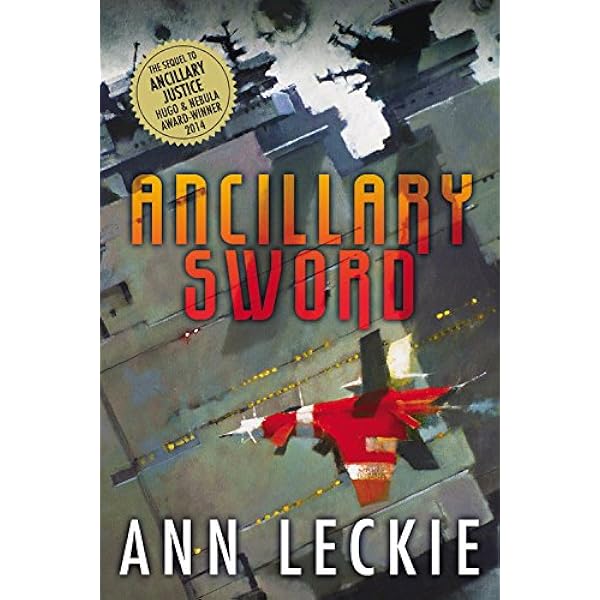
Read Ann Leckie's Ancillary Sword. The second in her Radach trilogy.
I am sure that these are not new to the bulk of readers here as the first in the series won the Hugo and the Nebula Best Novel award. Sword won the BSFA and the Locus novel award. I mentioned the first of them already & heard about both of them here. Using the google browser on my SFF link I found numerous comments. KatG actually rates the first as second best SF novel of the last decade. LINK
What was striking was the perspective of a basically inhuman intelligence becoming more human than almost all of the humans that she has to deal with. All this in an stratified racial/racist empire that is gradually falling apart. The development of the lead "Ancillary" is gradual. She has what in other contexts might be called human feelings to the extent that they are almost incomprehensible to the humans emeshed in their upbringing. She is in a position of official power so she can generally force some change in practice around her. KatG notes that she,at least in the first two books her desire is to overthrow the system, but to
Other aspects are the presentation of shared multiple consciousnesses, the oddest racist imperialist society that I have seen in years, the assumption of femaleness of all of the characters and technological weaponry used to good effect without any bushwa of explanation.
The sheer unthinking callousness of oppression and occasional genocide reminded me of British imperialism exemplified by the Amritsar massacre where more than a thousand peaceful Indian demonstartors were casually murdered for the crime of protesting against Brit policy. American atrocities and casual racism was no better, but I just recenly read about Amritsar.
Book two was highly rated. It was seen by some as a slightly weaker continuation of the series and by at least one (at TOR) as superior. One pan by a reader here was that the attitudes expressed were a little too reflective of current attitudes. I didn't see that as a problem.
For me it is one story, separated in publication but continuous in presentation.
I just started book #3.
 
Last edited:
I finished my second Robert Holdstock book in a row: Where the Time Winds Blow. A rather mystical take on time travel, I didn't enjoy it quite as much as Mythago Wood - which I read last month - although it had elements I preferred, such as the nicely detailed alien planet setting with its inscrutable, shifting ruins, and collection of five moons.

The story itself was divided into four distinct chapters - an exploration of the surface which sets the scene; a quest into the heart of the zone of ruins (where the eponymous time winds do indeed blow, and are considered pretty dangerous); a further episode of missions during which disaster strikes; ending with a more mystical journey into the essence of the planet and its inhabitants.

For me, the novel worked best in the second part. As with Mythago Wood, the exploration, possibilities, dangers and discovery are all rendered in intriguing detail and the characters are at their most interesting. The rest of the novel felt looser and less focused, with unnecessary rambling tangents. It's not all bad by any means though: although the characters show their datedness (heavily reliant on the usual male-centric military bs), there are odd moments of quasi-homosexual exposition peppered about, which does add unexpected depth. The descriptions of the complicated mating pattern of the local fauna are impressively thought out, as are the 'manchanged': tribes of physiologically-adapted humans who live in the planet's wilderness away from the sealed colonies of explorers.

It's considered to have a 'twist' ending but I didn't find it particularly revelatory as it deals with something to which we didn't know the answer anyway until that point. Pretty much the whole novel is based on speculation and the final reveal of the answer, given in a rather drawn-out ending sequence, is far from the best part of the book. It is good enough, though and it's well worth finishing. There are moments of real insight and vivid detail throughout Time Winds, as well as a fine touch with the prose and dialogue which seems to be rare for the time in which it was written.
 
I'm now reading Djinn City by Saad Z. Hossain.

It's an odd blend of sci Fi and fantasy, very entertaining.

I recently read Cyber Mage by the same author and a lot of the characters have similar names, I think maybe one's a "next generation" sequel of the other.
 
I finished up Shards of Earth by Adrian Tchaikovsky today. I freaking loved it. It's rare that I am blessed with good worldbuilding and good characters in the same novel. I am eagerly awaiting the sequels. Judging by the quickness of his writing, I'm sure they'll be out soon.

I was only halfway through Abaddon's Gate when I was tempted to pick this one up, so I've got to go finish that one.

Then I think I'll finish off the month with The 22 Murders of Madison May by Max Barry and Light Years From Home by Mike Chen.
 
Finished To Sleep in a Sea of Stars by Christopher Paolini. It was an interesting tale, and had good ideas and characters, but it went on too long.

Also did a quick read of Starship Coda by Eric Brown, the final short story in his Starship Seasons series. I listended to the four novellas late last year, though this wasn't included in the audiobook. A nice way to finish off with these characters. I've got Brown's Telemass Quartet and also the Kon-Tiki Quartet (written with Keith Brooke) on my to-read stack. I do love Brown's work.
 
but it went on too long.
Agreed (I didn't finish it)

Also did a quick read of Starship Coda by Eric Brown, the final short story in his Starship Seasons series. I listended to the four novellas late last year, though this wasn't included in the audiobook. A nice way to finish off with these characters. I've got Brown's Telemass Quartet and also the Kon-Tiki Quartet (written with Keith Brooke) on my to-read stack. I do love Brown's work.
Same! Actually you've reminded me to get back onto the Starship Seasons books, I read book one and that was it. Read the Telemass Quartet a while (actually bought the hardcover set for a good price) - reliably good reads.
 
As you all probably know, I am a big fan of Gena Marie Wylie's Kinsella Universe. Because it looked like a rehash of stories already told, I didn't read the 8th entry into the series. Corrected that mistake this month. Eagle and Kat provides a fine primer on what it takes to live in space as well as what constitutes an adult. No preaching (at least as far as I've progressed) but damned fine detail. Highly recommended!
 
Dissidence

517rYVgDhZL.jpg


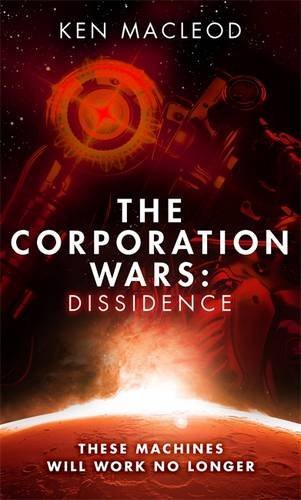
After dying in an Earth conflict then finding his consciousness awakened a thousand years later in a simulation light years from Earth, Carlos is conscripted to fight against terraforming robots that have recently attained sentience. As a concept this sounds pretty good. And it is, in parts. What it lacks is any likeable or fully-rounded protagonists, so much so that the sentient robots offer the only semblance of humanity. Coupled with this is a sometimes confusing background where Earth factions/corporations compete against each other for the locality’s resources, using the consciousnesses of ex-terrorists to operate their soldier robots. I liked the concept and the author can certainly write, but there just wasn’t enough in the story that I cared about, and consequently little to make me want to read the next book.
 
I finished up Shards of Earth by Adrian Tchaikovsky today. I freaking loved it. It's rare that I am blessed with good worldbuilding and good characters in the same novel. I am eagerly awaiting the sequels. Judging by the quickness of his writing, I'm sure they'll be out soon.

I was only halfway through Abaddon's Gate when I was tempted to pick this one up, so I've got to go finish that one.

Then I think I'll finish off the month with The 22 Murders of Madison May by Max Barry and Light Years From Home by Mike Chen.

I just started Cibola Burn. I like how they have a new cast of characters for each books (so far, except for the main characters). However, I am seeing a pattern in how the story lines go. I think I need to spread them out more. I read the last two in the last few months. Maybe one a year would work better.
so...
I picked up
The Doors of Eden by Tchaikovsky based on liking Elder Race.
 
Same! Actually you've reminded me to get back onto the Starship Seasons books, I read book one and that was it. Read the Telemass Quartet a while (actually bought the hardcover set for a good price) - reliably good reads.
I've read the first Telemass novel, but really need to get to the rest. Same for the Kon-Tiki Quartet. There's never enough time, and always too many books to choose from! It doesn't help that they aren't available as audiobooks - I'm still on my first paperback read of the year, so it may be a while!

Listened to a couple of shorter ones recently (both on audible plus):
Lost Planet Homicide by Larry Correia - I think this is based in the universe of another novel he's written/co-written, and it's an interesting place. Might have to look up and check out the novel.
Discordia by Max Berry - bit of a weird one with multiple agents from multiple parallel universe turning up to convert/subsume this Earth. All done very tongue-in-cheek, and while I wasn't enjoying it that much to start with, by the end it turned into a fun romp.

Currently on Station Eleven by Emily St John Mandel. Never read it, though know it's highly rated. So far can't argue with what I've heard.
 
53261640._SY475_.jpg


I read Defekt by Nino Cipri after seeing it was nominated for the Philip K. Dick Award this year. Derek is a loyal employee of LitenVärld, an Ikea-inspired homewares store. But after he's had his first ever sick day, he's put on the overnight inventory shift to find defective products - like walking chests with eye stalks and angry toilets! And his co-workers are four different versions of himself!

Sounds weird? It was, but it was also a great read. It's a coming of age story for Derek, an intelligent parody of corporate greed, and a speculative romp with wormholes and mini-parallel universes.

There is a previous novella set in the same world called Finna that I haven't read (yet), but apparently this can be read as a standalone.
 
On Basilisk Station
81vN9YaewLL.jpg

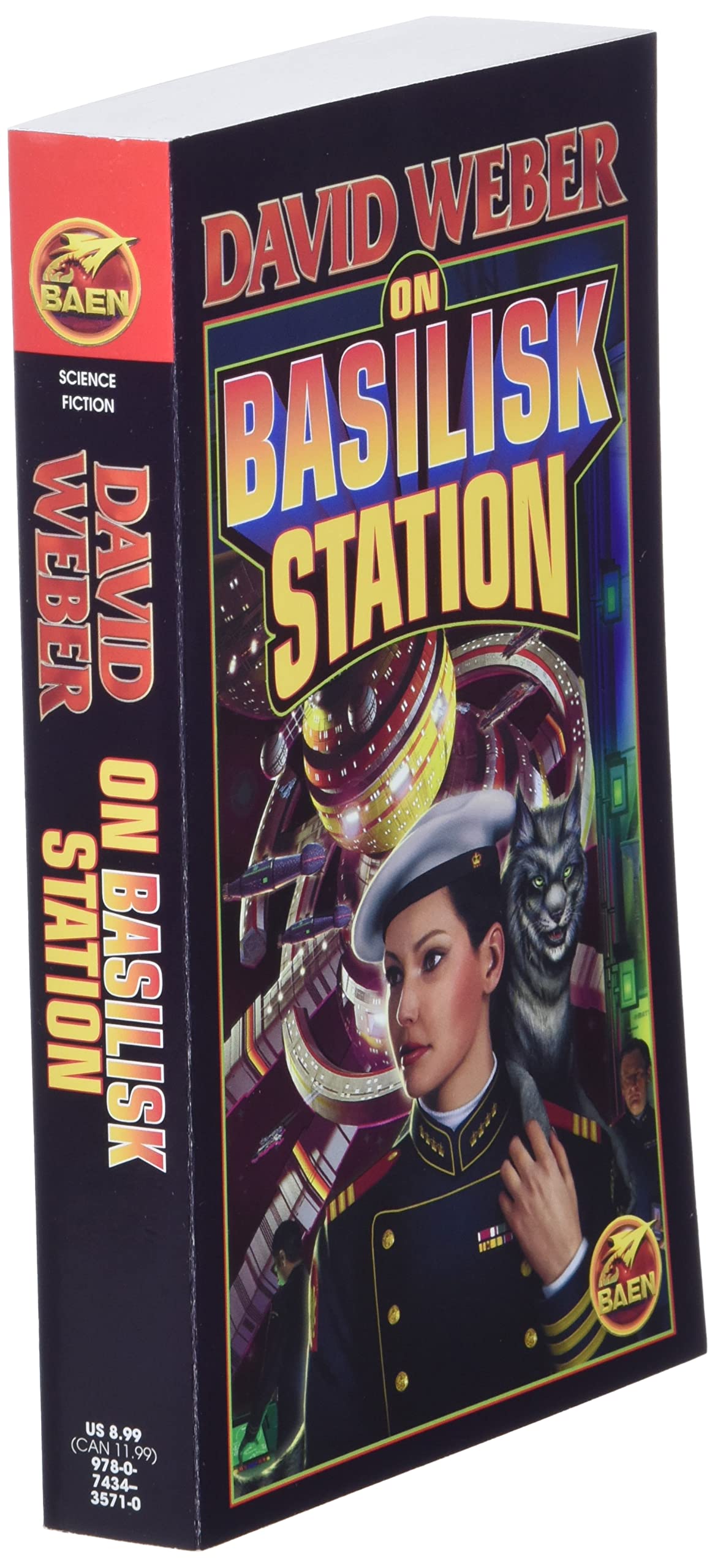
During her new command of a Manticoran fleet warship, Commander Harrington finds herself out of favour with naval command and is sidelined to Basilisk Station, a remote outpost of the kingdom. Determined to make the best of it and win back the confidence and respect of her crew, Harrington sets out to fulfil her duties to the letter, despite the almost impossible task of doing so with only a single ship under her command.

I thought On Basilisk Station was a pretty good read. Its Hornblower roots were clear to see: the young officer from a family of physicians; the skilled seamanship / command of both Hornblower and Harrington; the similarities in the organisation of the British Royal and Royal Manticoran navies. In contrast, Harrington is blessed with a sense of confidence I do not recall Hornblower ever possessing and, of course, this book is set in space. This mix of old and new works for the most part, combining futuristic technology with the traditions of a much older naval service. So, is On Basilisk Station Hornblower in space? For me, it did resonate with the Hornblower books, although it didn’t really matter one way or the other because the settings were so different. As a story, I enjoyed it, and I’ll probably continue with the series until (given what a few of you have said about how the series develops) I stop enjoying it.
 
Ancillary_Mercy_Cover.jpg

Unlike the first two in the series, there has not been discussion here about vol. 3
It won the Locus Best novel and was nominated for both the Hugo and the Nebula.
Although I liked it, I wonder if it's nominations came out of liking & respect for the first two.
The main plot lines are tied up, perhaps a little too neatly, at the end. As one reviewer commented, one can only hope for more stories in Leckie's universe.
One unique new character here, the Presgar interpreter. Further presentation of the previous cast with some less important additions.
Running themes of what makes one human or at least a conscious being, non-binary personhood and growth by previously stunted biased characters carry over from the previous. The personhood thing is actually not so much a theme as an assumption.
One change is that about a third of the book is other than first person narration. Lots of violent conflict as the opponents arrive and duke it out. Glad I read it, but perhaps should have waited a bit to better enjoy the uniqueness of Leckie's universe.
 
Last edited:
I finished Ogres by A Tchaikovski (seems every month there is a new book by him; this one is clear sf btw despite the title and the blurb...). Threw me off a bit because of the second person narration which I dislike, but it had some intriguing stuff in the beginning to persevere; after a while, it's kind of clear where the book goes, though it keeps its narrative energy till the end so overall I enjoyed it.

Blurb:

"Ogres are bigger than you.
Ogres are stronger than you.
Ogres rule the world.
It’s always idyllic in the village until the landlord comes to call.
Because the landlord is an Ogre. And Ogres rule the world, with their size and strength and appetites. It’s always been that way. It’s the natural order of the world. And they only eat people sometimes.
But when the headman’s son, Torquell, dares lift his hand against the landlord’s son, he sets himself on a path to learn the terrible truth about the Ogres, and about the dark sciences that ensured their rule."
 
The Ghost Brigades

518HPGGKMrL.jpg


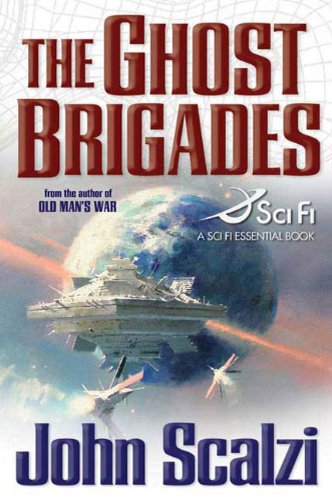
Set in the same timeline as Old Man’s War, this sequel focusses not on John Perry (whom I thought it would be about) but on the elite Special Forces of the Colonial Defence, and specifically on Jared Dirac, a freshly minted super soldier deliberately seeded from the DNA of a scientist defector. When the hoped for results in Jared’s personality do not appear, he is transferred to the Special Forces.

The first half of the book was mainly about Jared’s training which, for me, was the best part of the story. Apart from painting a convincing picture of how a super soldier was created, it also suited Scalzi’s style i.e. scientific information expressed in an easily digestible format; fairly straightforward characters, and a simple (but likeable) humour. What Scalzi seems not to be so much at ease with, however, is dialogue, which in the second half of the story comes across as a bit stilted at times; clichéd, even. I also noted this to a lesser extent in Old Man’s War. This aside, I enjoyed the story, less so as it went on, but not enough to put me off reading the next in the series.
 
Scalzi's new "Interdependency" Series is high on my scifi reading list for 2022.

I read "Old Man's War year's ago and loved it. But I'm not sure about the "Ghost Brigades".

Though 'The Last Colony" seems really familiar from reading the Kindle blurb. None of the other books in series the sound familiar. I was still heavily into paperbacks back then.

So, it is possible I missed the continuation of the series as it progressed.
 

Sponsors


We try to keep the forum as free of ads as possible, please consider supporting SFFWorld on Patreon


Your ad here.
Back
Top