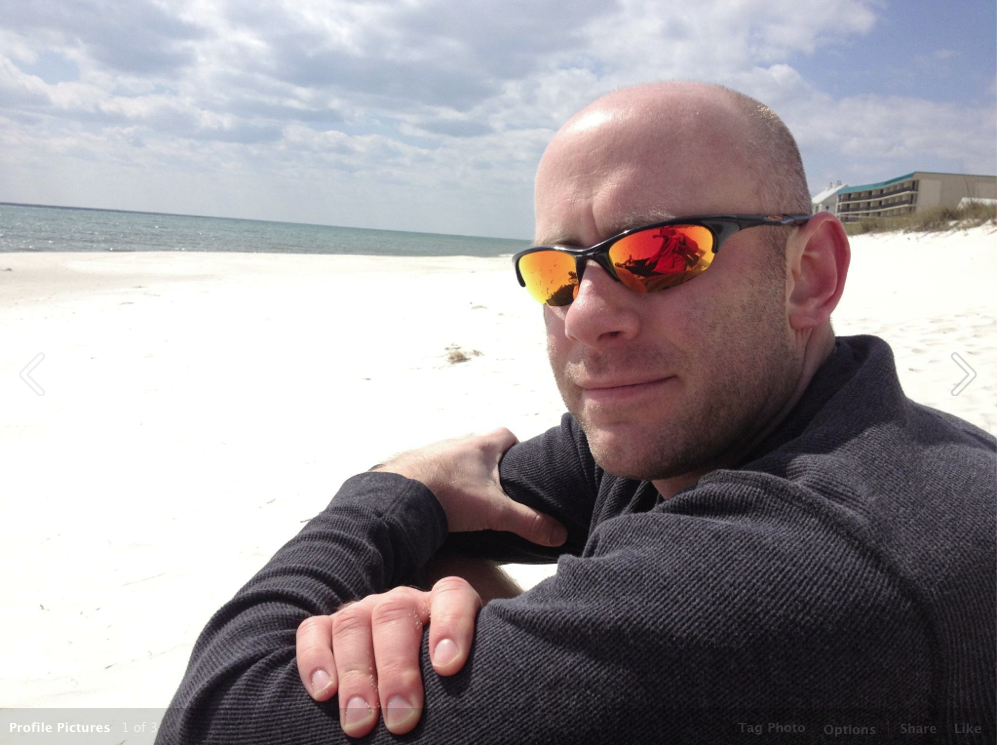
 Today, Nick Webb, author of the phenomenally successful Science Fiction novel, Constitution is interviewed by fellow author, Ralph Kern.
Hi, Nick. Firstly, congratulations on the awesome first few weeks of Constitution’s release. For those that might not know about the book, can you tell us a bit about it?
Hi, Ralph! Thanks for the invite and taking the time to talk with me! I’m truly humbled by the massive reader response to Constitution, and that so many people are both reading it and emailing me how much they liked it. To answer your question, Constitution is a familiar storyline: the underdog who wins against overwhelming odds, albeit with great sacrifice. An old, sick ship and an old, sick man are Earth’s last defense against an unstoppable alien force. As the captain of the aging Constitution, Captain Granger needs to figure out how to save both his crew and his planet from the overwhelming firepower. Along the way, we see the terrible human cost of war, even justifiable war, and the unforgivable consequences of putting politics and personal power ahead of the well-being of others.
Many people are comparing Constitution to one of my all-time favorite science fiction series, Battlestar Galactica which is certainly no bad thing. Did that show provide inspiration for the story? And what other inspirations did you draw from?
The BSG reboot did indeed provide some inspiration for Constitution. I intentionally included a few details with the purpose of making an homage to that show, which is also one of my favorites. A gruff, drunk XO. An old, obsolete battleship (though this trope is by no means unique to BSG). An overwhelming enemy that we’ve faced before and that has returned with overwhelming force (also not a trope unique to BSG). But as with any tropes, you’ve got to make them yours, and add your own unique flavor to them, which I think (and hope) I did effectively.
Other influences? I think attentive readers will see a little nod to Contact towards the end of Constitution, as well as little details here and there that nod to iconic series like Star Trek. (For instance, a chief engineer named Rayna Scott, who is a fun combo of Scotty from TOS and Kaylee from Firefly, though of course with some added complexity.)
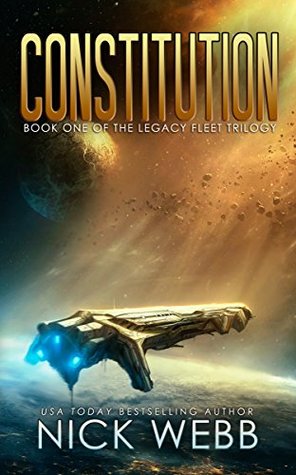 Something I’m personally impressed by is the way in which you give a sense that the universe of The Legacy Fleet has a deep history and breadth which goes far further than you have covered in this novel. How much have you worked out the universe? Do you have a timeline all worked out along with maps and a bible to work from?
Honestly? No. I do have some specific history planned out that I haven’t put into Constitution, but not much. But I think that’s a skill a writer needs to master–that of implying a grand sense of history and scale, but not necessarily writing and making explicit all the details of that scale. Otherwise the work would never get done and the book never published. I think a master of this is Brandon Sanderson–I’m reading the Mistborn trilogy right now, and I’m just in awe at the huge sense of scale and history he’s managed to create, but without exploring and explaining every last detail of that history. And then, when you find out that the narrator’s explanation and understanding of that history is just plain wrong, and with me as a reader saying Wow! Everything I thought I knew about this book’s mythology is suspect!, well, that’s just great storytelling, and something I’m trying to learn to do better. Not saying the Legacy Fleet Trilogy will turn out that way, but the politics and history I’ve already laid out is one of intrigue and deception, so there’s bound to be a few surprises in the upcoming books.
Though there is something to be said for those universes that do have a huge, explicitly explored timeline, maps, histories, etc. The expanded Star Wars universe (may it rest in peace), is a shining example. You can lose yourself for hours in the star wars wiki. Not saying I have! (*shifty eyes*).
I certainly know I spend far too much time reading through those histories and wikis! Moving swiftly on… Without giving spoilers, another impressive aspect of this book is that no one is safe. Once I knew you had a penchant for killing off characters who you had invested a lot of page time to, I genuinely got the sense that everyone was in peril. Often we know the heroes would make it through, but in this I simply couldn’t tell. How hard was it for you to kill off your characters?
On one hand, it’s hard, because I invest so much time in those characters, and then to kill them off feels so … uh, murderous, lol. Writing’s tough business, and killing your favorite characters is difficult. But on the other hand, I’m telling a story, and the best stories make you feel. Not just excitement at the victory, but pain at the cost of the victory. In that sense, murdering my characters is surprising easy, because it helps make a great story. But the nice part about SciFi and Fantasy is that you get to cheat a little bit. Some characters stay dead. Some don’t, but come back different. Some get rekilled. Some are alive but so fundamentally changed that they’re not the same. As much as I like a good, exciting plot, the plots are meaningless without real people caught up in those plots and driving the action forward, with all of their conflicting motivations, strengths, foibles, emotions, and conflicts. So, hard? Yes. But it’s dang fun, too.
I’d agree, in a morbid kind of way. Well, I for one am excited to know what’s next for the Legacy Fleet. Let’s have the scoop on here… give us the teaser blurb for the next one and when it’ll be out.
My timetable is a little fluid, though I’m hoping to publish Warrior within just a few months.
Teaser blurb? Hmm… let me think…
The book is actually not even half finished, but I can come up with something general…
We repelled the aliens.
For now.
But they won’t stop. They’re inhuman. They have no inhibitions.
And no mercy.
But from the crucible of battle has risen an unlikely hero. Captain Granger, at the helm of another time-tested battleship, will take the fight to the enemy. He’ll discover their secrets. He’ll unravel the betrayals and deceptions at the very top of the government.
He’ll save us all.
Or we’ll die.
WARRIOR
Or, you know, something like that. Sorry, not too many details, but I like the element of surprise! 😉
Thanks for that, and remember folks, you heard it here first. I’d like to speak about you a little now, Nick. I must admit to being curious about the fact you are an established author with the Pax Humana series under the name Endi Webb. Why was it you decided to tweak your pen name for Constitution?
Endi Webb was my test run, and honestly may have been a sort of defense against the massive feelings of insecurity every author (or any artist, really) feels when putting something out there into the world. But, inevitably, we’re our own worst critics, and my books as Endi were actually quite well received. I’m actually now quite fond of Endi, and still answer to that when fans, other author friends, or even my wife call me by it. My Facebook name is now Nick Endi Webb.
Originally, I went with Endi Webb because that was the phonetic pronunciation of my initials, N. D. Webb., and I figured if I was going to have a pen name, I might as well make it as close to my real name as possible. Another reason was that at the time I started writing, I was doing potentially sensitive scientific work for the government and didn’t want to mix my two professional lives. That period of my life has passed, so that’s one less reason to continue using Endi.
If I read your bio right, you actually work for NASA. What do you think are going to be the most exciting new developments in Space travel in the next 50 years.
I actually work for a medium-sized defense contractor that does a lot of work for NASA. The project I’m working on now was from a proposal I put together for NASA that ended up getting funded for the next few years, designing new ultralight strong nano and micro materials to be used in spacecraft structural components. Right now, one of the biggest limitations to getting a foothold in space and on other planets is weight–it’s incredibly difficult and expensive to get our ships out of Earth’s gravity well. That’s one of the problems I’m working on right now, and if we solve it, will open up a lot of opportunities in space.
By 50 years from now, I really hope we’ll be on Mars, as well as Europa and some of the other outer solar system moons. Some of them, like Europa, just make a whole lot of sense. There’s plenty of water under that ice sheet, the solar radiation out there is a tenth what we’d experience on Mars, and it just may be one of the best chances to find life in the solar system other than Earth.
I bet in another 50 years we’ll have far better rocket technology, probably using some form of either fission or fusion. Chemical rockets have incredible energy density, but nuclear power dwarfs it. I know nuclear is a bad word to many, but honestly, it’s probably going to be the best way to go until Zephram Cochran invents warp drive.
That sounds like fascinating stuff. As a hard SF man myself, I could dwell all day on your research to see what I could pick up. But let’s do that outside the interview ☺. So, final question, and seen as you mention the esteemed Zephran Cochran… which would win in a fight, the Constitution or the Enterprise?
Enterprise, hands down. Just a few photon torpedoes should do it.
Unless the Constitution could get Enterprise’s shields down, in which case a hundred fighters ought to make quick work of either Kirk or Picard. But Constitution’s main weapons are projectile based (easily handled by Enterprise’s navigational deflector) or laser based (which, from TNG, we know are archaic and easily absorbed by the main shields), so if Enterprise is prepared, there’s really no contest.
Although….
With the Constitution’s q-jump drive, Granger could pull a modified “Picard Maneuver”, and q-jump in underneath the Enterprise’s shields. Then it’d be far too close to use photon torpedoes without the Enterprise damaging itself, and a close range skirmish would favor all those fighters. Hmm … I may change my vote!
Ha, a considered answer. I’m sure Granger would give Kirk or Picard a run for their money. Nick, it’s been an absolute pleasure. Thank you for your time, and once again, congratulations for the success of your novel, Constitution: A well-earned and well-deserved success.
For any readers, you can find the book on all Amazon stores (Amazon.com).