
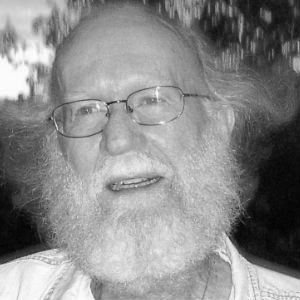
 Hi Terence, Thanks for giving us some time here at SFFWorld. We’re writing this questions as Open Road Media are releasing some of your older works as ebooks.
First of all we have Sailing Time’s Ocean, a time travel thriller, but also a story with a deeper look into the past and possible futures. Can you tell us a bit about it and what inspired you to write the story?
The story is really about displacement – both psychological and physical. In most people’s lives, they encounter these kinds of displacements: a relationship breaks up (divorce? a falling out?), a job is lost (untenable, must quit? let go?), a move to new quarters (transferred, need to relocate, financial considerations?), the death of a loved one… In each case, the individual has to deal with his/her new reality. These, metaphorically, are the nuclear blasts in our personal lives that displace us, much like the individuals in Sailing Time’s Ocean are displaced in both time and space. A displacement can lead to a positive end (Dalton, in the novel), or a negative (Christian, in the novel). Instead of a metaphorical nuclear blast as the agent of displacement, I used a literal one, detailing the outrageousness of the 1972 French nuclear testing in the South Pacific.
And then I elaborated on it by tying it to two quite different real-life historical South Pacific stories (The mutiny on the Bounty, and the infamous colony on Norfolk Island, used by the British for transportation of criminals), creating a tri-partite tale of displacement in both time and space. These were all stories that had interested me in the past for a variety of reasons – one of the simple reasons being that they are incredible (but true) stories.
The other book is The Woman Who Is the Midnight Wind, which is a collection of ten stories. What would you say is the main theme of the collection and if you could pick one, which is your favourite story?
Of the ten stories in the book, I think 8 of them revolve around the mysteries of family relationships – especially between parents and children. I was the fourth of five children, and am myself the father of three sons. My family, both present and past, are in my thoughts daily.
The remaining two stories deal with teaching, and provide speculatively different glimpses of the future of that profession. I have been a teacher myself for most of my adult life — even now still, as a lecturer in creative writing at Western University (London, Ontario) for the past ten years.
So to answer the question, perhaps I could resort to the old adage that all fiction (that considers itself serious) is a personal reinterpretation of its writer’s existence during the time the fiction was written. These stories are speculative (fantastical, science-fictional) twists and probes into my own life at the time of their individual creations.
My personal favorite from the collection would likely be Ashland, Kentucky. It’s based on events surrounding the time when my mother died, and based on some real letters found afterward. Interestingly, too, it became the launching point for the subsequent 3 Ashland novels (Shadow of Ashland, A Witness to Life, St. Patrick’s Bed) – two of which were Best Novel finalists for the World Fantasy Award — also available as eBooks from Open Road.
Earlier your Ashland series was also re-released as ebooks. How comfortable are you in general with seeing the re-appearance of older work?
I love having my books available once again. The bane of the writer for so long has been the phrase “out of print,” making once popular and interesting books difficult to obtain – or worse, virtually unobtainable. The digital world — the Internet — has changed everything over the last twenty years, including the Book World.
I wrote the books. I want them to be read. Older work is not inferior work. I’m thankful for the opportunity provided by the Internet for enhancing their life into the unforeseeable future. (O Brave New World!)
What is it with time travel you find fascinating?
We’re all time travelers – into the future. Time is the Big Mystery. The past is as big a mystery as the future, and speculating on the nature and possible mutability of Time is as legitimate an exercise as any other philosophical or scientific speculation. In addition, it provides boundless opportunity for truly dramatic situations (visiting your parents, returning to the time of Christ or the dinosaurs, affirming or contradicting historical belief…).
How did you start writing? Was there a particular book or moment in your life that spurred you on?
I was always a Book Person – read voraciously from childhood on. I get tremendous pleasure from books. I’ve spent my life reading books, teaching them, discussing them, writing them. I consider myself a lucky guy to have been able to spend my life among them.
I didn’t start writing until my mid-twenties. I’ve always considered myself a realist, and part of that stance is understanding the need for a balanced life in order to have and raise a family. Teaching has provided that framework – both socially and economically – and allowed me to live (and write) as I have.
Would you care to pass on any advice to writers starting out? What was the best advice you were ever given when starting out?
Nobody gave me any advice that I can recall. I’m pretty much a self-learner – made all my mistakes by myself, and learned from them! My advice, though, would be: Read. Everything.
How are you finding the e-book revolution? Personally, are you happy with an e-reader these days, or do you still prefer ‘tree-books’?
As previously stated — I’m happy that books of all stripes (my own certainly included) are once again available, in whatever form. I have an e-Reader and use it (train travel weekly), but given my history and age (I’m 68), I still read more paper books than eBooks.
I have a sense, though, that this is not going to be the case for younger readers as the 21st century carries on. My youngest son is definitely a Digital Guy, as are all his friends (and his generation). The Internet has always existed for them, so how can anyone not feel that Digital – which is the present — is also the future?
What kind of books do you read, any favourite authors?
I’m an omnivore when it comes to reading. I read everything, widely.
That said, I just finished reading 2 books that I got for Father’s Day: Gathering Prey, by John Sandford, and Wayfaring Stranger, by James Lee Burke. I loved them both, for vastly different reasons. I’m a big fan of the cop thrillers of Crais, Connelly, Child, Burke, Sandford Meyer, Perry et al.
A handful of my favorite SF&F books, though:
A Canticle for Leibowitz (Miller)
The Man in the High Castle (Dick)
Martian Time-Slip (Dick)
Dr. Bloodmoney (Dick)
Earth Abides (Stewart)
Timescape (Benford)
The Stars My Destination (Bester)
The Lights in the Sky are Stars (Brown)
The Winds of Time (Oliver)
Childhood’s End (Clarke)
The City and the Stars (Clarke)
Most writers have some other thing they’re passionate about, what’s yours?
I like to think of myself as a bit of a polymath – or in my best moments, a bit of a Renaissance Man (why not?) I own a motorcycle, play the trumpet, love hockey, baseball, reading and movies, am an accredited scuba diver, enjoy fishing for smallmouth bass, and am passionate about my family, both past and present.
Like Louis Armstrong says: What a Wonderful World.
Enjoy.
Once again, thank you very much for your time, Terence.
* * * * * * *
Interview by Dag Rambraut – SFFWorld.com © 2015



Lovely interview answers: thank you, Terence. And a great list of suggestions to read, too.
Family ,friend and a big fan
fascinating to learn the background of each story ….the why behind the story and ….a glimpse int0 the life of the author …what spurs him on…
Jacquie McCarthy