March saw the release of the third instalment form Stephen Hunt’s Far Called trilogy, published by Gollancz. The Stealer’s War, brings to an end to a series in which Hunt mixes a lot of the best parts of Fantasy and Steampunk with a dash of technology in one carefully built world. He uses a collection of characters who take great glee in political wranglings, murderous notions and of course, that all important adventure-quest for world domination. I’ve heard epic used many times, but the scale of The Far Called trilogy certainly deserves the title.
Welcome to SFFWorld, Stephen. As the god of the Far-Called world, you take care to ensure no character is spared from an emotional or physical mangling. Lady Cassandra has most certainly been dealt a poor hand. Was this a deliberate decision on your part to bring a character with a disability into the light, or did she sort of arise naturally from the environment?
I can’t remember which famous author said, ‘When in doubt, just stick your characters through the ^%$%^ing mangle again’, but it’s a lesson that’s been well internalised at Chez Hunt. I guess that’s where the disability for Lady Cassandra sprung from – as well as arising more or less organically from the plot. In terms of writing methodology, I’m more or less 50% architect and 50% gardener, now. I started out my career very tightly plotted, but have loosened up over the years – mainly to keep a few surprises back for me while I’m writing, if nothing else.
There can’t be any doubt that The Stealer’s War is the epic final the series needed, with so many different factions vying between one another. Battles scenes range in scale and complexity, just as much as the technology levels vary from culture to culture. Do you have a favourite battle from Stealer’s War?
I think the final one in the third book is pretty much the series’ cake-stopper. I have been influenced by some of my own favourite genre authors like David Gemmell and Bernard Cornwall when it comes to wanting to write ‘good battle’ for the readers. You should always try to leave something massive in reserve for the end. Otherwise, you end you end up with Francis Ford Coppola’s Apocalypse Now-problem. He wanted to have a supersized shoot-out at the end of the movie with the US forces versus the rogue Colonel Kurtz. But come the film’s end, Coppola realised he had already written such a great battle scene early on with Colonel Kilgore’s Air Cav-at-dawn scene –‘ I love the smell of napalm in the morning’ etc. – that he would merely be repeating himself.
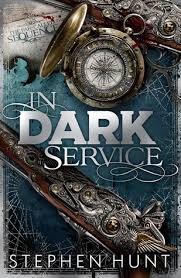 There has been some intricate world building involved for Far Called. It’s kind of hard not to love a world where a radiographer might not live to see his message reach its designated recipient. How long did it take you to develop the world in which the Carnehans could accidentally start and perhaps end a war?
I normally start with the world-building first. Maybe it’s the unreformed gamer in me, but I find that if you start with the ecosystem, it’s much easier to come up with realistic creatures & characters to inhabit said environment. It normally takes me about a month to nail everything down. The Far-called is the first series where I was actually anal enough to produce detailed maps for every part of the world – even large swathes that haven’t made it into the novels yet. This was a reaction to the second most regular complaint from readers of my six-book Jackelian fantasy series … ‘Where’s the ^%%&* map?’ (And the first complaint? Glad you asked . . . US readers asking, “Where’s the e-book?”),
If you could bring one piece of technology from any novel into everyday life, what would it be and why?
The nano-forge from various authors’ books – William Gibson, Greg Bear, Joe Haldeman to name but a few writers who have used this trope – not to mention Star Trek’s famous replicator. Tea, Earl Grey, Hot. Just shovel in some dirt as ‘toner’ and the atoms get rearranged into whatever you need – food, medicine etc. We’ve already pushed down the start of that road with 3D printers, but we’ve got a way to go yet before we’ve reached the level of sophistication described in Drexler’s seminal Engines of Creation. When we finally develop this tech, it’s goodbye mass capitalism, and hello The Federation. Hopefully. Or maybe we’ll just fab illegal firearms and pandemic viruses and happily go on murdering each other? I’d like to think we’d plump for the former, all evidence to the contrary notwithstanding.
You are one of the original minds behind the online forum SFCrowsNest. Do you find forums a hindrance or a rewarding experience for you as a writer?
Well, the Nest started off as the online version of a print magazine, before morphing into an SFF-specific search engine, then a general genre portal and online magazine (with a forum attached). I haven’t been the editor since 2000, so I’m a little out of touch, I guess. These days, I tend to rely on social networks for direct contact with my readers, more than I do old-style bulletin boards. Facebook, specifically, where I maintain one page for my SF readers and another page for my steampunk readers (www.facebook.com/SciFi.Fantasy/ and www.facebook.com/steampunkish/).
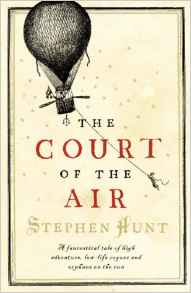 Both the Jackelian and the Far Called series are Steampunk influenced. Where do you see things going for the Victorian inspired genre as a whole?
One of my editors was kind enough to tell me there’s not really a Steampunk genre, there’s a Stephen Hunt Books genre. I think lots of authors – pushed by their publishers – have tried to jump on what they perceive as a steampunk bandwagon and found the subsequent sales rather disappointing. Outside the written word, however, the steampunk movement seems to be going from strength to strength, as far as the costuming, modding and lifestyle elements go. When you talk to steampunks at cons, very few of them have read any of the books behind the movement, though (not even the classics like The Difference Engine or Moorcock’s A Nomad of the Time Streams) – they just really love the aesthetics and the attitude. That popularity is a reaction to the homogenous mass-produced nature of our current society and the general crappiness of trying to stay balanced on the economic treadmill while ducking crazed politics, punishing debts, downsizing, offshoring, war, terrorism, crime, environmental collapse, mass migration and societal instability. We’re harking back to an imaginary golden age that never was to avoid looking too closely at the less pleasant aspects of the present. Escapism at its finest, really.
With Stealer’s War being the last in this trilogy, is there a character you are going to regret moving on from?
Jacob Carnehan was my favourite and the character I will miss the most. If I was David Gemmell, Carnehan would be my Jon Shannow, I guess.
Can fans hope to see more set in this world?
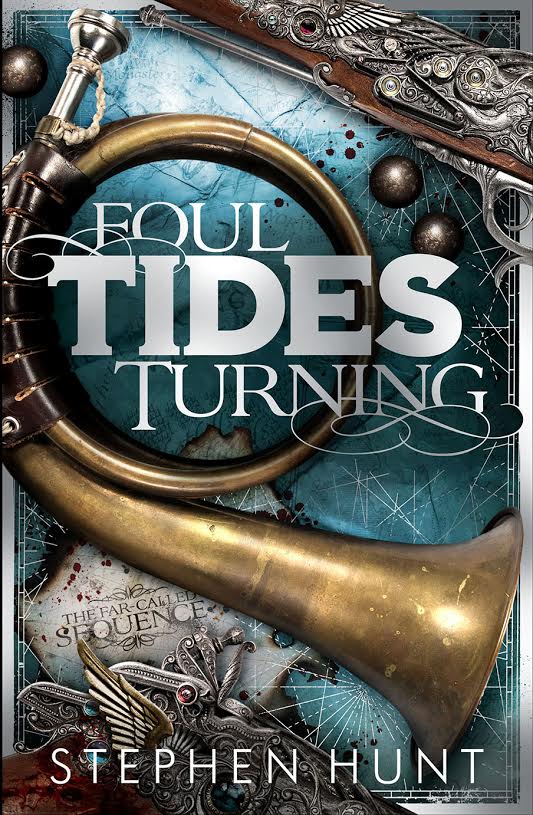 There’s certainly enough material for at least one more book in the Far-called series. However, I’ve got a lot of other novels backlogged inside my imagination, including a lot of reader pleading going on for more crime genre titles from Stephen A. Hunt, so we will have to see when I get the time to develop a book four in the Far-called.
Thank you for taking the time to answer my questions, Stephen. Stealer’s War, Foul Tide’s Turning, and In Dark Service are available from all good books shops (I have yet to see a dodgy bookshop on the high street).
You can find out more about Stephen’s Far-called series on his website or via www.facebook.com/steampunkish/