 Full Disclosure: I am not a sorcerer. I have no magical ability whatsoever. So how can I “write what I know” if I don’t really “know” magic? The way I see it, creating a magical system for a fictional world is like creating anything else in the fictional world.
Fortunately, there are plenty of things that I don’t know so I have no problem making things up and researching. Weirdly, when I’m writing magical spells, I treat it the same as when I am writing technology or designing a monster. That being said, designing a magical system can be tricky. It needs to show wonder, yet still have an internal logic and consistency. This blog will show my process of inventing one.
I begin by asking a lot of questions which I organize by type: who, what, where, why, and how. Then I do research in order to ground it in reality. Then I go for the awesome—even if it is a quiet type of awesome.
One tip before we get started: Know Thyself. I think in a certain way. I like rationality in my magical systems. Other folks may like more spectacle. No one is wrong. Ultimately, create what YOU think is interesting.
I always begin with WHO QUESTIONS:
Who uses magic in the story?
This lets me know how deep I must go with my system. Is it the protagonist? The antagonist? Every major character? Then I need to know more details than if I’m writing a feisty band of adventures and a wizard is part of the team.
Is this character in conflict with who can use magic in society?
The author should let readers know how the sorcerer live their lives and their relationship with their magic abilities. After all, magical people are vilified, maligned, or killed in one society while they might be considered a priesthood or a protected class in another. Or perhaps they don’t live in society at all.
Who else is in the story and how do they react to magic?
Do other characters trust magic or not? Do they want something? For example: In Tanya Huff’s Stealing Magic, the world’s most powerful, but lazy wizard is constantly besieged by Kings’ requests, envious sorcerers and others.
Next comes WHAT QUESTIONS:
Define “what” magic is available.
Can every wizard use every type of magic? Do some people have different gifts? Perhaps your wizard can only cast enchantments, but really needs a fireball. What then? Making your character’s magic omnipotent kills every plot you might imagine
And just as important is asking: What can’t magic do? and What is the cost of magic?
In Kim Harrison’s Hollows Series, Rachel Morgan’s aura becomes blackened when she casts curses. And when working with demons, witches and warlocks can end up as slaves.
Now often when the cost comes up, authors tend to think about the wizard, however remember there are more other practical limitations than the limit of the human body, mind, or soul. Consider the implication if ingredients or rituals are outlawed. Or if exotic ingredients are required, so only the wealthy may be able to use magic.
Under my what questions, there are author specific questions too such as…
What tropes do I want to use, which ones do I want to turn upside down? What metaphors and themes come up repetitively in the work?
WHERE, WHY, AND WHEN QUESTIONS:
Where does magic come from?
At least for me, these three types of questions go together. Readers may or may not know this, but the writer must know!
Magic might come from Mutation? The Force? The energy of a Parallel World or the MetaVerse. Maybe a God or Gods bestowing magical gifts upon their devout.
Why is using magic useful or important in your created world? And when is magic (or isn’t) an appropriate response?
Authors want to write awesome things. And sometimes we all get excited about a really cool idea. Let’s make it bigger! Wee! But seriously what’s the point of learning to cast a light globe if people can just switch on a light or light a candle.
Finally I ask HOW QUESTIONS:
How do the characters use magic?
There will be plenty of mixing and matching in the examples below, consider the implications of failure, or unintended consequences.
Is it unconscious or a conscious power? Do they use hand gestures? Dictate words, prayers or songs in English, nonsensical litanies or a special language? Is it a specific ritual? Do they need equipment or materials: elements, herbs, crystal balls, wands, staffs or whatever else you think is cool?
Once I ask myself these questions, I have a pretty solid start to having a workable magic system. Then its time for research and writing the book!
Still lost?
There is a lot of great advice out there. While I hope my post helped you think about writing a magical system, there is a ton of great information out there. Brandon Sanderson has Three Laws which he lists on his blog, Orson Scott Card wrote a wonderful chapter in his book How to Write Science Fiction and Fantasy.
Overall, don’t be afraid to have fun! In my own experiences, readers love books that are fun.
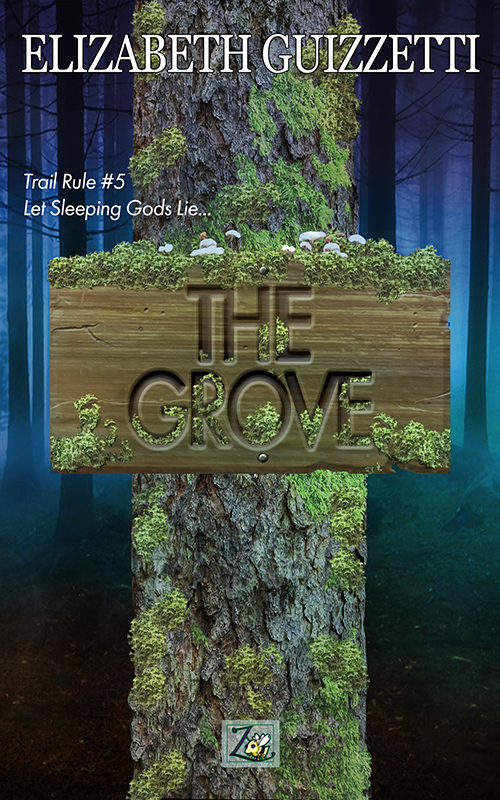 About The Grove:
Sitka’s Quay appears to be like every other coastal tourist town on Highway 101, but lurking below its southern grove of ancient spruce are three sleeping primordial gods. The Keeper, Dayla Fischer, must remain in control of her magical abilities or fall into sickening madness, but lives a relatively quiet life with her husband, Oliver.
That is, until the delusional, but charming Jonah Leifson comes to town with a plan to awaken the Three. Soon, children begin disappearing. With powerful suggestion spells and mind reading abilities, Jonah wins over other sorcerers, meth users, the police, and eventually even her husband. Though no one believes her and she doubts her own sanity, she must stop Jonah, before he wakes the Three and brings about the end of the world.
Published by ZB Publications (September 13, 2016)
E-Book ISBN: 978-0-9801459-2-2
Paperback ISBN: 978-0-9801459-0-8
About Elizabeth:
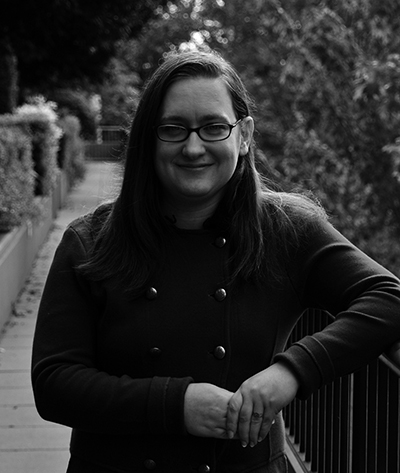
Much to her chagrin, Elizabeth Guizzetti discovered she was not a cyborg and growing up to be an otter would be impractical, so she began writing stories. Guizzetti currently lives in Seattle with her husband and two dogs. When not writing, she loves hiking and birdwatching.
She is the author and illustrator of independent comics: Faminelands and Lure and Out for Souls&Cookies! Her debut novel, Other Systems, was a 2015 Finalist for the Canopus Award for excellence in Interstellar Fiction. She continues to write science fiction, horror, and fantasy. The Grove is her third novel.