

 I write all sorts of books related to science. These range from physics textbooks and revision guides, through popular science books, to space opera and military scifi. Each genre brings its own challenges and its own rewards. Moreover, the style used in each is different, and changing between them can sometimes be difficult.
The first, and hardest to deal with when writing, is the voice. Traditional science books tend to be written in the third person passive. You probably met that when you were writing up experiments at school: “300ml of water was poured into the beaker.” When I started writing novels, this was the thing that really got me. It was a way of writing that was ingrained in me; indeed it still flows naturally and I have to make a conscious effort to use active voice. The number of times I’ve caught myself writing something like: “The guard was hit by a five millimetre round.”
The example above also brings up another difference, the writing of numbers and abbreviations. In fiction, and to some extent popular science, the convention of writing out numbers in words holds. Much of the time, digits appearing in the middle of a story jar badly, whereas spelling out numbers seems childish in a physics text. However, there is a problem with very large numbers. Textbooks have it easy, they can use standard form. Popular science tends to use the standard form and then explain it, at least the first few times it crops up: “3×10⁵, that’s a three followed by five zeroes”. Now, I doubt such large numbers appear much in fiction, but I have found myself needing to use them when describing time and distances in space. Without thinking twice about it, in Liberty I typed the line: “In the next second, space out to a radius of 1.5×10⁸ metres was cleared”. This much confused my beta readers when they looked on their Kindles and saw “1.5(oddsymbol)108”.
There are even formatting differences. I am used to using headings, sub-headings, paragraphs, sub-paragraphs etc. to structure non-fiction. Much of this is not seen in fiction. Then there are block paragraphs. Due to the more complex layout of many textbooks, with pictures, inset boxes, and other things that break up a solid flow of text, indenting the first line of a paragraph can look very messy. In fiction, however, indenting is expected.
Now the mechanics are out of the way, we can look at the actual content. In particular, the science involved in science fiction. Firstly, unless you are writing the purest end of hard scifi, you are allowed some conceits. The most common of these is some form of faster than light travel, in the form of actual linear velocity or some form of shortcut like a jump drive or wormhole. Many stories could simply not happen without FTL. Whether you give it some sort of scientific basis, or just have it as a black box, is up to you. Actually hanging it on a real theory is very trendy right now. Alcubierre drives are appearing in more and more books.
Sometimes things need explaining. In a textbook, doing this without upsetting the reader is simple, it is the point of the book. With popular science, it gets a little harder; you have to judge the line between putting them off because it is too hard, and offending them by making it too basic. When it comes to fiction, it is often impossible to please everyone. One reader will see a passage as adding depth and believability to the scenario, another will dismiss it as an infodump. And then you hit the most frustrating thing – when readers dismiss correct science as being bogus because it doesn’t match what they are used to reading.
OK, so the book content is finished. Now you need to market it. Even here, there are differences.
The cover is usually the first thing a potential reader sees that informs their choice of whether to buy. A textbook cover has to speak of authority, and seriousness. The designs are fairly static because people search for a book that looks like what they were used to a school. Popular science has to be modern and trendy, often needing updating as time goes on. Science fiction also follows trends, but these seem to be a lot slower. One great thing is that certain things that readers expect are well-established – Set in space? Show a spaceship.
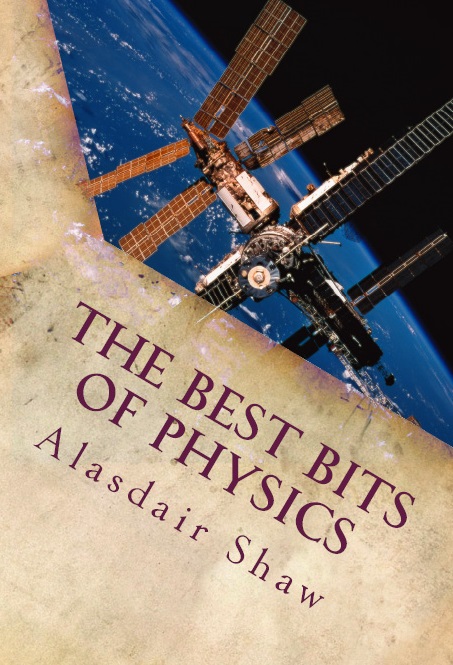
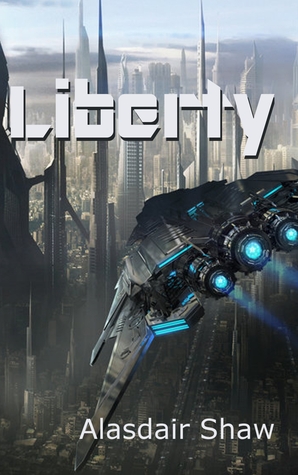
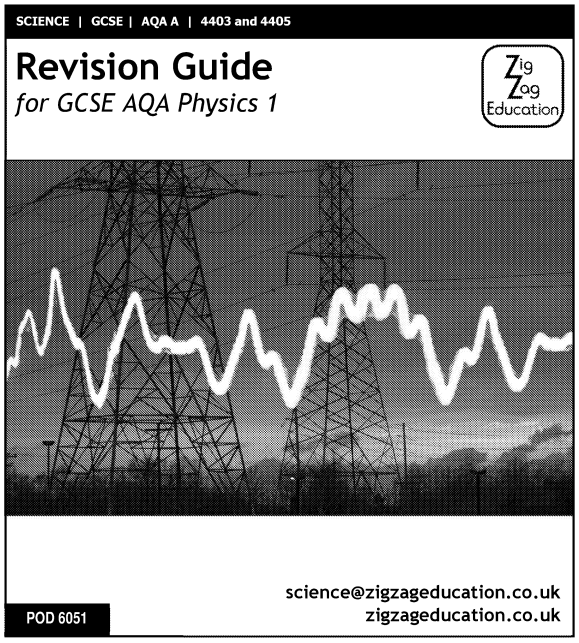
The author’s background makes a big difference to the sales of non-fiction. For textbooks, experience with the appropriate level of education is important. For instance, I list my many years teaching the subject and being a lead examiner. For popular science, readers seek authority but don’t always have a deep understanding of what that means. Having an MA in Natural Science and an MSci in Experimental and Theoretical Physics from the University of Cambridge counts for a lot more when selling a popular science book than the equivalent in English and creative writing would for a novel. Knowing about the author of a story is nice, but it rarely features as a selling point.
* * *
Alasdair Shaw grew up in Lancashire, within easy reach of the Yorkshire Dales, Pennines, Lake District and Snowdonia. After stints living in Cambridge, North Wales, and the Cotswolds, he has lived in Somerset since 2002.
He has been rock climbing, mountaineering, caving, kayaking and skiing as long as he can remember. Growing up he spent most of his spare time in the hills. Recently he has been doing more sea kayaking and swimming.
Alasdair studied at the University of Cambridge, leaving in 2000 with an MA in Natural Sciences and an MSci in Experimental and Theoretical Physics. He went on to earn a PGCE, specialising in Science and Physics, from the University of Bangor. A secondary teacher for over fifteen years, he has plenty of experience communicating scientific ideas.
He started his writing career with Walking Through the Past, a series of walking guides to archaeological sites in Britain’s uplands published by Archaeoroutes. He then got into writing physics textbooks, revision guides, and practice exam papers for ZigZag Education and BBOP: School Physics Resources.
The Two Democracies: Revolution science fiction series starts with Independence, and continues with Liberty. The third story, Equality, will hopefully be released in summer 2017, followed by Fraternity the year after.
You can sign up to Alasdair Shaw’s mailing list at http://eepurl.com/bu7HO1 and see what else he gets up to on his website at http://www.alasdairshaw.co.uk.
The Two Democracies universe intersects with our own at https://twitter.com/IndieAI and https://www.facebook.com/twodemocracies.





Loved this article thank you…very informative.