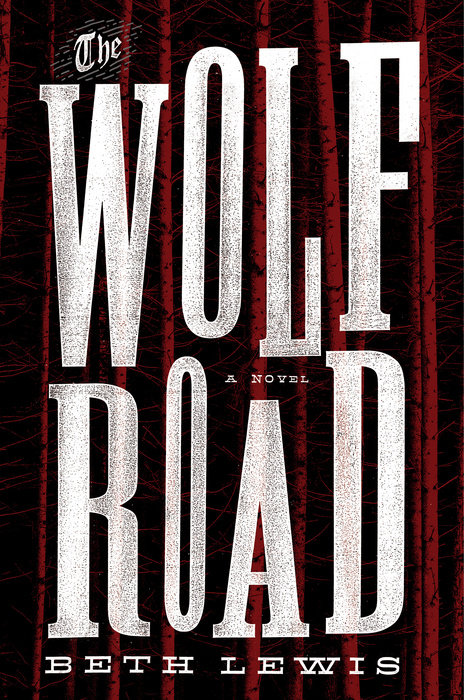
A young woman on the run from a serial killer is a familiar scenario. But the serial killer chasing Elka is a man she knows as Trapper, a man who helped to raise her and where she’s running is ca post-apocalyptic landscape. That fairly elegant concept is embellished by a powerful, magnetic first person narrative through Elka’s engaging voice.
Along the way, Elka finds herself on the run from the law. She learns Trapper’s real name is Kreager Hallet when the magistrate tracking him finds her. Although Elka is at first able to pass off that she knows nothing about Kreager, Elka begins to see her face accompany Kreager’s on the wanted posters in the desolate land and she is implicated as an accomplice to Hallet. In her travels, Elka is a little too trusting of a charismatic man who has unsavory plans for her. Around this time, Elka meets Penelope, an ally who accompanies Elka once she commits to finding her parents who left her to find “gold in them thar hills.”
I thought the relationship between Penelope and Elka was one of the stronger elements in the novel. Their trust of each other grew after they took turns saving each other’s lives. At first, Elka only saw Penelope as a survival companion at best, a nuisance at worst. That fades as the two realize they may be the only people they can trust. We learn a little more about Penelope as the novel draws to a close, but the strength is how the two young women come to rely, trust, and depend on each other.
Elka isn’t only running from the literal killer, she is also running from the truth and experiencing what amounts to post-traumatic stress disorder. “Trapper” took Elka in at the age of 7 and even named her and from what Elka knew, he provided for her and taught her to live in the unforgiving landscape. Memory is a tricky thing and easily buried events can come to the front of the mind at the most inconvenient times.
At times I was reminded of Cormac McCarthy’s brilliant post-apocalyptic novel The Road, especially with the somewhat vague reasons for the desolate landscape and the less than proper English utilized by the narrator. I’m a fan of the television show Criminal Minds, a popular program about the FBI unit responsible for profiling and catching serial killers, so that element of this novel appealed to me as well. While I was far from a fan of the film The Revenant, there are echoes of that film in this book – the harsh landscape, the unforgiving frontier aspect of land, and the desperation of the characters. Except compared against The Revenant, Lewis’s story is cohesive, tightly woven, and has a point to it. While The Wolf Road does have elements of all of these stories, Lewis’s voice, and her protagonist of Elka allow the novel to shine brightly on its own.
The Wolf Road is one of the most impressive debut novels to stroll along in quite a while. I’ll admit the broken / accented English of Elka’s voice was a bit disjointed at first, but it quickly felt perfect for the story and the only way the story could have been told. Lewis wraps up the tale in just about 350 pages and there is zero wasted space, in terms of narrative or character. The Wolf Road is a lean, powerful, thoughtful cat-and-mouse tale of survival in a harsh landscape.
Recommended
© 2016 Rob H. Bedford
Hardcover | July 2016
Crown Books | 368 Pages
http://bethlewis.co.uk/ | Excerpt: http://bethlewis.co.uk/read-the-first-chapter/
Review copy courtesy of the publisher