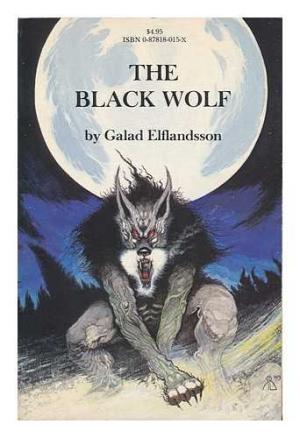
 As part of our Countdown to Hallowe’en, our SFFWorld Horror expert, Randy M., gives us his take on a relatively unknown classic Horror novel from the 1980’s.
“It’s easy for you to shrug when you hear my name and say, ‘Corey Thatcher is mad.’ It’s easy for you to dismiss all the things I’ve said as the ravings of a lunatic. … But I’m not mad and I’m warning you this one last time to leave Thatcher’s Ferry. If you refuse to heed my warning, then you’ll learn at first hand I was right. …”
All Paul Damon wanted was a fishing vacation. Well, mostly he wanted time away from the city to relax and if the fish bit, all the better. But there he is on the steps of Daley’s General Store in June of 19–, and Corey Thatcher ranting at the townsfolk to leave and never come back, and apparently not for the first time. The Thatchers, richest family around those parts, have been, to put it mildly, eccentric since first arriving.
The owner of Daley’s tells Damon the Thatcher family history, of how the earliest Thatcher, Elias, formerly a ship’s captain, had met his wife on an island during his voyages, decided to settle, brought his young bride to town and built a fine house. But the family had odd ways and the townspeople grew wary of them. Seems there was howling in the night in the vicinity of the Elias’ homestead and rumors of more unsettling practices, and then there were disappearances and the antagonism between Thatcher and his neighbors grew until it led to violence, the consequences of which are coming due: There is a force rising, gathering strength and summoning allies, and that force wants revenge on the people of Thatcher’s Ferry.
As trouble and violence brew, Damon cannot in good conscience leave the townsfolk to their fate and has to tap into all the resourcefulness and courage he showed in the Great War to help them fight an implacable foe. In the process he learns the dangerous and abhorrent secrets of the Thatchers.
When he was creating his mythos, H. P. Lovecraft invited other writers to join him, thus stories like Clark Ashton Smith’s “The Tale of Satampra Zeiros,” Frank Belknap Long’s “The Hounds of Tindalos,” Robert E. Howard’s “The Black Stone,” Robert Bloch’s “The Unspeakable Betrothal” and later additions like Bloch’s “Notebook Found in a Deserted House,” Ramsey Campbell’s “Cold Print” and “The Tugging,” and Fritz Leiber’s “The Terror from the Depths.”
A few writers attempted novel-length works with limited success artistically like Basil Copper’s The Great White Space and Bloch’s Strange Eons. But Elflandsson touched a nerve with The Black Wolf, many Lovecraft fans praising it. In his introduction, Charles M. Collins brings comparisons to Robert W. Chambers, Poe, Arthur Machen, and others. The novel doesn’t bear up under the weight of those expectations. To me, Elflandsson’s novel reads rather as though an admirer of Manly Wade Wellman decided to pit a small town and its outdoorsmen against Lovecraftian powers and force them to defend themselves, and at that level the book is successful entertainment, well-paced and involving. If you come to it unaware of its reputation or willing to give it a fair reading, this is a fun, pulpy mash-up of werewolvery and Lovecraftian shenanigans, not exactly frightening, but often suspenseful and well-imagined and rendered, and maybe just the right reading for a dark Halloween night.
Other enjoyable Lovecraftian novels:
Southern Gods by John Horner Jacobs
The Mall of Cthulhu by Seamus Cooper
The Black Wolf by Galad Elflandsson (1980, Centaur Books)