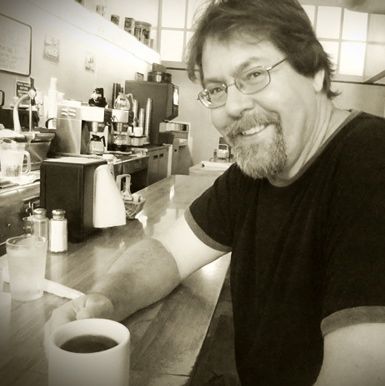
 One of the more fun things I frequently get asked is, “Who’s your favorite character in your books? It’s fun because unlike, say, “Which is your favorite child?” I can immediately give an answer. But it also takes some background.
“Favorite,” to a writer, often means the one they look most forward to writing. It’s not always the protagonist; in fact, depending on the seriousness of the main character’s journey, it might even seldom be the protagonist. Your main character has to carry the story, and that means that when writing him or her, you might have to put them through unpleasant and uncomfortable situations. That’s usually where you find the drama, after all.
It can be the villain sometimes. After all, often they have none of the hero’s self-doubt, and usually their actions are what drive the plot. A villain who enjoys his or her status can be a ton of fun to both read and write, doing all the things the hero can’t or won’t do.
But for me, it’s neither. Usually it’s a supporting character, one who comes in, participates in a few scenes, and then departs. An informal Twitter poll suggests that most other authors agree with that.
So: one of my two favorite characters is ex-pirate and ex-pirate-hunter Jane Argo, from my novel Wake of the Bloody Angel and two short stories, “Finger Stakes” and “The Key to the Coward’s Spell.”
What do I enjoy about Jane? Well, for one thing, in all three stories she’s more extreme than my protagonist, Eddie LaCrosse. She’s been a pirate, then switched sides and became a pirate hunter, maintaining her fearsome reputation and capturing the Hannibal Lecter of pirate captains, Rody Hawk. When she left that job, she became a freelance sword jockey like Eddie. Eddie is a guy who knows where his line is and won’t cross it, whatever the provocation. Jane is his dark reflection, a woman whose line is moveable and open to interpretation. They have mutual respect and trust, but no illusions about each other.
I also like that such an extreme character is a woman. Not a dainty, ass-kicking waif, but a tall, physically strong, and totally intimidating woman. Yet she’s also comfortable in her skin, aware of her own attractiveness and not above using it. She commands respect not by terror, intimidation or even sexiness; she’s respected because she respects herself.
And also, she’ll kill you if you disrespect her.
But she’s also the type of character who can wear out her welcome. I’ve tried several times to write a story with Jane as the hero and can’t make it work. Extreme characters rarely make good protagonists, because their extremity is hard to maintain. Think of all the supporting characters in movies who were audience favorites, but became self-parodies or worse when given their own stories. Ultimately, it’s up to the writer to remember whose story he’s telling, and why this insanely fun character only really works in the context of the protagonist’s story.
My other favorite character(s) are Janet and Ginny from my upcoming Tufa novel, Gather Her Round (available in March 2017). They are high school girls who’ve been friends since birth, and their favorite thing to do, besides play in their band, is get high and solve the world’s problems.
If I’d thought of them sooner, they would’ve been in all the Tufa books, I first came up with Janet as the protagonist of my half of a novella I wrote with Teresa Frohock, Hisses and Wings. Ginny was there as well, but their dynamic was a fairly small part of the overall story. However, when I brought Janet back in Gather Her Round, it made sense to have Ginny there as well. Then I discovered just how much fun these characters were to write, and that I could use them as a Greek chorus to comment on the other plot threads. If I ever decided to write a version of Clerks set in my mythical Tennessee county, they would be my Dante and Randal.
Writers put our protagonists through the wringer, or at least we do if we’re telling a good, substantial story. That can be hard going for the writer as well as the reader, maybe more so because we know what we’ve got in mind for them. But we almost all have a smaller character, one who appears, does their tricks, and then departs who we just love writing about. They are like cool water on a hot day to us and, we hope, our readers.
***
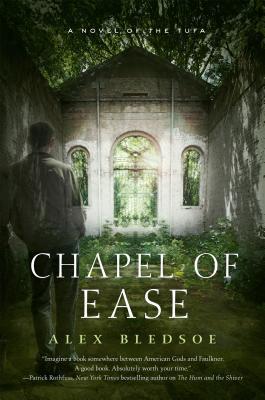
Alex Bledsoe has just released a brand new Tufa novel called Chapel of Ease.
When Matt Johanssen, a young New York actor, auditions for “Chapel of Ease,” an off-Broadway musical, he is instantly charmed by Ray Parrish, the show’s writer and composer. They soon become friends; Matt learns that Ray’s people call themselves the Tufa and that the musical is based on the history of his isolated hometown. But there is one question in the show’s script that Ray refuses to answer: what is buried in the ruins of the chapel of ease Matt’s journey into the haunting Appalachian mountains of Cloud County sets him on a dangerous path, where some secrets deserve to stay buried.
Alex Bledsoe grew up in west Tennessee an hour north of Graceland (home of Elvis) and twenty minutes from Nutbush (birthplace of Tina Turner). He’s been a reporter, editor, photographer and door-to-door vacuum cleaner salesman. He now lives in a Wisconsin town famous for trolls, writes before six in the morning and tries to teach his three kids to act like they’ve been to town before. Bledsoe is also the author of the Eddie LaCrosse novels and the Memphis Vampires series.
For more information about Alex Bledsoe and his books visit his website at alexbledsoe.com.