
 Here at SFFWorld we’re very pleased to introduce to you Mimi Yu, whose debut novel, The Girl King, is being published by Gollancz this week.
Here we talk about Feudal Asia, the excitement of being a debut author and Animorphs!
Hello Mimi! Welcome to SFFWorld.
Hello! Thank you so much for having me.
Congratulations on the publication of your debut novel, The Girl King. For those who don’t know, would you care to describe it for us?
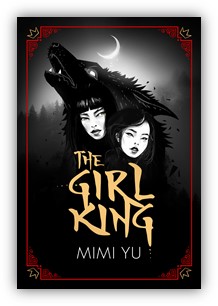
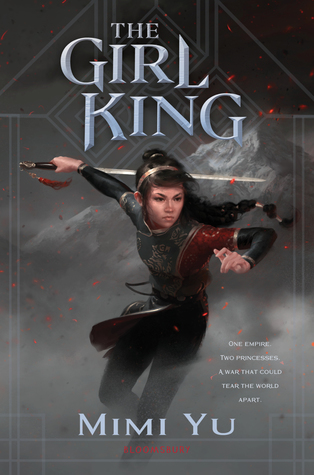
THE GIRL KING is an Asian-inspired high fantasy about imperialism, sisterhood, and magic. It’s told through three POV characters: Lu, an ambitious princess whose throne is stolen by a conniving male cousin; Minyi, her meek younger sister still trying to figure out where she belongs; and Nokhai, a boy born into a nation of shape-shifters, but who is unable to shift his shape.
 Has the book been long in the writing?
Oh, yes! I actually first started thinking about this book when I was still a bored teenager, slacking off in math class. It was just the barest of scenes at the time: two enemies, a girl and a boy, meet in the deep of a forest and emerge as allies. Beyond that, I had the vague shape of an empire and the world beyond it—all very unrealized. But it stayed with me, and the characters grew over time, until I finally sat down to write it as an adult.
What was your intention in writing the story?
A lot of the seemingly disparate media that most influenced me as a young person, from the Star Wars franchise to A Song of Ice and Fire, and even Victor Hugo’s Les Miserables, attracted me in large part because of the scope of their universes. Big worlds with many voices and many, often warring, points of view. At the same time, none of these universes featured people who looked like me, and as I wrote THE GIRL KING I really wanted to do my part to help change that for young readers of color today. Ultimately I think the representation of diverse characters in young adult literature helps all of us better understand ourselves. For me, writing multiple voices with multiple interests is the way I best grapple with the ambivalence and contradictions of being a human.
As I got deeper into the work, I realized I was also interested in power, specifically as it operates in a complicated web, rather than along a single line. I wanted to explore the ways in which certain characters have power or don’t have power, and why. And hand-in-hand with power also came another theme: trauma. In THE GIRL KING, as in real life, empire subjugates people not just physically, but also psychically. Even each character’s most intimate relationships–between mother and child, between lovers, between sisters–are shaped by this trauma.
How was being part of a writing workshop beneficial to your writing?
The workshops I took were quite short, but I feel like I’m still unpacking things I learned and felt there years later. I met so many deeply individual, determined thinkers and writers, and everyone gave a lot to each other. I think just being around so many thoughtful, brilliant and compassionate writers invested in their craft was great motivation for getting excited about the joy of the work. Truly, I don’t know if I could have finished the first draft of THE GIRL KING without their advice and enthusiasm, and I’m forever grateful to them.
I believe that your background is in Art and Design. How much of an asset was this with your writing – or was it a hindrance?
As a background in visual art suggests, I’m a very visual person! Often while writing I’m envisioning the characters and scenes playing out in my mind like a film. It makes descriptions of characters and world-building a lot of fun. Pulling those images from my mind onto the page and transforming them into words is so satisfying.
At the same time, I find the process of drawing more immediately gratifying than the process of writing. It’s much easier for me to see the bones of the final product in a nascent drawing than it is to see a finished novel in a few scenes, or even an outline. A story can’t really exist all at once in the same way as a piece of visual art. It’s much more about the long game, about waiting for the thing to coalesce, and I think sometimes I find that frustrating! I suppose I’m a bit impatient.
The setting of the book is excellent. Though we’re not told everything, there feels like a rich backstory of history, myth and legend. How much were real events and legends an influence or were the ideas totally from your Imagination?
Many of the broad strokes of the world came from imagination, and I guess the sort of cultural osmosis that informs us all. The historical influences were largely later refinements. The world of the book is very loosely derived from East and North Asian histories, the most obvious real-world parallel being the China’s Qing dynasty, which I used as a template for The Empire of the First Flame: a sprawling, diverse empire founded by outsiders to the imperial culture they inherited—at once a colonizing force, and one being steadily colonized itself. I was keen to explore both the structural contradictions of empire–which in many ways transcend any one empire’s particularities–as well as the historically specific sense of living in a moment of sea change, when certain long-held logics of power and hierarchy were about to give way to something entirely new.
For the texture of Yulan City, particularly Lu and Min’s daily lives in the palace, I was influenced by David Hawkes’ translation of Cao Xueqin’s “The Story of the Stone” (more commonly known as “The Dream of the Red Chamber” or “The Dream of Red Mansions”). I also used Endymion Wilkinson’s “Chinese History: A New Manual” as a reference for those small material details that really tie a world together.
There’s a pleasing range of quite different characters too, each with their own identity. Which came first? Do you have a favourite/favourites?
I don’t think I could ever pick a favorite, but Lu and Nok came first. I think Nok has changed the least throughout my various drafts and versions of this story. Out of all my characters, he’s probably the most like me, and so that made it easier to understand him right away. Min surprised me! I didn’t realize how much of this story was about sisters until I started writing her point of view. I feel very tenderly toward her—she contains so much of my teenage self’s sharpest little insecurities and sense of interminable, unbearable loneliness.
The characters do develop and change as you read the novel. Did you find your own views of the characters changed as you were writing or was it always your intention for things to be “as they are”?
Honestly, I don’t know that I’ve ever had a character behave or learn quite the way I wanted. That would be nice, wouldn’t it? I guess it’s a bit like a parent/child relationship—you’re so pleased with your lovely creation and you expect things to unfurl for them in a certain way, and then they thumb their nose at you and do what they want. Not to lean too heavily into this parent metaphor, but that’s what happens when you make a person: they need and want different things than you, and they learn in a way that’s all their own.
Without giving too much away, I ran into this a LOT with Lu. She’s royalty, and she’s quite comfortable with that fact. I don’t know what it’s like to even feel comfortable in my own flesh, so it took a lot of thought and time to figure out what makes her tick, what would drive a point home for her, what could shake her assumptions about how the world is, and her place in it.
What are you most pleased about with the finished book? Did it end the way you planned?
Much like every debut writer, I intended for the book to be about three hundred pages longer than it is. Then I met some very sensible, clever people called editors who patiently explained that in fact, it might be nice to make it palatable to human beings other than myself. I actually think that process—the editing—is the part I’m most proud of. Of course, it’s the part you can’t see, because it’s literally all about excising and honing and tucking away the seams. It’s very strategic and collaborative and I learned a lot as a new writer.
Do you write short stories as well as novels? Or do you plan to?
I have written a number of short stories; they usually turn into the beginnings of novels, unfortunately. I’d like to get better at it! Brevity is not my strong suit, but I’m keen to learn because I love reading short stories.
And now some questions about yourself. Have you always written/wanted to be a writer?
As a child I wanted to be a veterinarian who wrote on the side. It turns out chemistry is really difficult.
When writing, are you a plotter, or do you prefer to see where the muse takes you?
I very much aspire to be a plotter, it sounds like a such a peaceful existence. But no matter how diligently I outline, every time I start writing, all my carefully laid plans dissolve in my hands.
Are you a fan of Fantasy and Science Fiction? If so, what did you read when you were younger? Are there any you’d recommend? Any favourite authors/influences?
I wasn’t very aware of genre as a child, but I was always drawn to SFF above all else. I recently found an old elementary school report card where my English teacher suggested I try reading “something besides fantasy.” Thankfully, I did not take her advice.
As for specific books, my tastes were all over the place. I think I must have read more than half of the Star Wars extended universe novels as a middle schooler, and my brother gave me Game of Thrones when I was far too young. There was no internet and thus sadly, no savvy librarians and bloggers to give out recommendations, so I mostly picked books based on the covers or jacket descriptions, usually at the library or in school, or the overstock bin at the grocery store—the latter is where I found the amazing Animorphs series and the first Harry Potter!
Thinking longer term, after this series, have you thought about what’s next?
I have a few new ideas and universes, but the one that’s the most developed is a 90s period fantasy about a Chosen One who just wants to get into a state school, her sidekick best friend who cheats her way into being Chosen, and how being part of a diaspora gives you the power to see demons who inhabit human flesh.
More broadly, it’s very exciting to publish during this moment when the need for diverse books is starting to get the attention it has so sorely needed. As we continue, I’m interested in writing more books exploring what diversity and representation might mean for the future, specifically from my perspective as an Asian-American writer. The broad category “Asian” has been very important politically as a kind of strategic essentialism in fostering solidarity across a diverse array of groups. At the same time, moving forward, as we push for greater representation of Asians in all kinds of media, I hope that we can also explore the complexities of Asian identity and the diversity of people that fall under the banner of “Asian” in ever more depth.
Many thanks, Mimi. All the best with your publication!
Thank you, and thanks so much again for having me! It’s truly an honor.
And thanks to Alex from Gollancz for help with this too. Mimi’s debut novel, The Girl King, is out this week.





A new book to add to my reading list. Good work Mini Yu. I hope the content is as captivating as the cover