Some writers, some books, try to do mash up many elements, genre trappings that are sometimes mixed, some that are not commonly paired together. That can be a mess, frankly. In Hiron Ennes’s debut novel Leech nothing could be farther from the truth of the end product, they have crafted a novel whose parts come together as if they were meant to be together, naturally.
MEET THE CURE FOR THE HUMAN DISEASE
In an isolated chateau, as far north as north goes, the baron’s doctor has died. The doctor’s replacement has a mystery to solve: discovering how the Institute lost track of one of its many bodies.
For hundreds of years the Interprovincial Medical Institute has grown by taking root in young minds and shaping them into doctors, replacing every human practitioner of medicine. The Institute is here to help humanity, to cure and to cut, to cradle and protect the species from the apocalyptic horrors their ancestors unleashed.
In the frozen north, the Institute’s body will discover a competitor for its rung at the top of the evolutionary ladder. A parasite is spreading through the baron’s castle, already a dark pit of secrets, lies, violence, and fear. The two will make war on the battlefield of the body. Whichever wins, humanity will lose again.
Set in a remote facility in an ice and snow swept landscape, our unnamed narrator is a doctor who arrives after their predecessor met an untimely demise. The narrator, in fact, is a hivemind, the Interprovincial Medical Institute speaks through the body of an unnamed doctor to help the ailing baron of a mining town named Verdira. The unnamed doctor has a hidden mission, to discover what happened to the predecessor of the body representing the Institute at Verdira. While the Institute itself is essentially a parasite, when the current doctor examines the corpse of the previous doctor, they discover a self-inflicted would and a tendrily, caterpillar like parasite nestled in the dead body. The Institute has competition, and the majority of the novel’s plot is our unnamed doctor trying to keep the new parasite a secret while also trying to solve it amidst the chaos of a town that is broken lead by a man whose sanity may not be total.
There is so much going on in the background of this novel that informs the surface plot, many interesting details that are barely of any consequence to the characters and their daily lives. Sometimes, that kind of world-building feels more genuine and real. Randomly mentioned is the fact that the moon shattered in a long-ago catastrophe. Reference is also made to other disasters that have left humanity eking out a slim existence in a decaying world. The Institute is what seems to keep human civilization moving by taking over human bodies and caring for humanity. It is a creepy the way it is presented in the novel and the fact that it isn’t clear to most humans that they are being cared for by a parasite that takes over a human host is even more unsettling.
The setting is crumbling, society is hanging on to the last vestiges of humanity, at least the society in Verdira. Hines manages to generate a wonderful atmosphere in the novel, there are hints of things familiar in the genre, but mixed up in a way that feels quite refreshing. With a creepy mine, there’s some definite horror vibes of the dark dwellers flavor of the genre and even something of an old west feel given that Verdira is something of an outpost. The decadence also lends a gothic vibe to the story as well, and gothic stories novels also often cross the line into horror. The horror element is also very strong because the story very much evokes John Carpenter’s The Thing, set in Antarctica. That’s an obvious comparison others have made, but that makes it no less true. There’s a claustrophobic feel to Verdira and the fact that our protagonist isn’t sure who to trust and who may be infected with the “new” parasite.
There’s a mannered pace and aura to the language, as well, lending that aforementioned gothic feel to the story. The story is told directly through a human who has been “infected” by the Institute, giving the story a very intimate feel.
In addition to The Thing, I also felt a sense of resonance with some of Jeff VanderMeer’s weird horror fiction and in the way the Institute “helps” humanity, I couldn’t help thinking of Octavia Butler’s Dawn and Lilith’s Brood/Xenogenesis books. Like I said, some familiar echoes that when fully projected are a story of its own.
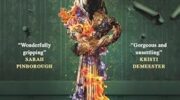
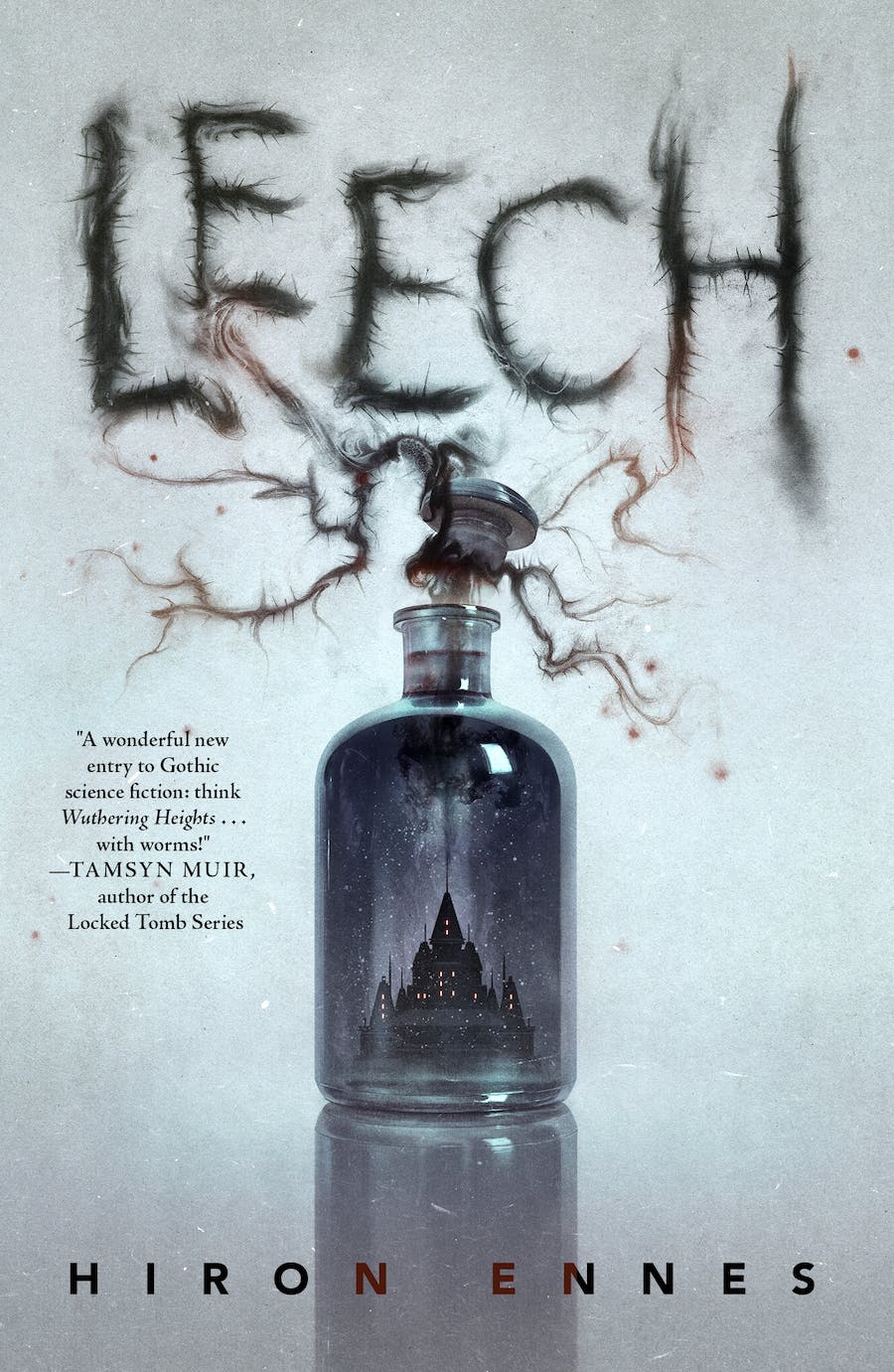
I also want to draw attention to the gorgeous cover by Sam Weber. It pops, has power, and greatly captures the essence of the novel.
If I can level any criticism at the novel, the ending felt a little bit chaotic and mildly confusing. It took a couple of times for me re-reading pages or passages to get a good feel for what was happening. That said, Ennes has crafted a horrific, haunting, and intriguing novel in Leech. A great read for Hallowe’en and a novel that has me eager to see what kind of stories Hiron Ennes will share with readers in the future.
Recommended
© 2022 Rob H. Bedford
Hardcover | September 2022
Tor.com Publishing | 336 pages
https://www.hironennes.com/ | @HironEnnes
Excerpt: https://www.tor.com/2022/03/11/excerpts-leech-by-hiron-ennes/