 Don’t call me Abraham; call me Abe. Though it’s what my ma named me, I’ve never liked Abraham. It’s a name that sounds so full of itself, so Biblical, so … I believe patriarchal is the word I’m after. One thing I am not, nor do I want to be, is a patriarch. There was a time I thought I’d like at least one child, but these days, the sight of them makes my skin crawl.
— from The Fisherman
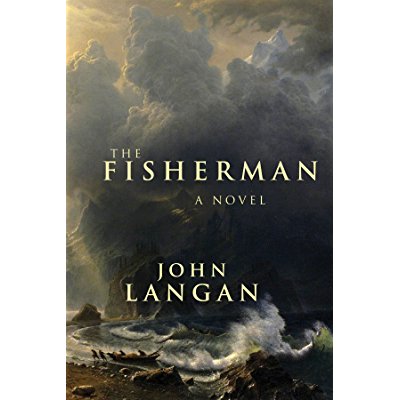
So starts The Fisherman, simultaneously alluding to the Bible and Moby Dick, both works recurring touchstones throughout the novel.
Abe married late in life to Marie, but lost her to cancer with which she was diagnosed shortly after returning from their honeymoon. Over the course of their brief marriage he watched her diminish and die, a process and result that emotionally eviscerated him, causing him to spiral, nearly drinking himself out of his job. Fishing provided, if not peace then distraction, a focus for his thoughts that removes them for a time from contemplation of loss, not just of his beloved wife but of the life they might have enjoyed.
Over time Abe steadied and has reached a balance when a co-worker, Dan, loses his wife and two sons in a car accident he somehow survives and for which he blames himself. Gradually the two men develop a connection and Dan begins to accompany Abe on his fishing trips to streams around the Adirondack and Catskills areas, the two men rarely conversing but somehow comforting one another all the same.
One day Dan comes to Abe proposing they go to Dutchman’s Creek, a stream with an odd reputation for taking the lives of some of those who fish along its banks. Dan has become a friend, he needs what solace he can get, so Abe agrees although uneasy at the prospect and what might have prompted the request. One wet Saturday morning they climb into Abe’s truck and head toward the Creek.
When they stop for breakfast at Herman’s Dinner they meet Howard the cook, who on this slow, rainy day steps out of the kitchen and makes their acquaintance. Learning of their trip to Dutchman’s Creek concerns him and so he tells them the story of how it gained its reputation for not being entirely of this reality, a tale of love and loss, of the destruction of a village and the creation of a reservoir, and of the intrusion of a dark force on a small community and the consequences of that force.
The novel begins with a deliberate, ruminative pace and gradually gains momentum as its darkness deepens. Throughout Langan plays with language, drawing on the sound and meaning of the German der fischer (the fisher, the fisher of men, the fissure, and so on) to explore the entry of mythic figures into the world of mankind in the places where our reality wears thin. As in his previous novel, House of Windows, The Fisherman merges a Melville-esque premise with Lovecraftian sensibility to portray the effects of huge forces on those people who try to stay afloat in the wake of events they can barely comprehend. I highly recommend the novel, and especially to anyone who enjoys the writing of Caitlin Kiernan or Laird Barron; The Fisherman is a worthy successor to Kiernan’s The Red Tree and The Drowning Girl and arguably a stronger work than Barron’s The Croning.
The Fisherman by John Langan
Published by Word Horde, June 2016
ISBN: 978-1939905215
Review by Randy Money