Grady Hendrix has tackled some of the most loved and known horror tropes – slashers, vampires, possession. With How to Sell a Haunted House, Grady tackles (in full) maybe the top of horror trope mountain – haunted houses. There’s more than that, too, haunted people, family secrets and some of the creepiest puppets I’ve ever read.
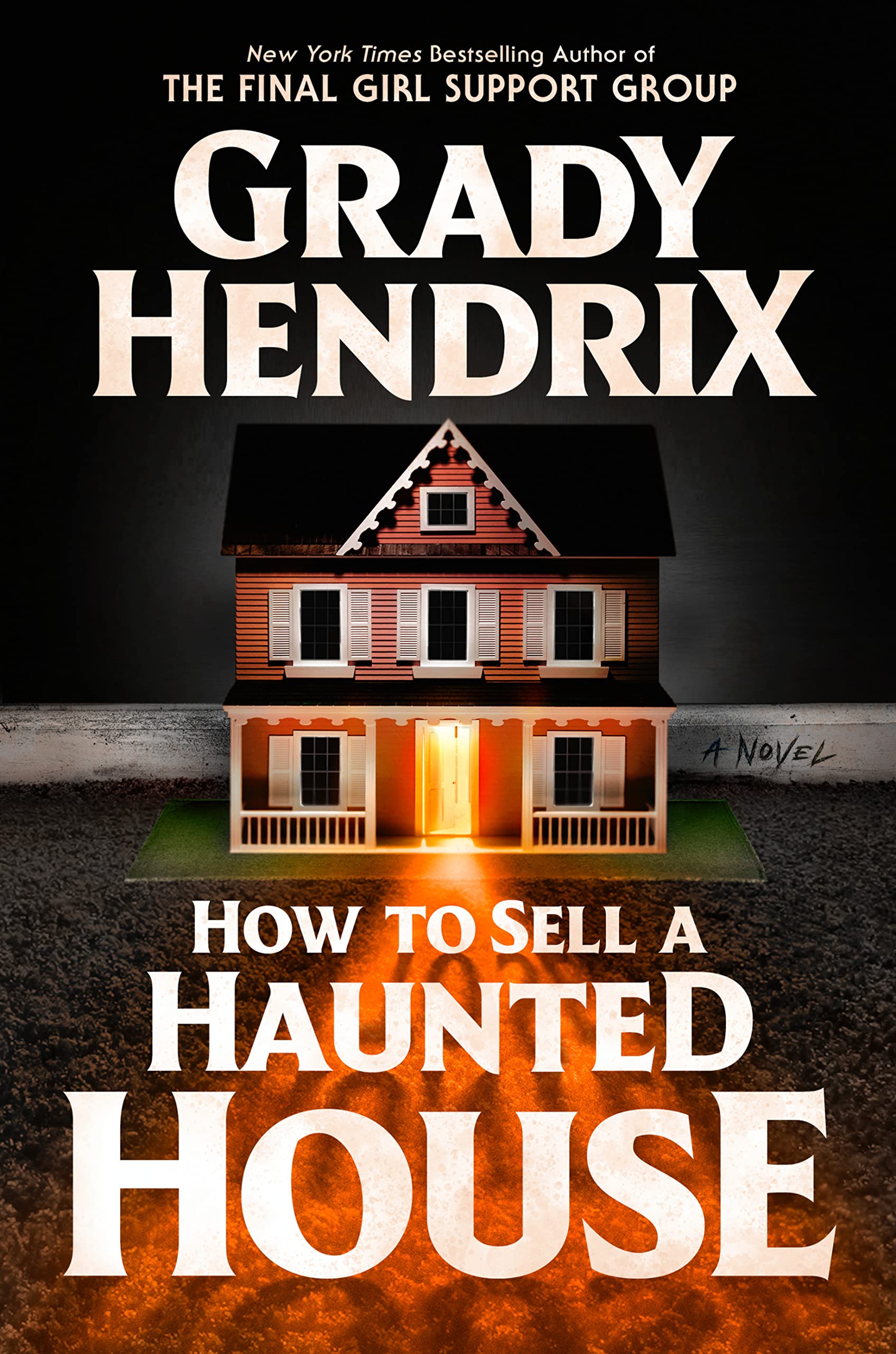
When Louise finds out her parents have died, she dreads going home. She doesn’t want to leave her daughter with her ex and fly to Charleston. She doesn’t want to deal with her family home, stuffed to the rafters with the remnants of her father’s academic career and her mother’s lifelong obsession with puppets and dolls. She doesn’t want to learn how to live without the two people who knew and loved her best in the world.
Most of all, she doesn’t want to deal with her brother, Mark, who never left their hometown, gets fired from one job after another, and resents her success. Unfortunately, she’ll need his help to get the house ready for sale because it’ll take more than some new paint on the walls and clearing out a lifetime of memories to get this place on the market.
But some houses don’t want to be sold, and their home has other plans for both of them…
The novel starts with death…the death of protagonist Louise Joyner’s parents. Louise finds out when her estranged and chaotic brother Mark calls to tell her they died in a car accident near their home in Charleston, South Carolina. Compounding Louise’s grief is the fact that she will leave her daughter Poppy behind and deal with Mark, who is very much at odds with Louise as we meet the orphaned siblings. The house has been in the family for decades, it is the house that not only in which Louise and Mark grew up, but also their mother. Their mother was a crafter of sorts and a puppeteer, the house is filled with hundreds of puppets. As they bicker and argue the house begins to chime in with some creepy things. TVs thought to be turned off are suddenly on again. Puppets thought to be in one room are suddenly in front of the TV. Then there’s Pupkin, the puppet that inspired all the other puppets and Louise’s mother’s childhood toy, the puppet that Louise always hated and “made Louise’s skin crawl.”
As soon as I knew about this book, I knew I’d want it in my hands because of how expertly Grady Hendrix crafts a story. Much of what I enjoyed in his previous novels can be found here, humor balancing horror, believable, likeable characters along with characters that infuriate – in other words, realistic characters that feel like they walked out of reality and on to the page. In his previous novels, he had some scares, but this one I actually felt goose-pimples rise up on the back of my neck in some scenes. This is easily his creepiest novel to date and one of the creepier novels I’ve read in the recent past.
Balancing out the creeps is another thing that Hendrix has excelled at portraying in his previous novels: relationships, family or close friends (who might as well be family). Family is an important part of this novel, not just the siblings, but the extended family who reside in and near Charleston, SC. Louise and Mark’s aunts and cousins who are wonderfully drawn supporting characters help to provide some humor and idiosyncrasies that help to make the family unique. Family is who helps us through grief and a lot of this novel is about grief, too. Frankly, many haunted house stories have grief as a major theme and component, and Hendrix’s very human and empathetic characters navigate this complicated human emotion with plausibility…if you factor in creepy haunted puppets into the mix.
When a writer does characters well, they can make you really believe in those characters, make you feel as if you know those characters. Next level writers can generate one emotional response in the characters they create only to figuratively snap their fingers and make your emotions switch from negative to positive, from disdain to understanding, sympathy, and empathy. Hendrix has pulled off that trick quite nicely here and from the fantasy genre, the two masters at this trick are George R.R. Martin (Sansa) and Robin Hobb (Malta Vestrit). I’d add Grady’s name to that list because he shines a mirror onto a character that illustrates their reflection in a different light, while not negating the flaws that made this character who they were and continue to be. That kind of transformative emotional response a character elicits often happens when characters go through hell, experience some kind of pain and trauma where we see them change and grow. What Grady does is slightly different, in that he informs readers of previously unknown events in a character’s life, but the effect is just as powerful.
Sharp-eyed readers may notice references to Grady’s previous novels, especially since a couple of them take place in the same general region. I wouldn’t say that there’s quite a “Grady Hendrix Fictional Multiverse” but it is a nice touch that there is even a thin connection between his works.
Grady Hendrix has become a “must read” for me. He’s grown into a modern master of the genre and each new book he publishes shows his growth as a storyteller in everything that word encompasses. He’s a smart, savvy writer who spins emotional stories featuring very human people and themes with the best of them.
As I’ve come to say in each book I’ve reviewed by Grady Hendrix, How to Sell a Haunted House will no doubt make my end of year/favorite/best of the year list.
Highly recommended
© 2023 Rob H. Bedford
Berkeley Books | January 2024
Hardcover | 432 pages
Landing Page for the book: http://www.gradyhendrix.com/#/haunted-house/
Excerpt: https://thenerddaily.com/how-to-sell-a-haunted-house-by-grady-hendrix-excerpt/
Author Web site: https://www.gradyhendrix.com/
Review copy courtesy of the publisher