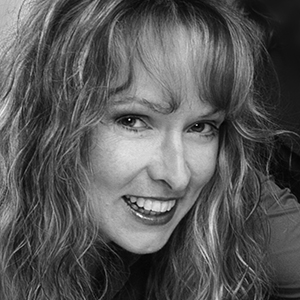
 Hi Cecilia, Thanks for giving us some time here at SFFWorld.
What are your expectations now that Open Road Media are releasing your Bitterbynde Trilogy as e-books in the US and Canada?
Hi Dag, and thank you for the opportunity to say hello to your readers!
What do I expect? Well I *expect* that the Captain Jack Sparrows, Long John Silvers and other entrepreneurs of the virtual Spanish Main will probably be adding my e-books as booty to their online treasure chests – however, the mighty cannons aboard the galleons of Open Road are, I am assured, primed and ready to shiver their timbers! What I *hope* for is that fantasy readers who’ve not yet encountered my books will come to know them through this easy-to-access medium.
How did you originally come up with the idea for The Ill-Made Mute?
Ever since I can remember I have been driven by a desire – a need – to create, in words, a secondary world of my own. My own Middle-earth, if you like, or my own Narnia – yet neither of those; a world that was uniquely mine. I began writing about this realm many years ago. Gradually the words accumulated, until the imaginary universe containing the planet Aia was almost fully-formed. Then I introduced a protagonist. At that time I was unsure who this person was, or what their destiny might be. I myself still had much to learn about my new universe. Thus, through the eyes and experiences of my protagonist I began to explore. A story unfolded. It had a beginning – it only needed a middle and an end… many were the hours I spent trying to find that middle and end. Many were the versions that dawned on me, were looked at from every angle and ended up discarded because they did not ‘feel right’.
All the time I was searching, I was still writing. My protagonist was amnesiac because at that time I had no idea of this person’s past. My protagonist was mute because I had no dialogue yet. Due to my unenlightenment my protagonist had no name, not even a face… no knowledge of the wider world…
Until at last, the beautiful, wonderful plot came to me in all its completeness.
As I escaped from the blind walls of ignorance, so my protagonist escaped from the confines of a stone fortress and began a journey through my world.
These e-book versions also contain some additional content. Can you tell us a bit more about what to expect and why you chose to include those new parts?
One of the questions I (and my fellow authors) are asked most often is, ‘How does one become a writer?’ This is why, in the new introduction to ‘The Ill-Made Mute,’ I attempted to address this question.
I’ve also included in these editions some illustrations I drew during my youth, to accompany other fantasy stories I was writing, as well as some of the scrawled, hand-written poetry from my teen years, and even the typed contents page from one of my juvenile fantasy stories.
In the introduction to ‘The Lady of the Sorrows’ I’ve included my thoughts on the experience of writing the Bitterbynde Trilogy in addition to some more images of my hand-written early drafts.
The new ‘The Battle of Evernight’ edition contains an entire extra chapter. This chapter was originally written in response to requests from readers for clarification of the final chapter as it appeared in early editions of ‘The Battle of Evernight’. Many people found the book’s ending ambiguous, and I was happy to clear up any confusion!
When you look back and especially now when you have revisited the material, is there anything you wish you’d changed back when the originals were published?
I can see some ‘tweaks’ I’d like to make; merely minor re-arrangements of a few words; think of them as polishing an already well-polished mirror. I suspect that writers and other creators are never really finished with any work. I’ve heard that many fine artists have to turn their ‘finished’ paintings to face the wall – otherwise every time they walk past, they are tempted to pick up a brush and make small adjustments here and there. Overall, there is nothing of any importance I’d like to change – I’m pretty happy with it!
Andre Norton, Grand Master of Science Fiction, said of The Ill-Made Mute, “not since Tolkien’s The Lord of the Rings have I been so impressed by a beautifully spun fantasy.”. What was your reaction when you first heard that statement?
I was more deeply honoured than words can express! And I continue to be, though much time has elapsed since then. I grew up reading – and loving – stories by Andre Norton. I admired and idolised her from afar. Her stories helped shape my own internal world. To have *her* say this about my work was praise above and beyond any I had ever hoped for. To this day I still have to figuratively pinch myself when I think about it. Norton was my hero, and Tolkien’s work has been my highest ideal, ever since I first read The Lord of the Rings at the age of nine. I do not feel worthy to be mentioned in the same breath as Tolkien, but if Andre Norton sees some comparison, I can be happy forever!
You were originally discovered on the Internet. Not so uncommon people might say, but this was long before the Internet became what it is today. What happened?
This was such an uncommon event in 2000 that it made the newspapers. And radio, magazines and TV, for that matter!
I had written the three books of the Bitterbynde Trilogy before I uploaded the first chapter to a Sci-Fi/Fantasy Writers’ Workshop, where my work was spotted by an editor. The editor recommended me to a U.S. literary agent, who signed me up. Shortly afterwards Time-Warner’s publishing department (New York) offered me a contract. They published my books in hardcover, the first time they had ever done so with a new author. The Bitterbynde Trilogy hit the best-seller lists world-wide and has been translated into five languages.
So, simply by sitting alone in a room in front of a computer I went from being an unknown writer to being a published author with a very nice advance cheque!
How are you personally finding the e-book revolution?
Like most revolutions it has both its advantages and its drawbacks. Its obvious advantages include instantaneous delivery, lower prices and portability of large numbers of books. Also I prefer e-books when using them for research purposes, as they possess that incredibly useful search function. The drawbacks include digital piracy, which I would not be concerned about except that it took me twelve years of intense labour to write these three books, and like everyone else I have bills to pay! I was hesitant to allow The Bitterbyne to be released as e-books, but I’ve taken the plunge now, for better or worse!
One of the great assets of print books which currently cannot be replicated by e-book readers (although it probably will someday; it seems technology can do anything) is the sensory experience of turning the whispering pages, and smelling that comfortable book scent, and placing a book on one’s shelves as an artifact or an ornament, and not simply a conveyor of information. There’s something comforting and reliable about a device that doesn’t depend on electricity to power it and whose words don’t change or unexpectedly fade!
Thinking back, how did you start writing? Was there a particular book or moment in your life that spurred you on?
My mother preserved a story I wrote (and illustrated) when I was aged five or six. It was – naturally – a fantasy story, and it was about a prince and a princess. Hearing my parents read to me when I was very young sowed the seeds of my motivation to write. Reading the armloads of fairy-tale and fantasy books my mother brought home from the library every week nourished the seeds. She brought us works by Andre Norton, Alan Garner, Ray Bradbury, Arthur C Clarke, Isaac Asimov, the amazing Nicholas Stuart Gray and and others too numerous to mention. As a child I mentally lived in Narnia until The Lord of the Rings showed me Middle-earth. It was reading these stories set in alternative worlds that fired me up to forge my own world. And it was Tanith Lee’s extraordinary writing that gave me ‘permission’ to revel in the English language to the fullest.
You draw much of you inspiration from folklore and seem very fascinated by the topic. Is this something you’ve always been interested in even before you started writing?
Well I would say yes, except that there really wasn’t much time before I started writing. The five years from birth to the age when I could hold a pencil and shape letters with it – they were the only years in my life that qualify. As a child I read Andrew Lang’s fairy books, and poems by Walter de la Mare, and ballads collected by Francis Child, stories by William Morris and a myriad other works influenced by the folklore of the British Isles. All through my life my parents used to give me books as birthday gifts. They well knew the sort of books I loved. When I was in my teens my mother presented me with a book by folklore collector Katharine Briggs, detailing many genuine anecdotes she had recorded during her extensive travels around England, Ireland, Scotland, Wales and their outlying islands. This cemented my fascination with this folklore and led me to further research.
I discovered that much less was popularly known about the folklore of the British Isles than the folklore of Scandinavia. Tolkien (and others) wrote extensively about the trolls, elves, dwarves and dragons of Scandinavia. I wanted to explore a more elusive folklore. I have also revelled in researching the rich, enchanting folklore of New Zealand, China, Japan and many other countries.
What has been most surprising to you in your writing and publishing career?
The fact that there are countless people out there who think along the same lines as I think – whose inner world resembles my own inner world! I’d assumed I was alone in my Arthurian/Tolkienesque/Romantic/Gothic/Pre-Raphaelite/medieval/folkloric daydreams. I was wrong. Being published, especially in the era of the Internet, has put me in touch with others of my own ilk, and it is a joy to meet them through email, Facebook, author appearances etc. I have found my people!
Would you care to pass on any advice to writers starting out? What was the best advice you were ever given when starting out?
Honestly I have thought hard about this question but I cannot recall anyone ever advising me about writing except my grade 5 teacher who told me I should substitute the word ‘piece’ for the word ‘bit’ in one of my short stories. Presumably ‘bit’ was not literary enough. The idea that some rather vulgar words were inferior to others tended, I suspect, to stunt my youthful writing efforts. In hindsight I am unutterably glad no one else presumed to advise me. There is really no right or wrong way to write, as long as you have the ability to *communicate your ideas*. Each writer has his or her own voice, which cannot be taught by another writer.
*If* anyone wants my advice, (take it or leave it!) I recommend the technique of simply writing down your thoughts as they occur to you, without regard to spelling or grammar, just getting Words On Paper. This first step is like collecting clay to make a pottery object. You need the solid mass of raw clay ‘words’ in your hands before you can start to shape them and prettify them with revisions. Many new writers fall into a trap of trying to make each sentence perfect the first time. They become bogged down in this perfectionism and lose the free thought-flow that is the source of their inspiration. So, to begin with just write, write, write!
What books inspired your career as an author, and what authors do you enjoy now?
I’ve mentioned a few above. In more recent years I’ve turned from exclusively reading fantasy and science fiction to reading non-fiction. I’ve been enjoying the works of authors such as Simon Winchester (‘The Map That Changed the World’, ‘The Surgeon of Crowthorne’), Dava Sobel (‘Longitude’) and Victoria Finlay (‘Colour: Travels Through the Paintbox’).
Fantasy and sci-fi are rooted in the real world, and the more widely an author reads non-fiction, the deeper into reality extend the roots of his or her invented realms. This enriches those realms and adds authenticity. The greater the authenticity, the better the reader’s (and writer’s) experience.
Most writers have some other thing they’re passionate about, what’s yours?
Animal rights. Anything PETA or Animals Australia stand up for, I stand up for as well. I support the rights of non-humans wholeheartedly with my voice, my money, my presence, my writing and any other way I can.
The Bitterbynde Trilogy was completed in 2002 and The Crowthistle Chronicles in 2007. After that you have released a young-adult fantasy novel in 2012. Do you have any new projects on the horizon?
I am writing non-fiction at the moment, This is a huge change for me, but I am enjoying it. I never dreamed I would ever write about the First World War, but this period in history now fascinates me.
I am working on a biography of an ancestor of mine who had an extraordinary life and left behind many letters and diaries recording his experiences. He joined the army in 1916, rose through the ranks, fought on the Western Front, won a Military Cross which was presented to him by King George V at Buckingham Palace, was transferred to the air force, flew biplanes very low over enemy lines and narrowly escaped being shot down, managed to stay alive until the end of the war, returned to Australia, married and had three children, received a degree and helped set up the Faculty of Commerce at Melbourne University, rejoined the air force and rose to be a Squadron Leader, voyaged with his family to England in the late 1920s to represent Australia’s air force, and was invited to be one of the VIP passengers aboard the maiden flight of the great airship R101. The rest is history… his story, and its shocking aftermath, is riveting material. I hope to finish it one day…
Once again, thank you very much for your time, Cecilia.
Thank *you* Dag!