
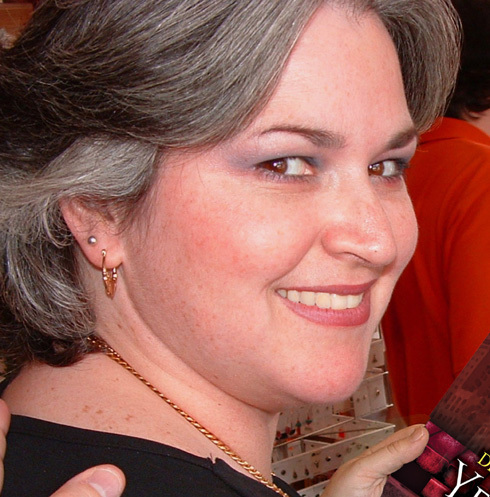
 Author’s note: For the sake of this article I will use myself and my publishing house, eSpec Books for example. All of the following is based on our experience having created and successfully funded seven campaigns in the last two years, soon to be eight.
You can’t turn around on social media these days without passing another post about crowdfunding. Nearly everyone is either using it or supporting it. But how many people actually understand what it is?
To put it simply, crowdfunding is a promise.
I, the creator of the campaign, promise to produce a book, and you, the backer, promise to provide the support needed to make that happen. In exchange you receive the pledge reward of your choice, which generally includes some format of the book to be produced, possibly including other incentives such as your name used as a character, autographed copies of other works, or some type of swag related to the project.
But really, it is never as simple as that. With so many out there eager to fund their own projects it is easy to get lost in the crowd (no pun intended). How do you stand out? How do you get noticed? Here are some key points to note.
Research
Each crowdfunding platform is slightly different from the others, be it on Kickstarter, Indiegogo, Patreon, or any of the other sites out there, so you need to familiarize yourself with the differences and chose which is right for your needs. Once you have chosen, scan other projects, both those that were successful and those that failed. See what works and what doesn’t, how the campaign pages look, what the creators are saying, and what they offer, then use that information to devise your own campaign.
Professionalism
This applies to both the overall appearance of your campaign and the tone you take when explaining what you want to do. Be consistent in formatting and present a polished campaign with uniformly sized and spaced images and clear, concise copy, free of errors and maintaining the same style throughout. For example, if your campaign involves books and you italicize one title, italicize them all. Do not switch to all caps in another paragraph, or some other style. Consistency is the key to appearing professional.
Some crowdfunding platforms can be a little unwieldy to use, limited in formatting options. Know this when you get started and compensate for it. Kickstarter is the platform I primarily use and there you cannot center artwork or text, which can lead to an uneven, amateurish appearance. To get around this I will process my artwork in a separate art program and add white space to either side of the image so that when I bring it into the campaign page it will appear centered on the page. I also create visually appealing banners for each section of my campaign. When doing this it is important to keep all of your images the same width so that they display uniformly on the finished campaign page.
Perceived Value
When creating a crowdfunding campaign it is important remember it’s not all about you. Really, it’s not. Backers are interested in what you want to create, but they don’t care what you get out of it. They want to know what they will get out of it. Basically, is what they will receive a good value for their contribution? It is your job as a creator to make sure it is. You can do this in several way from the rewards that backers get in exchange for their pledge, to bonus rewards and incentives that encourage them to spread the word or up their support. If backers help to fund one book, but they receive ten bonus short stories in addition to that book, that is a good deal.
Modest Goals
One mistake many creators make is getting too ambitious. They have an idea of what they want and they want it all at once. All or nothing. This is one of the reasons so many campaigns are unsuccessful. I have found that the best strategy for me is to determine the absolute minimum I need to produce a simple book. If I can fund quickly I am more likely to gain support from new backers because we have already succeeded.
Now that doesn’t mean that’s all I want to do, but if I start with a modest goal and fund quickly then I have the remainder of the campaign to go beyond my goal, which allows me to add those bells and whistles I really want, such as interior art, a better cover, or a hardcover edition.
How? Well, there is something called a stretch goal…
Stretch Goals
How do you inspire people to back or to increase their pledges if you have already funded? Actually, more importantly, how do you inspire them to do this without looking greedy? Stretch goals. These are reward levels that you set…additional promises you make…for each tier you reach beyond your initial goal.
Sometimes it is a freebie, such as an ebook copy of a short story, or a digital download of music or art, other times it is a production goal. For example, I crowdfund a lot of anthologies. One thing we have used for stretch goals is adding a high-profile author to the collection, or adding interior illustrations to a book. Almost always the reward is something digital that will not add to the expense of my account.
I try and keep stretch goals placed fairly close together, every $300 or $500, because they are also an opportunity to talk about a campaign without just holding out your virtual hand. Stretch goals are a way of building interest and anticipation, which can drive your funding higher.
Promotions
It is not enough to simply create a campaign and expect to gain backers without any further effort on your part. Unless you already have a following or a really, REALLY awesome idea, no campaign is going to fund without you putting in some serious promoting time. Social media can be a powerful tool for getting the word out there, though sadly not as effective as it once was. Blogs and interviews on fan sites are another great tool, as are your network of friends and family, when it comes to spreading the word.
Updates
These are a way to connect with your backers, to be a little social, to be a little motivational. Share your excitement about a goal reached or give them a little nudge to help spread the word.
It is also a way to assure your backers you haven’t forgotten about them, either during or after the campaign. Don’t go too long without making an update of some kind to show you are making progress on the campaign and to give them incentives to increase their pledge or tell others; and after the campaign to let them know you’re working hard on fulfilling your promise.
In Closing
I know all of this is a bit vague, but there is no tried and true way to guarantee success. You try anything and everything you can, short of putting out money you don’t have yet, and you don’t give up until the close of the campaign.
You start with a cool concept, put the prettiest face on it that you can, engage your audience and tell the world about what you want to do, and you keep telling them. And…once you do succeed, YOU MAKE GOOD ON YOUR PROMISE. Show good faith and quality work, and the next time you want to fund a project you will have your past backers standing there ready to hand you their money.
So, if you still feel crowdfunding is the route for you, if you agree it is worth the effort, do it, but do it right and you will reap the benefits of success.
***
eSpec Books is currently funding two novels by bestselling authors Jack Campbell (The Lost Fleet, The Lost Stars, and The Pillars of Reality series) and Brenda Cooper (co-author of Building Harlequin’s Moon with Larry Niven, and author of The Wings of Creation series).
The two books are very different coming-of-age stories.
Jack Campbell’s The Sister Paradox is an urban fantasy turned epic adventure, where a teen boy crosses dimensions to fight dragons and basilisks and other manner of magical creatures beside the sword-wielding younger sister he never had.
Brenda Cooper’s POST is a post-apocalyptic journey novel, where a girl name Sage leaves the safety of the botanical garden she grew up in to discover the world outside and with hope, help rebuild it.
To learn more or to support their efforts, visit http://tiny.cc/Novels2016.





Thank you for hosting me today.