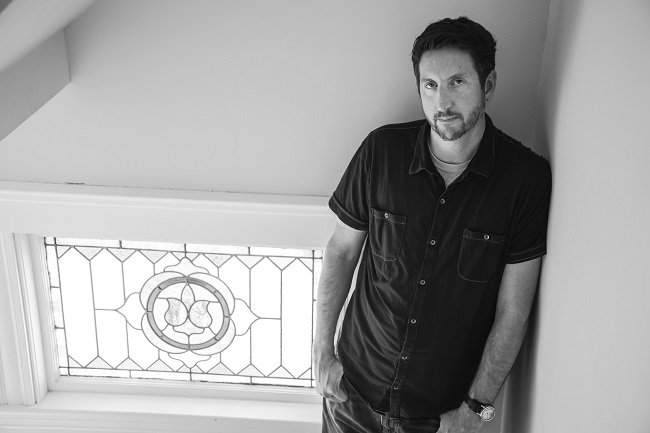
 You may have noticed that A Head full of Ghosts is one of our favourite Horror reads of 2016. Following Randy and Mark’s reviews of A Head Full of Ghosts, we were very pleased for both of us to have the opportunity to interview the author for SFFWorld as part of our Countdown to Hallowe’en for this year.
______________
Hello Paul!
Both of us loved your new book, A Head Full of Ghosts. Would you care to briefly describe it for those who don’t know the plot?
Thanks!
You’ve already uncovered my weakness…describing plot!!!!
Marjorie Barrett is fourteen years old and she’s either suffering from some sort of psychotic break or perhaps she’s possessed. Her desperate and cash-strapped parents allow a reality TV crew to document their lives leading up to an attempted exorcism. Fifteen years after the disastrous show, Merry Barrett (Marjorie’s younger sister) tells hers and her family’s story to a best-selling author.
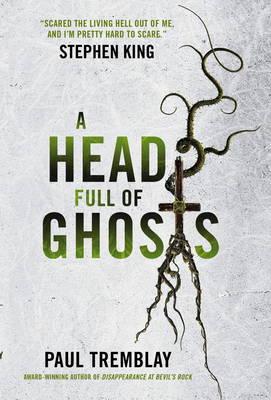 Apart from telling ‘a story that scares the hell out of you’, to paraphrase Stephen King, what was your own reason for writing the novel?
My first two novels were quirky detective stories followed by a couple of SF/Fantasy novels. A large part of the appeal of this novel when I was lucky enough to stumble across the story idea for A Head Full of Ghosts was that I’d finally be writing a horror novel. In a lot of ways the book is both my criticism of and love letter to horror.
I also really wanted to tell Merry’s story.
We loved the characters, and the plot. Both of us had to reread some of it after we had finished it. As the writer, which came first – the characters or the plot?
My ‘a-ha moment’ was noticing that there hadn’t been many exorcism/possession novels in the past ten years or so, and that if I were to write one it would be from a skeptical point of view. Or at least a point of view that wouldn’t easily accept that the supernatural as real was a given. So I had the vague idea of this postmodern, secular/skeptical, possession novel. Then the two sisters came next: Merry and Marjorie. I knew right away that the story would be told first-person from Merry’s point of view. The rest grew from there. Like a growing thing! (Jeeze, that’s shameless, I know…)
We also loved the fact that your characters admit that they know all the usual tropes – and then use them to their own advantage. To know the rules and then break them would suggest that you need a lot of background knowledge. Was there a lot of research involved in preparing to write this book?
I didn’t do a ton of new research once I started writing the novel. I’d already spent a lifetime reading novels/stories and watching horror movies. Also, my happening to be reading a collection of essays about the film The Exorcist helped inspire the idea for the novel.
I figured that writing an exorcism story I wouldn’t be able to ignore the Blatty-elephant in the room. I decided to embrace The Exorcist and all the general horror tropes I could think of, and use them to (hopefully) better build the ambiguity throughout the story. If the reader knows the author (and the story itself) knows the tropes and implications, then well, what is really going on? What’s real, what isn’t? And, does it matter if it’s real or not?
 Is there anything that surprised you about writing this book? What are you most proud of, having finished the novel?
I was surprised how fun it was to write the blog posts. I usually dread writing non-fiction. I don’t feel comfortable or confident writing essays and the like. Those blog posts though, I had a blast. And I was willing to fight to the literary death to keep those blog posts in the book as I they are essential to the story and to a character.
Can I admit that I’m really proud a bunch of people like it? I always wanted to write a book that would have people talking, theorizing, arguing. Mainly I’m proud that I didn’t totally screw up the good book idea that I was lucky enough to stumble upon.
A nice complex one, now. The information at the back of the book included an essay on the nature of Horror. There you argue for horror having a “progressive” structure. As we understand your explanation, it seems to us rather like the struggle the mystery/detective form had with re-establishing the status quo – what at first is a virtue, drawing in readers, later becomes an anchor, even a deadweight, holding the Horror form to an artificiality that limits the scope of the writer. So, firstly, have we understood that point correctly?
Yeah, I think so. I tried to argue that the best (or most affective) horror stories employ a progressive structure and reject a re-establishing of the status quo, unless the re-establishing is the horror/transgression of the story (as is the case in Shirley Jackson’s The Lottery). It’s the idea that once the terrible truth is revealed, no one and nothing can ever be the same again.
Despite this limitation, it seems there were many practitioners of a progressive structure in Horror after H. P. Lovecraft, who reveled in the joy of pushing the boundaries, particularly in the short form – we’re thinking writers like Fritz Leiber (“Smoke Ghost”; “The Girl with the Hungry Eyes”; “Diary in the Snow”) and Robert Bloch (“Yours Truly, Jack the Ripper”; “Enoch”; “The Hungry House”) and later, of course, Shirley Jackson and Robert Aickman, as well as more recently, Ramsey Campbell, Thomas Ligotti and Caitlin Kiernan. Does what you’re arguing for as a progressive medium differ from what they were doing? Who, besides yourself, are the current practitioners you’d point to as examples of such story-telling?
I confess to not being familiar with all of the works you quoted above. The ones I have read I do think they’d fit the progressive structure. There’s a transgression and the characters and world is never the same, and the stories reflect that. My essay was more in reaction to some of the classically conservative themes in horror. One example is having evil visit the nice suburban town and the other must be defeated/expelled. That’s a theme that The Exorcist employs, of course. The ending to A Head Full of Ghosts was a direct reaction to the all-is-well-again ending of The Exorcist. I wanted to make sure that what the Barrett family was made to go through lead to consequences that were as horrific as the attempted exorcism.
As far as current writers go, you should be reading the following: (in no particular order…) Victor LaValle, John Langan, Sarah Langan, Laird Barron, Nathan Ballingrud, Livia Llewellyn, Stephen Graham Jones, Michael Cisco, Nick Mamatas, Nadia Bulkin, Brian Evenson, Kelly Link, Letitia Trent, and so many more. The horror genre has never been more healthy or expansive, I think, and I’m so pleased to be a small part of it.
We’ve added more to our reading lists… thank you! Thinking further around the topic, we’re counting down to Hallowe’en at SFFWorld. What is the attraction of writing Horror for you?
Horror, in one form or another, has been an interest of mine for as long as I can remember. As a kid, monsters were just cool, right? I mean, they still are, of course. Now as an adult (mostly), I think that horror can dig into the most difficult questions that art and literature asks: what decisions are we going to make? Do we know the consequences? How do we live through this? How does anyone live through this?
What were your first encounters with it?
In the days before cable TV a local Boston TV station ran a program called Creature Double Feature every Saturday afternoon. The first movie was usually a Godzilla flick and the second was a black and white classic (or clunker) or a lurid Hammer movie. I loved the Godzilla movies and was terrified by the second movie. Even something as schlocky as Attack of the Killer Shrews. Yeah, that gave me nightmares. I scare easily.
We’ve already said that at the back of A Head Full of Ghosts there are some terrific lists of books and films that you would suggest we go away and watch/read. (And we’ve already started to work through!)
So here’s our challenge: can you recommend just one author and one film for someone new to the genre, and then one author and one film for someone who knows a bit, that they would read/watch at Hallowe’en? (One of us… actually, both of us… are expecting Shirley Jackson to be mentioned, but feel free to name others!)
You mean besides me? I could use the sales…
Okay, I feel pressure.
Author for the person new to the genre: Shirley Jackson, of course. The Haunting of Hill House is the haunted house novel of the 20th century, and We Have Always Lived in the Castle is a masterpiece of weird/dark/unclassifiable fiction.
Movie for the person new to the genre: John Carpenter’s The Thing. The story is a classic parlor/closed room who-dunnit turned into a who-will-do-it. So intense. The movie more than still holds up. The practical effects are uninhibited imagination and utterly horrifying. I defy anyone to not like (or appreciate) that movie. Or…watch the original Night of the Living Dead. I used to re-watch that every Halloween.
Author for the experienced genre junky: You should read anyone from that list of contemporaries I listed above. Or, if you haven’t done so already, you (yeah, I’m talking to you, experience horror junky) should read Mark Danielewski’s House of Leaves. It’s the ultimate rabbit hole novel. Or Toby Barlow’s Sharp Teeth, a free verse werewolf novel.
Movie for the experience genre junky: Something off the beaten path, perhaps? How about Kill List? Brooding, violent, and totally bonkers by the end. I love that movie. Or Sauna, a movie from Finland set during the Russo-Swedish war that is truly haunting and disturbing.
Fantastic answer: thank you! (More added to the pile…) Finally, what’s next on the writing front?
I have a short story coming out in Ellen Datlow’s Black Feathers anthology (February 2017) and a story coming in Christopher Golden’s Hellboy anthology (August 2017). Novel-wise, I’m hard at work on my next horror novel, which will likely be published Summer 2018.
We look forward to all of that. Many thanks, Paul!
Thank you!
Paul’s latest book – A Head Full of Ghosts – is out now. Randy’s review for SFFWorld is HERE. Mark’s review is HERE. Many thanks to Lydia from Titan Books UK for making this happen.
Copyright SFFWorld, October 2016