Current Non-Genre Reading III

I read Billy Summers by Stephen King - Billy's a war veteran and now killer for hire, and gets offered a last job that seems to good to be true.

This is SK at his best - engaging and natural characters, realistic dialogue, and plot turns that keep you on the edge of your seat. The staging of the main plot was well done too - you know things are going to go wrong, and there's going to be some sort of revenge - it's just when and how it will happen.

I'll look out for this one, Westy. Haven't read much King apart from The Dark Tower series. Someone I used to work with was a big fan of his but she was into horror, which I tend to avoid - due to the fact that my home backs on to an old graveyard and I have my patio doors open rain or shine, night or day. There are gravestones literally a few metres from where I'm sitting now.
 
Don't read Pet Sematary then!
That's definitely off the list. I did watch The Return Of The Living Dead (1985) the other night but I reckoned on it not being too scary - and it wasn't. Well, not too much... :eek:
 
I'll look out for this one, Westy. Haven't read much King apart from The Dark Tower series. Someone I used to work with was a big fan of his but she was into horror, which I tend to avoid - due to the fact that my home backs on to an old graveyard and I have my patio doors open rain or shine, night or day. There are gravestones literally a few metres from where I'm sitting now.

Yes..doesn't sound like an ideal setting for a late evening read of Stephen King's "The Shining" ;)
 
Yes..doesn't sound like an ideal setting for a late evening read of Stephen King's "The Shining" ;)

Nor Salem's Lot, which I haven't read but was terrified by those vampire kids hovering outside the window in the TV series I watched probably in the 80s. To be honest, living next to a graveyard makes for a very peaceful existence, and I don't intend to scare myself shitless by reading creepy stories.
 
Finished The Crow Road

little-brown-book-group-paperback-the-crow-road-by-iain-banks-4873624584243_1000x1000.jpg


The Crow Road is a story about a middle class Scottish family named Mc Hoan. Prentice McHoan is the principle character and narrator, and the experiences of Prentice’s friends and family members are told as third person narrative. These experiences are mainly flashbacks into the earlier lives of Prentice and his father. For the most part, the story follows Prentice through his late adolescent years during his time at university, his experience with unrequited love, bereavement, sex and alcohol. Some of these are hilarious, especially when Prentice chunters exasperatingly about Gav, his rugby playing flatmate. However, underneath it all is a more sinister story that only Prentice becomes (later) aware of. This doesn’t take precedence by any means, but ticks away in the background as the characters get on with their lives.

Like all of Banks’s books, The Crow Road is witty and clever, but out of all the books of his I have read this is perhaps Banks at his wittiest. If you like nostalgic trips back into the eighties along with music and political references of the time, you’d like this one. I know I’m dithering, but I’d award it between 3 and 4 stars
 
  • Like
Reactions: Raf
Just started "El Paso" by Winston Groom (Author of Forrest Gump). Set just before and then eventually during the Mexican Revolution. The bankrupt mexican govt was selling off huge tracts of land on the Texas / Mexico border. Hoping private investments from American rail & shipping tycoons would build infrastructure the govt couldn't afford.

Pancho Villa had other ideas. Loosely based on a true story. It tracks the adopted son of a minor rail mogul through the desert as they attempt to rescue relatives of the mogul. Who have been kidnapped from his ranch by Villa.

Pretty good, so far. Took a bit to get into as Groom spent some time on the childhood of the adopted son. But it sets the scene and character.
 
Just finished "El Paso" by Winston Groom. A bit slow to start, but an awesome finish. Almost a western influenced Grail Quest to find the kidnapped children of a father who became more than what he was in his quest for his children.

Though titled "El Paso" ( I was born in El Paso, btw), the story takes place mostly in northern Mexico. The story includes fictional accounts of historical character the likes of Ambrose Bierce, John Reed & Tom Mix as well John Pershing and a small appearance of George S. Patton.

Good story all in all...highly recommended.
 
Just finished "The Walking Drum" by Louis L'amour. Historical fiction novel set in Europe, Asia and the now Middle East. L'Amour is an iconic American writer that was, unfortunately, pigeon holed into the "Western" genre in the mid 1950's through the 70's.

I read dozens of his western novels starting as pre-teen and many years following. Lost track of him by the time I discovered scifi. "The Walking Drum" attained # 2 on the NYT Book list in 1984.

This long sought attainment by the author passed my attention then. Until I discovered a blurb / review just a few weeks ago.

He had 2 more novels in the works continuing the saga of Walking Drum's main character. But with L'Amour's untimely death in 1988, he never finished either novel. His son, Beau L'Amour, wrote the afterword and describes the possible outline of the novels based on his father's notes. It will have to do, I suppose. But I would really have liked to see where Kerbouchard's further venture's took him.

A first person narrative set in the time of 1100AD. Celtic Scholar, Druid, Warrior, Merchant, Pirate and sometimes slave Mathurin Kerbouchard crosses Christiandom & the Moslem countries looking for news of his father. A well known Corsair of the time.

It is a fun and educating read. I thoroughly enjoyed this one. Finished it in a mostly non-stop marathon session.
 
Last edited:
Finished The World Played Chess by Robert Dugoni. The tale of three generations dealing with coming of age and death. The earliest generation is a Marine who, as an 18 year old, goes to 1968 Vietnam. How he became a Marine is just right. The second generation is an 18 year old recent high school graduate preparing for college by working through his summer. The third generation is high school grad's son experiencing his senior year. In addition to coming of age, each must deal with reality of death. All three stories are great reads.
The Marine's story is powerful, brutal, and honest. It had an impact on me I'm still attempting to understand.
 
Reading, for research, Churchill: A Biography by Roy Jenkins. It's okay, and I'm getting what I need, but as Jenkins was a politician he really focusses on stuff in the House of Commons and, well, to be honest, I really don't care. It's a real case of scroll, scroll, scroll till you get to something good. Too much namechecking and either arselicking or arse-kicking, depending on whether the person in question is or was in favour with him or not. Not a book I would read for pleasure, but oddly there seem to be very few Churchill biographies around that tackle the period before World War II, which is what I need.
 
Reading the Second John McPhee Reader.
For those not familiar, McPhee is one of the acknowleged masters of non-fiction (by me:rolleyes:) - and many others. His work generally appears in the New Yorker, with the full books being excerpted there and the shorter pieces published in toto. Included in this collection are parts of Coming into the Country, Looking for a Ship, The Control of Nature, and the four books on geology that comprise Annals of the Former World. Also essays from Giving Good Weight on subjects as diverse as the Harlem fresh food market and a idiosyncratic French chef.
If you want to noodle around the backwoods of Alaska or explore the geology of America with a collection of entertaining geologists, read this one. McPhee has received Pulitzer and numerous other prizes over his career. I picked this up to entice a friend with McPhee, but ended up rereading pieces of books that I had previously enjoyed.
 
Last edited:
Last month I read a book that, as of now, is a shoo-in for this year's (2021) "Best initial read of the year" award. Yet it is so niche I can not recommend it to readers not already well versed in the book's subject matter. It's Immortal, by Jessica Dunchen. This is a fictional fleshing out of the life of Josephine von Brunsvik, as related by her sister Therese. To fully appreciate the book, you ought to have read at least one comprehensive bio of Beethoven (I recommend Jan Swafford's), as well as fact-based arguments for Josephine as his Immortal Beloved. As I consider myself well-read in both, and have favored Josephine as the Immortal Beloved for decades, Immortal suits me to a tee. Though fiction, it sticks very close to what truths we know about the von Brunsviks, Beethoven, and their interactions. That said, liberties are taken. My one real gripe with the book is minor. Near its end, an incident concerning one of Josephine's numerous children is fabricated that I find needlessly over-the-top. On a much lesser level, a fabricated brief chance meeting occurs that, to me, would have been better had the individual not been named. These are small matters in a work that captivated me from beginning to end.
 
At 1347 this afternoon, 23 Oct 2021, I concluded an initial read of Ellie Midwood's The Violinist of Auschwitz. Based on the true story of violinist Alma Rose, chronicling her stay in the death camp, it looks to be one of a number of like-themed books by Ms Midwood. There is at least one further book on Rose, which was made into a movie. According to Midwood, its author's credibility is highly suspect, and contested by other survivors of the Auschwitz female orchestra, which Rose directed. Be that as it may, I found it quite gripping, if at times understandably unsettling. At its Kindle price of $1.99 (as of late Oct 2021), it's a very strong recommendation. (Admittedly, Rose being a musician, I'm possibly more susceptible to being drawn into her story than might otherwise be the case. But still . . .)
 
Looking for good deals at the Kindle store yesterday, I was surprised to see Jan Swafford's Beethoven: Anguish & Triumph reduced to $3.99! I own, and have read it, in hardback. It's my favorite Beethoven bio, and Beethoven is one field I'm relatively well versed in. I bought the Kindle edition, simply because the hardback is a chunkster, too heavy and bulky to read comfortably lying on the sofa. (This was not yet true when a younger me first read it some years back.) I am of course biased toward writings on the master, as I consider him not only my musical god, but also one of the most fascinating individuals to have walked the face of the earth, as interesting as literature's best fictional characters. For those with little or no prior knowledge of Beethoven, the book might be a bit heavy going at times, but that's a small price to pay, in my estimation. At any rate, for the above price I think it a darn good deal.
 
Just finished a memoir by Dave van Ronk, The Mayor of MacDougal Street on the early days of the folk revival.
van Ronk was a white blues player central to the scene, particularly in New York City.
Lots of anecdotes about the early days and early players therein, including a kid from Minnesota named Zimmerman (Dylan).
Nothing spectacular, but worth a read should you be interested in the music/period.
 
Last edited:
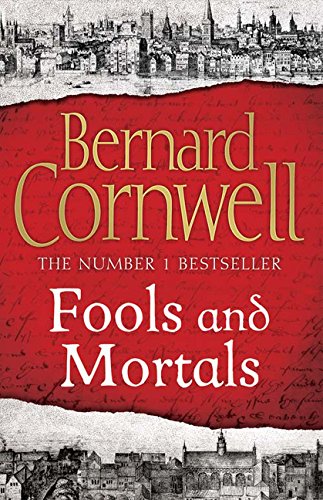
Fools and Mortals

51xZXZ0uXDL.jpg


A stand-alone novel set in late 16th century London, Fools and Mortals is a semi-fictional novel told from the perspective of Richard Shakespeare, William Shakespeare’s real-life brother (as far as I know, there is no evidence to suggest Richard was a player/actor or that he worked as a member of his brother’s company at The Theatre). The story surrounds the staging and production of A Midsummer Night’s Dream at the Lord Chamberlain’s house to celebrate the marriage of the Lord Chamberlain’s daughter. Richard is a player and yearns to be cast as a man rather than the female roles he sees himself as being pigeon-holed in. The ongoing construction of The Swan theatre nearby offers further opportunity for players, but when Richard visits The Swan to gauge the possibility of employment, he finds the owners are more interested in his brother’s playscripts.

If you are familiar with the film Shakespeare in Love, you will have a good idea of the social and political setting of Fools and Mortals. In the book, the political influence of the Puritans and their opposition to the theatres is given a fair bit of space, as is their crusade against the Catholics. What comes through most of all in the book, however, is Cornwell’s love of Shakespeare; in fact, the story is as much about the staging of A Midsummer Night’s Dream as it is about anything else. Consequently, this does have an effect on the story as a whole - which is not to say that it is unenjoyable – just that Richard’s story sometimes plays second fiddle to what Cornwell really wanted to write about. Personally, I have never been fond of A Midsummer Night’s Dream and skimmed through the parts of the book that focussed on the play’s production and performance. Because of this, I would award it 2.5 stars…at a push, maybe 3.
 
s-l640.jpg


Having been inspired by the AppleTV+ series Dickinson, I’ve been reading some of her poetry. I’m in the second of three volumes now. It is in the public domain, and can be obtained here for example:


I think that the modern world would benefit from more poetry…
 
Started Christian Cameron's "Killer of Men". A first person narrative to his grand daughter by an old man ( Arimnestos). About his life before and during the early years during when the various greek city states begin to throw off the yolk of Persia. In between warring with each other.

Enjoying it quite a bit so far. Looks to be the 1rst in a 6 book series.
 
Last edited:
Prompted by her induction ( if that is the right word ) into France's Pantheon today, I may finally get round to starting the biography of Josephine Baker that has been in my bedside to be read pile for the last couple of years.
 
Back
Top