Current Non-Genre Reading III

Not sure if this was intended or if ir was just a bad job of editing.

I guess I'm just old fashioned, but this use or non use of commonly accepted punctuation is bothering me a bit.

Has anyone here run into this with novels from authors from other countries?

It must be intended, it's a Booker prize nominee.

Of course, the most well-known proponent of non-standard punctuation (or lack thereof) is Cormac McCarthy.
 
I guess I'm just old fashioned, but this use or non use of commonly accepted punctuation is bothering me a bit.

Has anyone here run into this with novels from authors from other countries?

Yes: The True History of the Kelly Gang by Peter Carey, which lacks any punctuation apart from capitals, full stops and question marks. All of the dialogue (and there's a lot of it) is unpunctuated apart from the three marks I mentioned. Not sure if Carey qualifies as an author from another country as he's Australian, and I'm assuming you mean authors from more exotic places. When reading it at the time I felt a certain dismay at the style it was written in, but after a while I understood it was done that way for a reason. By the way, it won the Booker Prize in 2001.

I've encountered many different styles of writing over the years, some of them almost totally lacking punctuation, some of them using standard punctuation in unconventional ways. One novel I recall had no punctuation. As you can imagine, it wasn't an easy read.

I agree with you in that it can be unsettling, but if it's done for a purpose it can add something.
 
Not so much as exotic...but just work published in another language and, possibly translated.

The author is trying to write phonetic slang for many of his characters. His "Lasca" sailors apparently speak in an Indian/English/Burmese/Indonesian patois that the author is having them speak as he writes the language phonetically. He is doing the same the British sailors and/or officers in what I think are depictions of regional slang within the British Empire at that time.

I can figure out what is going on contextually, but with absolutely no exposure to the dialects he is attempting to describe, I mostly just skim. Which I hate doing so early in any book.

James Fenimore Cooper did the written dialect thing in "Last of the Mohicans". But I'd had some cultural exposure to the mountain dialect he was attempting to describe (phonetically in text), so I kept going and it ended up a pretty decent book. Even if it was a bit of a slog at the start.

I'll keep plugging on. I love books about historical India. One of my favorites (and another on the To Be Re-Read List) is M.M. Kaye's "The Far Pavilion". That's what drew me to this one.
 
is it for me in the 20th century when it comes to strange use (or lack of use) of punctuation and formating as in lack of capitalization.
and yes I find it hard to read... thinks of the centuries when scribes had to work without anything but capital lettering, not even spaces or paragraphs... a great roman orater raileD against the introduction of spaces as they took away from the speaker the discipline of understandIng the text and gave it to the scribe.
 
That's it, AF. Scorsese, too. I didn't remember that.
It's a good watch but not for everyone, I think. Some parts of it are slow going.
Thanks very much. :D
 
Not so much as exotic...but just work published in another language and, possibly translated.

The author is trying to write phonetic slang for many of his characters. His "Lasca" sailors apparently speak in an Indian/English/Burmese/Indonesian patois that the author is having them speak as he writes the language phonetically. He is doing the same the British sailors and/or officers in what I think are depictions of regional slang within the British Empire at that time.

I can figure out what is going on contextually, but with absolutely no exposure to the dialects he is attempting to describe, I mostly just skim. Which I hate doing so early in any book.

James Fenimore Cooper did the written dialect thing in "Last of the Mohicans". But I'd had some cultural exposure to the mountain dialect he was attempting to describe (phonetically in text), so I kept going and it ended up a pretty decent book. Even if it was a bit of a slog at the start.

I'll keep plugging on. I love books about historical India. One of my favorites (and another on the To Be Re-Read List) is M.M. Kaye's "The Far Pavilion". That's what drew me to this one.

I'm going to have put "Sea of Poppies" aside. I've been forcing myself to read a bit here and there looking for a thread. Just not enjoying this one. The use of slang from 4-5 different languages and/or dialects is not a winner for me.

There are better ways to handle dialects in a story than to just heave it into the face of your reader and let them make what they can of it.
 
Last edited:
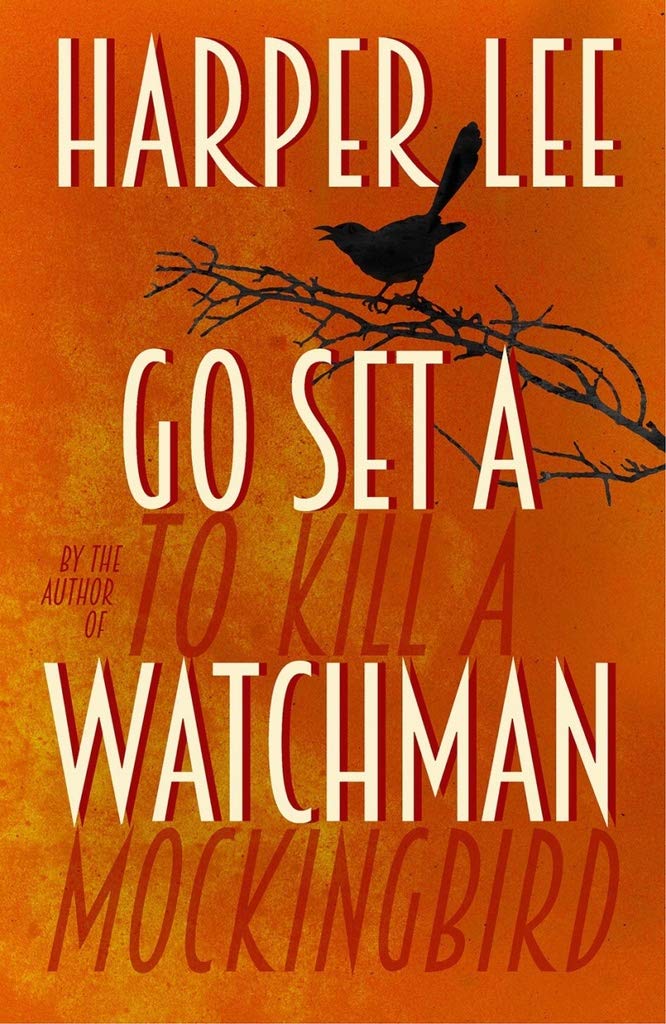
Read Go Set a Watchman

61K+dUG8MkL.jpg


Though I wasn’t aware of it at the time, this book was touted as a sequel To Kill a Mockingbird but has since been identified as a different draft to the original book. That smelt a bit fishy to me, but the book has been confirmed as being written by Harper Lee. Taking place 20 years after the events in Mockingbird, this book follows Jean Louise on her return to her home town of Maycomb, Alabama, and her reaction against the conservatism of her family and the residents of the town, especially regarding the issue of civil rights.

Some passages in the book seemed vaguely familiar, and after a little research I found that yes, due to it being a different draft to Mockingbird, some passages were identical to those in the original. However, I didn’t mind that as they were always in context. For me, the best parts of the book were those where Jean Louise reflected on the events of her childhood. These were beautifully written and evoked a different time and place. The racism aspect was from a very 1950s viewpoint and, by today’s way of looking at things, ultimately a bit of a cop out.
It’s a book with some special moments, but is very much of its time.
 
I am rereading for the first time Sir Terry Pratchett non genre Novel set in Victorian London
"Dodger"
The review from NPR when it was published Almost 10 years ago ended with this bit quoted below, but I really commend this book to anyone for a glimpse of Pratchett writing on the other side of the street… it is also an amazing Audible performance… most highly recommended in both formats
[
It's Dodger's moral heroism that stands out. Growing up in an oppressive environment of easy betrayal and cutthroat competition for scant resources, he nonetheless remains generous, loyal and brave, with an idealistic sense of justice — maybe a bit too much of a paper saint at times. But Dodger finds ways to put all that goodness to use. By turning this talented urchin into one young woman's "knight in soaking armor" (to use Dickens' description), Pratchett provides a focus for Dodger's better qualities.

Underneath that encroaching cynicism, Pratchett has always had a not-so-secret romantic heart. Dodger just represents a rare case of him wearing it on his sleeve
/QUOTE]
 
Just finished "Under Heaven" by Guy Gavriel Kay. There are fantasy elements in the book, but mostly it is a strong character driven historical fiction novel set in the 8th century Tang Dynasty. I'm a huge Kay fan anyway, but this book is simply stunning.

7139892.jpg


Just finished Under Heaven, too. Thought I'd got River of Stars in my TBR pile but it turned out to be this one, which was a pleasant surprise. It's certainly a very good read.
 
Read The Afghan

109509.jpg


This is a Forsyth novel featuring Mike Martin, who also featured in the earlier The Fist of God. Set in the years following 9/11, a chance raid on al-Qaeda suspects in Pakistan unearths startling evidence of a second major terrorist threat. Martin, because of his fluency in Arabic and ability to pass as as a native, is sent to masquerade as a recently released member of the Taliban in order to gain intelligence on this new threat.

Like all of Forsyth's novels, The Afghan is a decent read but probably not his best. The story has a couple of unlikelihoods, one of which the entire novel hinges on, but most readers will likely accept these as minor and not ones that detract from the story. 3 stars.
 
Started The Wind-up Bird Chronicle

70933._SY475_.jpg


Another charity shop pick up. At only 70 pages in, this novel has the makings of something special. Told from the perspective of Toru Okada, a disenchanted law assistant who has recently resigned from his job and now struggles with a purpose in life, you would think the story is boring. But it's not. Though I haven't a clue where the story is going or likely to end up, it's captivating.
 
Last edited:
He's a great author, and he has that way about his writing - simple, yet warm and captivating that makes you want to keep reading. If you end up liking this there's a decent catalogue to get through!
 
Finished The Wind-up Bird Chronicle by Haruki Murakami

Where to start? Well, this book is without doubt a complex novel that intertwines dreamlike sequences with reality, and most of the time even reality is dreamlike. Each of the characters in the book is a loner with his or her own individual, dreamlike existence, and they touch each other chiefly through reminiscences or ponderings. All of this is tenuously held together by Toru, who starts off without any idea of where his life is going, and then is hit by his wife leaving him without so much as a word. As you journey through Toru’s often mundane yet fascinating life, enigmatic and mystical occurrences jumbled together with historical recollections stretching back to the Japanese occupation of Manchuria take place. It’s weird and unworldly at times.

It isn’t until near the end of the book that you get an idea of what the hell has been going on, and for the 500 pages or so you read before you got there you were just along for the ride. Well, that’s not quite true as there are clues, but Murakami gently and subtly teases them out to you in an array of different ways. It’s a book that any deconstructionist would love, and I’ve seen themes such as alienation and powershifts touted in some literary reviews. But to me, underneath it all was a love story; a story of Toru’s refusal to accept that the love of his life had left him for another. It’s a strange journey, though. 4 stars
 
Finished The Cellist, number 21 in the Gabriel Allon spy thriller series by Daniel Silva - readable but the formula's becoming too predictable, the ending's unexciting and there's always another 50-odd pages right at the end wrapping things up that mostly don't need to be there. But I'll keep reading them just to see what happens in the final book!
 
56852404._SY475_.jpg


I read Billy Summers by Stephen King - Billy's a war veteran and now killer for hire, and gets offered a last job that seems to good to be true.

This is SK at his best - engaging and natural characters, realistic dialogue, and plot turns that keep you on the edge of your seat. The staging of the main plot was well done too - you know things are going to go wrong, and there's going to be some sort of revenge - it's just when and how it will happen.

There's also reference to a certain hotel from one of his earlier books; fans will like (and get) this.

I guess the only downside was the story flicks to the book Billy's writing, and because it switches to a completely different place and timeframe it slows the pace a bit - but it is important to Billy's back story. Overall a great read!
 
Finished John Saturnall’s Feast

51Mb1hTvmPL.jpg


Another book I spotted on the shelves of a local charity shop and by an author I was familiar with from twenty or more years ago, so acquiring it was a no-brainer. Norfolk isn’t a prolific writer and has published only four novels in thirty years according to his bibliography, this one being his last published work in 2012. The story is set in 17th century England before, during and after the English Civil War. The war itself does feature in the story, but the story is not solely about the war. The historical events feature more in the background and have an influence on how John Saturnall's story unfolds.

John is eleven years old when the story begins and lives in Buckland, a village at the end of the Vale of Buckland. His mother is a midwife and herbalist, which already marks her out as suspicious in these bigoted times. After flood and disease cause deaths in the village, a puritanical preacher (think Matthew Hopkins the witch-finder) holds sway over the villagers and soon John and his mother must flee to the woods. There, she teaches him about Saturnus's Feast.

Much of the story is set in the large kitchens of a manor house where extravagant meals are prepared. These are described in sumptuous detail and take up a significant portion of the entire book. The main story ticks along in the background whilst glorious concoctions are brought to fruition by a team of scullions, kitchen boys, under-cooks and cooks. This alone was fascinating.

For me, the book gave an insight into a period I wasn't that familiar with. The main storyline, which I won't give away here, was essentially a simple one but its context made it very readable and, well...unique. There are a few speculative elements in the book but these are more confined to mythological than fantastical. Overall, a well written book that I enjoyed very much. 4 stars
 

Sponsors


We try to keep the forum as free of ads as possible, please consider supporting SFFWorld on Patreon


Your ad here.
Back
Top