Current Non-Genre Reading III

Conqueror

51I0bBH21RL.jpg


Finished the fifth and final part of the Conqueror series about the Mongol Khans. After the death of Ogedai Khan, the role of Great Khan passes through several hands until Kublai makes it his aim to take it from his brother. To be honest I was expecting the book to be solely about Kublai’s reign, but it only went up to the point where he became Khan himself. But even so, it was a fine story about the Mongol campaigns in Sung China and the fight for the khanship. As for Kublai’s achievements while Khan, I’ll do some more reading to satisfy my interest.
 
Finished The White Rhino Hotel by Bartle Bull, the first book in a loose series (currently at 4 volumes). Set in 1919-1920 Kenya mostly, with a little bit before during the war and an epilogue in 1921, the novel takes a while to get used to its rhythm, and has some abrupt transitions between its interlocking storylines, but it is gripping and hard to put down.

Roughly speaking there are four major storylines - the main one in a sense (which is continued in later volumes) follows young Anton Rider, a young outcast raised by gypsies in England but not really belonging either to their culture or to the mainstream British culture, who dreams of being a big hunter and uses his chance to go to Africa, then the story of Adam Penfold's (a British minor aristocrat fascinated by Africa, wounded in the war, who put all his fortune as it was into the hotel and land there to the dismay of his wife Sissy) hotel of the title name which serves as a pivotal place where characters meet, plot and act, the story of Goan mixed race dwarf and illegimate son of a Portguese bishop from Goa, Olivio Fonseca, the bartender at the White Rhino, who dreams of making it big while pining after Kina, young daughter of the local chief and sister of Karioki, and the story of Gwen Llewelyn who follows Allan, her Welsh soldier husband, badly marred by the war, to Africa where he gains a very desirable plot of land in the Kenyan uplands in the British government land lottery for WW1 veterans, only for Gwen to have to do everything on her own despite going through many traumatic events.

In addition, many notable characters appear, Kariuki, son of the local Kikuyu chief, a former soldier in the British colonial army, and blood brother to Anton as they repeatedly save each other's lives on their trek through Africa, the German soldier of fortune Ernst von Decken, war adversary of Adam and later sort of mentor to Anton as his aged father Hugo, former big game hunter and now a (soon to be) dispossessed rancher in the former German colonies of East Africa takes a shine to young Anton as well as Vasco Fonseca, a slimy Portuguese trader and schemer from Mozambique who schemes with the colonial British bigwigs to cheat the soldiers and farmers of their land among many others who leave a deep impression throughout the novel.

Brutal, raw and not for the squeamish as it is quite violent and fairly explicit on occasion, but a memorable read about a bygone era. Highly recommended
 
At 1331 this afternoon, 21 Feb 2023, I concluded an initial read of The Adventures of Peter Pan, a compilation housing the following J.M. Barrie titles: The Little White Bird; Peter Pan in Kensington Gardens; Peter and Windy; Peter Pan, or the Boy Who Wouldn't Grow Up; When Wendy Grew Up; The Story of Peter Pan and The Peter Pan Alphabet. I read the bulk of these not quite a year ago, then finished the rest over the past week.

I was and remain utterly impressed with The Little White Bird, expecting something along the lines of Baum's Oz series, which I had finished just prior to acquiring TAOPP. TLWB is a far deeper, more adult title than any Oz entry. I never finalized my "2022: A Year of Reading" write-up. As I recall, TLWB came away with two "awards"; favorite single-volume novel of the year, and favorite male character of the year. Who is not, btw, Peter Pan. In fact, Peter has relatively few chapters of his own.

Peter Pan in Kensington Garden is basically an extraction of those TLWB Peter Pan chapters with just enough alterations to allow them to stand on their own as a separate book. I skipped it. (But nothing else.)

The remainder are, for the most part, good solid reads. There is some redundancy within these separate tales. The Lost Boys story is given three renderings; two standard prose narratives and one play script. I enjoy the first prose narrative and the play script but find the second prose narrative lackluster. Likewise, I prefer the first of two tellings of Wendy and her descendants' further contact with Peter. The Peter Pan Alphabet is "cute" fluff and an ultra-quick read.

I bought the collection for-a-song off Amazon. Had I been a bit savvier at the time I'd have simply DL'd individual titles free-of-charge from Project Gutenberg.

I almost failed to mention that the Peter Pan of The Little White Bird and the earliest versions of several other tales is a very different creature from, and in my opinion superior to, the one seen in Disney adaptations.
 
Last edited:
Finished "Physician" by Noah Gordon this afternoon. Robert Jeremy Cole, Rob J. to his family and friends at the ripe old age of 9 in the year 1010 AD is recently orphaned. Struggling to maintain and care for his even younger siblings, the children are parceled out to various families in the Carpenter's Guild that his late father had belonged.

Rob J. however find himself apprenticed to a Barber-Surgeon who call's himself simply, Barber. For reasons of his own. Barber Surgeons traveled the length and breadth of medieval England bringing entertainment, selling snake oil remedies and providing medical services (i.e. dental, minor surgery, setting broken bones and lancing boils) to the poor farming and fishing villages.

Rob J. learns about life and the surgical skills of the trade from Barber. Who, as it turns out is a good man. Not all were. A chance encounter with a Jewish Physician who had been trained in the finest medical schools in Persia has convinced a now adult Rob J. that he must travel there and attempt to gain entrance in that school.

The main problem with that plan is the animosity between Islam and Christianity. To get around that Rob J. disguises himself as a Jewish scholar and undertakes a journey across half the world to Persia to become a "Hakim" or Physician. Persia once encompassed the modern countries of Turkey, Iran, Iraq, Syria, Pakistan, Afghanistan, Turkmenistan and parts of Bulgaria and Greece.


What an amazing story. So well written. Highly recommended.
 
THE EAGLE SPEAKS by Dianne L. Hagan (this is the review I just put up on GoodReads -- honestly, thought I had done that months ago but, nope)

My standard disclaimer: I’ve know Dianne Liuzzi-Hagan and her husband Ron for over 45 years. Further, I was an early reader for her first novel, THE RIGHTFUL FUTURE, as well as for this one, so there may be some bias in this review.

Across the U.S. there has been an epidemic of nervous white people calling the police on Black people. Too often the encounter of white police and Black man goes sideways, and even the inclusive, Utopian community of Cadence is not proof against it. Titus Mann, soon to become a guidance counselor at the Six Nations Public High School, is shot by a sheriff as he goes to visit his aunt. Immediately questions arise: Why did a sheriff respond to a call for the Cadence police? Why did the sheriff shoot Mann in the back? Who called Mann into the police? Is this simply what it appears to be or is it the harbinger of something larger? Are outside forces coming once again to threaten the community of Cadence?

Dianne’s first novel was a strong debut, yet this one feels to me like a quantum leap forward not only in her choice of plot but in her handling of her characters and the assurance with which the story unfolds. Having a seat close to the creation of the novel, reviewing chapters as she completed and revised them, I found myself having fewer comments than for THE RIGHTFUL FUTURE. Dianne had learned from writing her first novel and it showed in the construction of her tale and the confidence implicit in her prose.

While it would be best to read the novels in order, if you’re at all intrigued by the synopsis or the reviews, I’d encourage you to give THE EAGLE SPEAKS a try. I don’t think you’ll be disappointed.
 
At 0454 this morning, 12 Mar 2023, just prior to leaving the sofa to prepare breakfast, I concluded an initial read of Alexandre Dumas' historical fiction swashbuckling action drama The Three Musketeers. This book took me a while to come to grips with, seeming at first little more than non-stop action featuring four over-the-top egocentric characters I couldn't drum up much enthusiasm for. I almost DNF'd it. I'm glad I didn't. It got better as it went along. The characters took on more depth. Their situations became more serious. Or so it seems to me. I particularly like the book's closing drama, beginning when "Milady" initiates her quest for vengeance. In the end, I consider it a very solid read, but don't (yet?) place it among my all-time favorites.

I like it well enough to have discovered that The Three Musketeers is the first novel in Dumas' six-part D'Artagnan series, which ends with Man in the Iron Mask. I DL'd those entries I did not already possess from Project Gutenberg earlier this morning.
 
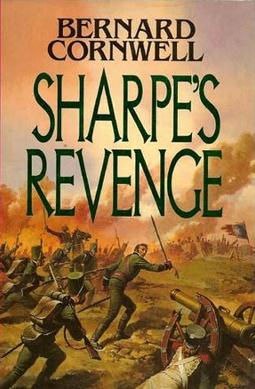
Sharpe’s Revenge

SharpesRevenge_cover.jpg


Published in 1989 but the 21st in chronological order, Sharpe’s Revenge sees Sharpe take part in the final battle of the Peninsular War at the Battle of Toulouse. With the end of the war and Napoleon’s self-imposed exile on the Isle of Elba, Major Ducos sees an opportunity to gain revenge on Sharpe by framing him for the theft of Napoleon’s treasure (which Ducos himself has stolen). Sharpe escapes from custody intent on clearing his name. Meanwhile, Sharpe’s marriage breaks down after his wife returns to England, withdraws all his money and takes up with Lord John Rossendale.

Although there are changes the TV episode pretty much follows the events of the book and to be honest both are equally enjoyable. However, the detail of the books are what I prefer -particularly for the battle scenes – and this one was no different, Another very enjoyable read in the series.
 
Sharpe’s Waterloo

81wC3w3EmRL.jpg


After Napoleon escapes from Elba and returns to France, he quickly raises a huge army and threatens the allies on the Belgian border. The Prince of Orange, eager for experienced officers, hires Sharpe as a staff officer and awards him the rank of lieutenant colonel. Before long, the Emperor’s forces are on the march and crossing the border with the intention of isolating and destroying the two armies of Blucher and Wellington.

As you’d expect this is mostly about the Battle of Waterloo and of course Sharpe plays a key role in it. I’ve read other lengthy accounts of Waterloo and the one in this book is pretty good, though perhaps not as comprehensive as some others. However, Sharpe’s Waterloo is a novel and the focus has to deal with the characters as well as the events. Still, it was another thumping good read. Only two more full-length novels to go now (and a new one to be released later this year which I have on pre-order). There is one more short story published by the Sharpe Appreciation Society, but I've decided to skip that one.
 
At 1528 this afternoon, 19 Mar 2023, I concluded an initial read of the Project Gutenberg e-book transcription of François Mauriac's 1922 short novel The Kiss to the Leper, translated from the French by James Whitall. I reckon this one to be a slice-of-life character study focusing on a physically repulsive, disease-ridden young man and the pretty young woman chosen by the town priest to marry him. Strong religious convictions come into play. This wasn't really my cup of tea but I enjoyed it, better than some titles I ought to have been more inclined toward, truth be told.
 
Education and the Good Life, by Bertrand Russell

I usually check the latest in Project Gutenberg every couple of weeks. Now and then they have something other than 150 year old anatomy books.

With all of the haggling about education in the Moronic States of America I thought some British wisdom might be worth checking out. It just needs a little technological updating.
 
The Bat

71Nb5DYQxdL.jpg

Finished this thriller by Jo Nesbo, a popular Norwegian writer I hadn’t read before. It was pretty much standard fare as these police/murder hunts tend to go, though there were a few different angles that you don’t usually see in books by writers like Lee Child, for example. For example, it’s set almost entirely in Sydney. Not enough to make it memorable, but reasonably engaging until the final part of the book started to become a bit silly. Sadly it was no Stieg Larsson and I shan’t be reading any others by the author, so not recommended.
 
54330571.jpg


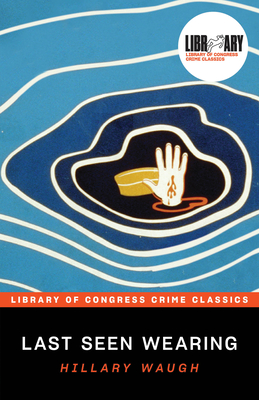
Continuing my recent mystery/crime binge, I read Last Seen Wearing by Hillary Waugh. Published in 1952 and written under the influence of the radio (later TV) show Dragnet and the movie (and stage play) Detective Story, this is one of the earliest sub-genre mysteries known as police procedurals. A few years later and Ed McBain (a.k.a. Evan Hunter, among other pen names) would cement their popularity with his 87th Precinct novels.

A young woman in a woman's college disappears. Has she left voluntarily? Been kidnapped? Is she alive or dead? Will she contact her family? Chief Frank Ford leans on his 30+ years of police experience to winnow down the possibilities while fending off worried parents and an ambitious DA.

Not surprisingly for a 1950s novel, it displays a casual sexism, but it is still gripping and maybe relies on Ford for a central character a bit too much, still I can understand why it was so influential as well as why it continues to make the lists of best mysteries.
 
At 0333 this morning, 25 Mar 2023, I concluded a long-overdue initial read of George Orwell's 1949 dystopian classic Nineteen Eighty-four (or 1984, as my e-book titles it). Well-known as it is, there's no sense in my attempting to concoct a synopsis of the work. Needless to say, I enjoyed it. Quite a lot. Also needless to say, I find much of its contents applicable to our current situation. But such matters are best left unexplored in forums such as this.

Mine is an ultra-cheap edition (well less than $1USD at Amazon) that also includes Orwell's Animal Farm, as yet unread.
 
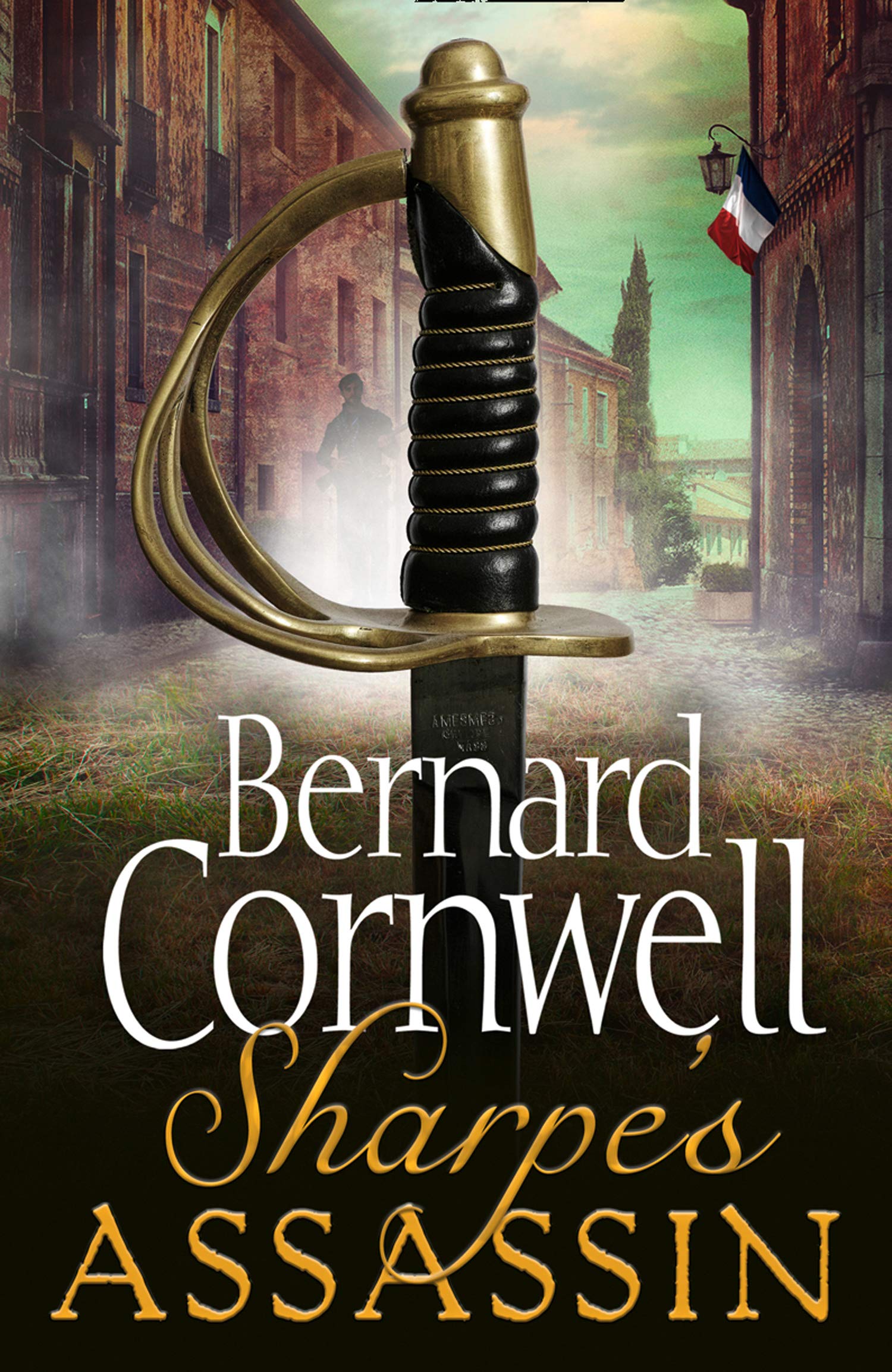
Sharpe’s Assassin

81v7gy2Dh1L.jpg


Commencing immediately after the Battle of Waterloo, Sharpe is ordered to march ahead of the army to Ham, where he and his battalion are to capture a fortress and release an important British prisoner. Worried about a suspected group of assassins in Paris, Wellington then orders Sharpe to the city to deal with the threat before the coalition armies and their leaders arrive there.

I wasn’t familiar with this story published in 2021 and there hasn’t been a TV episode made of it, so it was good to read something fresh. Mostly set in Paris, Sharpe is faced with locating and neutralising the assassination threat, supervising the return of stolen artworks from the Louvre (the Musée Napoléon then) and preventing his new major from flogging the men. Good fun and another enjoyable read.
 
At 2112 yesterday evening, 25 Mar 2023, I concluded an initial read of George Orwell's relatively short Animal Farm. This is part of an inexpensive Amazon e-book twofer also containing 1984, finished earlier the same day. Here we witness rebellion against tyranny, establishment of just and benevolent governance, the hijacking of that society by corrupting forces, and its gradual metamorphosis into an authoritarian regime as bad as, if not worse than, the system in place prior to the initial rebellion. It's compelling, thought-provoking reading. In other words, I enjoyed it.
 
Read Blood Grove by Walter Mosely.
I enjoy Mosely, having read about a half dozen of his books. This one (like all of his Easy Rawlins) is a detective period piece around life as Black man in greater Los Angeles. This in 1969. The action and interactions are gripping with lots of vivid characters and references to the times. A Black man could not drive a sporty car or enter a posh club without being stopped by guards or random racists. Easy Rawlins is always on the edge of being, arrested or attacked by police on the assumption that a (n word) had no rights and was guilty of something or everything.
I was disappointed that as resourceful as Rawlins is, he constantly calls on rich and powerful that he met earlier in the series or who pop up as needed to resolve problems. Those interactions are a little too useful, frequent and opportune to my taste. In earlier books he relies on himself and a few friends. I would recommend this book to those familiar with Rawlins or earlier books to those who are not.
 
Last edited:
The Kill List

shopping


After a masked jihadist known only as The Preacher appears online inciting individuals to select and kill notable figures in the US and Britain, the resulting deaths come to the attention of the anti-terrorist agencies and soon they are all out to identify, locate and eliminate him.

I’ve read this one before and I enjoyed reading it again. It’s Forsyth’s penultimate novel and has some similarities to his final novel The Fox in that it features a reclusive teenage hacker. If you like this kind of thriller, it’s first rate.
 
Finished The House of Doors, the third novel of the supremely talented author Tan Twan Eng (his 2007 debut The Gift of Rain is still one of my big-time favorite novels). Excellent stuff - my Goodreads review below:

The third novel from the extremely talented author of The Gift of Rain was a bit of a surprise for me as the subject seemed different from his other books - true it is set mostly in Penang like the other two novels and it alludes to characters from those, but it is ostensibly about the fortnight visit of Somerset Maugham in 1921 and the family he resided with together with his secretary and (sort of secret) companion Gerald. However, the novel is of course about much more, about secrets, about relations between people of diverse cultures and races, and even about the Chinese revolution that overthrew the emperor in 1911.

Narrated by Leslie Hamlin, a piano teacher who when 23 in 1905 or so, and a bit to her surprise was courted by and to the dismay of the local upper-class women with unmarried daughters, the "memsahibs", married a newcomer lawyer from Singapore, Robert Hamlin, still handsome in his late 30's-early 40's, and with third person segments from Willie (as Maugham was always known to his friends), the novel revolves around some dramatic events of 1910 when the famous Chinese revolutionary Dr. Sun Yat Sen, Sun Wen, to his friends, visited Penang to rally the local Chinese elites and to whose cause Leslie was soon attracted.

In 1921, Leslie and Robert, now a perfectly polite couple and recent empty nesters as their two sons are in England at boarding school, hide their own turmoil and secrets while wrestling with the abruptly declining health of Robert, partly due to his war experiences, and the need to relocate to the South African hinterland and its dry climate to avoid physical decline and death.

Willie, a former boarding school roommate of Robert visiting Penang for a few weeks on his East Asian tour, is a welcome guest and distraction for the couple, though he soon discovers he has major problems of his own as his vast fortune as one of the most popular and bestselling authors of the times has been taking a major hit due to unsound investments. Caught between the demands of his estranged but demanding wife in England (with friends and family in high places, his wife for example had gotten Gerald, an American citizen, expelled for "indecency" from the country and while Maugham's main sexual orientation was a relatively open secret, the conviction, and imprisonment of Oscar Wilde a few decades back still cast a long shadow over famous men like Willie who at least in England could not afford the smallest hint of "indecency"), and his young handsome companion who likes him, but likes the easy life better, Willie needs to keep writing and make sure his next book is another hit to recover his lost fortune...

And Leslie is quite attracted at least as a friend to confess, to Willie for reasons we discover slowly while having just the right tale to tell him to ensure that said book will indeed become such a hit. Of course, this entails revealing major secrets and since the Penang society was a small one at least as upper-class white people went, even changing names and the like would ensure Leslie and possibly Robert's local opprobrium once the story was published. Nonetheless, Leslie tells Willie all and that part which is the heart of the story is really engrossing, while the 1921 part moves well too, and complements the dramatic storyline.

With a superb epilogue just after the war in 1947 S Africa (split into a part at the beginning and a part at the end of the main storylines), The House of Doors is another hit from the author, hard to put down and a book to savor end to end.

Highly, highly recommended and a top 10 of 2023
 
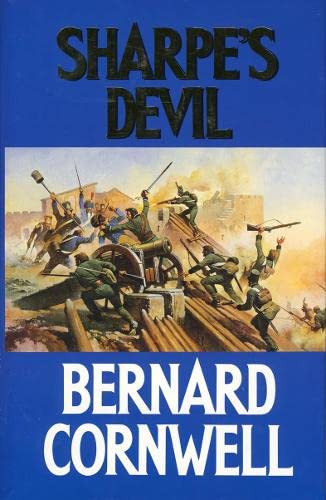
Sharpe’s Devil

4150S4VHdgL.jpg


Five years after Waterloo and happily settled in Normandy on Lucille’s farm, Sharpe receives a visit from Doña Louisa Vivar, the wife of Don Blas Vivar, whom Sharpe befriended during the Peninsular War. Needing the money for repairs to the farm, he agrees to set off for Chile (then part of the crumbling Spanish Empire) to find and bring back Don Vivar. On the way, the ship stops off at St Helena where he meets the exiled Napoleon, and then continues to Chile where he gets embroiled in the fight for Chilean independence.

This was the 12th book in publication order (1992) but is chronologically the last in the series. I wasn’t sure I’d like this one as initially it seemed as if it would just be a tacked on addition to the series, but it turned out to be another enjoyable read. And so my journey through Sharpe’s career comes to an end. The series has provided me with many hours of enjoyment and, to its credit it must be said, hardly any low points in its 20+ book length. For anyone looking for a series that provides lots of pleasure, it comes highly recommended from me.
 

Sponsors


We try to keep the forum as free of ads as possible, please consider supporting SFFWorld on Patreon


Your ad here.
Back
Top