
You are using an out of date browser. It may not display this or other websites correctly.
You should upgrade or use an alternative browser.
You should upgrade or use an alternative browser.
Current Non-Genre Reading III
- Thread starter Hobbit
- Start date
Finished Three for the Chair by Rex Stout, three novelettes (or, as I like to call them, long short stories) featuring Nero Wolfe and his assistant, Archie Goodwin. As I wrote for GoodReads, nothing earth-shattering, although the cause of death in "A Window for Death" is novel, but these stories have the usual enjoyable give and take, love/hate relationship between Nero and Archie. It interests me that Stout does such a good job of distinguishing their voices that Goodwin doesn't have to sound stupid for Wolfe to appear as a genius.

Decrepit&Senile
Registered User
- Joined
- Aug 5, 2009
- Messages
- 323
At 1959 yesterday evening, 15 Dec 2022, I concluded an initial read of Project Gutenberg's e-book offering of Arthur Conan Doyle's A Study in Scarlet, the debut of Dr Watson and Sherlock Holmes. It at first didn't impress to me, but got better as it progressed. Then, at a chapter change, it morphed into something else altogether. After reading much of the first morphed chapter, I became all but convinced that whoever prepared this e-book had been working on multiple projects and somehow managed to graft part of a totally different title into the Doyle.
I shut down the Paperwhite and returned to the computer to look at the ASiS in its HTML browser version. There, where it is fast and easy to scroll between sections, I saw that the seemingly foreign material is no mistake. Satisfied that it would all make sense at some point, I returned to the sofa and resumed reading. Sure enough, only a few pages beyond where I left off, a few name-drops expose the connection twixt what I was reading and the book's arching storyline. What's more, now that the dust has settled, that assumed foreign material has proven to be my favorite part of the tale. The book's closing section sees a return to Watson and Holmes and the conclusion of the case they investigate.
A good read, especially its middle "foreign" section. Believe it or not, this is my first exposure to Holmes and Watson in written form, though I've seen and enjoyed quite a few of their adventures via movies and television. As to Doyle, it's too soon to say. My only exposure to him is this book and a DNF of The White Company earlier this year, which I might resume at some point.
I shut down the Paperwhite and returned to the computer to look at the ASiS in its HTML browser version. There, where it is fast and easy to scroll between sections, I saw that the seemingly foreign material is no mistake. Satisfied that it would all make sense at some point, I returned to the sofa and resumed reading. Sure enough, only a few pages beyond where I left off, a few name-drops expose the connection twixt what I was reading and the book's arching storyline. What's more, now that the dust has settled, that assumed foreign material has proven to be my favorite part of the tale. The book's closing section sees a return to Watson and Holmes and the conclusion of the case they investigate.
A good read, especially its middle "foreign" section. Believe it or not, this is my first exposure to Holmes and Watson in written form, though I've seen and enjoyed quite a few of their adventures via movies and television. As to Doyle, it's too soon to say. My only exposure to him is this book and a DNF of The White Company earlier this year, which I might resume at some point.
Last edited:
Decrepit&Senile
Registered User
- Joined
- Aug 5, 2009
- Messages
- 323
At 0349 this morning, 18 Dec 2022, I concluded an initial read of British author Kenneth Grahame's 1908 children's novel The Wind in the Willows. My copy is a free Project Gutenberg download. I came across this book due to its inclusion in a YouTube booktuber's "10 (or was it 12?) Must-Read Modern Classics" video. I don't see it as a must-read, but it was enjoyable. It takes place on an alternate earth, where animals live and behave much as we humans do, and indeed mix with us on occasion. This world didn't always make sense with itself to me. For instance, much is made of these animals' love of meals. Prepared, cooked meals no different from ours. Meals that include such staples as ham and rabbit.
Another oddity. One of the four lead animal-characters, a toad, is imprisoned in a human jail. He eventually escapes by gaining the sympathy of a certain human female, who has him dress as a washerwoman to slip past the guards. This washerwoman is a relative of the human female, thus human herself. In the book's world, human and animal sizes are the same as on our earth. How did the toad fit into human clothes and fool his jailers into thinking he himself was human?
Speaking of the toad, he/it put me in mind of Tom Sawyer as portrayed in the latter part of Twain's The Adventures of Huckleberry Finn. Self-centered and self-serving, out for his own pleasure regardless of the harm it sometimes causes others.
A good read, but again, for me not a top-10 (or 12) must-read.
Another oddity. One of the four lead animal-characters, a toad, is imprisoned in a human jail. He eventually escapes by gaining the sympathy of a certain human female, who has him dress as a washerwoman to slip past the guards. This washerwoman is a relative of the human female, thus human herself. In the book's world, human and animal sizes are the same as on our earth. How did the toad fit into human clothes and fool his jailers into thinking he himself was human?
Speaking of the toad, he/it put me in mind of Tom Sawyer as portrayed in the latter part of Twain's The Adventures of Huckleberry Finn. Self-centered and self-serving, out for his own pleasure regardless of the harm it sometimes causes others.
A good read, but again, for me not a top-10 (or 12) must-read.
Last edited:


Ropie
Member of the Month™
- Joined
- Jun 6, 2005
- Messages
- 2,902
I just read Faser Land by Christian Kracht. This is a 1990s travelogue through Germany and into Switzerland. Apparently, it was at the time of its release, considered quite controversial. I found it both very funny and very interesting (a major achievement for me as it's the first novel I have managed to read in German) but not particularly shocking or controversial. However, it does offer quite a glimpse into the thoughts (and it is all thoughts - there is almost no dialogue) of a young German struggling with the history of his own country. It's probably the best book I read all year, actually.
PS - don't bother with this one if you are trying to give up smoking, as the protagonist mentions lighting a cigarette on just about every page!
PS - don't bother with this one if you are trying to give up smoking, as the protagonist mentions lighting a cigarette on just about every page!

Agent Cormac
Dark have been my dreams of late..
- Joined
- Aug 20, 2013
- Messages
- 913
Sharpe’s Havoc
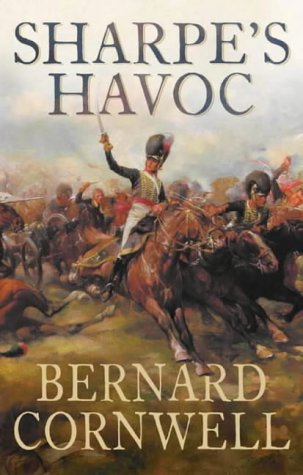
Trapped behind the French lines during the British and Portuguese retreat south of the Douro River, Sharpe and his company find themselves under orders to a British Foreign Office spy. Sharpe suspects the officer of siding with the enemy and eventually breaks out to supply boats to the advancing British forces on the opposite of the river. As the French army is pushed back into Spain, Sharpe is ordered to find and kill the traitor who is escaping over the Portuguese hills with the French.
With plenty of action and intrigue this was one of the best in the series so far, though its only the seventh book chronologically and early days yet. As ever, another entertaining and enjoyable read from Cornwell.
Trapped behind the French lines during the British and Portuguese retreat south of the Douro River, Sharpe and his company find themselves under orders to a British Foreign Office spy. Sharpe suspects the officer of siding with the enemy and eventually breaks out to supply boats to the advancing British forces on the opposite of the river. As the French army is pushed back into Spain, Sharpe is ordered to find and kill the traitor who is escaping over the Portuguese hills with the French.
With plenty of action and intrigue this was one of the best in the series so far, though its only the seventh book chronologically and early days yet. As ever, another entertaining and enjoyable read from Cornwell.
Agent Cormac
Dark have been my dreams of late..
- Joined
- Aug 20, 2013
- Messages
- 913
Sharpe’s Eagle
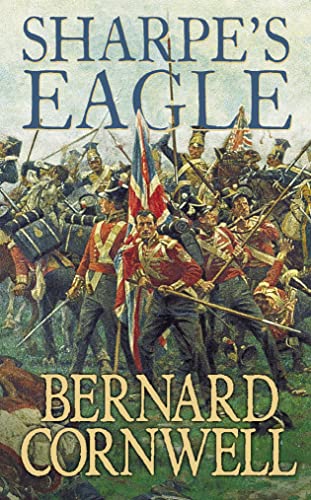
According to Cornwell’s preface this is the first Sharpe book he wrote, and not Sharpe’s Rifles which I mistakenly thought was first. Regardless, you’d be hard pushed to tell this was the first book of 25 or so because it’s just as good as any of the others. Set during the British advance into Spain and ending with the Battle of Talavera, Sharpe finds himself and his company of Rifles attached to the South Essex regiment, led by the one of the series’ recurring bad guys, the incompetent, cowardly yet politically well-connected Colonel Sir Henry Simmerson.
In the TV series Simmerson is portrayed excellently by Michael Cochrane, and Daniel Craig plays his equally nasty nephew, if memory serves me right. The episode is really good and one of my favourites, though the book is just as good and another rip-roaring read.
According to Cornwell’s preface this is the first Sharpe book he wrote, and not Sharpe’s Rifles which I mistakenly thought was first. Regardless, you’d be hard pushed to tell this was the first book of 25 or so because it’s just as good as any of the others. Set during the British advance into Spain and ending with the Battle of Talavera, Sharpe finds himself and his company of Rifles attached to the South Essex regiment, led by the one of the series’ recurring bad guys, the incompetent, cowardly yet politically well-connected Colonel Sir Henry Simmerson.
In the TV series Simmerson is portrayed excellently by Michael Cochrane, and Daniel Craig plays his equally nasty nephew, if memory serves me right. The episode is really good and one of my favourites, though the book is just as good and another rip-roaring read.
Agent Cormac
Dark have been my dreams of late..
- Joined
- Aug 20, 2013
- Messages
- 913
Sharpe’s Gold

With no other wars to occupy them the French advance into Spain and look to push all the way into Portugal, ousting the small British force in the process. Desperately needing gold to shore up the defences, General Wellesley sends Sharpe behind the lines to retrieve a shipment of Spanish gold being held by partisans.
This was Cornwell's second book about Sharpe’s adventures and is probably the weakest of the stories I’ve read so far. It’s not bad, but it’s scope is kind of limited compared to other books in the series. Also, Sharpe’s decisions seemed to be extreme at times and tailored to fit in with the story Cornwell wanted to tell. The TV producers must have felt the same because from what I remember the TV episode bears little resemblance to the book. As I said, it’s not bad but isn’t one of the better books in the series.
With no other wars to occupy them the French advance into Spain and look to push all the way into Portugal, ousting the small British force in the process. Desperately needing gold to shore up the defences, General Wellesley sends Sharpe behind the lines to retrieve a shipment of Spanish gold being held by partisans.
This was Cornwell's second book about Sharpe’s adventures and is probably the weakest of the stories I’ve read so far. It’s not bad, but it’s scope is kind of limited compared to other books in the series. Also, Sharpe’s decisions seemed to be extreme at times and tailored to fit in with the story Cornwell wanted to tell. The TV producers must have felt the same because from what I remember the TV episode bears little resemblance to the book. As I said, it’s not bad but isn’t one of the better books in the series.
Finished the first book of David Gilman's 7 novel series "Master of War". Thomas Blackstone and his handicapped brother Richard are framed for the murder of a village girl. Both boys are archers trained by their father, a veteran of the many battles during the 100 year war between France and England.
Given the choice of service with Edward's archers or the hangman's noose, the brothers opt for service in the archer levies of King Edward in 1346. Eventually ending up at the Battle of Crecy' where an outnumbered English army withstood and vanquished, with the aid of 10,000 English bowmen, the cream of French armored cavalry.
In the midst of the battle, Thomas while trying to save his brother, but also ends up also saving Edward's (Edward, The Black Prince) son. Edward knights him on the spot and sends the gravely wounded Thomas to a French nobleman with split loyalties for succor and healing.
Thus beginning the journey from a simple archer to a leader of men in the service of Edward of England.
New author for me and an outstanding read. Right up there with Cameron and Gwynne in the battle descriptions and characterizations. A real page turner for me. On to the 2nd novel now, "Defiant Unto Death".
Given the choice of service with Edward's archers or the hangman's noose, the brothers opt for service in the archer levies of King Edward in 1346. Eventually ending up at the Battle of Crecy' where an outnumbered English army withstood and vanquished, with the aid of 10,000 English bowmen, the cream of French armored cavalry.
In the midst of the battle, Thomas while trying to save his brother, but also ends up also saving Edward's (Edward, The Black Prince) son. Edward knights him on the spot and sends the gravely wounded Thomas to a French nobleman with split loyalties for succor and healing.
Thus beginning the journey from a simple archer to a leader of men in the service of Edward of England.
New author for me and an outstanding read. Right up there with Cameron and Gwynne in the battle descriptions and characterizations. A real page turner for me. On to the 2nd novel now, "Defiant Unto Death".
Master of War (Master of War Series Book 1) - Kindle edition by Gilman, David. Literature & Fiction Kindle eBooks @ Amazon.com.
Master of War (Master of War Series Book 1) - Kindle edition by Gilman, David. Download it once and read it on your Kindle device, PC, phones or tablets. Use features like bookmarks, note taking and highlighting while reading Master of War (Master of War Series Book 1).
www.amazon.com
Last edited:
Agent Cormac
Dark have been my dreams of late..
- Joined
- Aug 20, 2013
- Messages
- 913
This sounds very similar to Harlequin, the first of Bernard Cornwell's Grail Quest series. I enjoy this period very much so might give it a go sometime. Thanks, Raf. 
Agent Cormac
Dark have been my dreams of late..
- Joined
- Aug 20, 2013
- Messages
- 913
Sharpe’s Escape
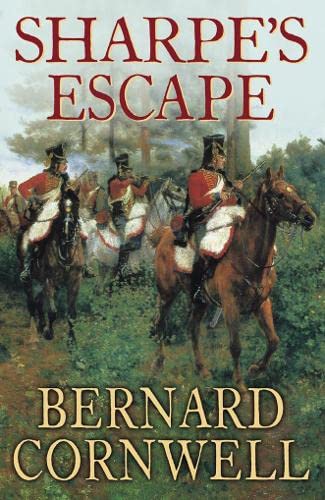
This is the tenth book chronologically and the 23rd in order of publication. Sharpe finds himself set aside as company leader by the regimental commander Colonel Lawford, who wishes to further the advancement of his wife’s brother-in-law, Lieutenant Cornelius Slingsby. Meanwhile, Sharpe stumbles on a scheme to sell supplies to the advancing French by a Portuguese major and his vicious brother. Wellington’s British and Portuguese army command the heights at Bussaco, inflicting a defeat on the French but then withdraw to the massive fortifications protecting Lisbon. Sharpe is left behind, marooned behind enemy lines.
The previous book chronologically, Sharpe’s Gold, was written 23 years before Sharpe’s Escape and (although it was a fairly enjoyable read) the difference in terms of Cornwell’s growth as a writer was clear to see. Here, Sharpe is a skilled officer with an eye for battlefield tactics. He’s still the gruff, unrefined soldier risen from the ranks, but to those who recognise his qualities he is valued as a leader. All in all, I liked this one very much and it ranks as one of the best in the series so far.
This is the tenth book chronologically and the 23rd in order of publication. Sharpe finds himself set aside as company leader by the regimental commander Colonel Lawford, who wishes to further the advancement of his wife’s brother-in-law, Lieutenant Cornelius Slingsby. Meanwhile, Sharpe stumbles on a scheme to sell supplies to the advancing French by a Portuguese major and his vicious brother. Wellington’s British and Portuguese army command the heights at Bussaco, inflicting a defeat on the French but then withdraw to the massive fortifications protecting Lisbon. Sharpe is left behind, marooned behind enemy lines.
The previous book chronologically, Sharpe’s Gold, was written 23 years before Sharpe’s Escape and (although it was a fairly enjoyable read) the difference in terms of Cornwell’s growth as a writer was clear to see. Here, Sharpe is a skilled officer with an eye for battlefield tactics. He’s still the gruff, unrefined soldier risen from the ranks, but to those who recognise his qualities he is valued as a leader. All in all, I liked this one very much and it ranks as one of the best in the series so far.
Decrepit&Senile
Registered User
- Joined
- Aug 5, 2009
- Messages
- 323
At 2102 yesterday evening, 5 Jan 2023, I concluded an initial read of Signal For Vengeance, book thirteen in Edward Marston's The Railway Detective series. This entry varies from the norm in that an ongoing development in the detective's personal/home life receives almost equal footing with the murder he investigates. Also, the superintendent's role is somewhat more prominent than usual, and a bit more fleshed out. While not one of my favorite series entries - they can't all be - it was an enjoyable, easy read.
While on the subject of whodunits, Arthur Conan Doyle's The Case Book of Sherlock Holmes enters public domain in the U.S. this year. I DL'd a free copy from Project Gutenberg a few days ago.
While on the subject of whodunits, Arthur Conan Doyle's The Case Book of Sherlock Holmes enters public domain in the U.S. this year. I DL'd a free copy from Project Gutenberg a few days ago.

suciul
Read interesting books
- Joined
- Dec 24, 2005
- Messages
- 3,759
I finished Dacia in Rebellion by P Jaksa the 4th book in the series about the Trajan vs Decebalus wars and it was excellent like the whole series which I highly recommend. My Goodreads review:
Excellent fourth volume conclusion(?) to the Dacia - Decebalus and Trajan trilogy - set in the waning days of Trajan's reign and the ascension of Hadrian and his new Augustan defensive imperial policy. Follows the Dacian characters of earlier volumes, their children etc who now live outside Roman Dacia, and their friends and allies as well as the two emperors and their family and retinues. Starting with Trajan's ill-considered attempt to take by siege the Parthian fortress of Hatra and the capture in Dacia of a Roman officer who by chance knows who had betrayed Sarmisegetusa to Trajan and going for a couple of hundred pages with great energy so it's very hard to put down until the satisfying ending. There are battles, ambushes, intrigue, deadly hunts, treason plots, daring infiltration behind enemy lines as well as quieter more contemplative moments, romance etc
Highly recommended both in itself and as a conclusion (probably but who knows as there is scope for more of course - Dacia 271 would be an interesting topic) to the superb 4 volume series.
Excellent fourth volume conclusion(?) to the Dacia - Decebalus and Trajan trilogy - set in the waning days of Trajan's reign and the ascension of Hadrian and his new Augustan defensive imperial policy. Follows the Dacian characters of earlier volumes, their children etc who now live outside Roman Dacia, and their friends and allies as well as the two emperors and their family and retinues. Starting with Trajan's ill-considered attempt to take by siege the Parthian fortress of Hatra and the capture in Dacia of a Roman officer who by chance knows who had betrayed Sarmisegetusa to Trajan and going for a couple of hundred pages with great energy so it's very hard to put down until the satisfying ending. There are battles, ambushes, intrigue, deadly hunts, treason plots, daring infiltration behind enemy lines as well as quieter more contemplative moments, romance etc
Highly recommended both in itself and as a conclusion (probably but who knows as there is scope for more of course - Dacia 271 would be an interesting topic) to the superb 4 volume series.
Agent Cormac
Dark have been my dreams of late..
- Joined
- Aug 20, 2013
- Messages
- 913
Sharpe’s Fury
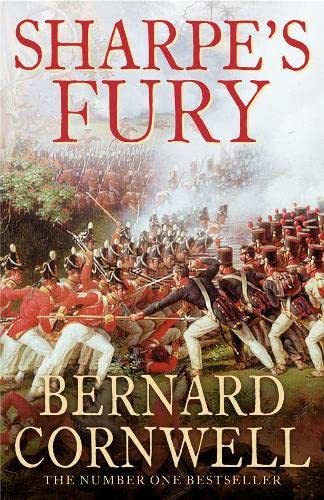
Set in Cadiz, the last enclave of the Spanish government after the French invasion of Spain, Sharpe’s Fury sees Sharpe in the middle of a plot by pro-French members of the Spanish government to discredit the British Ambassador to Spain, Henry Wellesley (brother to Wellington), and thereby bring about a rapprochement with the French. Events move on to the Battle of Barrosa, part of a Spanish/British campaign intended to break the siege of Cadiz.
Once again, Sharpe is at the centre of things as he and a few of his men find themselves in Cadiz after blowing up a bridge and being pursued away from the British forces by the French. It’s another mix of truth and fiction that has Sharpe involved in the breaking of the plot as well as in the actions that take place around Cadiz. This was the penultimate published book in the series (although the eleventh chronologically) and was another entertaining read. It’s not one of the best, but it was still an enjoyable read that I gobbled up in a few sittings.
Set in Cadiz, the last enclave of the Spanish government after the French invasion of Spain, Sharpe’s Fury sees Sharpe in the middle of a plot by pro-French members of the Spanish government to discredit the British Ambassador to Spain, Henry Wellesley (brother to Wellington), and thereby bring about a rapprochement with the French. Events move on to the Battle of Barrosa, part of a Spanish/British campaign intended to break the siege of Cadiz.
Once again, Sharpe is at the centre of things as he and a few of his men find themselves in Cadiz after blowing up a bridge and being pursued away from the British forces by the French. It’s another mix of truth and fiction that has Sharpe involved in the breaking of the plot as well as in the actions that take place around Cadiz. This was the penultimate published book in the series (although the eleventh chronologically) and was another entertaining read. It’s not one of the best, but it was still an enjoyable read that I gobbled up in a few sittings.
suciul
Read interesting books
- Joined
- Dec 24, 2005
- Messages
- 3,759
Finished I Was Jack Mortimer by A Lernet-Holenia, a 1933 Austrian novel reissued at some point by Pushkin Press and I greatly enjoyed it; my Goodreads review below:
A short but hard-to-put-down book that is hard to characterize; a young taxi driver in Vienna is fascinated by a young beauty from the upper classes who takes a ride into his vehicle, then a passenger of his is shot dead and when the police kind of ignores his pleas for attention, decides to impersonate the dead man for a little while, to avoid being accused of murder (while throwing his body into the Danube and cleaning the car of blood); of course, things do not go as planned, as Jack Mortimer, the dead man was quite an interesting character, so stepping into his persona, can be considerably more dangerous than going to the police. However, our young hero is resourceful...
A fast and quite entertaining novel, that is more of a sort of modern picaresque novel than a mystery or drama, so has to be enjoyed as such rather than expecting some clever mystery plot. Also, a slice of Viennese life in the 1930's that is interesting in its own way.
Highly recommended
A short but hard-to-put-down book that is hard to characterize; a young taxi driver in Vienna is fascinated by a young beauty from the upper classes who takes a ride into his vehicle, then a passenger of his is shot dead and when the police kind of ignores his pleas for attention, decides to impersonate the dead man for a little while, to avoid being accused of murder (while throwing his body into the Danube and cleaning the car of blood); of course, things do not go as planned, as Jack Mortimer, the dead man was quite an interesting character, so stepping into his persona, can be considerably more dangerous than going to the police. However, our young hero is resourceful...
A fast and quite entertaining novel, that is more of a sort of modern picaresque novel than a mystery or drama, so has to be enjoyed as such rather than expecting some clever mystery plot. Also, a slice of Viennese life in the 1930's that is interesting in its own way.
Highly recommended
Finished the 2nd novel in David Gilman's Master of War series, Defiant Unto Death. After recovering from his wounds Sir Thomas Blackstone has captured and now rules an area in Northern France, with the secret aid of various Normandy nobles. Who are in quiet rebellion against the current King of France.
The 2nd book delves deeply into the politics of the 100 year war. So much so, that the first quarter of the book became highly narrative for a time. I almost put it aside, but kept going and eventually the story evened out and picked back up.
I've read several books that deal with events during this era, but they have always been from the viewpoint of the noble chivalric houses. Christian Cameron's "Ill Made Knight" series was that type of story.
Blackstone is the antithesis of those types of characters. A common man who has risen above what would normally be possible for one of such low status. But he has never forgotten his roots and the way he treats the men who fight for him instills a fierce loyalty in his forces.
After the Battle of Poitiers in which massively out numbered force of 6000 English and Gascon infantry yet again won the day against the cream of the French heavy cavalry numbering 12-13,000. Blackstone attempts to kill the King of France after he had surrendered. In anger, Prince Edward the Black of England banishes Blackstone from the battlefields of France & England.
Trying to keep his family safe & together, Blackstone takes shelter at monastery one night and eventually ends up doing a service for an Italian Friar. The results of that service finds ends up with an offer of employment for Blackstone and his men with certain Tuscan Lords needing protection the multiple gangs of bandits.
Overall, a good read. Some events with Blackstone's wife do seem a bit contrived to me. Still a good enough story to continue though.
The 3rd book of the series is called "Gate of the Dead". Started it last night.
The 2nd book delves deeply into the politics of the 100 year war. So much so, that the first quarter of the book became highly narrative for a time. I almost put it aside, but kept going and eventually the story evened out and picked back up.
I've read several books that deal with events during this era, but they have always been from the viewpoint of the noble chivalric houses. Christian Cameron's "Ill Made Knight" series was that type of story.
Blackstone is the antithesis of those types of characters. A common man who has risen above what would normally be possible for one of such low status. But he has never forgotten his roots and the way he treats the men who fight for him instills a fierce loyalty in his forces.
After the Battle of Poitiers in which massively out numbered force of 6000 English and Gascon infantry yet again won the day against the cream of the French heavy cavalry numbering 12-13,000. Blackstone attempts to kill the King of France after he had surrendered. In anger, Prince Edward the Black of England banishes Blackstone from the battlefields of France & England.
Trying to keep his family safe & together, Blackstone takes shelter at monastery one night and eventually ends up doing a service for an Italian Friar. The results of that service finds ends up with an offer of employment for Blackstone and his men with certain Tuscan Lords needing protection the multiple gangs of bandits.
Overall, a good read. Some events with Blackstone's wife do seem a bit contrived to me. Still a good enough story to continue though.
The 3rd book of the series is called "Gate of the Dead". Started it last night.
Last edited:
Agent Cormac
Dark have been my dreams of late..
- Joined
- Aug 20, 2013
- Messages
- 913
Sharpe’s Battle
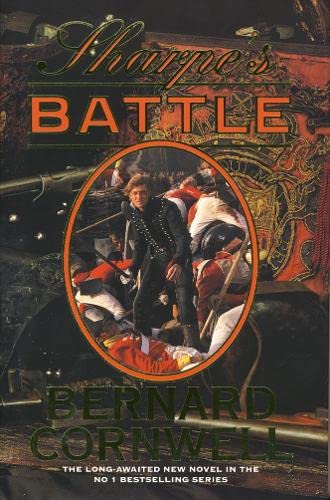
With a court of enquiry hanging over his head for executing two French officers who had been raping a girl, Sharpe fears losing his captain’s commission. Meanwhile he is assigned to drill the Real Compania Irlandesa, the former royal bodyguard of the King of Spain, not to make them into a useful battalion but under orders to encourage the unwanted and unreliable soldiers to desert. As usual the book ends with a battle, this time centred on the village of Fuentes de Oñoro.
The battle itself is a grim affair and takes up as a much as a quarter of the entire book, and once again Sharpe and his men are in the thick of it and manage to be present at all the key moments. I thought it was a pretty good read with intense descriptions of the hand to hand fighting in Fuentes de Oñoro. Apart from one short story, the next five or six books chronologically are some of the first Sharpe books and were written in the early to mid 80s, and see Sharpe and Wellington’s army advance into Spain. Looking forward to reading them again.
With a court of enquiry hanging over his head for executing two French officers who had been raping a girl, Sharpe fears losing his captain’s commission. Meanwhile he is assigned to drill the Real Compania Irlandesa, the former royal bodyguard of the King of Spain, not to make them into a useful battalion but under orders to encourage the unwanted and unreliable soldiers to desert. As usual the book ends with a battle, this time centred on the village of Fuentes de Oñoro.
The battle itself is a grim affair and takes up as a much as a quarter of the entire book, and once again Sharpe and his men are in the thick of it and manage to be present at all the key moments. I thought it was a pretty good read with intense descriptions of the hand to hand fighting in Fuentes de Oñoro. Apart from one short story, the next five or six books chronologically are some of the first Sharpe books and were written in the early to mid 80s, and see Sharpe and Wellington’s army advance into Spain. Looking forward to reading them again.
Currently on a ' palate cleansing ' short break from genre .
BOX 88 Charles Cumming .
A good spy thriller which turned into quite the page turner . Read this as it's the first prescribed reader for the book group I recently joined . Never been in a book group so looking forward to making my debut next week ! Hopefully , I'll be invited back .
INDUSTRY OF MAGIC AND LIGHT David Keenan .
Half way through this . It's unusual but enjoyable . A prequel to THIS IS MEMORIAL DEVICE [ which is in TBR pile ] .
In the near future , i hope to be back to genre with BEYOND THE BURN LINE Paul J McAuley of which I've heard a lot of positive buzz and very much looking forward to .
BOX 88 Charles Cumming .
A good spy thriller which turned into quite the page turner . Read this as it's the first prescribed reader for the book group I recently joined . Never been in a book group so looking forward to making my debut next week ! Hopefully , I'll be invited back .
INDUSTRY OF MAGIC AND LIGHT David Keenan .
Half way through this . It's unusual but enjoyable . A prequel to THIS IS MEMORIAL DEVICE [ which is in TBR pile ] .
In the near future , i hope to be back to genre with BEYOND THE BURN LINE Paul J McAuley of which I've heard a lot of positive buzz and very much looking forward to .
In mystery mode, I've finished The Plague Court Murders by John Dickson Carr, Murder After Christmas by Rupert Latimer and Bodies in a Bookshop by R. T. Campbell. All have the light-hearted approach to murder and mayhem of the Golden Age mystery. The first and last are enjoyable as long as you don't mind the authors' infatuation with their sleuth's eccentricities and the rather elaborate and convoluted solution to Carr's mystery.
The Latimer is one of the quirkiest and most consistently amusing mysteries I've read, dealing with a family of eccentrics who all seem afflicted with bad judgement complicated by an excess of discretion and civility.
The Latimer is one of the quirkiest and most consistently amusing mysteries I've read, dealing with a family of eccentrics who all seem afflicted with bad judgement complicated by an excess of discretion and civility.
Sponsors

We try to keep the forum as free of ads as possible, please consider supporting SFFWorld on Patreon

Your ad here.


