Current Non-Genre Reading III

Some non-genre books I've read over the past few months include starting the Jack Reacher series (which is very entertaining, and yet to become repetitive), and Mad Honey by Jodi Picoult and Jennifer Finney Boylan (easily one of the best books I read last year).

Have also just listened to Frankie Boyle's Meantime. I like Boyle as a comedian, and much of that is in the book, but my word it's rambling and goes off on tangents so often. A decent story buried underneath it all, and it was entertaining enough to say I enjoyed it.
 
At 1419 this afternoon, 19 Jan 2023, I concluded an initial read of William Makepeace Thackeray's 1852-53 novel The Luck of Barry Lyndon, supposedly at least loosely based on the exploits of a real-life individual (of another name), told in first-person narrative. One thing for sure; however many books I read this year, it is extremely unlikely that I will encounter another character as unashamedly odious as Lyndon. Despite, maybe because of, that, I found the work thoroughly engrossing from start to finish. I suspect it will remain a strong contender for 2023's Favorite Read of The Year. As with so many classic reads, mine is a free Project Gutenberg download. (For what it's worth, I noticed at least one free Amazon Kindle edition.)

A disturbing aspect of the book; our modern world contains too many BL emulators, who, like him, achieve fabulous success but, unlike him, rarely get their comeuppance in the end.
 
Still in mystery mode, and probably will be for a while longer: The Widening Stain by W. Bolingbroke Johnson, pseudonym for Morris Bishop, educator best known for luring Vladimir Nabokov to Cornell University. Golden Age mystery set in a thinly disguised Cornell and written with something like the spirit of 1930's-'40s screwball comedies -- eccentrics exchanging bon mots and witticisms, with a few limericks tossed in -- this was extremely entertaining. A good lead in the chief cataloger, Gilda Gorham, and a range of oddball librarians, professors and adjuncts, with a slight tendency toward stereotyping.

I've been lucky so far this month. This and Murder After Christmas are among the most successfully comic crime novels I've read from the 1940s.
 
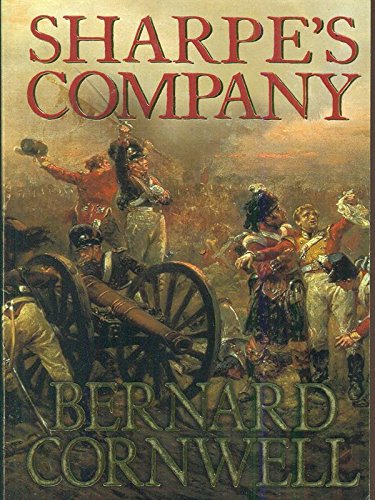
Sharpe’s Company

61RNaLLeGbL.jpg


When Sharpe’s gazetted commission of captain is rejected by the pencil pushers at Whitehall, he reverts to lieutenant and loses his company. Meanwhile, Sergeant Obadiah Hakeswill reappears and is soon up to his old tricks, including trying to rape Teresa, Sharpe’s partisan lover. Wellington’s army moves to capture the French held fortress of Badajoz. Although the siege opens up breaches in its defences, storming them will be bloody work. Sharpe volunteers to lead the Forlorn Hope but permission is refused.

Much of this book concerns the siege of Badajoz and graphically conveys the slaughter that comes with storming a strongly held fortress. Obadiah Hakeswill, now more unhinged than ever, works to undermine Sharpe’s old company and plots revenge on Sharpe and his lover. All in all, another great read in the series that really gets over the horrors of Napoleonic siege warfare. This was the third book in publication order and the 14th chronologically. Sharpe’s Sword, my next read, is the fourth in publication order.
 
  • Like
Reactions: Raf
Read two impressive non-sff novels (one actually with sff connections as was written by Jon Courtenay Grimwood - am a big fan of many of his sff novels - under his Jonathan Grimwood name for historical fiction), but had time to write a little only about one, so I will mention for now:

Theory of Shadows by Paolo Maurensig

A short but detail-packed novel about the last days of the great Russian Chessmaster Alekhine; penniless and down on his luck, in a sort of exile in Portugal in 1946 after being banned from a recent important chess tournament for his Nazi ties (emigre with French nationality, Alekhine while initially protesting the German occupation of France, later collaborated with the Nazis to some extent - he claimed that was only to protect his half-Jewish fourth wife Grace - though he soon became a sort of protegee of the infamous Hans Frank, German governor of Poland, later hanged for war crimes after the famous Nuremberg trial) as he was persona non-grata in France, Alekhine is put up by anonymous benefactors in a luxurious hotel in the resort of Estoril near Lisbon.

Befriending a Jewish musician haunted by the loss of his family in the Holocaust and lacking ready cash for even the smallest purchases, while receiving anonymous clippings of earlier pictures of himself on front pages of Nazi journals and laughing cordially with Hans Frank, Alekhine is at the bottom of his fortunes and with his body failing due to excessive drinking and smoking, it seems to be only a matter of time, and not that much after all, until he will be dead and either reviled or forgotten.

However things seem to be turning at least slightly in his favor as a Portuguese friend arranges a lucrative newspaper interview, while news has come from London that the Soviets are willing to sponsor there a world championship game between Alekhine - the undisputed holder of the title for most of the past 18 years (he narrowly lost it for about two years in the 30's when playing drunk and depressed a title match against Max Euwe, though he sobered up for a while and trounced Euwe in the rematch) and still the acknowledged best player in the world -and the rising youngish Soviet grandmaster Botvinnik who actually was one of few players to hold a positive record against Alekhine (1 win and two draws before the war); a similar match was bruited about for 1939-1940 but the start of WW 2 made it impossible.

And so it goes, alternating with snippets from his past, his difficult relationship with his many wives and few children as well as from his Russian life as a child of a noble but distressed family, and later as a young man navigating the difficult world of the 1918-1921 Russia until he was allowed to emigrate by marrying a Swiss admirer.

As we know, the match (a match of the century for sure before Fischer-Spassky) was not to be as Alekhine dies mysteriously in Estoril at the age of 54 and the author explores magisterially both his last days, his friendship with the Jewish musician, who while horrified when being sent the same pictures of Alekhine with the Nazis and confronting him, sort of forgives him in the end and various possibilities to account for the death.

Gripping and not to be put down, so highly recommended
 
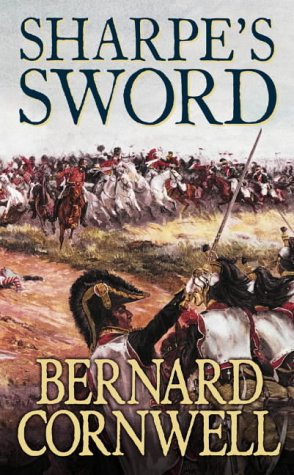
Sharpe’s Sword

51VGDKNNAWL.jpg


After capturing a French captain who is then given parole by Sharpe’s commanding officer, the captain then escapes and Sharpe learns that the man is actually Colonel Phillipe Leroux, a vicious imperial officer charged by Napoleon to uncover and kill El Mirador, Britain’s top spy in Spain. Following the surrender of the fort Leroux is sheltering in, Sharpe manages to track Leroux down but is shot in the gut, almost dying. During his recovery, Wellington manages to lure Marshal Marmont into battle outside Salamanca.

Although the main event is the Battle of Salamanca where Wellington’s forces drubbed the French and captured two Eagles, underpinning it all is a hidden war of spies and disinformation. The ‘Sword’ of the title refers to Leroux’s wonderful Klingenthal sword, which Sharpe lusts after, though it also refers to another sword as well. The story differs from the one told in the TV episode and is bigger in scope in that it includes the Battle of Salamanca. For that reason, I rate the book over the TV adaptation – and that doesn’t take into account the book is another darn good read.
 
60373696._SX318_.jpg


I just started listening to the new audiobook Dark One: Forgotten, which is written by Brandon Sanderson and Dan Wells. I am a huge fan of Brandon Sanderson's work, and I read I Am Not A Serial Killer by Dan Wells last year and absolutely loved it, so I had to give this one a read.

From what I understand so far, it's a fictional story written in the perspective of a true crime podcast. It's audiobook exclusive (so not for everyone) and it follows the story of a famous violinist who has disappeared but not only that, it seems everyone has entirely forgotten about her. The detectives who investigated her disappearance, even her mother, etc.

It's relatively short listen (around 6 hours) and I'm about an hour in and really enjoying it so far.
 
26722.jpg


I read Act of Treason, the 9th book in the Mitch Rapp spy thriller series by Vince Flynn. Mitch investigates and hunts down those responsible for bombing a motorcade, whilst setting up some corrupt politicians to fall.

This was faced paced from the first page, and it hardly let up the whole book; definitely one of the better ones in the series.
 
Sharpe's Skirmish
9781913603243.jpg

This one is a novella that was given away by W H Smith with every copy of Sharpe’s Fortress they sold, but was later rewritten by Cornwell and published by the Sharpe Appreciation Society. It’s a good little story in which Sharpe and his men defend a bridge during the summer of 1812. It doesn’t have the scope and detail of the novels, but was an enjoyable read all the same.
 
@Agent Cormac Have you read Bernard Cornwell's series The Last Kingdom? I've heard a lot of positive things about the TV show but was thinking about reading some of the books before I checked it out.
 
Yes, Berlyn, I read them all last year and really enjoyed them. If you scrag back in this thread you'll find my posts on them. Great series, I thought.
 
Sharpe’s Enemy

9780006170136-uk.jpg


Taking place over Christmas of 1812, Sharpe is despatched to deliver a ransom to free the wife of the irritating Colonel Augustus Farthingdale. She and the wife of a French colonel have been captured by a large group of deserters from the different armies taking part in the Peninsular War and have banded together to form a considerable rebel force. After the deserters refuse to release the women, Sharpe takes a force of Rifles and an unwanted detachment of rocket artillery to rescue them. The French also turn up on a rescue mission, but Sharpe suspects their large numbers means they are there to steal a march during the winter lull in Wellington’s campaign.

This is the one where Obadiah Hakeswill finally gets his comeuppance. Cornwell later expressed regret at finishing him off because he’d lost a perfect villain, though personally I felt it was about time he was gone and someone new brought in (hence the first appearance of Major Ducos in this one). I enjoyed it a lot and it didn’t suffer from its almost total lack of historical truth. Sharpe also climbs the ranks to major in this story and has to take command of a larger force than the company level he is used to. Another good read.
 
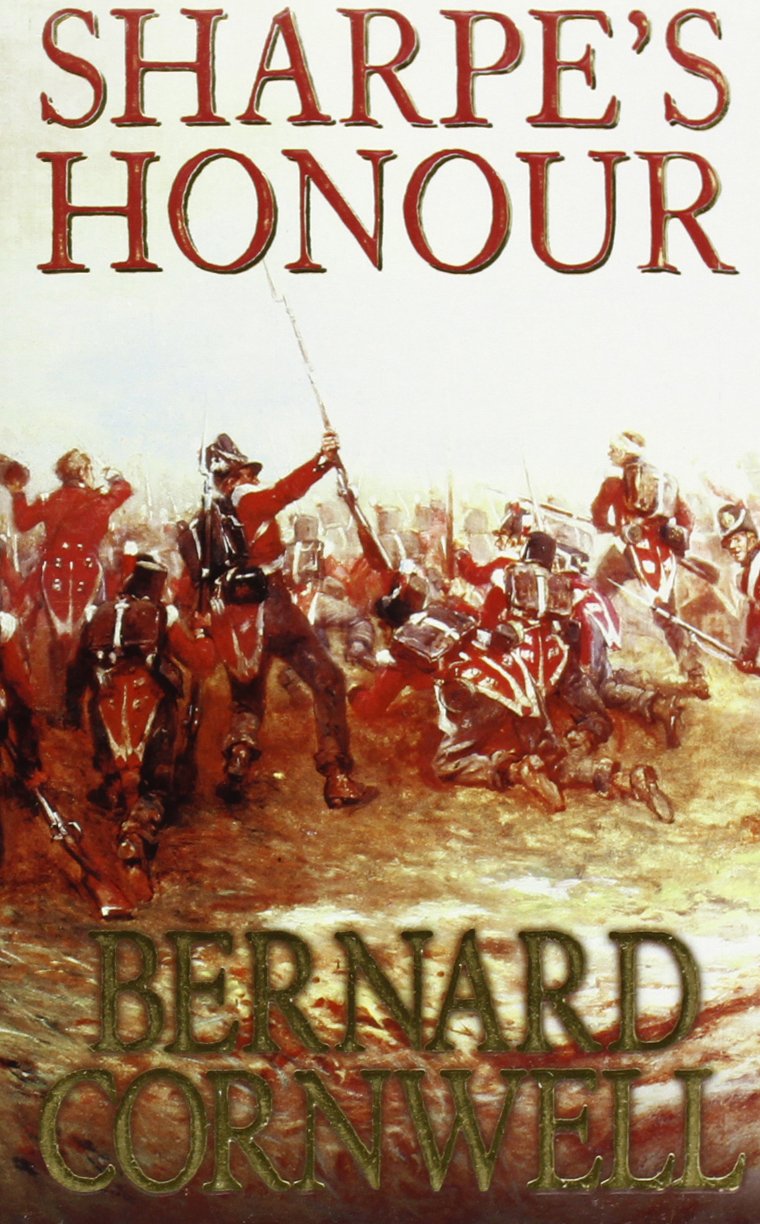
Sharpe’s Honour

71wGXq3LU3L.jpg

Sharpe is framed for the murder of a Spanish noble and sets out to clear his name. The retreating French forces make a stand at Vitoria in northern Spain and confidently expect to defeat Wellington’s army.

Of course, Sharpe arrives just in time to take command of his leaderless battalion and be present at the looting of the French baggage train. This is the 17th book chronologically and another great read in the series. On to the next one.
 
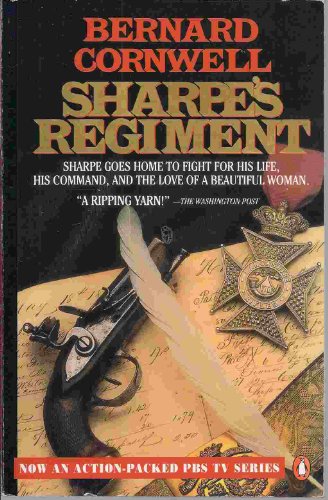
Sharpe’s Regiment

9780006174523-uk.jpg


Because of dwindling numbers in the South Essex Regiment and no prospect of replacements, the secretary of state for war advises that the unit be broken up. Sharpe is despatched to England to find out what is going on and discovers that recruitment is still taking place but the men are nowhere to be seen. Determined to get to the bottom of things, Sharpe and Sergeant Harper masquerade as former soldiers and are snapped up by a recruiting party.

This is one of my favourites in the TV series and the book pretty much tells the same story. The nasty Sir Henry Simmerson makes a reappearance in this one along with his niece, Jane, who later becomes Sharpe’s wife and eventually the loss of the fortune he gained at Vitoria. It’s a bit of a diversion from the usual fare but is still lots of fun. Just five books left to read now, plus another that’s due out later this year.
 
55457493.jpg


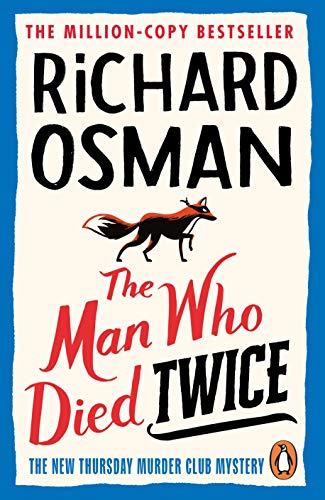
I just finished reading The Man Who Died Twice by Richard Osman. This was an easy 5/5 from me. It's the second in the Thursday Murder Club series and it was an absolute blast to read. Richard really improved from the first book. The characters were all fantastic, I loved them all. I am really looking forward to reading the next in the series. Highly recommend this series to anyone who wants a bit of lighthearted mystery in their lives.

It's the following Thursday.

Elizabeth has received a letter from an old colleague, a man with whom she has a long history. He's made a big mistake, and he needs her help. His story involves stolen diamonds, a violent mobster, and a very real threat to his life.
 
Sharpe’s Siege

220px-Sharpe%27s_Siege_front_book_cover.jpg


Ordered north up the French Biscay coast to capture a small fortress, Sharpe and his two Rifle companies complete the business after Royal Navy Captain Horace Bampfylde and his marines look to be making a mess of it. While Sharpe heads inland to create chaos along the French supply road, Bampflyde abandons the fort and sails back to British lines to take credit for its capture. Major Ducos, learning of Sharpe’s isolated position, orders General Calvet and his demi-brigade to assault the abandoned fortress to which he has retreated.

I guess Cornwell wanted to show a different perspective on siege warfare, so Sharpe is faced with defending rather than assaulting a fortress in this story. Mixed up in this is an American privateer and his crew (America declared war on Britain in 1812) and the Comte de Maquerre, supposedly a British ally who is secretly working for Ducos. It all makes for an interesting ride with the siege as the main event. Great fun.
 
  • Like
Reactions: Raf
Do you need to read the first book first?

I wouldn't say its entirely necessary, but there is definitely some history between the characters that you'd miss out on without reading the first. Don't get me wrong, the first book is still really good, I just think Richard Osman got a lot better as a writer by the time he wrote the second one.
 
Yesterday afternoon, 7 Feb 2023, I concluded an initial read of Oliver Potzsch’s historical fiction whodunit A Hangman’s Daughter Tale 3, The Beggar King. (If memory serves, I labeled book 1 a quasi-fantasy due to its supernatural elements, which are absent here.) This book was handicapped from the start in that I read it immediately following three titles I consider very strong early contenders for “Favorite Read of the Year”; WM Thackeray’s The Luck of Barry Lyndon and two single-volume fantasies by Adrian Tchaikovsky, Guns of the Dawn and City of Last Chances. Indeed, Beggar King is, for me, not in their league. It is, however, a decent series entry. Book 1 remains my favorite thus far, but this one has its moments, including significant life-developments for two series regulars, and a glimpse into the past of another two. Despite the series title, Beggar King remains an ensemble piece, like its predecessors. The book’s unique characters are well-written, its story suitably complex. On the debit side, I think plot progression relies a bit too often our protagonists making poor choices/decisions, and suffers from a few too many info-dumps, which, in my admittedly limited exposure to the whodunit genre, seems a fairly common trait. But again, if you are invested in the series, this title will likely not displease.
 
Last edited:

Sponsors


We try to keep the forum as free of ads as possible, please consider supporting SFFWorld on Patreon


Your ad here.
Back
Top