The Couch Potato

babylon_5.jpg


Season One: "Signs and Portents" (Part five)
1.11 "By Any Means Necessary"

Ah yes. JMS meets Alan Bleasdale! Looking at the big wide universe from the view of the little guy, a theme he would return to in season five, this episode focusses mainly on a strike by the docking workers at Babylon 5, the man sent to break the strike and Sinclair's uncomfortable position in the middle. He wants his station back in business, but he knows also that he has to work with these people when the hotshots have gone back to Earth. Equally, he knows he can't rock the boat too much back home and so must try to find a compromise that suits, or at least appeases, everyone.

As the workload mounts at Babylon 5, there is an accident at one of the docking bays and one of the workers is killed. In addition, a priceless plant being shipped to Ambassador G'Kar is lost when the ship carrying it is involved in the accident. Tensions rise, and when the news that the promised increase in the budget is not now going to materialise, the labourers at the dock ballot for strike action. It's all looking very precarious and quite dangerous, with riots looking likely to break out. The shop steward, a young woman called Neeoma Connally, keeps the hotheads under control for now, but it's not a situation that can be allowed to escalate.

Meanwhile, G'Kar is distraught at the loss of his plant, called a "G'Quon Eth", which he needs in order to celebrate the Holy Days of G'Quon, his religious icon, and has Na'Toth make enquiries to see if anyone on the station has one for sale, at any price. Sadly for him, the only one who does is Londo, who refuses of course to sell it to him. Eventually, after playing with his old adversary a little, (and after G'Kar breaks into Londo's quarters in search of the plant) he relents, but the price he asks is astronomical. Although furious, after thinking about it for some time, and given that his time to celebrate the Holy Days is running out, G'Kar agrees to pay the price, whereupon Londo tells him he has changed his mind: the plant is no longer for sale.

Although dock workers on Babylon 5 are expressly forbidden in their contracts from striking, more and more of them are calling in sick, and Garibaldi realises they now have a case of "Blue Flu" on their hands: no-one is really sick, but it's a way around an all-out strike, though it may as well be one. Sinclair asks to speak to Connally, and tells her he can give her no guarantees, but he worries that if the dockers don't go back to work the Senate could invoke the Rush Act, a sort of martial law wherein troopers are used to force the workers to bend to the will of Earthgov. Such a situation would get very messy, and Connally does not believe the Senate has the guts to take such a radical step. Sinclair however reminds her that things are not as they used to be, and Babylon 5 does not have all the friends it used to in the early days.

Indeed, in the end Earth forces the issue by sending their "top labour negotiator", one Orin Zento, to Babylon 5 to take control of the situation. His meeting with Connally, and later the workers, is nothing less than the throwing down of an ultimatum: go back to work while you still can. When the workers call off the pretence of being sick and go for an all-out strike, he is furious and determined to invoke the Rush Act, despite Sinclair's counsel that this can only lead to bloodshed. He is a one-dimensional man, used to getting his way and trampling over workers' rights, and it seems he only ever came here with one thing in mind: the Rush Act.

G'Kar asks Sinclair to intervene in his dispute with Londo, explaining to the commander that as the highest-ranking member of his faith on the station and the ambassador of his people, it is G'Kar's responsibility to provide the G'Quan Eth plant for his followers to all observe the ritual, which must be performed when their sun rises over the G'Quon Mountain, back on his homeworld. Londo however will not be convinced, and the intervention by Sinclair is useless. He has his own problems anyhow, as Senator Hidoshi calls from Earth to advise that a majority of the Senate have voted to give Zento the authority to invoke the Rush Act. The senator agrees that only violence and ill-feeling can result from such a course, and sadly reflects that this is most likely the aim of many in the government: to provoke a reaction that will damage the president's standing and lead to calls for the station to be shut down.

Sinclair calls for the entire text of the Rush Act, studying it for a loophole he can use, as it's now obvious that he has to obey a direct order from the Senate. Luckily he finds one, so that when Zento invokes the Act he's able to use it, as the terms state he can break the strike "by any means necessary", and the means he chooses are to allocate funds from Babylon 5's own budget to upgrade docking equipment and hire more workers. He also declares an amnesty for anyone involved in the strike, which though it infuriates Zento allows the men to go back to work with honour still intact.

There's still the matter of G'Kar's plant to be dealt with. After telling Londo that the G'Quon Eth plant is a restricted substance and taking possession of it on that basis, he hands it over to the Narn, but G'Kar is angry, as he says the time for the ritual is past. However Sinclair points out that the light that touched the holy mountain ten years ago is only now due to arrive at the station, and surely that will be sufficient for G'Kar to perform his ceremony. Impressed by the commander's logic, and somewhat mollified, G'Kar agrees this will work.

Back in his quarters, there's a message for Sinclair from Senator Hidoshi, which warns him that, though the senator himself approves of the way the commander handled the crisis, the Senate does not, and he has made himself some new enemies. He warns Sinclair to watch his back.

Important Plot Arc Points
The spiritual side of G'Kar

Arc Level: Red
We saw this first come out in "The parliament of dreams", when at the end the Narn waxes philosophical about the place of the younger races in the galaxy at large. When we first meet him, in the pilot, G'Kar is portrayed as a bully, a petty, scheming man whose only real aims in life are to further the position of his people and if possible destroy the Centauri. Here, we see a different side to him. He is a religious man, a man devoted to his --- well not quite god: I don't think the Narns worship gods in the same way the Centauri do, but they more seem to devote themselves to the teachings of religious figures, perhaps more like buddhists. He believes fiercely in what is right, and he takes his position as both spiritual and diplomatic leader of his people very seriously indeed. This side of him will begin to develop over the next few seasons, and you will be surprised, even amazed at where it will take him, and the change it will engender in him.

"Trouble at home"
Arc Level: Red
It's been intimated before: things are changing back on Earth. In the previous episode we saw an actual attempt on the life of the president (and it won't be the only one) and we've seen the emergence of the radical Earth group Homeguard. When Neeoma Connally doubts the Senate would go so far as to invoke the Rush Act, Sinclair tells her not to be so sure: things are changing on Earth. Now Hidoshi confirms this, warning Sinclair that the balance of power is shifting, and people are jockeying for position. There are big changes coming, and they will not be for the better. Babylon 5 will find itself standing on one side of a drawn line, with its enemies --- who will be many --- on the other side.

QUOTES
In the wake of the accident with the Narn ship, everyone tries to blame everyone else:
Connally: "Don't try to blame my people for this! We've said all along that the dockside equipment isn't up to handling the amount of traffic we get."
Sinclair: "The computer malfunction might have been caused by operator error."
Connally: "Even if that were true, what do you expect? My people have been forced to work triple shifts because we are understaffed in every area!"
Sinclair: "Ms Connally, we're not here to assign blame..."
G'Kar: "Maybe you are not, Commander, but my government will want to know who was responsible for damaging our ship."
Ivanova: "Then I suggest you start with its captain, who panicked and fired up his engines inside the docking bay against my direct orders!"
G'Kar: "Now don't try to blame this on us, Lieutenant Commander! We are the victims here!"
Connally: "You lost some cargo, Ambassador. Alberto del Vientos lost his life!"

Londo, in mock sympathy for the loss of the G'Quan Eth plant to G'Kar:
"If there is anything I can do to be of assistance, you will let me know, yes?"
G'Kar: "No."

When he is told who the one person on the station is who has a G'Quon Eth plant, G'Kar sighs "Why does the universe hate me?"

When Garibaldi goes to see Connally to take her to see Sinclair, and asks her why she hasn't reported as requested:
"I've been tied up. I got a lot of sick workers here," Connally replies.
When the workers start to pretend to cough, Garibaldi is annoyed. "You think this is funny, huh Well, I don't."
"We're as serious as a rip in a spacesuit," replies Connally, "and we want the Senate and Commander Sinclair to know it."
"By staging an illegal strike?" asks Garibaldi. "I thought you were smarter than that."
"Sinclair and Ivanova are career military," replies Connally. "I don't expect them to understand. But I figure you for blue collar under all that Earthforce grey."
(Indeed, as it turns out, Garibaldi's grandmother was a cop in Boston back on Earth, and so he knows of the "blue flu". He sympathises with the workers, but is worried what escalation will lead to, and he has after all a job to do, like it or not).

Connally to Sinclair: "Don't tell me about consequences! My father was shot dead during the '37 mining strikes on Ganymede. I have spent my entire life defending workers' rights," she tells Sinclair, "and I'm not about to stop now. You get us decent pay and equipment and hire enough workers to do the job safely, then we return to work."

Londo and G'Kar bargain for the plant:
Londo: "Care for a drink? Oh, I forgot! The Days of G'Quon forbid it. But they come to a close very soon, do they not?"
G'Kar: "You know why I am here."
Londo: "The G'Quan Eth plant, yes? Difficult to grow, expensive to transport, very expensive to own, but so very important to you at this festive time."
G'Kar: "I understand you are in possession of a G'Quon Eth plant. If this is so, I am here to purchase it."
Londo: "Ever since we left your beautiful planet G'Quon Eth plants have been hard to find. Mine, which is being cared for in a safe place, I have been saving for a special occasion. When you drop the seeds into a proper mixture of alcohol --- boom! Whole new universes open up! It's a shame you Narns waste them, burning them as incense."
G'Kar: "Name your price!"
Londo: "You are asking for quite a sacrifice from me, but in the interests of interstellar peace and friendship, ummm, fifty thousand commercial credits, in cash, in advance."
G'Kar: "That's an outrage!"
Londo: "Of course it's an outrage! The question is, how important is your religious ceremony to you?"
G'Kar leaves in a rage, but is soon back. He tells Londo "I have the money. Fifty thousand credits, in cash. Where is the G'Quon Eth?" But Londo, smirking, replies
"Actually G'Kar, I have changed my mind. The G'Quon Eth plant is no longer for sale. I have also changed my lock code, so don't bother visiting me. Consider this a small - a very tiny - portion of revenge for what you did to our colony on Ragesh 3, and to my nephew. Did you think that I had forgotten that?" (see "Midnight on the firing line")
Leading to G'Kar's outburst: "I'll kill him with my bare hands.... Sinclair can only kick me off the station. He might even thank me!"

When Sinclair asks Londo to compromise over the plant, this is Londo's response: "You know I would do anything for you, my good friend, Commander Sinclair - but not this.... This isn't about money, Commander, or spiritual beliefs. G'Kar is only worried about losing face. The Narns ---- bah! They're a barbaric people. They're all pagans, still worshipping their sun. No, I would rather burn the plant than give it to him."

It's clear from this that Londo neither knows nor cares for G'Kar's beliefs, and how he observes them. The Narn do NOT worship their sun: it is the rays of the sun glancing off the tip of their holy mountain that inspires them to prayer, much in the same way that muslims face towards Mecca when they pray. The sun plays a part in their worship, certainly, but it's merely a facet of their religion, not their god. In fact, as mentioned the Narn do not worhsip gods, but rather revered religious figures from their history. It's rather ironic that Londo doesn't see his own people, who DO still worship gods --- a whole pantheon of them, if only through lipservice --- as barbaric. In terms of religion, the Narn are probably closer to the Minbari than the Centauri are.

Connally to Zento, right before the decision to invoke the Rush Act:
Zento: "Every other guild on the station has signed our agreement. They understand that our government is not a bottomless pool of money!"
Connally: "I don't care if they've agreed to wear bunny suits and sing the Hallelujah chorus! We're not putting up with this kind of treatment from Earth Central any longer!"

Sinclair's solution to the strike:
"Under the Rush Act," begins Sinclair, "the Senate has empowered me to end this strike. I'm authorized to use any means necessary. Correct Mr Zento?"
Zento: "Yes, any means necessary."
Sinclair:" Am I assured of your full support on this?"
Zento: "Absolutely."
Sinclair: "Then under that authority I choose the following means to end this strike. One, I am reallocating 1.3 million credits from Babylon 5's military budget in order to begin necessary upgrades of docking equipment and to start hiring additional workers. Two, I am declaring a complete amnesty for any striking worker or guild representative who have committed no other crime during this period."
Zento: "You can't do this!"
Sinclair: "You're right, I couldn't, until you convinced the Senate to invoke the Rush Act. You should never hand someone a gun unless you're sure where they'll point it. Your mistake."

Zento: "You know damn well you twisted the intent of that order, and you won't get away with it."
Sinclair: "I think Ms. Connally said it best the other day - 'stuff it!'"

Sinclair explains to Londo how he can still carry out his ceremony: "This ritual is supposed to be performed in the sunlight that has touched the G'Quan Mountain at a particular time on a particular day, right? But as your people went into space it wasn't always possible to be at the foot of that mountain and pray in that sunlight. But what you forgot to take into account is that sunlight also travels through space. Think about it: this station is 12.2 light years from Narn, that's just a little over ten of your light years. The sunlight that touched the G'Quan mountain ten of your years ago will reach the station in twelve hours. It's been on a long journey, but it's the same sunlight. Good enough for you to complete your ceremony, wouldn't you agree?"

And a final warning from Senator Hidoshi:
Hidoshi: "Remind me never to play poker with you, Sinclair: you are a hell of a gambler. This time you won: the Senate has decided to let your decision on the strike stand without comment."
Sinclair: I'm glad they see it my way."
Hidoshi: "They do not. But... public opinion is on your side.
Sinclair: "I see."
Hidoshi: "Commander, I admire what you've done there. My great-grandfather worked the New Kobe spacedocks till the day he died. I will admit, the discomfort you've given some of my colleagues pleases me. This is why I am telling you this. Orin Zento has powerful friends. By embarrassing him, you've embarrassed them. Today you have made new enemies. If I was you Commander, I would watch things very carefully. You are not the most popular person in government circles right now."
Sinclair (after the senator is gone): "So what else is new?"


1.12 "Signs and Portents"

thenewyorker_the-oddest-terms-used-for-antique-books-explained.jpg

And finally the arc begins its slow journey across the topography of the storyline! With our last major arc episode being "And the Sky Full of Stars", which really posed more questions than it answered, we're given more clues in this episode as to what's happening, or what may be happening.

New character: "Mr. Morden" played by Ed Wasser
images

Although he is only introduced in this episode, and we will not see or hear of him again until deep into season two, the enigmatic Mr. Morden will be a pivotal figure around whom the second, third and fourth seasons will all revolve. He will orchestrate dark plans, betray and dupe people, and be directly responsible for the deaths of millions.

So, then, the episode...

Let's just, for the moment, leave aside the main plot involving the raiders, shall we? Although these space battles added excitement and special effects, and ensured the show didn't drag for those who can't sit easy unless there's a big colourful explosion lighting up the screen every five minutes, in essence they turn out to be side-avenues, dead-ends in fact which in my opinion merely serve to pad out the episodes they're in without being important or adding to the overall story. In the end, they come across to me as unimportant, and while they're well-written, they can all (there are a few of them in a sort of ongoing subplotline for a while) be described as "raiders threaten Babylon 5 and its borders and the station's fighters go out to, well, fight them." The end.

In fairness, if that were all there was to this episode I'd be writing another few-liner synopsis a la "Infection", and leaving it at that. But it's not. Oh, Great Maker, no. It's far more than a shoot-em-up-get-out-of-our-space thing, and looking behind the raiders story, there's so much more going on. Get comfortable, because from this point on the story begins to begin to unfold, if you understand. No-one is saying everything is going to become clear in a few episodes, or even in this season --- in fact, the next episode is a real throwaway in one sense --- but things do start to move slowly towards the first major revelations, and a shattering climax at the end of the season.

Londo meets with a man who claims to have recovered a long-lost Centuari relic, known only as The Eye. The man he is meeting is returning the artifact to him, having received payment for same from the Centauri government. Londo is unaware as he takes possession of The Eye that he is being watched. The man, who calls himself Morden, visits G'Kar and asks him "What do you want?" G'Kar is annoyed at the vagueness of the question, but eventually admits that what he wants is to wipe out the Centauri, every last one. But when asked what then, he shrugs, says it doesn't matter. As long as the Centauri are gone and his people's safety thus forever assured, he can't really think of anything else he wants. Morden leaves, looking less than impressed at the answer.

Linking back to "And the sky..." Sinclair takes Garibaldi into his confidence. The events that were revealed to him, the memories that came back when he was in the virtual reality cybernet, have been weighing on his mind, and he asks his friend to help him find out more about what happened.

Londo meanwhile greets Lord Kiro and his aunt, Lady Ladira, two nobles from the Centauri court; Ladira is a seer, and seems to be very troubled by Babylon 5, screaming that the place will be destroyed; she sees fire, death, destruction. Worried for her, Londo asks Kiro if her predictions are accurate, and the noble laughs that when he was young, she prophesied that he would one day be killed by shadows! Kiro wants to see The Eye, which he is conveying back to the Emperor on Centauri Prime. As they leave, the two are followed by someone who makes a report about locating his target.

Morden visits Delenn, asking her "What do you want?" but she feels faint, and a silver triangle appears on her forehead. When she turns again to look at Morden, she sees only darkness, as if the man is nothing more than a shadow. She demands he leave, which he does, and when he has departed she says to the air "They're here!" There is no disguising the fear and dread in her voice.

Kiro and Londo look at The Eye, and Kiro complains that as the artifact originally belonged to his family it should be his, not the Emperor's. Londo counsels him against such thoughts of usurping power; these are not the old days, he reminds the younger Centauri. Meanwhile Ambassador Kosh returns to the station --- this is the first time we've seen him for a while --- and Morden ducks behind a corner, as if afraid or reluctant to face the Vorlon. He does however meet Londo, and asks his question. When Londo, after some irritation, declares that he wants the Centauri Republic to rise again, for everything to be as it was when his people ruled the galaxy, Morden smiles and seems satisfied, as if this is the answer he came for. He leaves.

In complete fairness, this time the raiders story is tied in to the main plot, as it seems they've been trying to lure Babylon 5's fighters away from the station with decoy raids, in order to be able to attack Kiro's ship when it leaves and take The Eye. As they prepare to depart, Ladira has another vision --- well, the same, but clearer and more urgent --- and she screams "The shadows have come for Lord Kiro! The shadows have come for us all!" Kosh, meanwhile, has discovered the presence of Morden on the station and warns him off, though Morden does not seem afraid of him.

In Sinclair's office, Ladira has another vision, which shows us that Kiro, having had a deal with, and rendezvoused with, the raiders, has been betrayed as the raiders now intend to ransom The Eye back to the Centauri Republic, and Kiro will also fetch a decent price. However, as they prepare to imprison Kiro, a huge, alien, spiderlike spaceship emerges from a jumpgate and immediately destroys their ship.

Londo, when he hears of the tragedy --- more that The Eye is lost again than that Kiro is dead --- believes his career is over. He was the one responsible for getting the ancient artifact back to the homeworld, and he has failed. However just when all seems lost, Morden turns up with a box which happens to contain The Eye! He offers it to Londo as a gift, but when Londo, opening the box and unable to believe his eyes (pun intended!) turns back to thank the man, he is gone. He calls out after him down the corridor, asking how can he ever thank him, and a disembodied voice assures him that when the time is right, Morden will find him.

As a coda to the story, Garibaldi meets Sinclair and tells him that he has done some checking, as requested, and found out that Sinclair was a long way down the pecking order for the post of commander of the station. He only got the job because the Minbari demanded it. For some reason, Garibaldi tells his CO, they wanted him, and only him. Later, Sinclair is allowed to see the vision that the Lady Ladira had, and he sees the station explode. He is shaken, but she tells him this is one of many possible futures, and she hopes it may yet be changed.

Important Plot Arc Points:
Morden

Arc Level: Red
Although when he arrives at the station Morden is nondescript, and seems nothing more than a functionary --- in some ways, that's what he is, but with very powerful friends --- it is he who will set in motion a chain of events which will plunge the entire galaxy into war. He has come to Babylon 5 to ask the question he always does, and when he finds someone who gives him the answer he wants, he allies himself to that person, making them in fact beholden to him. When Londo Mollari "passes the test", he helps the Centauri ambassador out of his difficult predicament by recovering The Eye for him. He knows that Londo is now indebted to him, and you can be sure he will collect on this debt, many times over. But he also helps him because he knows that if he does not, Londo will lose fae and power, possibly his position and therefore be of no use to the strange man and his dark allies. He, and they, need Londo to be exactly where he is, and to have the power he has --- and more --- in order to properly benefit from their association with him.

The strange spider ship
Arc Level: Red
This is the first time we ever see this odd alien ship. It looks almost alive, a huge, twisting, rippling thing through which stars and the darkness of space seem to leak, and from which light seems to bounce off and bend away. In shape like nothing morel than a massive spider, it's obviously got superior armaments, as it cuts through the raiders' ship like a hot knife through butter, and there is no communication from it, no demand to return The Eye, no call for surrender, and no identification of any sort. It appears suddenly, and vanishes as quickly, like a predatory beast used to roaming space. This is not the last time we will see this ship, in fact, by season three it will be a familiar and terrifying sight all over the galaxy.

"What do you want?"
Arc level: Red
Yep, another one! I told you this episode was arc-heavy! There's little arc-wise in this episode that doesn't impinge heavily on further seasons, and in many ways it's the first real major turning point for the storyline. The question is a simple one, but never qualified or contextualised, so in that manner hard to answer. If someone were to stop you on the street and ask that question, your first reaction would probably be what do you mean? What do I want in what way? Without knowing the context in which it's asked it's a very leading and open question, and G'Kar breaks it down, trying to get Morden to clarify, but he will not. All he will say is "What do you want?" It's Londo of course who gives him the answer he wants, the answer he has come for, and in doing so makes something of a deal with the Devil, even though he does not as yet realise that.

"Leave this place!"
Arc Level: Red
When Morden meets Kosh, the Vorlon warns him to leave. Morden refuses, and some time later Garibaldi mentions that the ambassador has asked for tools to repair his encounter suit, though he will not say how it got damaged. Whoever Morden works for, whoever his allies or, as he calls them himself, "associates", are, it's clear they bear no love for the Vorlons! And vice versa.

Lady Ladira's vision
Arc Level: Red
What the Centauri seer saw was an attack on Babylon 5 and the eventual destruction of the station. Although it's easy to dismiss this, don't be so hasty, as it will impinge very much on the station's fate in the years to come, and will not be as clear-cut as we're led to think it may. Other things she saw and spoke of will also become more clear when season two gets going.

QUOTES
Londo, taking possession of The Eye:
Courier: "Nice piece of jewellery, isn't it?"
Londo: "Great Maker! This is not a piece of jewellery. This is not "the merchandise". This is the Eye, the oldest symbol of Centauri nobility, property of the first Emperor. It comes from the earliest days of the Republic, lost over a hundred years ago at the Battle of Nashok."
Courier: "I know the story, Ambassador. And I'm glad it means something to you, but to me it's just another commission. My job is to find things --- objects, people, you name it. And now that I've got my payment I'll be on my way."
Londo: "Payment indeed! My government paid enough to buy a small planet. But I would very much like to know how you got your hands on this,"
Courier: "No. You wouldn't."

Londo and G'Kar have a heated argument as they wait for the lift: this is about the only moment of comic relief in a dark, moody, portent-heavy episode, and as ever, it comes from the inspired pairing of Peter Jurasik and the late, lamented Andreas Katsulas.

Londo (after G'Kar has pressed the button for the lift): "I pressed it already."
G'Kar: "I have pressed it again."
Londo: "Ah. (Pause) I hear there is a famine on your world's southern frontier. My condolences."
G'Kar: "You should have thought of that before you strip-mined our resources."
Londo: "Ah, so it is all our fault, hmm?"
G'Kar: "Precisely."
Londo: "I have noticed that your own people have continued to exploit your world's resources, to build the mighty Narn war machine."
G'Kar: "We have to protect ourselves!"
Londo: "By doing to yourselves what you say we did to you? Ah! That's evolution for you!"
(Through this conversation the two ambassadors are waiting for the lift with one human, one on either side of him, and he looks very uncomfortable in the middle, trying to ignore both)
G'Kar: "Now see here..."
Londo: "You should look upon this famine as a blessing, Ambassador. A weeding out of the excess population!"
G'Kar: "One more comment like that, Mollari, and you will become part of the excess population!"
Londo: "Pfagh! Threats! Now you can go to Hell!"
G'Kar: "And you can kiss my pouch, you ---"
(In the middle of this exchange, the lift arrives and the grateful human legs it, leaving the two ambassadors glaring at each other, declaring in unison "Now look what you made me do!")

Morden visits three of the ambassadors while at Babylon 5, (four if you include Kosh, though he initially avoids him and seems to have no intention of meeting him) and asks them the same question. Oddly enough, he does not go to Sinclair, though later we will understand the reason for that. It seems that he is looking for a particular answer, and the way he reacts to the three different replies tells its own story, and will become more clear in seasons to come.

G'Kar, representative of the Narn Regime, a recently-occupied and oppressed people, just getting back on their collective feet after having been under the boot of a foreign power. A people thirsty for revenge. A young race, an impressionable, impulsive one?

G'Kar: "I'm not sure I understand the question, Mr...?"
Morden: "Morden."
G'Kar: "Yes, Morden. Who did you say authorised this little chat?"
Morden: "Councillor Chu'bar. First Circle."
G'Kar: "And does he know what this is about?"
Morden: "No. But in order to see someone of your prominence, I had to get a recommendation. He provided it. You still haven't answered my question, Ambassador: what do you want?"
G'Kar: "What do you mean, what do I want?"
Morden: "What do you want?"
G'Kar: "What do I want for supper? What do I want to do this evening? What do ---"
Morden: "What do you want?"
G'Kar: "This is pointless! What I want is for you to go away and leave me in peace."
Morden: "As you say." (Goes to leave. G'Kar thinks it over for a moment)
G'Kar: "Wait! What do I want? The Centauri stripped my world. I want justice."
Morden: "But what do you want?"
G'Kar: "To suck the marrow from their bones and grind their skulls to powder."
Morden: "What do you want?"
G'Kar: "To tear down their cities! Blacken their sky! Sow their ground with salt. To completely, utterly erase them!"
Morden: "And then what?"
G'Kar: "I don't know. As long as my homeworld's safety is guaranteed, I don't know that it matters."
Morden: "I see. Well, thank you very much for your time, Amabassador. Good day."

The Minbari, one of the oldest races, and indeed with a certain involvement with the Vorlons. In essence, it can be view as strange that Morden visits Delenn, unless he is unaware of her connection to Kosh and his people, because he clearly does not want to deal with the Vorlons. He should also know that the Minbari are a peaceful race, and very cerebral and slow to act in anger, but perhaps he is viewing them through the lens of the Earth/Minbari war. However, he gets more than he bargained for, though he does not seem to realise it at the time.

Delenn: "What is the purpose of your question, Mr ... Morden, is it?"
Morden: "The question is its own purpose, Ambassador Delenn. What do you want?"
Delenn: "I am informed you have just seen Ambassador G'Kar. Are you asking each of us this question?"
Morden: "Perhaps. Does that invalidate the question?"
Delenn: "No, but it makes me wonder..."
(here she cuts off, becoming faint. Morden feigns concern)
Morden: "Something wrong, Ambassador?"
Delenn: "No, just a moment of fatigue."
Morden: "Ambassador?"
Delenn: "Leave me. Get out! Now!" (after Morden leaves) "They're here..."

Had Morden been better informed, or more alive to the situation, had he seen the triangle that appeared on Delenn's forehead (he doesn't, as she covers it and turns away from him) perhaps he might have realised that he had made something of a major mistake in coming to the Minbari. As it is, he assumes he is simply not wanted here and will not get an answer to his question. When Delenn sees the dark shadow over him, it is a presentiment of horrors to come, and also perhaps a race memory, from a people who have seen his kind before.

And finally, Londo. The Centauri, Morden will know or have been informed, are a broken people. Once proud masters of the galaxy, with a star-spanning empire and subjects by the millions, the emergence of other, younger races, the first steps of Mankind into space coupled with their bruising occupation of Narn and its attendant guerilla war by the inhabitants of that planet, have stretched their resources, weakened their position and forced them onto the sidelines. If anyone can be expected to jump at the chance to reestablish themselves in the places of power, it surely must be the fading Centauri Republic. If only Morden can get Londo to indicate that this is indeed what they, and he, want.

Morden (as Londo is leaving with The Eye): "Ah, Ambassador Mollari. I was just coming to see you. My name is..."
Londo: "Sorry, but I don't have time to chat right now. I suggest you make an appointment."
Morden: "I did."
Londo: "Then make another one. (to himself) Never a transport tube when you need one!"
Morden: "Ambassador, I was authorised to speak to you by ..."
Londo: "Yes! Yes! Look: what do you want?"
Morden: "That's what I was going to ask you! What do you want?"
Londo: "You are a lunatic. Go away. Pester someone else." (The transport tube doors open, he steps in. Morden follows him) You are a very persistent young man."
Morden: "I have to be. I'm not allowed to leave here until you answer my question. What do you want?"
Londo: "This is a silly conversation."
Morden: "Yes it is. What do you want?"
Londo: "To be left alone!" (The tube reaches his destination and the doors open. He walks out. Morden remains in the tube).
Morden: "Is that it? Is that really all, Ambassador?"
Londo: "All right. Fine. You really want to know what I want? You really want to know the truth? I want my people to reclaim their rightful place in the galaxy. I want to see the Centauri stretch forth their hand again, and command the stars. I want a rebirth of glory, a renaissance of power. I want to stop running through my life, like a man late for an appointment, afraid to look back, or to look forward. I want us to be what we used to be. I want it all back the way that it was! Does that answer your question?"
Morden: "Yes. Yes it does."

This is a speech that will set in motion a chain of events which initially will give Londo what he wants indeed, but which will at length sweep him along like a helpless swimmer caught in a tsuanami, unable to stop the tide, knowing that it will destroy everything in its wake, and that somehow it is his fault. He will regret those words, that speech, voicing that seemingly unattainable desire, but not immediately. The full gravity and despair of the events that begin to unfold here, and that will spiral totally out of control, will not be made apparent to him until it is far too late, and not only for him.

Mister Morden departs. He has his answer. And the galaxy waits and shudders.

However, as he leaves, Kosh warns him "Leave this place. They are not for you. Go. Leave. Now."

Garibaldi explains to Sinclair what he has found out about the Battle of the Line, and his part in it.
Garibaldi: "I dug around a little and... look, Jeff, you probably know you weren't first in line to run this place."
Sinclair: "I suspected as much. I was surprised when they called me. How far down the list was I?"
Garibaldi: "Pretty far. I mean, despite all its problems this is still a high-profile job, a real plum. Admirals, generals, the whole brass was lined up hoping to get it, but every name was rejected until they got to you."
Sinclair: "Rejected by who?"
Garibaldi: "The Minbari government. They were first to sign on to support Babylon 5, on the condition that they had approval on who ran this place. They wanted you."

Morden's parting gift to Londo. The ambassador believes his career here is finished, with the loss of The Eye, until Morden turns up with it.
Morden: "Good evening Ambassador."
Londo: "You! Go away! It's late: I'm in no mood for your games."
Morden: "I'm leaving shortly; I got what I came for. But before I go .... a gift. From friends that you don't know you have." (He proffers the box to Londo, and while the ambassador opens it disbelievingly, he leaves the room. When Londo sees what is in the box, he turns in amazement)
Londo: "The Eye! How ---?" But Morden is gone. He looks out into the corridor. Nothing. "Where did you go, eh?" he calls into the air. "Let me buy you a drink! Let me buy you an entire fleet of drinks! How can I ever find you to thank you?"
From down the corridor, its origin no longer seen, comes the reply: "We will find you, Ambassador. We will find you."

Though he does not realise it at the time, this is a chilling warning, a dire warning of the storm yet to break.

And so, as the arc begins its slow turn, we have some questions that need to be answered. Many will not be resolved for several seasons, some will be known by the end of this one, but almost all will lead to bigger and more complex conundrums.

QUESTIONS
What is the odd alien ship that attacks the raiders' ship? And why does it attack? Where has it come from, and to where does it go after the attack?

How did Morden recover The Eye?

Who is this cold, strange little man who seems to wield such power that he doesn't even fear Kosh?

Why does Kosh tell him to leave, and what does he mean by "they are not for you?"

What is the fate of Babylon 5? Will it really be destroyed, as the Lady Ladira foresaw?

Why did the Minbari want Sinclair to be the one to run the station? What is their connection to Babylon 5?

What does Delenn mean when she says "They're here", and what did she see when she looked at Morden? Why the darkness? And what was the weird little triangle that appeared on her forehead?

Morden is obviously the agent or emissary of someone far more powerful than he. Who is this entity, group, organisation, person or race? And why are they so interested in what people want?

Why does he not approach the human leadership of the station, ie Sinclair?

Get ready folks: the ride begins here!

A few more points: this is the first time we see an introduction of a character called Corwin. He will later become of somewhat minor importance, for a time, climaxing in having his name in the credits at the start, but it doesn't quite work out. This episode --- and indeed this series --- is I think unique certainly in sci-fi but possibly also in major drama, in that it is the only one I can recall that features the characters actually going to visit the toilet (well, apart from "Hill Street Blues", where someone was always wrecking the gents, setting it on fire, or having impromptu meetings there!) --- even Jack Bauer, in "24", never seems to have the time to take a piss! It's nice to see that JMS kept this basic human need/imperative and showed us that yes, on regular occasions, just like us, his characters have to visit the little boys' room. I think this makes the show that much more real.

Finally, check the pilot episode again, near the beginning. That control technician in the opening sequence? Look familiar? Look again. Yeah, it's him: Ed Wasser, who plays Mr. Morden. But is it just coincidence, or is he supposed to have been the character, watching and waiting, plotting on the sidelines, observing the events unfolding as Kosh arrives at Babylon 5? We'll never know, as JMS has refused to tell. But it's an interesting hypothesis.
 
220px-Supernatural_Season_1.jpg


1.10 "Asylum"

Dean is amazed to receive what looks like a text of co-ordinates which he believes originated with their father. The co-ords point to an abandoned asylum, which has been the subject of mysterious deaths over the past few years, and now there's a story about a cop who went in there only last night and then came home and shot his wife dead before taking his own life. Sam tries to reason with Dean that the text may not have come from their dad --- it does say "unknown" on the caller ID --- but Dean is having none of it, and excitedly heads off towards the location shown on the text message.

Disappointed that they don't meet their father there --- Dean had hoped for this, Sam was not so sure --- they investigate anyway and find a plaque in the asylum with a doctor's name on it. This leads them to the doctor's son, who fills them in on the fact that there was a riot in the south wing, where all the violent, criminally insane patients were held, in 1964. There were deaths and some bodies were never recovered, which leads the boys to assume there could be some dark energy, angry spirits still haunting the asylum.

Meanwhile two stupid kids enter the asylum too, thinking it'll be a laugh. Well, the boy thinks he's cool and brave and is trying to scare his date. She is more worried and uncomfortable. He goes off to explore but she stays behind. While he's cut off from her a female spirit tries to kiss him, but he pulls away and when Dean and Sam, with the girl, Kat, in tow, find him he tells them that he thinks the ghost tried to whisper something in his ear. As they make their way towards the exit, Kat is grabbed by another of the spirits and whisked into a cell, the door slamming shut, but Sam, who has also been approached by one of the spirits, tells her she has to listen to what it has to say.

Scared but seeing this as the only way to get out, she does and tells the guys that the spirit whispered "137" to her. Deducing this to be a room in the asylum, Dean goes to look for it while Sam gets the kids to safety. This turns out to be harder than expected though, as all exits are locked and all window barred. Seems something doesn't want them to leave, not just yet. Then Sam gets a call on his mobile phone from Dean, and rushes off to meet him, leaving the two kids alone but with a shotgun full of rock salt, good for repelling spirits. When Dean shows up shortly afterwards the two tell him that Sam went to see him, as he had called him, but Dean says he never made any call, so it's obviously a trap.

Indeed it is, as Sam encounters the spirit of Dr. Elicott, the head psychiatrist who had been conducting tests of extreme rage therapy, hoping that by making his patients vent their anger it would cure them of it. In reality, it only amplified it, leading to the '64 riot and the death of the good doctor. Now he has infused Sam with his anger and when he meets Dean again Sam attacks him, his rage boiling over as he shoots his brother, but since the shotgun is only loaded with rock salt it just knocks Dean out. When he comes to, he realises what has happened as Sam berates Dean for giving him orders, following slavishly the course their father has set out for them, always being the "good little soldier" etc, and Dean hands him a real gun, daring him to kill him. Sam squeezes the trigger but nothing happens: the gun is empty. Taken by surprise, Sam is off guard as Dean clocks him.

Down in the basement Dean locates the doctor's bones and pours salt over them, though the angry spirit tries to do to him what he did to Sam. Dean is however able to throw his lighter on the pile of bones and it goes up like a torch, the spirit vanishing as the bones disintegrate. The four of them reunited make their way out of the no-longer-haunted asylum.

The next morning, Dean's phone rings but he is asleep so Sam answers it. He stares in amazement at the thing as he gasps "Dad?"

MUSIC
Bachman-Turner Overdrive: "Hey you!"

QUESTIONS?
Other than the obvious, at the end: is that really their father calling?

The "WTF??!" moment
Again, final scene, as Dean's phone rings and Sam answers it, and it appears to be their dad on the other end...

PCRs
A lot in this episode, probably the most so far:

Talking about his father, Dean says "I love the guy, but I swear, he writes like friggin’ Yoda!" A reference to the Jedi Master Yoda of the second and third Star Wars movies...

When introducing himself to one of the cops who searched the asylum, Dean says "I’m, uh, Nigel Tufnel, with The Chicago Tribune." Nigel Tufnel is the lead guitarist with spoof metal band Spinal Tap.

Making light of his knowledge of Sam's visions, Dean asks him to "Let me know if you see any dead people, Haley Joel." Haley Joel Oserver is the actor who played Charlie in "The sixth sense", the Bruce Willis-starred movie about a boy who can see dead people.

Dean mentions "Yeah, whatever. Don’t ask, don’t tell." A reference to the US military tradition of prohibiting the recruitment of gay or bisexual applicants to their services. "Don't ask don't tell" was repealed by President Obama in 2011.

Dean asks (Yeah, I notice Dean uses the lion's share of the PCRs!) "Hey, Sam, who do you think is a hotter psychic –- Patricia Arquette, Jennifer Love Hewitt, or you?" Jennifer Love Hewitt plays Melinda, a girl who can see and communicate with spirits in the TV drama show "Ghost whisperer", while Patricia Arquette is Allison DuBois, based on a real-life medium in the series, well, "Medium".

Dean makes two references to Jack Nicholson in this episode. First: "Kind of like my man, Jack in Cuckoo’s Nest." That would be "One flew over the cuckoo's nest", a cult movie about life in an insane asylum.

And "Kind of like my man Jack in The Shining" Another reference to "The Shining", this time clearly indicating the movie and not the book.

Dean calls Dr. Elicott "Dr Feelgood". They were a British rock band of the seventies and eighties, whose biggest and most popular hit was "Milk and alcohol."

Dean also tells Sam, after his brother tries to shoot him "Man, I’m not gonna give you a loaded pistol!" Although it's not a direct quote, and may just be Dean expressing his understanding that Sam was out of his head at the time, this could be a line from "Die hard", when Bruce Willis says it to Alan Rickman's character, who has been pretending to be a frightened American instead of one of the terrorists who took over the building. It would fit in with Dean's makeup and preferences certainly that he would use a quote from that movie.

BROTHERS
Here we see the continuing disparity between how the two boys see their father. Dean, as someone who has helped his dad hunting down evil creatures for the past number of years, is ready to follow orders and go where he's sent, or believes he's being sent. Sam is more level-headed and suspicious, reasoning that the text they receive at the beginning may not even be from their father. Dean is convinced it is, though there's little evidence to support that. It's more a leap of faith on the part of the older brother. However, Dean is at the wheel and despite Sam's protestations, it's he who makes the decision to check out the asylum.

Although under the mind control of the spirit doctor at the time, the feelings of resentment that bubble up to the surface in Sam have their basis in reality. He does feel like Dean makes all the decisions, and in some ways sees him as almost a hired hand. Even Kat, the girl they meet in the asylum, asks if Dean is his boss, which of course slightly angers and perhaps embarrasses the younger man. When he is pushed to it (in his controlled state, it has to be said) he is actually prepared to kill his brother, though of course he would not do so normally; in fact, each would die to save the other's life.

Sam is more open and honest, more trusting than his brother. This may come from the fact that he has not spent the last few years stalking demons and evil things in the night. He prefers to tell the truth, where possible, whereas Dean usually constructs some sort of alibi or false identity. This is shown clearly when they return to their old home, and Dean immediately begins making up a story but Sam just tells Jenny who they really are. Sometimes of course, Sam's honesty will work and sometimes it will lead him and his brother into more trouble, just as Dean's attempts to lead various lives and hold multiple identities, while often handy, will come back to bite him on occasion.

It's rather telling, and good storywriting, that it's Sam, essentially the skeptic in terms of whether they will ever find their father --- or whether he's even alive --- who takes the call which appears to be from him.

1.11 "Scarecrow"

Picking up the phone that rang at the end of last episode, Sam talks to his father, who tells the boys he can't meet them yet but he is all right. He tells Sam he knows what happened to Jessica, and that the thing that killed both her and their mother, which he is hunting, is a demon. Sam says they can help, but John tells him instead to take down a list of names he's going to give him, saying the events about to unfold are bigger and more important than he and his quest for vengeance. Sam won't listen but Dean grabs the phone and nods, writing down the names. Seems that there is a certain spot in Indiana where, on the second week of April, three couples from three different states, all taking cross-country road trips, disappeared without trace. Since all their paths intersected at this one point, John believes there is something there responsible for the disappearances, and asks (well, orders really) his sons to go there and investigate.

Sam however is adamant that they should go to California --- the phone prefix code John used was for Sacramento --- and offer their help to their father despite his orders. He reveals that he is far closer to the tragedy than Dean, having seen his girlfriend killed only weeks ago. The two argue, and Sam eventually declares he will go to California on his own. In a heated rage, he gets out of the car and will not come back. Dean, equally angry and mystified as to why his brother won't trust their father, threatens to drive off and leave him, and when neither back down, this is exactly what he does.

Dean travels on to Burkitsville, Indiana, where he starts asking questions about the couples who have disappeared. He has no luck until the owners of the general store recognise the most recent one. They point him in the direction the couple left after they had fuelled up. Sam meanwhile meets a girl hitch-hiking like him, but Meg is pretty and sexy and quickly gets a ride, while Sam waits for someone to take pity on him. As Dean passes an orchard his EMF goes off, indicating paranormal activity nearby. He investigates and finds a nasty-looking scarecrow in the field, holding what appears to be a scythe. When he looks closer he is dismayed to see that the scarecrow has a tattoo, indeed the very same as the one the guy in the last couple to come through here and disappear had.

Back in town, he talks to Emily, who works in the gas station. She tells him she knows of the scarecrow and it creeps her out, but as far as she can remember it's been there forever. Dean points to a van, and she says it belongs to some couple who are having car troubles. Fearing the worst, Dean backtracks to the cafe where Scotty, the owner, is plying the couple with cider and apple pie. He seems very annoyed when Dean tries to interfere, to get the couple moving sooner, and when Dean warns them enigmatically that they may be in danger. He calls the sherrif, who forces Dean to leave the town. Meanwhile, waiting for the bus to Sacramento, Sam is reunited with Meg, who tells him the van driver was a pest and she left him. Turns out she's going to California too, so they introduce each to the other.

Undeterred, Dean is on his way back into town as night falls. He comes across the couple in the orchard, running from the scarecrow, which has somehow come to life. He shoots it, but it keeps coming. At the last it disappears, and the couple say they can't believe their car broke down, so soon after supposedly being fixed. Now that they're safe however, Dean calls Sam and they discuss what the scarecrow could be. Dean thinks it's some sort of pagan god. He reasons that the deaths only happen once a year, at the same time, and that it's always a man and a woman involved, indicating some sort of fertility rite. The fact that the townsfolk feed the couple before they leave is to him like fattening up the calf for slaughter before it's sacrificed to the god. After an awkward moment, the boys settle their differences: Dean says he realises Sam must follow his own path, and that he's proud of him. He asks him to call him when Sam meets their father.

Dean goes to a college to find out what he can about local gods, and turns up a picture of a scarecrow in a field, which the local professor tells him is one of the Vanir, a Norse god. The descendants of the village are mostly from Scandinavia, so that would fit. Also, the Vanir seems to draw its magical strength from the tree it co-exists with, so now Dean has a good idea how to kill the scarecrow in Burkitsville: burn the tree and the scarecrow should die with it. Unfortunately, just as he leaves the college with this vital information he's knocked unconscious by the sheriff, and it seems the professor is in on it too.

When Dean wakes up he is in a cellar, and then Emily, the girl he spoke to at the gas station, is brought in by her Aunt Stacy and Uncle Harley, who run the gas station and clearly intend to make she and Dean a sacrifice to the scarecrow. Seems it always has to be a couple and, well, Dean amd Emily aren't one but the god won't know or care. Dean tries to explain to her about the tree, and she tells him there is one in the orchard that is revered and treated as special; the townsfolk call it The First Tree. This surely must be the one the scarecrow is drawing its power from. Meanwhile Sam, about to board the Sacramento bus, changes his mind. He has not been able to get in touch with Dean for three hours and is concerned, considering what his brother is chasing. He decides to head to Burkitsville. Meg is almost in tears as he leaves, in disbelief that he is going back to the person he told her he was running from.

The townspeople tie Emily and Dean to separate trees and retreat. Dean tells Emily to keep watch and let him know when the scarecrow starts to move. She gasps and says she sees a shadow moving, but it turns out to be the returned Sam, who frees them. When they try to escape the orchard however the villagers are blocking their path. Just then the scarecrow appears and slices into Harley, then taking Stacy too. The sacrifice has been made --- if not the intended one --- and the townsfolk leg it. The next morning they locate the tree and Dean Sam and Emily burn it to the ground.

They leave the next morning, Emily deserting her erstwhile adopted family and going to Boston on a bus, Sam electing to join back up with Dean: it's pretty obvious they both need each other, and they've now blown off the required steam. Meg, meanwhile, is picked up on the road again and when the driver's attention is diverted she slits his throat, allowing the blood to pour into a silver bowl which then seems to allow her to contact someone. She argues that she "could have stopped Sam", but although we can only hear one side of the converation, it ends with her nodding and saying "Yes father"....

MUSIC

Creedence Clearwater Revival: "Lodi"
Bad Company: "Bad Company"
Colepitz: "Puppet"

QUESTIONS?

The one from "Home" remains: why does John Winchester not want his sons' help, and why will he not meet them yet? What is he waiting for? And what does he mean by "this thing is bigger than anything else"?

Who, exactly, or what, is Meg? It seems obvious from the final scene that she's either some sort of demon or is allied with one, and the fact that she communicates with her father by murder and blood sacrifice is not good...

PCRs
Dean to Scotty: "Hi, my name’s John Bonham. " Drummer with Led Zeppelin (For once, he's found out, as Scotty professes to be a fan...)

Aunt Stacy to Emily: "The good of the many outweighs the good of the one" Classic line from Star Trek II: The wrath of Khan", spoken by Spock as an example of pure logic. The actual line is "The needs of the many outweigh the needs of the few. Or the one."

Dean, as they try to escape the field: "Let’s just shag ass before Leather Face catches up!" Leather Face is, I believe, the crazed killer in "Texas Chainsaw Massacre". However, it's an unfortunate choice of phrase as "shag" means, at least here, to (ahem) make love, and to have the word "ass" after it, well....

The "WTF??"! moment
Right at the end, when the sweet, innocent Meg is revealed to be something far, far darker and more evil. When she's picked up and says "I need to make a call", and the driver hands her a mobile phone, and she says "It's not that sort of call!", suddenly slitting his throat, there is no other phrase that goes through your head but WTF???!

BROTHERS

This is the first time the boys have a real big blow-up. They've had their differences of opinion before, mostly about how they see their father, and indeed this is the catalyst for their temporary separation here. Sam can't believe that Dean would just blindly follow orders from their father, and wants to go help him in his quest to track down and face the demon that killed their mother, although as he points out Sam is closer to the event than Dean, having only just recently watched his fiancee die at its hands. When Dean won't see things his way, Sam reaches breaking point and leaves his brother, determined to do what he believes is right.

It's indicative of the fact the Sam has not spoken to, or engaged in any way with his father in years that when he is told what to do he argues, demurs and questions, whereas Dean, aware of the way his dad's mind works and somewhat aware of what's at stake, snaps to attention, as it were, immediately and does as he is told. While Dean never questions their father, Sam is all too quick to, and this denotes the different ways the two men see their father.

Left on his own to work things out, Dean has yet to turn to Sam for advice, or perhaps just support, and even at the end he is willing to allow Sam follow the path he has set, by asking if he needs to be dropped somewhere, but it's Sam who realises that his place is by his brother's side, and even though they make light of their reunion, it's obviously a big relief to both the brothers to be back again as a team.

1.12 "Faith"

Trying to save some kids from a random monster, Dean gets electrocuted when he has only one chance: to use the taser even though it's in a puddle of water. He kills the thing but gets shocked himself, and when Sam gets the news at the hospital it is not good: the electric shock triggered a massive heart attack and Dean has perhaps weeks to live. Determined not to let that happen, Sam brings him to a faith healer who, though Dean is sceptical, seems to heal him and then while getting checked out at the hospital by a disbelieving doctor, Dean is troubled to hear that the same day he was healed another young man dropped dead of a heart attack. He confides to Sam that onstage at the faith healer, Roy LeGrange, he saw what looked like a very old and pale man, and he thinks it was a spirit, maybe Death himself, who passed him over. But why? And what link is there between his "miraculous" recovery and this other young man's unexpected death?

Unconvinced that his recovery is in fact a miracle, and worried that there might be some outside agency at work, maybe through Roy, Dean meets with him and his wife, Sue-Anne, and is told that some years ago Roy was diagnosed with cancer. He woke up blind, was expected to die, but he prayed and he was healed. Ever since then, he's been able to perform miracles: healing the crippled, bringing sight to the sightless, making lame men walk, the whole thing. Sam meanwhile has gone to check out the swimming pool where the guy who did die used to work, and he's told the guy was a fitness fanatic, very healthy, and his mate is surprised that he took a heart attack. He tells Sam that apparently at the time of his death the guy was running, from something that he said was after him. Sam notices the clock is stopped at 4:17, which un-coincidentally is the time of death. Since it stopped it hasn't worked again. 4:17 is also the exact time Dean was healed.

On the way out of Roy's house, Dean meets Layla, who has an inoperable brain tumour and is trying to see the healer, but has been rebuffed at every turn. "Roy wants to help you", Sue-Anne tells her and her frustrated mother, "and he will, just as soon as the Lord allows him." Angry that Dean has been cured when firstly he's a stranger (and they've attended every single service, this being their sixth time to try to get Layla seen) and secondly he's not a believer, the mother demands to know what gives Dean the right to be cured in Layla's place? Dean is sad but can say nothing and leaves. Back with Sam he gets the bad news: a death occurred at exactly the same time as he was cured, and with the same symptoms. Sam, checking further, has discovered a history of deaths linked to "miracles" Roy has performed. All take place at the same time, and mirror each other. So the guys now know that some agency is working through Roy, taking lives for those spared. Dean feels sick. He knows what they're dealing with: a Reaper.

Sam is sceptical: the Grim Reaper, he asks, but Dean says no, not THE Reaper, just A Reaper. He explains that every culture has its reaper legend, and that you can only see them when they're coming for you, which is why he could see the figure onstage when he was healed and Sam could not: the Reaper originally was coming for him. Reapers can also stop time, and Dean reasons that somehow Roy is working with one in order to perform his miracles. Dean remembers seeing an odd cross on the stage and checking now they see it's linked to the tarot. Roy must be using its magic to bind the reaper and make it do his will. Dean is for killing Roy, calling him a monster, but Sam refuses to slay a human, no matter how evil they may be. They decide the best thing is to find a way to break the spell and release the reaper.

Sam breaks into Roy's house while he's at service, and finds a small book with a picture of a reaper on the cover. He also finds newspaper cuttings about those who have died to give others life, and a darker subtext begins to reveal itself. There are gays, abortions rights advocates, people who surely Roy would consider impure and perhaps enemies. The latest is one about Wright, a man who does not believe Roy has been sent from God, and has been handing out protest pamphlets at every service. They just passed him on the way in. Sam calls Dean and tells him that he is going after the guy, to try to save him, but until he has Dean has to make sure nobody else gets healed.

Ironically, it's Layla's name that's called, and though Dean tries to explain to her that she can't go up, that someone will die in her place, she doesn't understand and is overjoyed at finally having her chance. Sam goes after Wright, but though the man is running from the reaper Sam can't see him, and has to rely on Wright to tell him where the creature is. Dean manages to interrupt the service by shouting "Fire!" and everyone evacuates, but the reaper still keeps coming. Confused, Dean realises that Roy is not the one controlling the thing, then sees Sue Anne reciting in the corner. SHE is the one in control! He tries to confront her but she screams and cops drag Dean away, throwing him out of the tent. But at least the reaper has been confused enough by the half-recited spell that it has stopped pursuing Wright.

Roy then tells Layla and her mother that he will heal Layla in a private ceremony tonight at his home. Dean and Sam discuss the fact that they believe Roy may not know that his wife is controlling the reaper. They reason that originally she may have bound the creature to save Roy from death, but now she's using it to pursue her own twisted moral agenda, having it kill people she sees as immoral, or who threaten her and her husband. The boys read that to bind a reaper a black altar has to be built, with human bones, blood and so on. They also think the large cross in the tent, which is mirrored in miniature around Sue Anne's neck, could be a key. They resolve to destroy both before Layla can be healed and another innocent dies in her place.

Sam finds the altar but Sue Anne gets the drop on him and locks him in the house, telling him that just as she was able to give life to Dean, she can as easily take it away, the inferrence being that Dean is now going to die in place of Layla. Not really sure how that works, as they are/were suffering from different complaints, but anyway... Dean is walking along towards the tent when the reaper comes after him. Sam has managed to break out and attacks Sue Anne in her recital, smashing a glass bottle of blood. Horrified, Sue Anne watches as the spell is broken and the reaper comes for her, taking her life. I particularly like the quote here, when she gasps "My God! What have you done?" and Sam snarls "He isn't your god!" Nice one, Sam!

Although everything has turned out for the best, it hasn't really. Layla still hasn't been healed, and Roy can no longer work his "miracles". Dean agonises over whether or not they did the right thing in stopping the reaper before Layla could have been cured, but there's no easy answer really.

MUSIC
(Anyone wanna guess?) :rolleyes:
Blue Oyster Cult: "Don't Fear the Reaper"

QUESTIONS?
Not really any as such.

PCRs
Again, none really. One of the victims of the reaper is jogging along and the music on her ipod is BOC, but it's a bit over-obvious, and the whole "Don't fear the Reaper" thing is totally overdone in terms of music. But then, what else could have been used?

The "WTF??!" moment
Probably right near the start, where we learn Dean has less than a month to live.

BROTHERS
This is a pretty dark time for Sam. He faces losing his brother, and no doubt blames himself for leaving him alone in the house with the monster, even though he was at the time getting the kids to safety. When it looks like Dean will die, Sam turns to the knowledge they have amassed over the months and tries to find something in ancient lore that can cure Dean, resulting in his taking him to see Roy. Dean is more philosophical about his impending death, although he could just be putting on a brave face for his brother. He reminds Sam that what they do is dangerous, and the chances of one or both of them dying in the course of their work are quite high. He seems oddly prepared to meet death.

Dean later has to face the fact that someone's life was taken to allow him to live. He was not complicit in the decision, of course, knew nothing about it, but even so he feels guilty. Then he has to deal with the extra guilt of preventing Layla from being cured, after she had waited so long. There's no doubting that this episode will have changed him from the happy-go-lucky, smartass wisecracker he was into a more sombre individual, much more aware of his mortality. You can't face Death and not come away a changed person.
 
1.13 "Route 666"

Allright, alright, so the titles are getting a little cliched. But as I said, season one is a little slow and plodding compared to what comes soon after. Keep the faith, people! This episode introduces us to, of all things, one of Dean's ex-girlfriends. Dean, as we know, is not known for staying with the same girl two nights in a row, yet it seems there is history with this one, because not only does Cassie call the guys in to help her solve a mystery surrounding the death of her father and his business partner, she knows what the brothers do. Dean told her, and when Sam finds out he is incensed: he reminds Dean that he had to lie over and over to Jessica about what the boys got up to, and here Dean is spilling the family secret to some girl he met a few years ago! Dean, however, seems more than taken with the girl and his reunion with her seems to bring up painful memories. For once --- and probably following on from his experience with death --- he's not wisecracking or making fun.

Cassie tells the boys that her father's car looks to have been run off the road, but there is only one set of tracks at the accident. Her father had previously worried about a big black truck that seemed to be following him, but had dismissed the idea. Now, with his business partner in the car dealership they ran together also dead by traffic accident, it's beginning to look a little more than just coincidence. As Cassie already knows (whether she believes or not is another story) about the brothers, they don't have to hide anything from her and can discuss the possibilites in the open, possibilities and theories they would normally have to talk about among themselves, out of earshot of the person involved.

When yet another death occurs, Dean and Sam talk to friends of the deceased, one of whom mentions that there was a story about a bunch of black guys disappearing in a big black truck, back in the sixties, though nothing was ever found. Both Cassie's father and his partner were black, as is the latest victim of these "accidents", and maybe things are beginning to slowly add up. Could someone have a racist agenda or grudge? But why only one set of tyre tracks at each accident scene?

Dean wonders about the possible connections between the victims --- he seems to think that it's more than that they're all black; he thinks they're all connected to Cassie's family, and so far they have been --- and goes to talk to Cassie, and it comes out that Cassie dumped him after he told her what he does for a living, as she thought he was just looking for an excuse not to commit, and she didn't believe him. Dean notes that it didn't seem so crazy once she needed help. One thing leads to another and they end up in bed. Meanwhile, the mayor of the town is run over by the big black truck, and when they hear about it Dean and Sam are mystified. The mayor wasn't black, and the attack didn't take place on the road, like the other three, but on the mayor's property, a building site. Plus, to their knowledge, the mayor has no direct connection to Cassie's family.

Research turns up some facts: the site the mayor was planning to build on used to be the family home of one of the most powerful families in the town, the Dorians, who also ran the paper Cassie works for. The mayor had the home bulldozed to make way for whatever he was planning to build, and on the next day the first killing occurred. Seems that Cyrus Dorian disappeared around the time all those black men went missing, too. Later that night a black truck revs up outside Cassie's house and she calls Dean in a panic. When they get to the house they quiz the mother, who helps reveal the story behind the mystery.

Seems she was dating Cyrus Dorian but seeing the man who became her husband, Martin, on the side. When Dorian found out about it he went mad, and ended up torching the church they were supposed to be married in. A bunch of children practicing for a choir were burned alive. The two men had a face-off where Dorian beat Martin up but he got free and started pounding on Cyrus, eventually killing him. Martin called his two friends (the other two who have now died in the "road accidents") and they helped him dispose of the body. Of course, Cyrus drove a big black truck.

Turns out the mayor knew what Martin and his friends had done, but kept quiet about it as he also knew, or suspected, about Dorian. The brothers decide they need to dredge the swamp and get the truck up so they can burn the body of Cyrus Dorian. However, as soon as they've done so, the ghost truck appears, so it seems they have been less than successful, and must think of a new plan. Dean leads the ghost truck away while telling Sam to burn the wreck. Sam wonders how in the hell he's supposed to do that?

But he has an idea. He talks to Cassie on the phone and gets the exact location of the church Dorian burned down forty years ago. When the truck rushes at Dean it hits the hallowed ground and vapourises.

MUSIC
Joe Walsh and The James Gang: "Walk Away"
Blind Faith: "Can't Find My Way Home"
Bad Company: "She Brings Me Love"

QUESTIONS?
None.

The "WTF??!" moment

Not really one in this episode.

PCRs
Again, no.

BROTHERS
We continue to see beneath Dean's tough guy facade, as he comes face-to-face with a woman, perhaps the only woman other than his mother who seems to have truly meant something to him. Sam is amazed that such a woman even exists in Dean's life, but it transpires that they were very close --- marriage is not mentioned, but the relationship looks to have been pretty strong --- to the effect that Dean let down his guard and wanting to be totally honest with Cassie told her about his life hunting demons. Sadly, this seems to have had the opposite effect, and she took it as a sign he was looking for a way out of the relationship.

Sam can now see his brother in a new light. He's not now the one-night-stand, never-settle-down type, and while he'll never be as rooted as Sam is, he has at least now got one woman in his history who matters. There will of course be ribbing about this for some time, but Sam is glad Dean has, or had, someone: just a pity it didn't work out. As the episode closes though, Dean is already putting the events of the past few days behind him, or trying to, as he ignores and rebuffs his brother's gentle poking of fun at him. His ego has to be bruised, as he was the one who was dumped, and surely that has never happened before to him? But more than that, he realises that for the first time ever he let someone in, opened the door and they kicked it shut. It could very well be why he is the way he is now: fool me once...
 
No picture appearing there, TH.
on chrome when I see tat broken image icon right-click and select
"Open image in new tab"
will work
"Load image" will not work

I see this quite a lot recently
 
v27056551061.jpg


Some more of the TV I’ve been watching recently, and what I thought (or think) of it.
500px-Third_Day_Logo.jpg

The Third Day (Mystery, horror, suspense)

Meh. I was wary of this from the fact that Jude Law is the main protag, but it was getting so many good reviews I thought I’d give it a go. The premise is pretty ludicrous - man trapped on some sort of island by virtue of the road by which it is approached being waterlogged, ie swamped, overnight, forcing him to remain there, for some reason, for days while his wife worries - and the story seems a poor rip-off of movies like Children of the Corn and The Wicker Man. You know the kind of thing: simple folk living apart from society decide for whatever reason that the old gods were best, and the old gods demand sacrifice blah blah. Gave it up after three episodes.

Status: Unknown; possibly self-contained as it’s described as a serial rather than a series. If so, then complete.

Verdict: 4/10
MV5BMGZhOTQ1YmEtODI4NC00MjdkLWFmNjktODIxMzk3OGUwMTk0XkEyXkFqcGdeQXVyMTkxNjUyNQ@@._V1_UY268_CR1,0,182,268_AL_.jpg

Vagrant Queen (Science Fiction, dark humour)

Find of the year, so of course they cancelled it. Hip, sexy, funny, topical and irreverent, like an even better Killjoys. Great acting (and bad acting which is so bad it’s great), clever storyline, good aliens, great ships (“We have a doorbell?”) and enough fun to fill a galaxy. Based on the comic series, sadly ended on a cliffhanger and was scrapped. Bastards.

Status: Cancelled after one season

Verdict: 10/10
resident-alien-poster.jpg

Resident Alien (Science Fiction, comedy)

A real find here. Alien crashlands on Earth with a mission to wipe out humanity. Only one problem: he’s lost the destruction device he needs, and it’s winter so it’s lost in a lake of ice. He’ll have to wait till the ice thaws to find it, and meanwhile he has to pass as a human. Cue mucho hilarity as he tries to fit in, and slowly becomes assimilated into humanity - until one kid sees through his disguise, then cue mucho more hilarity.

Status: New (first season)

Verdict: 9/10
The_Bridge_season_one.png

The Bridge (Crime, drama, mystery)

Most of you probably know about this series from Scandinavia. I did, too, having heard a lot about it, but I kept waiting for it to restart so I could watch it from the beginning, which I felt was essential if I was to enjoy it properly. I was right, as it happens. Four seasons of unremitting gritty crime drama, and an amazing lead character. Highly recommended.

Status: Finished

Verdict: 10/10
the-valhalla-murders.jpg

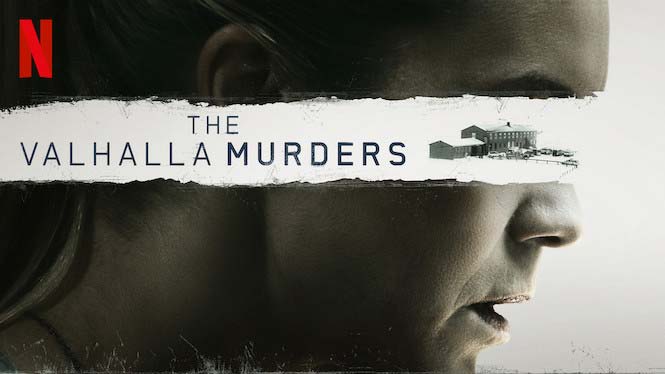
The Valhalla Murders (Crime, drama, mystery)

Set against the starkly beautiful backdrop of Iceland, this series carefully handles the idea of child abuse and the use of authority in a sensitive way. A great story which seems to have resolved quickly, until you find it hasn’t. Very enjoyable.

Status: Finished (I think)

Verdict: 9/10
Younger_TV_Land.png

Younger (Comedy. romance)

Yeah. I was on a hiding to nothing with this one, and I knew it but gave it a shot. Woman tries to return to work at age 40 after having brought her daughter up, finds the world has changed and nobody’s interested. Stretching a suspension of disbelief almost to breaking point, she passes for 26 and suddenly everyone wants to hire her. But what of her - really - 26-year old new boyfriend? How does she get around to telling him he’s sleeping with someone who could be his mother, or at least his aunt? And how does she fit in at her age into a world of dizzy twenty-somethings whose biggest worry is how many followers they have on Twitter or Facebook or some damn thing? And does anyone care? Not me. I gave it three, four episodes, then went grumbling back to the old folks home. Kids these days, don’t know they’re born etc.

Oh, and I see it ran for - count ‘em - SEVEN seasons! Jesus!

Status: New

Verdict: 4/10
What_We_Do_in_the_Shadows_Title_Card.jpg

What We Do in the Shadows (Horror, Comedy)

Based on the movie, the series just makes it better. The story of three hapless vampires sharing a house who do not get on very well, and who find adjusting to life in the twenty-first century hard to say the least. Lots of laughs, and some decent storylines.

Status: Renewed for third season

Verdict: 10/10
51ixQX7QBiL._AC_SX342_.jpg

Monsignor Renard (War, drama)

Four-part series following the return of a priest to war-torn France where he tries to keep his flock safe while still tentatively helping the Resistance against the occupying Nazi force. It’s good, and John Thaw in the title role is excellent, but it needed to be longer. Storylines begun tend to peter out and suddenly you’re looking at the end credits for the final episode and thinking is that it? Yep, it is. That’s all she wrote, folks.

Status: Finished

Verdict: 8/10
MV5BZmRlOGU3MGUtNjhlOS00MjkwLWI0NzAtOTRhYjUwNjU1M2EyXkEyXkFqcGdeQXVyMTcxNTM0OQ@@._V1_UY268_CR4,0,182,268_AL_.jpg

Devils (Drama, high finance, conspiracy)

It’s always the problem with shows that focus on the workings of Wall Street - hard to understand the basic concepts, though to be fair the writers here do explain some things. A decent mystery/conspiracy which has definitely legs for a second season, which has been greenlit. An Italian production, but not too much in the way of subtitles - most of it is in English.

Status: Renewed for second season

Verdict: 8/10
The_Serpent_%28TV_series%29.jpg

The Serpent (Crime, drama)

Based on the real-life story of serial killer Charles Sobhraj, who murdered backpackers and students in Asia, taking their identities. Good to see Jenna Coleman (Dr. Who/Victoria) in the role of a bad girl, and is she one bad girl! Also stars Ellie Bamber (Les Miserables/The Trial of Christine Keeler) and Tim McInnerney (Black Adder).

Status: Finished

Verdict: 8/10
Quiz_-_ITV_Promotional_Poster.jpeg

Quiz (Drama)

The story of the creation of Who Wants To Be a Millionaire, and its most famous scandal, when Major Charles Ingram was helped cheat his way to a million. Stars Matthew MacFayden (Spooks/Succession/The Pillars of the Earth), Mark Bonnar (Shetland, Casualty, Line of Duty) and Michael Sheen.

Status: Finished

Verdict: 10/10
500px-For_Life_%282020%29_logo.png

For Life (Drama, Legal, prison)

Another one based on a true story, the life of Isaac Wright Jr who was wrongly convicted and imprisoned, but used his time inside to gain a law degree and successfully prosecuted the case for his own retrial and release. Full of twists and turns and in no way predictable, gritty and powerful and with the not inconsiderable figure of 50 Cent behind it, series was renewed for a second season.

Status: Renewed for season two

Verdict: 10/10
hf90ASeFeKVwPiRF8jDRPDysHIu.jpg

The Feed (Science Fiction)

Interesting idea and quite topical, in a world where everyone is constantly plugged into to the Feed, a social networking and communications platform. But some people are being co-opted by something in the Feed, made kill and a dark secret begins to emerge. Clever stuff. Still watching this at the moment.

Status: New

Verdict: Not finished yet but will be at least 8 or 9/10
 
Last edited:
And then there are the ones I have recorded but have yet to watch. These include

Bates Motel (Crime. Horror, drama)

Based on Psycho. Saw bits of this years ago and now it’s restarting so I am interested to watch it.

A Discovery of Witches (Fantasy, horror, drama)

I know little about this despite having seen some promos, but basically it seems to be about, hmm, witches. Currently in its second season.

State of Happiness (Drama)

Norwegian drama which follows, so far as I can see, the fortunes of one small town in Stavanger when the oil companies pull out after having failed to find oil.

Bloodlands (Crime, drama)

No idea but seems to be a police procedural about a cop who has to face his past? Just started so I’ll be waiting till I have some more episodes before giving it a shot.

Zerozerozero (Crime, drama)

From the makers of Gomorrah. Sold on that one line alone.

Trapped (Crime, drama)

Seems to be about a politician who survives an attempt on his life. Another Icelandic drama, though this is season two and I haven’t seen season one.

Secret Bridesmaids’ Business (Drama)

No idea. The blurb says “An unexpected wedding proposal brings three best friends together, until a series of secrets are uncovered and a dangerous obsession begins to spiral out of control.”

The Outpost (Science Fiction)

I have yet to watch an episode of this and it’s now on its third season. Every clip I see looks intriguing though.

Bad Banks (Crime, drama)

Again, no idea. “Successful junior banker Jana’s world collapses when she is dismissed without notice, but gets one last chance”. Hmm.

Briarpatch (Crime, drama)

Inspector returns to her home town to search for her sister’s killer.

The Terror (Horror, drama)

Apparently based on a real story, seems to take place somewhere in the Arctic Circle or somewhere?

Damien (Horror, drama)

Man realises he is the Antichrist.

World on Fire (War, drama)

Translator helps his Polish lover flee Warsaw as the Nazis close in.

The Undoing (Drama)

Seems to be some sort of family secret thing? Getting great reviews anyway.

Trickster (Science Fiction)

Some sort of teen magical/supernatural s**t. Was slated for a second season, apparently, but then was cancelled.

Guilt (Drama, dark comedy)

Built around two brothers who, heading home one night kill an old man. Hmm.

Trackers (Drama, espionage)

“Cape Town’s Presidential Bureau of Intelligence launches an investigation into a terrorist plot, while a shadowy smuggling plot gets underway.”

Evil (Horror. drama)

Kind of an X-Files thing it would appear, though with Demons. So maybe not so much X-Files as Supernatural? SuperXNatural Files? Renewed for a second season anyhoo.
 
200px-Red_Dwarf_logo.png


Season 1: "Three Million Years From Earth..."

1.5 "Confidence and Paranoia"

Holly's joke: We have been travelling through the galaxy now for three million years and there are many things we've discovered. The highest form of life in the universe is Man and the lowest is a man who works for the Post Office.

After having visited the officers' block on the ship, which he had thought decontaminated but which Rimmer had left on the long finger, Lister develops a mutated form of pneumonia, which results in his fever-induced hallucinations taking physical shape and form. Rimmer accuses him of having gone to the officers' quarters in order to sit in Kochanski's quarters and wallow in self-pity. Lister wakes in the night feeling terrible, and goes down to the medical unit. On the way there however he collapses and is found by the Cat, who is no help to him at all, totally self-centred as ever. Rimmer comes by, having found Lister, and tries to get the Cat to help him, as being a hologram Rimmer can lift nothing. The Cat, however, shallow and self-serving as always, is more interested in his lunch, and so it is left up to Rimmer and the scutters --- the little manual robots that look after menial tasks onboard the huge ship --- to look after Lister.

Lister bemoans the fact that he never had the guts to ask Kochanski out, and Rimmer declares that if she had accepted, then the only things stranger than that occurrence, in his opinion, would be the spontaneous combustion of the Mayor of Warsaw in 1546, and the time in 12th century Burgundy when it rained herring. Lister tells Rimmer of a theory he and Chen had, that everyone has two people inside them: the person that tells us we are great, and gives us our confidence (and so they called this facet of personality Confidence), and the person that puts us down and tells us we are useless, holds us back and is known as Paranoia.

That night, sleeping after his treatment in the medical unit, Lister dreams of fish falling from the sky, having listened to what Rimmer had been saying earlier, but the dream becomes real, and it does rain fish in their sleeping quarters! A moment later, the Mayor of Warsaw appears and then spontaneously combusts! To complete the list of hallucinations which have become solid, two figures have materialised in the drive room; these are Lister's Confidence and his Paranoia...

As expected, Confidence builds Lister up from the moment he arrives, and tells him he can do anything. Indeed, with the hallucination's help, Lister divines Rimmer's hiding-place for the rest of the personality disks of the crew, and prepares to retrieve them from outside of the ship so that he can bring back Chrissie Kochanski as a hologram. In opposition to Confidence, Paranoia brings Lister down, telling him he is useless, and that he should listen to Rimmer (which wins him a measure of kinship from the hologram), but Lister goes off, not surprisingly, with Confidence. They can't go outside the ship yet, because there is a magnetic storm in progress, but as soon as it passes, they are ready to make the trip outside.

Meanwhile, Rimmer tries to get rid of Paranoia, but his plan fails. The dust storm passes, and Lister and his Confidence go out in spacesuits to retrieve the disks. Rimmer notices however as they leave that the medicom has been wrecked, and challenges Lister to explain that. He can't, and Rimmer points out that both Lister's Confidence and his Paranoia have a vested interest in ensuring that Lister does not get better, as they are both symptoms of his sickness, and once he recovers they will both disappear. Lister is unconvinced however, and out they go.

Outside Red Dwarf, Confidence admits that he has killed Paranoia, but when Lister makes to go back inside, Confidence says he should take his helmet off; "Oxygen is for losers!" He goes to prove it by removing his own helmet, and the inevitable happens. With both his Confidence and his Paranoia gone, Lister is cured and now has the disk back. He is warned by Rimmer that the disk will only bring him misery, but he ignores his bunkmate, which as it turns out is unfortunate, as Rimmer has swapped the disks, and what Lister brings back is not Kochanski but ... another Rimmer!!

Note: this is the first of what could be called a two-parter in this series. Every other episode up to now has just ended, with little or no reference to what happened in the next one, but "Me2" (me squared) follows on directly from this, carrying through the consequences of Lister's ignoring Rimmer's warning, and indeed brings to a close the first season.

The idea of Confidence and Paranoia is a great one, and just one of many clever and innovative ideas Grant and Naylor will come up with over the course of the coming seasons, with some theories and plots which would not be out of place in a normal sci-fi drama --- minus the laughs, of course!

Best lines/quotes/scenes

Holly is bored. He's read everything that's ever been written anywhere, on any subject, and come to the conclusion that the worst book in the history of man is "Football: it's a funny old game" by Kevin Keegan.

HOLLY: "I'm at a loose end now. I don't know what to do with meself."
LISTER: "Holly, why don't you just read everything all over again."
HOLLY: "I was thinking it might help pass the time if I created a perfectly functioning replica of a woman, capable of independent decision-making and abstract thought and absolutely undetectable from the real thing."
LISTER: (Sitting up eagerly) "Well why don't you, then?"
HOLLY: "Because I don't know how. I wouldn't even know how to make the nose. Heh."
LISTER: "Holly, is there something that you want?"
HOLLY: "Well, only if you're not busy. Would you mind erasing some of my memory banks?"
LISTER: "What for?"
HOLLY: "Well, if you erase all the Agatha Christie novels from my memory bank, I can read 'em again tonight."
LISTER: "How do I do it?"
HOLLY: "Just type, HolMem. Password override. The novels Christie, Agatha. Then press erase."
LISTER jabs two-fingered on a keyboard. "I've done it."
HOLLY: "Done what?"
LISTER: "Erased Agatha Christie."
HOLLY: "Who's she, then?"
LISTER: "Holly, you just asked me to erase all Agatha Christie novels from your memory!"
HOLLY: "Why should I do that? I've never heard of her."
LISTER: "You've never heard of her because I've just erased her from your smegging memory!"
HOLLY: "What'd you do that for?"
LISTER: "You asked me to!"
HOLLY: "When?"
LISTER: "Just now!"
HOLLY: "I don't remember this."
LISTER: "Oh, I'm going to bed. This is gonna go on all night!"

Rimmer's to-do list, sadly not quite properly prioritised...


Rimmer: "Ah! Had a good day, Lister? Scrummed enough choccies? Watched enough drivel, have you? Look at you: you're turning into a sad, middle-aged woman. Next thing you know you'll be varnishing your nails and buying girdles."
LISTER: "Oh yeah? And what've you done that's so great?"
RIMMER: "I've achieved seventeen things today off my daily goal list, whereas you've never achieved anything ever in your entire life."
LISTER: "Don't know, you know. I went to the Officer's Block."
RIMMER: "When?!"
LISTER: "This morning."
RIMMER: "But it hasn't been decontaminated!"
LISTER: "You said it had last week!"
RIMMER: "No, I said it was on last Thursday's daily goal list!"
LISTER: "And you haven't done it yet?!"
RIMMER: "Tomorrow. It's on tomorrow's daily goal list. Item 34, right after "Learn Portugese."

The Cat finds a sick Lister crumpled on the ground:

CAT: "Hey, this is mine. That's mine. All this is mine. I'm claiming all this as mine. Except that bit. I don't want that bit. But all the rest of this is mine. Hey, this has been a good day. I've eaten five times, I've slept six times, and I've made a lot of things mine. Tomorrow, I'm gonna see if I can't have sex with something! (Dancing away) "Oooooooooow, yeaaaaaaah..."

(Coming across Lister's prone body)

CAT: (Singing) "S-E-X, you know I want it! S-E-X, I'm gonna get it! (Seeing Lister) S-E-X, I think I found it!" (Recognizes Lister and crouches down beside him.) "Oh, it's you! Hey, monkey, you're sick. Sick, helpless, and unconscious. If you weren't my friend, I'd steal your shoes! Time for a snack. This way!" (Dances away.)

On discovering Lister is unconscious, Rimmer tries to get the Cat to help, as being a hologram he can't pick him up. The Cat though, is not budging. Hey, he's eatin'!

RIMMER: "Is there something wrong with you? Lister's collapsed!"
CAT: "Yeah?"
RIMMER: "What do you mean "yeah?" He needs help!"
CAT: "And?"
RIMMER: "And if you don't help him he might die."
CAT: "Aw, no. That's too bad. I really liked him, too."
RIMMER: "So, come and help him."
CAT: "What? And interrupt my lunch?!"
RIMMER: "What is more important: a man's life or your smegging lunch?"
CAT: "That doesn't even deserve an answer."

Rimmer tries to cover up the fact that he's been trying to get rid of Paranoia, one half of Lister's delusional hallucination:

RIMMER: (Shouting to the scutter, who is armed with a syringe) "NOW! STAB HIM! STAB HIM! STAB HIM! QUICK! STAB HIM!"

PARANOIA turns to look at the scutter which has hardly moved.

RIMMER: (To PARANOIA) "Uh, you haven't met "Stabem," have you? He's one of the scutters. Stabem, meet Lister's paranoia. Lister's paranoia, this is Stabem."

Lister susses out where Rimmer has hidden the personality discs (with a little help from his Confidence):

CONFIDENCE: "Come on, King, you know Rimmer. Where would he hide 'em?"
LISTER: "I don't know."
CONFIDENCE: "Yes, you do."
PARANOIA: "No, he doesn't."
CONFIDENCE: "Come on! Think : winner!"
LISTER: "Outside. Outside the ship."
RIMMER: "Uh... Wrong, actually!"
CONFIDENCE: "Where outside?"
LISTER: "Well, he'd have to send the scutters... and the disks would have to be safe...."
RIMMER: "Wrong, wrong, absolutely brimming over with wrong-ability."
LISTER: "And they'd have to be right under me nose he could laugh at me."
RIMMER: "Wrong and getting wronger all the time."
LISTER: "Outside out sleeping quarters. The solar panel outside our sleeping quarters!"
RIMMER: "You followed me, you goit!"
LISTER: "Is that where they are?! That's incredible! I did it!"

Rimmer tries to be cool...

RIMMER: "Holly, put a trace on Paranoia."
HOLLY: "What's a trace?"
RIMMER: "It's space jargon. It means find him."
HOLLY: "No, it doesn't. You just made it up to be cool."

As Dave switches on the hologram generation unit, the awful truth is revealed..

On the other side of the room, another hologram of Rimmer appears.


RIMMER #2: "Well, he did warn you!"
RIMMER: "I certainly did." (To LISTER) "Do you honestly think I'd put Kochanski's disk in Kochanski's box where any Munchkin could find it? You think you had it bad before, Lister? Well now you've got it in stereo, baby!" (To RIMMER #2) "Welcome aboard, Rimmsie!"
RIMMER #2: "Nice to be here, Mr. Rimmer, you son of a gun."
 
love-hate.jpg


Season One

Episode One


We open on a normal house in a suburb of Dublin, the camera pans up to the window as we hear a voice with an American accent explain how to disassemble a Glock automatic pistol. We then see Nidge (though we don't see his face) avidly watching a YouTube video as he takes his Glock apart. Meanwhile Darren Treacy arrives in Dublin Airport, just off the flight from Spain and trying not to look nervous as he passes through Customs. At the same time a key scrapes in a lock and we see his brother, Robbie, being released from prison. He gives the guard the finger as he steps out into the afternoon sunlight, looks around, waits a moment then begins walking. Darren is shown still making his way out of the airport.

Cut to two people in bed. We will quickly learn that the man is Tommie, Darren's friend and a member of Nidge's gang, and the woman he is in bed with is Mary, Darren's sister. Darren, having been away --- and Robbie, having also been away, though in a different sense --- knows nothing of the relationship. What will emerge as being important to both Darren and Robbie is that Tommie is supposed to have been collecting the latter from prison as he's released, but instead he's in bed with the ex-con's sister. We next see Nidge, frustrated at not being able to follow the instructions onscreen, hide his Glock as his girlfriend Trish bangs on the door.

Darren calls Robbie and tells him he's waiting for Tommie to collect him, and Darren says he's on the way to meet him (wondering where the hell Tommie is). Tommie realises that he's forgotten about Robbie and gets a call from Darren, says he's on the way. Meanwhile, Robbie goes to a nearby shop to get credit for his mobile phone but as he comes out of the shop he's shot by a masked gunman. Darren arrives to find his brother dead, no sign of Tommie. When he does turn up he can't say why he was late, as Darren doesn't know, and might not approve, that he was screwing his sister. Darren blames him for Robbie's killing, and Tommie can't deny it. If he had been there when he was supposed to be...

The next morning Darren is arrested. He knew this would happen; he had skipped the country on arms charges, but he gets off on a technicality. When he asks the gang's lawyer how he should sort paying him, he's told it's been sorted. However this now trashes his plans for leaving in two days and returning to Spain, as he had originally intended to. Until the paperwork is complete and the charges dropped totally, he can't leave the country.

Enter John Boy, criminal boss and don to the Dublin gangland, and his psycho brother, Hughie. On the way to Robbie's house they're stopped by the Guards but there's nothing to charge them with. Also at the house we meet Stumpy and Rosie. Darren used to date Rosie and had intended to hook back up with her on arriving back in Dublin, and is upset to see she is with someone else now. Following old Irish tradition the family are having a wake for Robbie at the house, and this is where all the family, and the gang members, gather. Rumours abound as to who killed Robbie, and a name is mentioned --- Jimmy Byrne, who apparently Robbie attacked while inside, and who has skipped town.

At the graveside, Mary tries to confess to Darren about Tommie, but it's unclear if he gets the intimation. Of course, they're both heartbroken so the actual impact of what she's trying to tell him may not be too clear. Back in the pub, a scuffle breaks out between Hughie and Stumpy when the latter takes exception to his off-colour jokes and innuendos about Darren catching up with Rosie. It's obvious the two don't like each other and Stumpy storms off. Meanwhile in one of the cars Darren and Rosie discuss the past, and why he left when he did. It's equally clear the attraction between them is still strong. On the way out though Stumpy comes across the two in the car and you can see he's not happy about her hooking up with her old flame again. He drops into the conversation the fact that Rosie is pregnant, which is news to Darren. The tension in the air as she and Stumpy talk shows that they are far from in love.

John Boy tells Darren about the rumour concerning Jimmy Byrne, but also floats the possibility that Tommie could have been involved. Without knowing the details, it does look a little suspicious that he failed to pick Robbie up from jail, and can offer no real excuse. Tommie is therefore worried when Nidge and Darren invite him to take a trip with them, and go to a forest, where Nidge produces his Glock. However, it turns out they're just looking to test it out, and Tommie is not a suspect, as he thought. However Darren tells him that he knows about Mary, but as long as he doesn't hurt his sister, he doesn't care that he's with her. The trip was though set up deliberately to give Tommie the idea that his number was up. A message has been sent, and received.

QUOTES
Trish: "What are ye doin' in here with the door locked?"
Nidge: "I was updatin' me Bebo page!"

Mary: "Darren said it was a mandatory ten years he could get for it!"
Trish: "For what? Possession?"
Mary: "For having a gun in the house."
Nidge: "Mary, it was a 9mm semi automatic, not a bleedin' rocket launcher he had! Jesus! He'll get ... five. Tops!"
Trish: "Shut up you! You're makin' it worse!"

Trish, as she and Nidge are on the way to the pub after the funeral: "How long do we have to go to this thing for?"
Nidge: "We're staying."
Trish: "It's gonna be depressin', is all."
Nidge: "Well what do you expect? It's not the X Factor, is it?"

Darren: "Which is worse, Tommie? Being late for Robbie, or ridin' my sister?"
Tommie: "Bein' late for Robbie."
Darren: "Yeah. So if I'm not gonna shoot you for that, how do you reckon I'm gonna shoot you for being with Mary?"

QUESTIONS?
At this point, the obvious one: who shot Robbie, and why?

We're not told how long Darren has been away, so is it possible that the baby is his and not Stumpy's?

FAMILY
As in most if not all crime shows, relationships play a huge and important role in "Love/Hate", and none moreso than the family, but sometimes it's hard for those on the outside (or even the inside) to separate the "loving family man" from the cold-blooded killer. In this section I'll be looking at how those who aren't in the gang, or those who are on the periphery, relate to the ones they love, how they reconcile the nefarious deeds they know or suspect their other half perpetrate with the man they know and love.


In this opening episode the most striking and immediate example of this "divided loyalty" is Trish, girlfriend to Nidge. She knows, or has an idea, what sort of things her man gets up to, but is prepared most of the time to turn a blind eye. As long as the safety of her son is not in question. Because make no mistake about it, if it comes down to a straight choice --- Warren or Nidge --- she'll take the safety of her son every time. Even in the opening exchanges we see Nidge is something of a harrassed man, which gets him ribbing from his colleagues, even in his absence. Darren talks to Robbie and asks if Nidge is coming out with them that night, and Robbie grins "if he can get Trish to let go of his nutsack!" They know Nidge loves Trish, and that sort of love has real power, even over a gangster.

Trish refers to the night out, moaning and saying that it's been nice and quiet this past year, leading us to the conclusion that none of the gang (Darren's been away, Robbie in jail) have been up to anything special recently. Or if they have, she doesn't know about it. That's all of course due to change very soon. She also frowns, as would any woman, on her boyfriend's penchant for hookers, something that comes with the territory. She does not, however, forbid him from such pursuits; she knows it happens and is even expected by the gang hierarchy. But she's more concerned about the illegal deeds she hopes he's not about to get back into, as she warns him if he "starts that **** again" she'll throw him out. It is clear though that she knows when she's gone too far. Nidge loves her but he can only be pushed so far.

MIRROR, MIRROR
Although at times the characters here are viewed in a generally favourable light, seen as just ordinary guys, Stuart Carolan, creator of the show, is careful to show us that they are far from ordinary, not at all like you and me. The "guy next door" front is just a facade and beneath this lurks an evil, scheming, heartless and coldly brutal killer. In this section I'll be digging below the surface, tearing aside the masks and forcing these characters to peer deeply into the mirror, to see the terrible reflection they cast.


Nidge, who is shown to be a family man, fond of a drink and a support to Darren when Robbie is killed, shows his other side, his true side, when we see him collecting a debt that's owed. It's twenty-two thousand Euro, a lot of money in anyone's language, but the wife has only been able to muster twenty thousand. She hopes Nidge will take it, but he sneers that she owes two grand more. Where will she get it, she pleads despairingly: the credit union would only give her a maximum of twenty. Nidge shrugs: she'll have to borrow it from someone. It's not his problem how or where she gets the money, just that the debt is paid. As he drives off with the twenty grand, the woman asks him in a faltering voice will he be okay, obviously referring to her husband, or son, whoever owes the debt. Nidge grins nastily: "I don't know. Will he?"

This callous disregard for the financial position of a vulnerable woman shows Nidge up for what he is: a cheap, nasty thug who is happy to allow people to get into debt but has no qualms about putting the screws on them when they can't pay up. It's not like going to the bank: when you owe the gangs, you had better be able to pay or you're going to end up losing something. Maybe a limb, maybe an eye, maybe your life. It's particularly harrowing when the criminal, after having this scary confrontation with the woman, calmly drives back to his loving family and continues his "second" life, as if nothing had happened. The ability of these people to rationalise and compartmentalise their gangland life is nothing short of chilling.

HONOUR AMONG THIEVES?
Here I'll be looking at the widely-held belief, which is a myth, that criminals in gangs look after each other. They don't. Scumbags look after number one, and that's it. There's a wolf pack mentality in that they stick together both to look and be more intimidating to their enemies and because each has dirt they can dish on the other, but generally it's a mutual reliance that provides the glue that holds gangs together. It's also this refusal to stand by one another that will, eventually, lead to the downfall of many of the gang members here.

STUMPY:
Although not an actual gang member, Stumpy runs with them and is known to them, but there is no love lost, as is evident when Nidge refuses to let him into the house, slamming the door in his face. Darren too has reason to dislike the man, as he now has the woman he wants to get back together with. Like everyone else, Stumpy will be tolerated for his earning power and his muscle, and for fear of what he knows that can damage the gang, until he either becomes no longer useful or a liability, at which point all bets are off and the pack will show its true colours, turning on him and tearing him to pieces.
 
600px-Spooks002.JPG


1.2 "Looking After Our Own"

We open on what looks at first like a high-tech, well-funded bunch of burglars, but turns out in fact to be Danny with an MI5 team who are attempting to bug the house of an unknown target. However it becomes clear the guy has serious tech installed and they have to abandon the mission, resetting everything they changed and leaving without a trace. We soon learn the house was that of Robert Osbourne, a right-wing racist leader who is planning a race war, in conjunction with an independent MP called Bill Watson. Harry's team plan to infiltrate the organisation by having one of them befriend Osbourne's wife, Claire, whom he is beating. This person is called "the runner", in that one would assume, they run the target and try to make them give up information that may help bring the man to justice.

Osbourne and Watson have a meeting in Osbourne's house, where it's quickly obvious that his small child is not safe from the extremist's quick temper; bruises on his wife's face already attest that she is no stranger to being hit. The two men discuss the disaffection in British society, the simmering anger against immigrants and foreigners, minorities and other cultures, and how best they can exploit that to their mutual advantage. Tom meanwhile is incensed when Tessa seconds Zoe to her own team, to shadow a Customs and Excise human trafficking operation, leaving him one person --- one very important person --- short on his team.

Word comes to the Grid that the runner has been involved in a traffic accident, and without her to keep Claire occupied it looks as if Osbourne's wife may leave him, taking with her their best chance of getting to the racist. Left with no other option, Tom has to take over the infiltration himself, and the only way he can do that is to take over the running of the computer classes Clare had been taking. The problem is that the course is run by a husband and wife team, so Tom is going to need "a wife". With Zoe, who would of course have been his first choice, unavailable to him, he is forced to recruit Helen, who is really little more than a clerical officer and not happy with her lot. She has however taken all the required courses and so is qualified, even if she has not been "in the field" before. She is of course delighted to get the chance of some proper action, and determined to show what she can do.

Tom's personal world is beginning to move onto a collision course with his work life, and his girlfriend is getting tired of his constant disappearances and weak excuses, his late-night and early-morning exits, and the amount of "emergencies" he seems to be called in to sort out at "work". Now, as he needs to be out of circulation for a few weeks, he calls her to tell her he has to unexpectedly go to the USA and Japan. She is, not to put too fine a point on it, unimpressed and hangs up on him. At the computer class the liaison with Claire is going well, and cemented more when they stage a robbery and Tom "rescues" her, retrieving her handbag. Having gained her confidence, they are then invited to dinner where they meet the infamous Obsourne. Not surprisingly, he holds forth on his racist views, gets drunk and they leave to the sounds of Claire getting another beating.

Meanwhile it turns out the third person in Osbourne's entourage is not who he seems. Nick Thomas, who is pretending to be sympathetic to the racist views and agenda the bigot is spouting is in fact a freelance journalist called Kieran Thomas. Osbourne already suspects he is not who he says he is, and now that MI5 have tumbled him they realise his life may be in danger. They signal the team to advise them something is up that could blow the operation up in their faces if not dealt with swiftly. They rather fortuitously run across him when he comes canvassing to their house, and tell him they know who he is and he must hand over all the evidence he has gathered. He tells them that Osbourne has been paying off local thugs and driving them to immigration centres and asylums, thus sparking off riots while Bill Watson then uses the political blowback to further his platform of nationalism.

With no other option now Tom and Helen reveal who they are and try to recruit Claire into helping them. In return they'll pay her, money which will help get her free of her abusive husband. Meanwhile Thomas, the journalist, is rumbled by Osbourne. Under presumably torture, he gives up Tom and Helen, who are taken captive by the right-wingers. When Tom fails to check in as arranged suspicions are aroused back at The Grid. During the Customs human trafficking operation, Zoe notices that Osbourne is pictured at a meeting with some of the top-level smugglers, and passes the information on to Harry, who wonders what a right-wing racist is doing helping to get illegal immigrants into the country? Isn't his whole ethos based on getting those who are here out and not letting any more in?

As Osbourne attempts to find out how much MI5 know about him and his organisation, Zoe is recalled to lead the team to try to rescue them. Osbourne tells Tom that he is facilitating the influx of refugees and asylum seekers in order to choke the system and bring the resentment to fever pitch. However, Helen is tortured when Tom plays dumb, first by having her arm pushed into a searingly hot deep-fat fryer, and then her head. In agonising pain for a few seconds, she is shot in the head by Osbourne's henchman. Claire, shocked at the brutal torture and killing of the young woman, and seeing her husband for what he truly is, a cold, callous psychopath, engineers a diversion just as Tom is being set up for the same fate. Throwing a cigarette she's been smoking into the burner it ignites the fat and Tom is able to escape. He calls in and a rescue team homes in on him.

Tom is all for sending in the SAS and taking the whole organisation out, but "higher-ups" in Government circles believe they can use Osbourne and his agenda to allow them to take a tougher stance on immigration --- which is, coldly ironically, more or less what Osbourne wants, although he's far more militant and literal about the way he goes about it --- and Harry is told he can do nothing. Going ahead anyway, he arranges for Osbourne to be assassinated. Claire and her child are given tickets out of the country, and photographs of the dead refugees, who were being smuggled in as part of Osbourne's plan and who were thrown overboard by the traffickers once they realised Customs were on to them, are sent to Bill Watson, with the intimation that they have also been sent to the newspapers, and his career is about to come to an ignomimous end, quite possibly in prison.

Quotes
Sometimes there are quotes that don't easily fit into any of the individual sections here, but are still worthy of repetition. In those cases I'll just put them in here on their own. This first one is particularly ironic, given what happens later.

Helen, on her disillusion with the glamour of her job:
"Join MI5! Multiple opportunities for advancement, they said! Protect national security, they said!"
Tessa, bringing over some photocopies and putting them on her desk: "Double sided, if you don't mind. And it's "Eyes Alpha", so try not to look at the interesting bits."

The mind of a terrorist

Watson, smugly: "Having recently warned the House about rising racial tensions in Bristol, I'm starting to earn the nickname of Nostradamus! I'm coming across like a prophet!"
Later, Osbourne says to him as he leaves "Nobody ever blamed Nostradamus when the bad news arrived. Remember that."

Osbourne talks about people not being ready to stand up for their race:
"You know why there's never been a revolution in this country? John Wesley. He was a Methodist, went around preaching; had everyone sitting on their hands in church while everyone in France was going nuts. Most people don't do anything in this country on principle, and most people don't kick up a stink unless a) they're told to or b) it's in their faces and it hurts them. It's in their faces now. It's hurting. You know, this time last year nobody knew what a muslim was, now everyone's looking at people in the street --- where's he from? What's he doing? They're starting to notice things they never noticed before: asylum seekers clogging up the hospitals. Shop assistants who can't speak English. Black media corrupting our children. We have a window right now, a great big window just opened. People are starting to realise --- they won't do anything until they're told --- they're British. Everyone's crying out for a voice of reason, someone to make them realise that they're not alone, they're not on the extreme; that they are the majority, that it's their country and it's all right to get angry!"

Osbourne embarrasses his wife in front of his friends:
"That top doesn't do 'em justice. Five grand each they cost me. Man buys a tit job for his wife, least she can do is show them off to his mates. Come on! Undo your top!" (After she hesitantly and very shamefully obeys him) "Lovely! My beautiful wife."

Harry's World
As they make arrangements to replace the runner, Harry asks Tom "The couple who run the computer classes: are they removable?" Seeing Tom's look he clarifies with a slight grin "In a nice way." The obvious inference here being that MI5 are not above "removing" or "replacing" people if it suits their purposes, and on occasion this may involve more, shall we say, permanent measures? Harry wants to make it clear to his subordinate that this is not one of those times!

He talks to Tom about why Tom didn't tell him about his love interest so that she could be vetted in the normal way. Tom replies testily: "I just wanted to keep it simple." Harry nods.
"Always a mistake, in my experience."

Harry, as he watches the government man, Derek Morris, leave, having been ordered to stay away from Osbourne until advised, and thumbs his mobile phone: "**** you Derek, with knobs on!"

Big Brother is watching!
In the shopping centre as they shadow Claire, a setup robbery is arranged. The security guard nods to Tom as he walks in --- he's a spook. So is the guy who grabs Claire's handbag.

When Osbourne's agents call to check on the previous address of the Wilkes', the identity under which Helen and Tom are posing, there's an old lady there. She tells the man they couple moved, supporting the story they had given Osbourne. When he's gone, she gets on the phone, revealing herself to be, yes you guessed it, another spook!

The shopkeeper from whom Tom buys "History Today" is yet another operative.

Signs and Signals
Much of the work of MI5 is done without words. Messages are passed in code certainly, but there are other, less obvious or trackable signs that can speak volumes to those who can interpret them. In this section I'll note any that relate to this episode, and later, if they reoccur in other episodes or are referred back to.


"There's a van with a cat in it".
When Helen looks out the window she sees a van which has dangling from the front visor a small Garfield figure. She knows this is a silent signal from Thames House.

"History Today"
In response to the cat signal (no, not the bat signal!) Tom goes to a particular newsagents and asks for the magazine "History Today". Inside the magazine, among the "junk mail" you find in every one of these --- ads for Dell, book clubs, tickets that tell you you've definitely won a prize (though it's probably a pencil and NOT the Caribbean cruise!) --- he finds one which he reverses and rubs a felt-tip pen over, revealing a hidden message that warns him about the undercover journalist. The exchange between he and the shopkeeper --- "History Today?" "Only just come in" --- are probably also failsafe codewords in case the wrong person walks in and happens to ask for the magazine. In the world of MI5, even the smallest things can be keywords or clues.

The "Need to know"
When they confront Kieran Thomas and let him know --- sort of --- who they are, Tom and Helen demand that he turn over all the evidence he has gathered to them, including copies, but he is not having it. He says "I'm done now. I'm off tonight, editing for the next few months." Tom chillingly asks him "What makes you think you'll have anything to edit when you get home, exactly?"
The implication is clear, but vague at the same time. Tom is obviously letting the journalist know that he has the power to shut him down, have him fired, reassigned or even killed if necessary. It's also quite possible that the threat alludes to the destruction or removal of his computer and files from his house, office, or wherever he has them. What is clear though is that, in a situation like this, where national security is threatened and mass riots on the horizon if they don't stop this lunatic, MI5 will do anything, stop at nothing, to ensure nothing compromises their operation. One man and his perhaps misguided quest for fame and notoriety will not stand in their way.

Rivalries
Again, the relationship between MI5 and the main Government is shown here, in the endgame, as Derek Morris, another essentially faceless government man, sets out the scenario as he sees it, with the cold calculating eye of the politician and the dark logic of the bureaucrat:
"Two people have died and Osbourne's on the rampage. I say good, in a manner of speaking."
Tom: "He killed one of our own! We can stop him today!"
Morris: "Whoever said anything about stopping him? Now we know what he's up to, in spite of the cock-up (this with a sidewise glance at Harry) I'm chuffed to say he's tainting the Right with every single action he takes, and pushing the Right further right and the Left towards the central reservation. Meanwhile these reception centres are a living nightmare, and suddenly a government position on immigration is possible that was practically unthinkable two years ago. Despite the fact that most of the cabinet were gagging for it. Now we can enter a new bill, that brings the shutters down on undesirables. And make it look like we're practically Socialists, for God's sake. All thanks to you. Pardon me for being party political."
Tom: "You're not going to let us touch him, are you?"
Morris: "Now, I didn't say that. And only until the bill's been passed, obviously. Then you can get Special Forces to do your dirty work, as per the hymnsheet. We're not total cynics." (Tom walks out in disgust) "Oh dear."
Harry: "You're a little ****e, Derek. Have I ever told you that?"

The Shock Factor
If a show ever delivered twists and shock endings, scenarios and outcomes that would not have been expected or even dreamed of, particularly in a British TV drama, Spooks cornered the market. Nobody was safe, even major characters, and anything that could happen often did, leaving us as viewers feeling a lot more deeply invested in the characters, knowing anyone could die at any time, and it also made the dangerous scenes that much more, well, dangerous. There was never such a thing as "Oh he/she can't die" --- everyone was fair game. But it wasn't just deaths that provided the shock factor in this series, and here I'll be looking into what was basically the "WTF moment" in Spooks, each episode that has one.

Helen's torture and death


Admittedly, we're only into episode two and have not had time to get to know Helen, but her character has been deliberately built up, especially in this episode, to make us get to know and like her. Her innocence and enthusiasm is refreshing, and even up to the point her arm comes out of the fryer we think Tom will do something now. It's been a horrible ordeal but she'll survive. It's therefore a massive shock when he still sticks to his guns and her head is forced under the oil, not even killing her but obviously leaving her in almost unimaginable pain. We've all had deep fat fryers and chip pans spit oil at us from time to time, and we know how sore it is. Now multiply that by a million! When Osbourne's lieutenant shoots her it's almost a mercy.

But this sudden, unexpected and violent death prompted enough complaints to the TV regulator that this episode provoked the most irate phone calls for the year 2002. Of course, that did the ratings no harm.
 
Last edited:
275px-The_New_Statesman_title_card.jpg


1.1 "Happiness is a warm gun"

Alan B'Stard wins a landslide victory at the local election due to his ensuring the other two candidates are unable to campaign, putting them both in hospital when he arranges to have the brake lines of their cars cut and the two crash into each other. However the Chief Constable, Sir Malachy Jericho, knows what he has done and tells him that unless he works for him within Parliament he will expose him. He tells B'Stard he wants a bill passed in the House to allow police to carry firearms, and the young Tory is going to help him get it through. B'Stard's bill passes, despite opposition from Labour, in particular his nemesis, Bob Crippen, and the chief constable is delighted. Not only that, but being successful in getting such a major bill passed when only a few months in his seat raises B'Stard's profile, and he is now a rising star of the Right.

Meanwhile Sarah, his wife, is having a lesbian affair with his PR agent, Beatrice Protheroe. Alan doesn't know about it but probably wouldn't care as he hates his wife anyway, and he soon has other things to worry about, as the local bishop, who also sits in the House of Lords, preaches against his bill, saying he will vote against it and will try to convince his fellow Lords to do likewise. Despite this, Alan's bill does pass and his accountant, Norman Bormann, shows him some cheap revolvers he has secured a contract for, at a tenner a go! When B'Stard remarks that they feel a little light (not to mention that they're cheap!) Norman admits they're actually made from recycled frying pans, and will most likely blow up in the face of anyone who tries to use them. B'Stard says that's ok: they're for deterring, not firing!

Norman then demands money from B'Stard before he will reveal the name of the supplier; he wants to assume a new identity by having a sex-change, and intends B'Stard to finance it. B'Stard goes to visit his old friend Sidney Bliss, an ex-hangman who constantly moans that the world is a worse place since they abolished "the rope". It's his pub, "The Hangman's Knot Inn", that Sir Malachy frequents, and here B'Stard meets with the Chief Constable .... and his friend. It seems Sir Malachy believes that God is sitting beside him, and has indeed ordered him a pint of bitter. When the chief refuses to hand over the dossier he is holding over B'Stard, proving his complicity in the hospitalisation of his two rivals, saying that B'Stard can still be useful to him in Parliament, the Tory convinces him that the Bishop of Haltemprice is in fact the Antichrist, and Sir Malachy hands over the file to B'Stard, then sets off to confront the bishop. Meanwhile, Alan makes a call to the station...

When the chief constable pulls his gun on the bishop he is quickly arrested thanks to B'Stard's "tip off", and now he has the previously deputy chief constable in his pocket. On his recommendation, the police force places their order for pistols with him, so that when he is pursued by a squad car for speeding, the gun blows up in the cop's hand and B'Stard escapes, grinning all the way to the bank.

Quotes
In a show as sharply satirical and comedic as this, there are bound to be some choice quotes. Though of course I won't be noting them all, here are some of the better ones in this episode.
SDP Candidate: "Vote SDP. Vote for me because ---" (To aide) "why should they vote for me?"
Aide: "Because you're decisive!"
SDP Candidate: "Oh right! Vote for me because I'm more decisive!" (To aide) "Should I turn left or right at the bottom of the hill?"

Meanwhile, the candidate for Labour, coming up the hill and around the corner from the SDP campaign car has a simpler message: "Vote Labour. Vote Labour. Oh please!"

As B'Stard awaits the expected announcement of his victory, the returning officer reads the ballots:
"Aslon, William Richard" (voiceover) Labour, Intensive Care --- 3,237
"Roper, Martin Cyril" (voiceover) SDP, Critical --- 1,265
"Sutch, Screaming Lord" (Voiceover) Monster Raving Loony --- 5,019
"B'Stard, Alan Beresford" (Voiceover) Conservative --- 31,756. And I therefore declare that Alan Beresford B'Stard is returned as Member of Parliament for the constituency of Haltemprice."

B'Stard goes to take up his new position in the House but is stopped by a security guard.
Guard: "I'm sorry Sir, members only."
B'Stard: "I am a member! I've got the largest majority in the House!"
Guard: "Name?"
B'Stard: "B'Stard!"
Guard (shaking head and walking away): "Only doing my job, Sir..."

Sir Malachy takes out a Smith and Wesson from his bag, says "What do you think of this?"
B'Stard says "Very pretty" but the chief constable frowns. "Wasn't talking to you!" and turns to the empty seat to his left, where he believes God is sitting....

B'Stard tells Sir Malachy that the Bishop is the Antichrist: "Don't you remember his sermon? I respect atheists, and idolators, and, um, cannibals, he said. And he opposed the Gun Law, which we all know was God's will. And, last Christmas, while you were away on ... pilgrimage duty ... he preached that not only was Mary not a virgin, but technically, a surrogate mother."
Sir Malachy: "He never did!"
B'Stard: "Cross my heart. In fact, not only is the Bishop of Haltemprice almost certainly an unbeliever, I suspect he is the secret leader of all who oppose the will of God."
Sir Malachy: "You don't mean..."
B'Stard: "The Antichrist!"

Deputy Chief Constable Ginsberg: "He (Sir Malachy) should never have passed his probationary period. He was hearing voices ten years before the introduction of personal radios!"

Cop 1: "Blimey! What's it say on the radar?"
Cop 2: "Made in Taiwan."

MACHINATIONS
Of course there will be many of these down through the four seasons, some small, some much larger, many impacting not only on the country but on Europe, possibly the world. B'Stard is never averse to using people, and many of his plans come from this very practice. Here I'll be looking at some of his dastardly --- and some not so dastardly, but still cunning and sharp --- plots.

Sir Stephen's Speech

Unable to get the creative juices flowing while he's trying to write his own speech, B'Stard listens in boredom to Sir Stephen's notes, which run thus: "For a century and a half, the British bobby has patrolled his beat on his trusty bicycle, armed only with his truncheon, his whistle, and his considerable courage." When Alan snaps "Old hat!" at him, he considers, says "Oh, do you really think so? Very well then: his truncheon, his whistle, and his old hat."
Though B'Stard jeers the speech he decides in the end to steal it, and uses it in the House (inclusive of the old hat line) so that when Sir Stephen --- who is not present when B'Stard makes his speech, having been looking for his notes, and only comes in later --- reads his out, he is booed and laughed at, everyone thinking he has stolen the younger MP's speech.

SIDEKICK
piers.png

If B'Stard is the harsh, cruel, greedy and uncaring face of Thatcherism, Piers Fletcher Dervish is the opposite. Kind, courteous and gentle, he's the perfect foil for Alan and is constantly bossed about, used and abused by the man. In this section I'll be examining the relationship between the two, and how it develops over the course of the series.

The first indication we have of how little B'Stard thinks of Piers is when we first meet him, and Alan is reading him his speech which will preface his attempt to pass a law through the House of Commons authorising the police to carry weapons. When Piers tells him the speech is "Awfully good", he smiles, "You like it? Must be rubbish then!" and promptly trashes it. Then when he's spoken to his wife on the phone, making lovey cooey noises at her, he slams it down and claps his hands together. "Right! I'm off to Stringfellows to commit adultery!" he announces. Piers, excited, asks "Can I come Alan?" to which Alan with a withering look at him sneers "I have no idea, Piers!"

WHAT IS LOVE?
In this section I'll be taking a look at not only B'Stard's relationship with his wife, but any others he has with other women (not one-night stands or flings, but the odd one that might actually mean something to him) as well as how other characters in the series see and deal with love and relationships.

SARAH

sarah.png

Obviously front and centre in B'Stard's life is his wife Sarah. It becomes clear from the first episode that the only reason he married her is that she has a lineage traceable back to royalty, and that her father controls the local Conservative party, and has the power to oust Alan from his seat if he should so desire. Her affair with Beatrice Protheroe, and her many other dalliances and sexual adventures as the series unfolds, show the level of trust and admiration and respect she has for her husband, less than a dried-up river. However she does realise that at times she needs to be seen "by her husband's side", as when he wins election, and she knows how to play the dutiful wife in public, when it suits her or their shared ambition.

THE USER AND THE USED
Apart from Piers, there are a myriad other people Alan uses to achieve his ends, including as above his wife, but in this section I'll be mostly concentrating on people other than those two. Whether it's an agent, typist, driver, political colleague or even a cabinet minister, B'Stard will manipulate, blackmail, threaten, blacken the name of and terrorise anyone to get what he wants.

NORMAN/NORMA BORMANN

B'Stard's accountant and financial adviser for the first season, Bormann is another facet of Alan, prepared to lie, cheat and steal to make himself rich. The authorities have caught up with him though and when B'Stard goes to meet him he is using an old disused railway carriage in the middle of nowhere as his office. Alan's contempt for the man is evident when Norman starts telling him his problems and Alan responds with "Does it affect me? No? Then it's not important, is it?" When he hands over two grand to him and asks what it's for, Norman tells him he's decided to kill himself. Reaching to take his money back, B'Stard smiles "You don't need two grand for that! Jump off something!"

SIR MALACHY
Although only in this episode, B'Stard turns the tables on the chief constable. At first, Sir Malachy has him bang to rights, and with his intelligence on how B'Stard orchestrated the crash of the cars of his two rivals before the election, he is able to blackmail B'Stard into getting his gun law passed. When he refuses to hand over the dossier, however, and Alan sees he is going to end up being used by the man to further his insane neo-Christian agenda --- "What about a bill to criminalise atheism?" --- he takes steps, using the copper's own fanaticism and borderline lunacy to trick him into attacking the Bishop of Haltemprice, thus getting him arrested and removed, no longer a threat.

As a side-result of that, although it's not confirmed it is possible that the bishop may have been so shaken by the events that he might retire and so remove any further impediment to future bills Alan wants to pass through. At the very least, it's a cruel and sadistic way to punish the man who was on the verge of thwarting the passing of his gun law. You don't mess with B'Stard...

DEPUTY (soon to be CHIEF) CONSTABLE GINSBERG
As the one who alerted the police to Sir Malachy's intentions, as well as pointing out to him that as Deputy to Sir Malachy he now stands to take over the senior position, B'Stard is asked by Ginsberg if there is anything he can do for him, and uses him to arrange the order of the defective guns. He couldn't care less that they'll most likely kill someone if fired: he's all about the profits.

PCRs
Oh yeah, they're here too. Well, what would you expect in a political satire? In case for some reason you haven't been reading my "Supernatural" writeups, PCR stands for Pop Culture References, and where they're used here I'll explain them.

"An Archer"
--- When asked how much money he wants from Alan to pay for his sex-change operation, Norman replies "An Archer!" B'Stard, shocked, retorts with "A whole Jeffrey! But that's two thousand pounds!" This refers to politician and writer Jeffrey Archer paying a call girl two grand to leave the country, leading to his resignation from the Tory Party in 1986.

"Dennis Waterman" --- As the speed cops watch B'Stard fly by in his Bentley, one asks the other "Who's that? Dennis Waterman?" Famous as a hardcase actor in cop show "The Sweeney" and in the show "Minder".

"Hill Street Blues" --- B'stard quotes the second Duty Sergeant's not-so-immortal-as-the-original line, "Let's do it to them before they do it to us" From the popular 80s cop show of the same name of course.
 
babylon_5.jpg


Season One: "Signs and Portents" (Part Six)
1.13 "TKO"
Why? Where is the unwritten rule that says that no matter the genre, no matter the show, no matter how implausible such a scenario may be, every drama series ever has to have an episode about boxing? Or baseball. But mostly boxing? I mean, I've seen in in cop shows. I've seen it in comedy shows. I've seen it in horror shows. Fantasy shows. Spy shows. And here it is, cropping up once again, this time in a sci-fi show, if not the sci-fi show. And yes, it's as bad as you would expect. Completely banal, trite, preachy and pointless. "Rocky" in space. God damn it.

The only thing that saves "TKO" is that there is a very deep and well-written subplot concerning Ivanova, but the main plot, Christ, a two-year old could have written it and it could have been transplanted from any martial arts, cop or action series or movie. And of course you know how it's going to end. Quite unlike JMS's usual view --- that the good guys don't always win --- here they do, and everybody Lives Happily Ever After. It's just pathetic really.

But anyway. A friend of Garibaldi's arrives on the station looking to take part in the Mutai, a brutal alien sport which is kind of a mixture of boxing, judo, kick-boxing and ultimate fighting. Garibaldi is shocked, saying no human has ever entered --- never mind survived --- the contest, and calls it "a meat grinder". His pal, Walker Smith, is desperate to redeem himself back on Earth. He was a boxer of note, set for the big time but refused to throw an important fight and so was set up. Drugs were found in his locker and he was banned from the sport, his name dragged through the mud. The Mutai is his big chance to vindicate himself and restart his career.

Yawn! Sorry, it's just so pedestrian and predictable.

So to the subplot. As we saw in "Born to the purple", Ivanova's father died and her rabbi comes aboard Babylon 5 with her legacy from him, and asks her to sit shiva for her father, the traditional wake conducted by those of the Jewish faith. Ivanova demurs, saying it's been too long, she has duties etc., and it becomes clear to the rabbi that she is avoiding facing the reality of her father's death. So the rabbi goes to see Sinclair, to request leave for Ivanova to allow her honour her father. The commander, surprised that he was not even told about the tragedy, tells him she can have as much time as she needs. But when the rabbi tells Susan what he has done she is aghast, saying it was not his place to talk to the commander on her behalf. Seeing he has only made things worse, the rabbi leaves, troubled.

Meanwhile Walker Smith is unsuccessful in his attempts to take part in the Mutai, but an old fighter named Caliban (yawn ... sorry) agrees to help him. Although the aliens have expressed their opposition to a human fighting in the Mutai, there is a way in. If Smith accepts the challenge of the Sho-Rin, the master fighter, at the event then his application cannot be refused. Smith takes up the challenge at one of the fights, much to Garibaldi's dismay, as he had thought the matter closed and his friend had confirmed that suspicion, but only to get him to accompany him to the fight. Though annoyed at having been lied to, Garibaldi sees he must help Smith if he is to survive.

He helps as Caliban trains Smith for the fight (Cue "Rocky" inspirational music) and they enter the ring three days later and yadda yadda yadda you know how it goes. Each man fights well but in the end they are so well matched that the contest is a draw, Smith gains the respect of the alien fighters and humans can now fight in the Mutai. Pee-yook!

If it wasn't for the subplot I think this could even beat out "Infection" as the worst, not only season one episode, but overall episode. But the tenderness and pathos in Ivanova's attempts to come to terms with her father's death rescues the story somewhat, and after some soul-searching she decides to sit shiva after all, remembering the man her father was and trying to measure up to his expectations. Sinclair is also present at the ceremony, and it's a touching little affair. But even with this I have to reiterate it's hard to see this episode as anything other than throwaway, and you'd wonder if the network executives passed a note to JMS along the lines of needs more action! Fight scenes! Christ.

Important Plot Arc Points
Not a one. Completely self-contained. And completely bloody awful.

Quotes
Again, not much. If anything, decent lines come from the subplot. Even then, there's very little quoteworthy in this episode. As for the whole main plot, the Mutai thing? The dialogue is so cliched and trite that it's almost painful. All that's missing is for Walker Smith to wrap himself in the flag of the Earth Alliance at the end! Here are the few (very few) quotes that stand out:

Rabbi Koslev: "This is my first time in space. Such vastness seen so close makes one feel very small."

Again, the rabbi, to Sinclair this time: "This Babylon 5 of yours. Mescado! (sp?) A great miracle!"

There's one quote that's worth repeating, not because it's good but because it foreshadows an event that will transpire at the end of this season. Having saved him from getting a knife in the back, Smith tells Garibaldi "One of these days, Garibaldi, you're gonna learn to watch your back!" This line will come back to haunt the security chief as the season closes. It will also be alluded to before that.

Notes:
We do at least get something from this episode. Though he's now dead, we learn more of Susan Ivanova's troubled relationship with her father. Seems she holds, or held, him responsible for the death of her mother, and in turn he frowned upon her decision to join Earthforce, particularly after her brother Ganya was killed in the Earth/Minbari war. She is torn by her emotions following her father's passing: unable to reconcile her feelings of anger and blame towards the man with the loss of her father. Later in the episode we hear that despite everything, Andrei Ivanova was very proud of his daughter, and indeed in the episode that saw his death, he did apologise to Susan for not being a better father. When she eventually allows the pent-up emotion out and cries for the loss of her father it's a cathartic experience, and no doubt there's a measure of closure. It also softens her character somewhat for the future.


QUESTIONS?

None, other than how a writer like JMS could write this piece of crap!

1.14 "Grail"

There also seems to be an unwritten rule that following a really good episode you have to have at least one poor, ordinary or disappointing one. Sort of like an anti-climax I guess. Well "TKO" was certainly the antithesis of "Signs and portents" --- they could have come from different shows almost! And although few if any episodes will ever be that way again, its followup is not really that much better. It's a decent story, but means little in the overall arc and is kind of just another opportunity for JMS to shoehorn in some Arthurian references, which he seems to like to do. That's all very fine, but the episode really goes nowhere and leaves you feeling a little empty. The only saving grace is the appearance of the superlative David Warner in the role of Aldous Gajic, the seeker. Basically, Warner could appear in a show and do nothing but stand there and it would improve it tenfold. Here he puts in his usual stellar performance, and completely steals every scene he's in. Which is most of them.

Aldous Gajic arrives at Babylon 5. He is a seeker, and what he seeks is the Holy Grail. When Delenn, who was originally irritated that a man of such importance was not greeted on his arrival, asks why Sinclair and Garibaldi are so dismissive of his quest, Sinclair explains that on Earth the Grail is a legend, and no-one believes it truly exists. Delenn however says that does not matter: Gajic is a true seeker, and he should be afforded the respect due such a personage.

Meanwhile, a two-bit hood called Deuce is putting the squeeze on another smalltime crook called Jinxo, who helped build the station. He wants plans of secret passages he says he knows were built into the space station, and when Jinxo tells him he can't do this he demands money instead. To reinforce his threat, he shows Jinxo another inhabitant of the station who was going to testify against him. He calls and something very similar to a Vorlon encounter suit slips out of the shadows and approaches the woman. An alien tentacle whips out from the suit and attaches to her forehead, sucking the life out of her. Deuce warns Jinxo to get his money, before "Ambassador Kosh" has to feed again!

Franklin calls Sinclair and Garibaldi to medlab and shows them the woman whose brain, it appears, has been wiped. She's not the first victim of such an attack and Garibaldi knows Deuce is involved. He's furious that his only witness against the gangster is now a vegetable: Miriam Runningdeer, as the woman is known, will have to learn everything she knew all over again, basically a child starting to understand her world. She will never be in any condition to testify, even should she somehow remember what she knows about Deuce, which is very unlikely. Meanwhile Garibaldi has arrested Jinxo, who was trying to pick Gajic's pocket, and says that he needs the seeker to appear as a witness to the crime.

The judge sentences Jinxo to exile from the station, but the criminal shouts that he cannot leave Babylon 5 or it will be the end for everyone. Intrigued by his passion, Aldous Gajic asks the judge to remand Jinxo into his custody, which he gratefully does. When they are alone Gajic asks Jinxo why he is so adamant to remain onboard, and Jinxo tells him that he worked on all five of the Babylon stations, and every time he took leave something happened. Babylon 1 was sabotaged, Babylon 2 the same. Babylon 3 also exploded while he was away. Having stayed right up to the moment Babylon 4 went online, Jinxo was leaving when he looked back and saw the station vanish. He knows that if he leaves Babylon 5 something similar will happen. Gajic admires the man's courage.

Ivanova has formulated a theory that there is a creature onboard performing --- or being used to perform --- the brain wipes. It's called a Na'ka'leen feeder, and it comes from Centauri space. When Sinclair questions Londo about the creature the ambassador nearly has a heart attack, and when he hears one may be on the station he locks himself in his quarters, telling the commander he should do the same. Gajic and Jinxo visit Delenn and Lennier, who tell them the Minbari have not heard of the Grail, but will send word of the seeker's quest and should anything turn up they will inform him. Jinxo is impressed that the Minbari are willing to help Earthers, considering they were recently at war, but Delenn explains about the different castes. She says the warrior caste would not understand her helping a human.

Deuce decides Jinxo's time is up, and sends for him and the judge, intending to feed them both to the, er, feeder. When Gajic consults Kosh in his search for the Grail, Jinxo, recognising the encounter suit, is terrified and tells the seeker they must leave before the Vorlon eats their brains. As they leave they are attacked by Deuce's men, and Gajic fights well but is captured. Jinxo escapes and goes to seek Commander Sinclair's help, telling him Deuce is going to feed Gajic to Kosh. Sinclair mobilises a team.

In the ensuing firefight the feeder is destroyed but not before Gajic dies, taking a shot intended for Jinxo. Realising he must continue the seeker's work, Jinxo takes up the quest. After all this time being afraid to leave Babylon 5 he does so, and the station remains. For now.

Important Plot Arc Points:
Commander Sinclair

Arc Level: Orange
Although they certainly don't seem obvious here, there are little pointers to Sinclair's destiny, mostly alluded to by Delenn. She calls him a seeker, likening him to Aldous Gajic, and definitely seems to intimate that she knows more about him than he does about himself.

Babylon's burning
Arc Level: Red
The fate of the previous four Babylon stations is mentioned here, as indeed it was in the pilot, and as I said there, the fate of Babylon 4 is tied irrevocably and directly in to the secret behind Commander Jeffrey Sinclair. The point Jinxo makes, that as he left Babylon 4 it seemed to vanish, will come up again soon, but only resolve itself in season three.

QUOTES
One of the many Delenn quotes that hint at a deeper meaning to Sinclair's life. As he gently mocks Aldous Gajic's search for the Holy Grail, Delenn says "He is a true seeker" and Sinclair admits
"I wish him well. He's probably the only true seeker we have." To this Delenn smiles knowingly.
"Then perhaps you do not know yourself as well as you think", she offers.

Sinclair sympathises with the denizens of Downbelow, the rougher, wrong-side-of-the-tracks part of Babylon 5, many of whom turn to crime. He says to Garibaldi, who wants to send in a security sweep, "Most of them are just people with nowhere else to go. They come here looking for a new life, a new job and when they don't find it they can't afford transport back. What do you want me to do, Mr. Garibaldi? Shove them out an airlock?"
(Interestingly enough, though this is often used as a sort of joke around the station --- "Do that again and I'll shove you out an airlock!" etc --- we will find later that Dr. Franklin, who is listening to this exchange, has very frank views on this practice, as he has seen the effects of this actually happening. He doesn't think it's at all funny.)

Garibaldi and Sinclair discuss the possibility of getting another witness to testify against Deuce. Garibaldi moans "When the word gets out about Miriam, I've got about as much chance of that as seeing a Vorlon do a striptease!" This is a funny image, but file that thought away until the end of season two... that's all I'm sayin'.

Sinclair quizzes Londo about the Na'ka'leen feeder:
Sinclair: "I'm looking for some information on a lifeform in Cenatauri jurisdiction. A Na'ka'leen feeder."
Londo: "Aaaahhh! A hideous creature! Hideous! We came across them in our colonising days. Lost an entire colony before we got a quarantine. The only good Na'ka'leen is a dead Na'ka'leen!" He pauses, a thought occuring to him. "This is of course a purely theoretical question? A whim of yours, that you might ask, yes?"
Sinclair: "Well, not really".
Londo: (his whole bearing changes and he is suddenly very scared) "Not ... there couldn't be ... here? I'll have the files sent to you immediately Commander. If you want me I'll be in my quarters, under top security! And I suggest you do the same!"

Gajic asks Delenn if the two castes, warrior and religious, ever agree on anything. Her answer is chilling: "Yes, and when they do it is a terrible thing. A terrible force, as recent events have shown us. Let us hope it never again happens in our lifetimes." This obviously refers to the decision to go to war against Earth, of which we will learn more as the series progresses.

Londo tries to squeeze money out of Aldous Gajic, but is thwarted by his well-meaning but naive attache:
Londo (in reference to offering his aid to track down the Holy Grail): "Ah yes. We will have to do a complete search of our trade history files. Very complicated and time-consuming. However if you can afford the fees..."
Vir: "Ambassador? I've already done it. I thought it would help move things along."
Londo (barely containing his anger): "Vir! Vir! What are you doing?"
Vir: "Being efficient, Sir!"
Londo: "A few more like you, Vir, and the entire Centauri Republic will efficient itself to extinction!"
(to himself) "Fools to the left of me, feeders to the right! I need to find a real job!"

Gajic explains to Jinxo how he became a seeker:
"I kept the accounts for one of the major Earth corporations. I lived in a world of numbers --- clean, smooth, logical, precise. We took a vacation to visit the Mars colony; the first time I'd been. We were in a crawler, halfway across the Amazonus Planetia when suddenly the ground gave way beneath us. I woke up in hospital, a few bumps and bruises. But Sarah, the children, were gone. I grieved for a long time, a very long time. But eventually I went back to work, but the numbers didn't add up any more. Nothing made sense any more. So finally one day I just left, believing there had to be something, some reason why I had been spared. And then I met a man, said he was the last of his kind. He told me that I was a man of infinite promise and goodness. And when he was dying, he gave me this staff. And now I'm the last. But the numbers add up again, Thomas. The numbers do add up."

Sinclair advises Kosh he was being impersonated. Kosh asks "Why?"
Sinclair: "Deuce wanted people to think he had the Vorlons working for him. He figured it would add to his image and intimidate people."
Kosh: "Why?"
Sinclair: "Well after all, no-one knows exactly what you look like. That makes some people a little nervous."
Kosh: "Good."

Sinclair: "It's a hard thing, living your life searching for something and never finding it."
Delenn: "Are you spreaking about Aldous, or someone else?"
Sinclair (after a pause): "Aldous, of course."

Delenn (to Jinxo, as Aldous Gajic's body is taken to its burial): "Put this on the ground where he rests." (She presses a jewel into his hand) "Crush it. It will glow every night for a hundred years. It is our way with all true seekers." Here, she glances pointedly and mysteriously at Sinclair, though he may not notice.

As usual, it's left up to Londo to add the comic relief, when right at the end he talks to Garibaldi though his locked door.
Londo: "Are you sure it's dead?"
Garibaldi: "I'm positive. It's dead as a rock. I saw it with my own eyes."
Londo (opening the door and peeking out suspiciously, but not coming out fully): "How do you know it's not just resting? Feeders are sneaky, you know."
Garibaldi: "Londo. Trust me."
Londo (coming out into the corridor, suddenly brave): "Ah. Well. There you are Vir. I told you there was nothing to worry about!" He turns to Garibaldi as Vir peeks out. "He's young. Sometimes he panics. You know how it is. Where is it?"
Garibaldi: "The doc's dissecting it. Wants to find out how it can move so fast. He's learning all kinds of things about it."
Vir (now in the corridor beside Londo): "Such as?"
Garibaldi: "Well, when they're about to attack they get quiet. So the key is, as long as you can hear them, as long as there's noise about, you're safe. But if you ever hear nothing: worry."
Vir (Garibaldi walks off and Vir does not notice Londo has gone back in and locked the door): "Interesting. Very interesting." (pause) "It's awfully quiet out here, isn't it Ambassador?" Suddenly realises he is alone in the corridor. "Ambassador? Londo! Open the door Londo ! Ambassador, it's not funny! Open the door, Londo!"

And the final word goes to Ivanova. As the shuttle carrying Jinxo leaves Babylon 5 and they worry if the Babylon curse might have had some basis in truth, they watch as the ship goes through the jumpgate, and Sinclair says "No boom." Ivanova, ever practical, typically Russian grins
"No boom today. Boom tomorrow. There's always a boom tomorrow!"
 
Most people have a problem when asked what is their favourite TV show ever. Understandable, given how many great shows have graced our screens in the last fifty years or so, and the continuing (in the main) high quality of programmes being developed today. So choosing your favourite, out of all the shows you've ever seen, has to be hard, right? Not for me it's not. I have already noted in the introduction to this journal that Babylon 5 stands as my second-favourite show ever, but I have no hesitation or indeed concerns about naming my all-time favourite, and this is it.
start2.jpg

This may seem strange, when you consider that back when the show originally aired I didn't watch it, but remember its haunting theme and the scene of a sailing ship tacking into the wind, an image which remained with me through my later youth, and together with the music became indelible icons of the show in my mind. It was only in later years, with the advent of digital television and its rerun on one of those new channels that I had a chance to actually watch the show, and find out if the sailing ship and the theme were all there was to the show, or if it actually had any merit as a series. Suffice to say, I was pulled in immediately and from then on never missed an episode. In a very real way, an almost lost element of my childhood had resurfaced in adult life, and unlike many things that come back to you in later life, this was not a disappointment, not a reminder that sometimes we see things with the eyes of a child that when we grow up do not measure up to our original impressions of them. This, on the contrary, vindicated my childhood wonder and supplemented it by showing me a drama that was every bit as good as I had hoped it would be, and then some.
The Onedin Line was one of the very classiest dramas produced by the BBC in the 1970s. Originally broadcast as a one-off Drama Playhouse, the show charted the lives of a shipping family in late nineteenth-century Liverpool, focussing in particular upon James Onedin, the ship captain with "ambition enough for an army of Napoleons". Securing the purchase of his first ship through the convenience of marrying the seller's daughter, James Onedin soon proves he is not above trickery and hard-heartedness to survive in the busy, cut-throat world of trade and shipping.

Faced on all sides by business rivals, mounting debts and though sometimes even the very elements themselves seem to conspire against him, James uses his practical business sense and knowledge of ships and the sea, as well as men's hearts and minds, to keep his fledgling empire afloat. In the best tradition of BBC pseudo-historical drama though, things do not always go his way, and the master of the Onedin Line has more than his fair share of disappointments, failed ventures and losses. He is supported in his endeavours by his wife Anne, who, despite knowing initially little of the ways of the sea, comes to learn, and proves herself in fact an astute businesswoman. In addition to this, she is more or less the "power behind the throne", as although James will seldom admit it, he does everything he does with his wife in mind, and would not hurt her for the world.

The show gained huge audiences and became one of the favourite shows of the day. Viewers remember the stirring, triumphant and romantic theme to the programme, Khachacturian's glorious adagio from Spartacus, as the camera travelled towards and then up along the ship, before the title credits appeared emblazoned on the screen.

The writing is superb, the acting first-rate and the stories both interesting, entertaining and informative. So well researched is the series that it is very easy to gain an almost firsthand knowledge of Liverpool in the 1860s and the sea trade in general, maritime practices and rules, and even the state of politics and the economy during the latter half of the 19th century. It's a true family saga, in the grand old tradition, in that people are married, sons and daughters are born, grow up and take their place in the unfolding storyline. However, the series centres around James Onedin, and he is never far from the storyline. Like a colossus bestriding the world of trade, he compels and demands our attention, and we cannot help but wonder where his next adventure will lead, how he will get out of this particular pickle, and in all honesty, who will end up paying the price for his survival? For as James is quick to point out to his wife soon after they are married: "In matters of business, I give nothing away!" He is not above sacrificing the happiness, wealth, futures or dreams of his close family and friends to further his ambitions. He is a tough man, uncompromising, but capable of occasional feats of compassion and kindness. Even his best friend, his First Mate Baines, he will not acknowledge as such, preferring to keep him at arm's length, as a trusted employee, but no more, although the truth of their relationship is later explored in depth.

The Onedin Line ran for a total of eight seasons, from 1971 to 1980, though when rebroadcast it was rare for anything further than the third to be screened, whereupon they would return to the pilot episode and start all over again. I was lucky enough to see the entire thing when it was first rerun, and was in fact amazed that there was so much of it, as at the time the only episodes available on VHS tape to buy were seasons one and two, and possibly three. For a long time I thought that was all there was. Imagine then my surprise and delight when, expecting the series had come to an end on UK Drama, the channel showing it, they carried on into season four, five, six, seven and finally eight! I was, as Kryten from Red Dwarf once put it, in hog's heaven!

As I review this series, I'll be doing it on an episode-by-episode basis, even though for a British series this flouts the tradition now normally followed of a season consisting of no more than ten episodes, usually much less; seasons one and two have fifteen episodes each. But there is so much to talk about in this series, and given it's landed the place of top show for me --- an unassailable position I believe, borne out by the fact that fantastic a show as it is Babylon 5 still occupies position number two --- that I really think I'll have to devote a full post -- or more! --- to each episode.

Cast
Like any of these big "family-dramas" of the seventies and early eighties, the cast list for The Onedin Line grows exponentially as new characters are added and indeed new family members born. Of course, as in any drama other characters die or are written out --- sometimes temporarily, sometimes not --- so I'll be concentrating on, apart from the core main cast members and characters, those who impact on each season, and as new ones are introduced I'll note them.

James Onedin, played by Peter Gilmore.
article-0-1BD28AE1000005DC-982_306x423.jpg

The focal point of the series and the man whose name it bears, James is a sea captain living in Liverpool but spending much of his time at sea. Dreaming of greater things for himself he decides to go into business on his own, and over the course of the series uses means both fair and foul to defeat or takeover his competitors. Something of a mix of Richard Branson and Gordon Gecko, though ostensibly the hero of the series he is not above using dirty tricks to get what he wants, and he essentially sees his family as means to that end. Unswervably ambitious and true to his convictions, he is a tough but mostly fair master to those who work for him, but has generally nothing but contempt for his rivals. Many of his more daring schemes will pay off, but many will land him in worse hot water than he was in when he began. The epitome of a self-made man, it is self that best defines Onedin, as he bows to no man.

Anne Onedin, played by Anne Stallybrass
the-onedin-line-s01e01-1174.png

If there's one thing James loves more than his ships it's his wife. Originally a marriage of convenience, a device by which Onedin procures his first ship, the relationship between James and Anne develops to a point far beyond which either of them ever expected it to. A pragmatic woman, Anne knows her place but is not afraid to speak up when she feels she needs to, and is probably the only one who can prevail upon her fiery husband and calm him down when he is ready to go off half-cocked, but even she knows when to remain silent.

Elizabeth Onedin, played by Jessica Benton
images

The pretty, socialite sister of James, Elizabeth is in love with Daniel Fogarty, but his position as a lowly sea captain impresses neither her nor her brother, and she takes up in a scandalous affair with the younger foppish Albert Frazer, an alliance much better liked by James, who sees that he can use Frazer's father's shipbuilding yards to his advantage.

Robert Onedin, played by Brian Rawlinson
d9c1dc78072d54beb7ca617c4bec8571.png

Elder brother of James, Robert has none of the adventurous nature of his brother and is content to run his chandler's shop, an attitude which earns him contempt from James. Robert is more concerned with rising through society --- mostly at the behest of his social climber wife, Sarah --- and refuses to back James' wild schemes, leading to bad blood between the two brothers.

Mister Bains, played by Howard Lang
baines.jpg

A bluff old seadog, Bains is James Onedin's right-hand-man, First Mate on most of his ships and occasionally captain, and though James treats his with gruff and grudging grace, the two are fast friends, even if neither will admit it. Onedin needs Bains, and vice versa, and they will see many an adventure through together.

Sarah Onedin, played by Mary Webster
sarah_onedin.jpg

Sarah is married to Robert, and thinks little of James and his machinations. She has no love for or regard for the sea, and thinks the chandler's life is beneath the status Robert should be striving for. She has a high opinion of herself, an attitude that brings her into conflict with James, who she barely masks her intense dislike for. She is sympathetic to Elizabeth, but more to spite James than that she actually likes her.

Albert Frazer, played by Philip Bond
albert_frazer.jpg

The son of a powerful shipbuilder, he is smitten with Elizabeth and she with him. He woos her and she agrees to a relationship with him, but this is complicated by her promise to marry Daniel Fogarty, and the scandal the affair will produce (especially when it's revealed that she is pregnant with Daniel's child) places James in an uncomfortable position, where he has to choose between ordering her to marry Fogarty (this IS the nineteenth century, remember!) for the sake of her social standing --- and his --- or bless the relationship with Frazer, which benefits him commercially and financially.

Daniel Fogarty, played by Michael Billington
95ef632b5d9d3a179b8ca5ec25bd807d.jpg

Fogarty is a First Mate, looking for his own captaincy and in love with Elizabeth. He does not know, being away at sea, that she is carrying his child. He does however know how lowly she sees his status, as she has tried to persuade him to give up a life at sea and take a "more respectable" desk job at the dock. But Fogarty's first love is the sea, and now it seems that he has a second rival for Elizabeth's affections in Albert Frazer.
 
Last edited:
MV5BNmVhMGFlMjUtN2I0NS00MTM4LWFlZTgtMWI1Y2QyMmI1ODdjXkEyXkFqcGdeQXVyNzkwMjQ5NzM@._V1_UY1200_CR85,0,630,1200_AL_.jpg


(Note: I should point out this is NOT the current US version with Kevin Spacey, but the original BBC version broadcast in the 1990s.)

I've always enjoyed a good political drama. The State Within, A Very British Coup, The Politician's Wife and to a lesser extent, The West Wing were all shows I got thoroughly invested in, which is odd when you think about it, as I am in no way a political animal. Oh, I watch the news and keep up with what's happening, but I'm no more interested in politics than the next guy or girl. But I suppose in the same way that I abhor the activities of the IRA or am an atheist, I can enjoy a show or film on either subject without having to subscribe to its ideals.

But really, at its heart the thing about political drama is that it is, despite what you might think, interesting. The lengths some people will go to achieve their ends, good or bad, can be really shocking and/or illuminating, depending on what those ends are. So when this series began showing on I think it was UK Drama at the time, I watched it and quickly got sucked in. Much, almost all of that, if I'm honest, was due to the stunning acting of the late great Sir Ian Richardson in the main role, and of course to the writing of Michael Dobbs.

House of Cards is a trilogy, although originally the book was not intended as such. Dobbs had to write the other two novels more or less specially for the BBC, who had dramatised the first one but decided not to end it as the writer had intended, with the death of Richardson's character, and I must say on the basis of what I have seen this was a masterstroke, because there is so much more than one book in this story.
p015kj9h.jpg

Francis Urquhart (pronounced "urk-it") is the Chief Whip in the Conservative Party when the drama opens. For those who don't know, a Chief Whip is a member of the party who makes sure the other members toe the line, making sure they vote when needed and ensuring their continuing loyalty to the party and the leader. In simple terms, if you think of the MPs (Members of Parliament) as schoolchildren, the Chief Whip is the teacher, or perhaps the head teacher. Most fear him, many respect him and he wields considerable power within the party. But this is not enough for our man, and he has designs on the top job. Nothing particularly ground-breaking about that, you say.

But Urquhart has a dark past, and will do anything and everything to make sure it stays in the past, and dark. There are "indiscretions" from his youth which, if made public, might spell the end of his career, never mind his push for Prime Minister. The series takes place just after the tenure of Margaret Thatcher, and Urquhart always feels in her shadow, the moreso when he has to attend the unveiling of a statue in her honour. He wants to make his own mark, and is happy to do anything that helps him reach his goal.

The sheer, unbridled lust for power and the exercise of control over others are trademarks of Urquhart; he's a man who tells others how it is, and if they don't agree with him he is more than able to break them, in some cases literally. He has no compunction whatever about climbing the slippery ladder to the top, hurling those in front of him down the scaffold where they fall in a mounting heap of corpses, both figurative and literal. But apart from his desire for political power, he also has sexual predilections which his wife not only understands, but supports, and as people are brought into his world he tests them to see if they are worthy, if not they end up just another corpse on the pile.

Something the series does very well is that Richardson will often "break the fourth wall", speaking in asides to the audience, like when he's going in to the House of Commons he turns to the camera and talks about how much fun Prime Minister's Question Time is. He also makes some darkly dramatic soliloquies, like an actor on the stage. There is not a lot of incidental music in the show, so that when some is used it has more of an effect than if it were constantly running through the programme.

Though each part of the trilogy takes place more or less as a self-contained show, that is, one does not lead directly into the others, certain elements from the previous ones filter in to the next as the ghosts from Urquhart's past follow him from part to part, refusing to be silent and lie down, trying to destroy him. He is without doubt the central character in the series; everything revolves around him, and a supporting character list is best reserved for each part of the trilogy, as apart from his wife and one or two others most characters serve out their time in the first, second or third part of the trilogy and have little or no bearing on the next ones.

Like Rik Mayall's Alan B'Stard, being discussed in my reviews of The New Statesman, already in progress, --- but without the laughs --- Francis Urquhart (often referred to as FU) orchestrates machivellian plans that impact upon the lives of many, sometimes hundreds, thousands or even millions of people, and weaves around himself a web of murder, deceit, intrigue and infamy, with one of three goals in mind: power, the acquisition and then retention of it; self-preservation and that old chestnut beloved by politicians the world over, wealth. Little else matters to him, other than his sexual conquests, and even then he tires of these easily, seeing them more as challenges and an attempt to stave off the boredom of always being able to come out on top of any situation, through means fair (seldom) or foul (more often than not), and when he has wearied of his new toys he invariably tosses them aside and goes looking for a new diversion.

Nothing is outside his reach, and to give you an idea of his daring, the second part of the trilogy features his taking on of the King of England, facing down if not the most powerful then certainly the most popular and sacrosanct figure in Great Britain. Not since the time of Oliver Cromwell has a Prime Minister stood toe to toe with the ruling monarch and dared him to best him. But all that is to come. When we first meet Francis Urquhart, as I say, he is but a humble functionary, the Chief Whip, and though wielding a certain amount of power it is nowhere near enough to satisfy his lusts, and he thinks the position a waste of his talents. He decides to make a power play, and begins to set events in motion.

And that, my friends, is where our story begins...
 
love-hate.jpg


Season One

Episode Two


As it's the rumour going around, Darren is waiting outside Jimmy Byrne's house waiting for him to come back so he can take revenge for the killing of his brother. Meanwhile, John Boy and his crew are getting ready to colelct a shipment of drugs coming in the next morning, and Mary intends to see a psychic, worried about where her late brother's activities may have landed him in any afterlife that may exist. Trish phones Nidge, angry that he appears to have forgotten his own son's birthday, which is tomorrow. As Darren leaves Mary's house she fumes that someone keeps putting their rubbish in her wheelie bin. This may seem a small thing but will be seen to evoke a violent overreaction at the end of the episode.

Darren goes to see the so-called psychic and warns him that he had better tell his sister what she wants to hear, or ... he places a pistol on the desk meaningfully, and says he'll be back if Mary gets told anything that will upset her. The gang collect the drugs at the docks, but as they arrive in the van to the lockup Darren realises the police are staking out the place and they have to fall back on plan B, which involves finding another place on the fly. Tommie knows a guy, JP, and they're able to use his garage to store the gear.

The drugs are distributed to various dealers in John Boy's network, and Mary rings Darren to tell him that she has received a call from Peter, the psychic, to tell her that Robbie is in Heaven. Nidge proposes to Trish, who is delighted and accepts. JP turns up at the party Tommie invited him to in gratitude for getting them out of a scrape, but he's high and soon gets on Huey's nerves. The night does not go well. Rosie visits Darren and they reminisce, but Darren says he realises she is with Stumpy now. Anything he can do for her he will. She seems disappointed. Later Darren gets a call from Jimmy Byrne, who tells him he didn't kill his brother, but he had better stay away from his wife or he'll kill him. He says he's coming back to Ireland, and Darren will be waiting.

As a final coda to the show, Darren then hears someone putting their rubbish in Mary's bin. With displaced rage bubbling up inside him and needing to let it out, he runs out, catches the guy and pounds the crap out of him.


QUOTES
Trish (on phone): "Ah where the hell is that clown?"
Nidge (annoyed): "Ah what are ye givin' out about now?"
Trish: "The clown? The clown for Warren's birthday?"

Peter (the psychic): "What I was saying to your sister, to Mary, is that in cases of violent death, the spirit of the loved one is sometimes unable to move on."
Darren: "Stuck?"
Peter: "In a sense."
Darren: "That's the thing that upsets Mary the most. So his spirit is stuck someplace?"
Peter: "It's not a place as a state of being."
Darren: "But his spirit is still stuck?"
Peter: "Stuck wouldn't be right in the sense that the soul itself of its own volition decides to stay."
Darren: "So this place that he's in..."
Peter: "Well it's not a place..."
Darren: "I understand. But this place he's in, it would be somewhere sad?"
Peter: "Well, that would be my sense of it."
Darren: "But all this **** is making my sister very upset, yeah? So I want you to call her, and I want you to tell her that Robbie is gone to a good place. Will you remember that? And that he's happy, and he's going to Heaven, and he loves her, and all the rest of the other bull****. Or else I'm going to have to come back."

Rosie to Darren: "I wish, I wish I could just click me heels and go back, and all this was different."

John Boy to Darren, on his arrival at the party: "Here he is! Man of the Match!"

John Boy to Darren: "Ireland is ****ed for the next ten years, you know that don't ye? This is the only game you can make any money. Make your money and get out. People are going to be selling up all sorts of stuff, houses, land, all you need is the money. Banks won't give it to you. Here, I was thinkin' , maybe I could set up me own bank. What do ye think? Couldn't be worse than the bastards that are there now."

QUESTIONS?
It's obvious Stumpy suspects Rosie is meeting Darren, but how much does he actually suspect, and how far is he willing to take it?

MIRROR, MIRROR
We've already seen how Nidge balances family life with being a career criminal, how he dotes on his son while extorting money out of people. Now we see Darren, the "hero" of the whole thing, lose his rag with someone who is doing an annoying thing but not deserving of the beating they get at the end. Of course, he's just tranposing his anger at Jimmy Byrne towards the neighbour, but it's still a brutal act, which shows us that, pretty boy though he may be and with a good heart, Darren is still in his blood a violent criminal.

Nidge, too, takes out his anger at nearly being caught with a van full of drugs and releases the pressure he feels by threatening the clown Trish has booked for their son's birthday party. When he tries to pay him less than the clown is asking, the entertainer gets stroppy but Nidge turns on him. He is used to dealing with people in a violent and aggressive manner, and he won't change that behaviour, whether the object of his anger is a gun-toting criminal or a Garda or a man dressed as a clown. He knows no other way to respond, and more to the point, he knows it gets results.

LETTER OF THE LAW
We've recently had a case of a gangland boss, already inside for a long stretch, getting an addition seventeen years on his sentence for orchestrating a drug empire from behind bars. So the fact that here, John Boy, who is in court on some unexplained charge --- probably drunk driving or speeding, as he mentions the judge has decreed he must resit his driving test --- is able to arrange the pickup of a huge shipment of drugs while in court, is quite true to life. Sometimes nothing stands in the way of the criminal ensuring he carries out his nefarious business, on occasion right under the noses of the guardians of law and order!

FAMILY
Although she knows, or suspects, what Nidge gets up to, Trish is far more concerned with maintaining a normal family life --- or as normal as possible --- for their son. So when Nidge, driving the van loaded with drugs and worried the cops are following him, and waiting for a new destination gets a call from her to see where he is, that the party is in full swing and he promised to be there for the cutting of the cake, he really can't believe it. Nidge loves his son too, but he has to devote all his immediate attention to the job he's on, and has no time for family matters. When however Trish realises how serious this is, she backs off, trusting her boyfriend and worrying that he'll be all right.

HONOUR AMONG THIEVES?
Both Darren and Tommie distinguish themselves well in this episode. Darren is the one who susses that the lockup is under surveillance, while it's Tommie who arranges the alternative location at short notice. Both have now proven themselves valuable to the gang. Not that this will count for anything as soon as they step out of line, or once they've served their purpose.

ONE CUEBALL SHORT OF A FRAME
All right, all right: I'm not that well up on snooker terminology. But John Boy's psychotic brother (half-brother, I think: it's mentioned at one point in the first episode though I don't believe ever made that clear the actual state of the relationship between the two) is a typical example of the unhinged criminal at his worst. It's this unpredictability that scares people, even on occasion puts John Boy on edge (more for the worry that a loose cannon can screw everything up than actual fear of what he might do) and will eventually come back to haunt him. In this section I'm going to be looking at the crazy wild world of Huey, known "affectionately" as "Cue Ball".


As the guys unpack the heroin (or cocaine, whatever the drug is: never clarified) in JP's garage, Heuy sees a cool old car and wants to take it out for a ride. JP though is reluctant. This is the conversation between the two:
Huey: "Cool car JP man!"
JP: "Thanks."
Huey: "Don't mind us havin' a look?"
JP: "Nah it's fine."
Huey: "Can I take a spin in it?"
JP: "It's me da's."
Huey: "He'd mind, would he? (Pause) What's the story with the car?"
JP: "It's me da's."
Huey: "I'd bring it back!"
JP: "You're good thanks Huey."
Huey: "What do ya mean?"
JP: "Thanks but you're all right."
Huey: "What are you thanking me for?"

This conversation serves to illustrate certain things about the little gangster. One, he truly and honestly believes anyone will give him anything he wants, and he can do anything he likes. When you're a little psycho and everyone's afraid of you, this is in fact usually the case. Secondly, a darker part of him loves making people squirm. He knows, probably, that he has no chance of getting a "spin" in the car, but he pushes JP just to see how far he can intimidate him, and then when he's bored of that he mocks the desperate efforts of Tommie's friend not to seem like he's being awkward, all based on the fact that he doesn't want to get on Huey --- or John Boy's --- wrong side. Huey enjoys exerting control over people, and he loves it when the fear of him leads to either him getting his way, or if not, him being able to push people around.

He has now latched onto JP as a target, and despite the fact that the guy did the gang a favour, he will force the issue later on in the episode. There is, really, no percentage in helping the gang, and one would also suppose none in refusing to help. In the latter case, you make an enemy of some very powerful people who will make sure you regret it, and in the former, they will not see themselves as owing you anything, and you will certainly not become their friend, or part of their circle, unless for some reason they want this to happen.

Later, at the party, with JP high and this time not caring, or seeming not to, Huey broaches the subject again, but this time JP just relaxes and smiles when he asks:

Huey: "Maybe if you asked him (his da) he wouldn't mind?" JP smiles. This annoys Huey. "What are you smilin' for? You think I'd rob it?" JP makes a motion with his hand like an aeroplane taking off. "What's that mean?" asks Huey. "You think you're Superman do ya?" Turning to John Boy "If he keeps that up I don't care, he's goin' out the window! See if he can ****in' fly then!"

Here I think Huey is even more annoyed at JP that he can't intimidate him, scare him because the guy is out of his head, and even his threat to throw him out the window doesn't faze him. He quite possibly sets up Elmo, one of the other criminals, to punch JP out when he thinks he's making fun of him. His laughter is maniacal. He has managed to get the man he has taken an instant dislike to beaten up without having to lift a finger. Now that's power!
 
220px-Supernatural_Season_1.jpg


1.14 "Nightmare"

Sam wakes from a horrible nightmare and tells Dean they have to go. He has had a dream about someone in Michigan who needs their help. As they drive there (Dean still a bit sleepy and thinking his brother is overreacting) Sam calls the police station and gives them the number plate of the car he says he saw in his dream. To Dean's unease it checks out and they get a home address, but by the time they arrive the guy is being taken away in a bodybag. They ask what happened, and are informed the man committed suicide. Sam doesn't believe it though: he tells Dean that in his dream, the guy was trying to escape and was being trapped in his car by something.

Posing the next day as priests (which Sam notes is a new low for them) they gain access to the house and talk to the man's family. They are told Jim, the victim, was a normal guy who nobody would have expected to have taken his own life. It transpires that it was his son, Max, who found him and Sam goes to talk to the kid. Dean tries to find out how long the family have been living here, and is told five years. He then floats the idea of strange noises, electrical outages that usually denote some sort of spiritual activity in a house (see "Home") but is told that no, there was nothing like that going on.

As they try to figure it out later, Sam is suddenly shaken by another nightmare, though this time he's awake and it causes him intense pain. He sees Roger, Jim's brother, being killed by having his head cut off when he leans out a window and it slams down on him. The boys race to try to prevent it but are too late. When they talk to Max though and he tells them everything was all right between his father and his uncle, the brothers detect something in his tone that speaks about their previous home, and they decide they should check it out. When they get there they are told a tale of child abuse by one of the old neighbours, that Max's father and indeed his brother used to beat the boy, and that the mother would stand by and do nothing. They also learn she is Max's stepmother, his real mother apparently having died in a car crash.

Just then Sam has another vision, and things become clearer. He sees Max attack his stepmother with a knife, but he's not holding it. He's controlling it, almost as if he were capable of telekinesis. Sam watches horrified as Max tells his stepmother she did nothing to stop the abuse, and wills the knife to drive through her eye and into her head. They race back to the house and stop Max but he uses his telekinesis to trap them. Asking for a moment to talk to him alone, Sam explains that what he's doing is wrong, that the people who beat him in the past are dead now ... and Max tells them that the abuse continued, right up to the time he killed his father. Sam says he understands, but then Max says that his father hated him, blamed him for his wife's death.

How could he do that, asks Sam, and Max tells him tearfully that she died in his nursery, bursting into flames. Sam is speechless for a moment, then tells Max that the very same thing happened to him and Dean, and that they must be connected somehow because the same demon is after them for some reason. Max finds it hard to take in though, and despite Sam's assurances that they can help, he traps him in the room and goes up to where his stepmother is hiding with Dean. He levitates Dean's gun out of his pocket and points it at his stepmother. Dean steps in front of her and he shoots, killing Dean.

But of course that was a vision Sam was having. However it will come true if he doesn't hurry. He slides the bookcase Max had blocked the door with away, legs it up to the room, banging on the door. As he gets in Max is about to shoot Dean (because he's protecting the stepmother) but Sam talks to him, pleads with him to stop, and Max nods, turns the gun around and ends his own life.

As they leave, Sam wonders why this demon is after them. He blames himself for Max's death, but Dean tells him it wasn't his fault. Sam says at least they had a good parent to look after them when their mother died, unlike Max. "A little more tequila", he postulates, "a little less demon-hunting, we could have ended up like Max." He then tells Dean that he was somehow able to move the bookcase just by thinking about it, and worries that he may be turning into something he can't control, perhaps like Max. Dean laughs it off, saying that as long as he's around nothing will happen to Sam.

MUSIC
The Bob Seger System: "Two plus two"
The Bob Seger System: "Lucifer"

QUESTIONS?
What does the demon want? It's clearly now not just Sam and Dean, as they now have evidence it was after at least one other child...

What are Sam's visions? Where are they coming from? And will they continue?

How did Sam move that bookcase? Is he going to manifest other powers too?

The "WTF??!" moment
When Max tells Sam about what happened to his mother, and we realise that what happened to Sam and Dean is not unique.

PCRs
Just the one. Again, it's a pseudonym related one. Dean introduces the two "priests" with "Good Afternoon. I'm Father Simmons, this is Father Frehley." Gene Simmons and Ace Frehley, members of heavy metal/glam metal band Kiss.

BROTHERS
As much as the last two episodes have basically focussed on Dean, this one centres on Sam, as we learn about his visions; that the one about Jessica is not the only one he had and that he has now progressed to having these nightmares in the day, when awake. We also find that he is manifesting new powers, witnessed in the removal of the bookcase through the power of his mind. Although he shrugs it off, Dean has to be concerned. Not only is his brother now showing signs of being even weirder than usual, but they have met someone else who has gone through the same trauma as they, and it seems what happened to them happened to others too.

So why did it happen? Their quest to hunt down the demon has just got a lot more complicated than a simple thirst for revenge. Now it's answers they need, and though it no doubt scares him what's happening to Sam, Dean is the elder brother and vows to keep him safe, no matter what.
He also must be somewhat relieved to see Sam's attitude towards their father softening, considering the events of "Scarecrow" that led to the parting of the ways, if only temporarily. Sam now seems to realise how hard it must have been for their dad, to have lost his wife and yet held the family together. Max's dysfunctional family are a clear indication this did not necessarily have to be the way things turned out, and he is grateful.

The ARC of the matter
Here I'd like to introduce a new section. Up to now, the episodes have been pretty much self-contained, and unlike Babylon 5 few if any of the ones that have gone before tie in to the main storyline (with the exception of the pilot of course) so there has been no discernible arc to follow. This is the first episode where the possibility of a deeper, more involved storyline makes itself apparent, and some clues to the larger plot can be gleaned.

There are still self-contained episodes, but as the series develops and moves into season two and beyond the arc will begin to come more to the fore, integrating itself into the stories and tying what may have seemed like random events together, until we finally see "the big picture". For any episodes that do this, I'll be talking about them here. If an episode doesn't impact on, or advance or present clues to the arc, I won't run this section, but in the ones that do, I'll be looking at the implications both on the previous episodes and those yet to come.


Here we get the first clues that Sam's nightmare about Jessica's impending death was not in fact a one-off, or even in his mind. He discovers that he can see into the future via dreams, he can see when people are in danger and having ignored this in the case of his fiancee, to his and her cost, he resolves not to let anyone else die if he can prevent it. This "power" obviously freaks Dean out, but he covers it well.

By the end of the episode we've also learned that Sam is not the only one developing abilities, and although Max dies, it can be surmised that there are more than just he and Sam in America, perhaps the world, who have these powers. We also learn, or are given a hint, that Sam has certain other powers, such as some form of telekinesis, which he uses, instinctively and almost involuntarily, to move the bookcase and escape from the room in order to rescue Dean --- or is to to try to save Max? Or both?

1.15 "The Benders"

Sam and Dean have come to Hibbing, Minnesota, where there has been a strange report of a man, Alvin Jenkins, going missing, and a boy who says he saw him being dragged under his car by "a monster". Sam notes that their father marked the area in his journal as a significant spot for monsters; this county has the highest disappearance rate per capita of the whole state. While they consider what to do, Sam goes back to the car but does not return. Panicked, Dean searches for him to no avail, and has to ask for help from the local police. When he mentions Sam's name (giving his real name for once, as otherwise Sam could not be properly tracked down if he has been taken) the sheriff, Kathleen, remarks that his brother, Dean, is on record as dying in St. Louis as a suspect in a murder (see "Skin") --- Dean is clearly uncomfortable being reminded about the shapeshifter but tries not to show it. There are bigger problems for him to deal with. The security traffic camera footage turns up a suspicious looking black truck (no, not the same one from "Route 666"!) which has equally suspiciously new plates, indicating it must be stolen. It drives off with what can only be described as a whining growl, the sound the kid they interviewed said the thing that grabbed Jenkins made.

Meanwhile Sam has awoken to find himself in a cage, and surprisingly Jenkins is in one opposite, alive. He talks to him but before he can get any sense out of him some men in black walk in, open his cage, throw in some food, lock it again and leave. Sam is amazed to see that they appear to be dealing with humans, not monsters, for once. When Jenkins' cage is opened and he escapes, Sam warns him it may be a trap --- it was too easy --- but Jenkins does not listen and heads for the woods, where he is set upon by a band of men who appear to be hunting him. Sam hears his dying scream.

Dean's ruse of impersonating a police officer to get the deputy to help has been sussed, and she is ready to turn him in, but because her own friend also disappeared three years ago and was never found she feels a sort of affinity for Dean's loss of his brother (though she still doesn't know who Dean is, just that he's not who his fake ID says he is) but she handcuffs him to the police car when they arrive at the spot they believe Sam may have been taken to. She heads into the woods alone, despite Dean's desperate protestations. When she comes across a rundown house and talks to the little girl who answers the door, Kathleen sees that Missy is dirty and unwashed, and the girl tells her that her mother is dead. Just then her father comes up behind and knocks Kathleen down with a shovel.

She wakes up in a cage next to Sam, but Dean has got free and joins them, looking for some way to open the cages. He goes back to the house but is captured and tortured by the family, who are basically redneck inbreeds who hunt people for fun. Who woulda guessed, huh? The father sends his boys to kill both Sam and Kathleen but in a fight the father and his boys are killed and the brothers and Kathleen escape yadda yadda yadda...

Note: Before I get to the music and such, I'd just like to point out this is a truly awful episode. It's Supernatural's "TKO" (see my Babylon 5 features) or "Infection" even. The only thing that's slightly good about it is that we've been conditioned, up to now, to expect ghosts and creatures and demons and all manner of horrible, otherworldly things to be responsible for the disappearances/deaths the boys investigate, so from that point of view it throws you for a loop somewhat to find it's nothing more behind this than redneck hillbillies. Perhaps you could remark the worst monster is Man? But really, this is a third, no, fourth-rate ripoff of every girl-finds-backwoods-cabin-and-comes-across-mad-rednecks movie you've ever seen or heard of. It's trash, and returns for a brief, depressing moment to the monster-of-the-week format, though even then it's worse than anything that has come before. There's no story arc, no advancement of the relationship between the brothers, nothing. Just a story that should have been buried and never let sully this great series. Shame.


MUSIC

Joe Walsh: "Rocky Mountain way"

QUESTIONS?
Just the one: who wrote this crap, and allowed it to get within a billion parsecs of Supernatural??

The "WTF??!" moment
There isn't one, apart from see above.

PCRs
Just the one. Jenkins says he's waiting for "Ned Beatty time". Rather appropriately, this refers to the movie Deliverance. Also appropriately, he's right, as it happens...
 

1.16 "Shadow"


Thankfully, after the crapfest that is "The Benders", we can sit back and enjoy the sort of quality story we're coming to expect from this show. Dean and Sam check out an apartment where a woman has been apparently killed --- in fact, torn to pieces --- without the alarm being tripped and with no sign of visible entry or exit. Considering the damage done, Dean thinks werewolf but Sam disagrees: the cycle isn't correct for lycanthropic behaviour, and besides, a werewolf would have demolished the place both getting in and out. Dean has an idea and uses masking tape to join up the pools of blood that are on the ground, and they look at the symbol thus formed, but neither recognise it.

Checking through their father's journals they have no further luck, then while at the bar where the girl who was killed worked, Sam runs into Meg again (see "Scarecrow") and though he acts glad to see her, he's suspicious. He hardly knows her, he met her while at his lowest ebb, leaving Dean to sort out the mystery of the killings in Burkitsville, and now, when she's supposed to be in California, here she is, "accidentally" bumping into him again at the very site of another possibly supernatural killing. He doesn't like it, but Dean tells him he's making something out of nothing. His older brother is probably biased by the fact that Meg is hot, too.

While Sam stakes out Meg's apartment Dean checks on her (at Sam's request; he doesn't think there's anything in it) and also the symbol they found. Meg seems to check out, but the symbol proves to be an ancient sigil for a dark demon from the Zoroastrian belief, something called a Daeva. Dean says they're powerful, nasty: he calls them "demonic pit bulls". He tells Sam they have to be summoned, conjured. They're ancient and savage, and very hard to control: they tend to turn upon the one who brings them forth. Dean whistles that it would appear there is some very dark magic at work, and a major force is in town. Sam watches Meg dress and leave her room, and follows her.

She enters what appears to be a camouflaged door which leads to an abandoned warehouse in which there is a black altar. She picks up a silver bowl filled with blood and again does her communication trick, as she did when hitch-hiking at the end of "Scarecrow". Again, only her side of the conversation can be made out, but she seems to warn whoever is on the other end of the line, so to speak, not to come yet as Dean and Sam are in town. She nods, and promises to be ready, then leaves. When she has gone Sam checks out the altar and sees several human hearts on it, along with some magical and ancient artifacts and drawn on the wall in blood the symbol they saw in the room where the girl was murdered.

When Sam gets back to the hotel and talks to Dean, his brother advises him that he has been checking into the other murder that happened prior to the one they are investigating --- or were; things seem to be about to take a much more important turn now --- and is dismayed to find that the victim was born in ... Lawrence, Kansas. Turns out the other victim also comes from there originally, so surely that can't be a coincidence? The place they lived as children, where their mother was killed by a demon, and now two other people from there are linked into this murder? Dean is all for capturing Meg and interrogating her, but Sam says they should stake out the black altar and see what turns up, see who or what she was talking to.

Considering how big this is, and how it's just possible that they're near the end of their quest, Dean calls their father and leaves a voicemail, hoping he will be able to come and help them. Meanwhile they assemble every weapon they can and head to the warehouse. Meg however seems to know they're there, hiding in the shadows as she carries out her ritual, and suddenly the Daeva --- assuming that's what it is --- forms as a shadow on the wall and knocks Sam to the ground while throwing Dean across the room.

When they come to they are tied to separate posts. Meg tells them there is no link between the two people; the fact that they were both from Lawrence was just a ruse, used to lure the two brothers to her. Those two people died for nothing, but Meg seems the type who's happy to kill for no reason. Then the real reason for trapping (and not killing) the two boys becomes apparent: this is not a trap for them, but for their father. Sam breaks free and nuts Meg, she goes down. He runs to the altar and overturns it, at which point the demons turn on Meg and drag her out the window to her death.

When the boys get back to their hotel they are overjoyed to see their father standing there. An emotional reunion ensues, but is broken when a Daeva attacks John, and we see Meg is not dead after all; she is standing in the street clutching a pendant with the Zoroastrian symbol and directing the attack. Sam throws a flare which destroys the shadows and thereby robs the demons of their power, as they can only exist in this world as shadows. Under the cover of the exploding flash of light they get out of the hotel, and though Sam wants their father to come with them, Dean reasons that it will be too dangerous: the demon used the brothers to get to their father already, knowing he's more vulnerable when he has to protect and worry about them. They can't let that happen again. Tearfully they part, their father telling them they will meet up again soon.

MUSIC
Little Charlie and the Nightcats: "You got your hooks into me"
Vue: "Pictures of me"

QUESTIONS?

Who is Meg, and who is she working for or with? Who is this "father" she speaks of? Can she really be the daughter of a demon?

The "WTF??!" moment
Has to be when the boys come back to their hotel and see the figure of their father standing there to greet them.

PCRs
Dean quips: "It’s Miller time!" Slogan of the Miller Beer company, as if you didn't know.

BROTHERS
We learn a lot more about what the quest means, separately, for each of the boys here. Sam just wants to find the demon that killed his mother, destroy it and go back to having a normal life. He's prepared to stick it out to the bitter end, but once they've achieved their goal he wants to draw a line under it, forget it and move on. Dean, on the other hand, has seen too many weird and evil things to be able to go back to any sort of a normal life, and anyway he's been hunting longer than Sam has, and has become used to it.

More than that: he's beginning to enjoy it. It's like an addiction, something he really can't live without now. When Sam says he can't wait till it's over, Dean says "It'll never be over", and there's a note of gratitude in his voice that says he doesn't want it to be over. "There's always gonna be something to hunt", he tells Sam, with more relief in his voice than horror. Dean has settled into the role of professional demon hunter over the last few years, and now it's a way of life for him. He can't imagine doing anything else. Even if they get the demon that killed their mother, he's prepared to keep hunting down evil things, whether they're connected to that demon or not. And he knows there is no shortage of evil supernatural beings in the world.

He honestly can't understand Sam's wish to leave it all behind; to him, there's nothing he wants more than to continue the life they're leading, with the exception of having their father join them and being then a trio of demon hunters. The elaborate facade Dean has constructed around his feelings begins to chip and break as we see a vulnerability in him here that we have slowly begun to notice creep in since his heart attack. He is upset that Sam would leave him, go back to his life. He's like a small child; he wants everything to stay as it is. In that respect, he is far the younger brother.
And yet, he's again taking charge and doing the adult thing by the end of the episode, when he realises that it's far too dangerous for their father to remain with them, and they must split up again. Sam wants their dad to stay with them, having not seen him for years, but that's understandable. Dean, of course, closer to his father but ready to shoulder the burden, takes up the cloak of adulthood and the mantle of the bigger brother and tells Sam this is the only way they can ensure their father's safety. No doubt John Winchester is proud of both his boys, but doubly proud of Dean for his pragmatic approach to the situation.

Sam is no doubt worried that he brought Meg down upon them by splitting with Dean back during "Scarecrow", but logic would suggest that if she wanted to find the brothers she would have found a way. Logic would also suggest that, not having died as we thought in the fall from the hotel window (the possible daughter of a demon killed by a simple fall? The very idea!) we should expect to see this hellion again, and the paths of the brothers will surely cross with hers in the future.

The ARC of the matter

This is a particularly arc-centric episode. We meet Meg again, the strange girl we first encountered in "Scarecrow", who turned out to be a lot more than she at first appeared. Here we see her setting a trap for the boys, or actually their father, and it seems obvious that her master/father --- whether the demon they are pursuing or another entity --- knows of John Winchester and his boys and is moving to try to stop them. We're thrown a curveball in the shape of the murder victims both being from the boys' hometown, but it turns out that's just a ruse to draw them in.

We also see, for the first time since the end of "Home", John Winchester on screen, and we see him briefly reunited with his boys. The reunion does not last long, however, and they must part ways again, but the boys' father warns them of dark days coming, and says he will be in touch.

1.17 "Hell House"

Sam and Dean come to Richardson, Texas, to investigate the tale of a supposedly haunted house in the woods where the very real police report says three girls saw another one hanged, and when the brothers talk to the girls they keep coming up with the one name, a guy called Craig. Questioning him, they are told about the legend of Mordechai Murdoch, who was a man who killed his daughters during the Great Depression, rather than let them starve to death. He then hung himself. Sam and Dean take readings from the location where the old house used to stand, and they do seem to get some activity. They go inside, and find that there are freshly-painted symbols on the walls, one of which seems familiar to Dean but he can't quite place it.

Then they hear voices, and ready for anything, run into two "ghost hunters", Ed and Harry. They are clearly fakes and Sam and Dean leave them to it, but Dean wonders why that symbol seems so recognisable? Researching the legend of Mordechai Murdoch they hit a blank wall, although they do come across a report on a Martin Murdoch who lived there in the thirties, but nothing untoward seems to have happened to or about him: he had no daughters, just two sons and neither died. The boys are beginning to wonder if they've come here on a wild goose chase?

However that night another girl dies, supposedly committing suicide by hanging herself, though it has been shown that she was dared to go into the "Hell house" by her friends and then a phantom appeared behind her and strangled her with the rope. When the brothers hear the news they realise that something is up: this girl was a good student with a great future ahead of her, hardly a suicide prospect. They gain access to the house that night by blowing the cover of Ed and Harry, who are skulking in the bushes and who the cops then chase, leaving the way clear for the boys. Inside they encounter the ghost and shoot at him, but to no avail and they have to run.

Sam points out that the ghost was carrying an axe and had slashed wrists, which does not fit in with the legend about him. He is beginning to form a theory, and the next day they head back to Craig's record store, where browsing through albums they come across one by Blue Oyster Cult, and Dean realises that the symbol that was fresh drawn on the wall of the Hell House is the logo for the band. He forces Craig to confess, and he admits it was all a hoax, set up by him and his cousin as a joke, but that now it appears to have taken on a life of its own, and called forth an angry spirit.

Up to now the brothers have been checking one of the websites Sam frequents, hellhoundslair.com, which has confirmed the Mordechai Murdoch story, but now when they check the story has been changed to reflect the fact that the ghost is now said to have slashed his wrists with an axe. Sam thinks the ghost may be a Tulpa, a Tibetan thought spirit. There is a story about monks envisioning a golem and it appearing, so perhaps if enough people believe strongly enough, on the web, the same thing could happen here.

They go to the trailer where Harry and Ed are running the website and they agree to shut it down, so that Dean and Sam can try to figure out how to kill the spirit. When it reappears again the best they can think of is to burn the house down: if Mordechai, or the Tulpa, is bound to haunt the house and they burn it to the ground there will be nothing left for him to haunt, and he should vanish. He does, and they hope he stays gone, unless someone else writes a new legend. But Ed and Harry now understand the danger of posting such information on their website, and will be much more careful. In fact, they've received a call from a movie producer to make a film about the spirit, and will in all likelihood forget about the site. Sam doesn't tell them that it was only him, pretending to be a movie mogul, who made the call.

MUSIC
Blue Oyster Cult: "Fire of unknown origin"
Blue Oyster Cult: "Burnin' for you"

The "WTF??!" moment

Meh, not really one. Maybe when it's revealed that the symbol on the wall is the BOC logo, but sure, any rocker worth their salt would have known that!

PCRs
Announcing the recommencement of the practical jokes, Dean grins "What's the matter Sammy, scared you're going to get a little Nair in your shampoo again huh?" This would appear to refer to the female hair removal cream "Nair", and one can only assume that at some point Dean mixed some in Sam's shampoo, though where girly leg hair cream came from among two guys is anyone's guess!

When they meet Craig and introduce themselves as journalists, he says he writes for his school magazine, to which Dean sneers "Well, good for you Morrisey." I can't be sure, but I think this may refer to the lead singer with the Smiths, Morrissey. Though the Smiths would not have been that big in the USA, so it could refer to something else? Also, I don't get the writer link, but that's all I got...

Ed, one of the self-proclaimed "ghost hunters", to his partner: " Be brave. WWBD. What. Would. Buffy. Do. huh?"You don't need me to tell you who Buffy is, do you? ;))

BROTHERS
When they were younger Sam and Dean were always playing practical jokes on one another. Here, their relationship has mellowed, from the point where they split in anger during "Scarecrow" to the coming back together and standing with their father of the previous episode, and it's almost like they're kids again. Sam changes Dean's radio station to a, well, not rock station, while Dean puts itching powder in Sam's shorts. Sam superglues Dean's drinking bottle so that it sticks to his lips and Dean ... and so it goes. I must say, to be perfectly honest it's all very immature and silly, and I guess it's meant to show that even in the depths of darkness and despair the boys can find something to laugh about, and it probably also holds back the fear and terror that must be reaching for them every night since their encounter with Meg. Still, I could have done without it. Never really saw the value of practical jokes myself.

Since they parted company with their dad the brothers have been using the website hellhoundslair.com for information and for leads on what to tackle next, which is how they end up in Texas looking for the missing girl (who is never found).

Notes: It seems that after "Shadow" the whole quality of the writing has slid, not as abysmally as on "The Benders", but this is sloppy. It's sort of back to monster-of-the-week and though the idea of propagating a legend and summoning a demon, almost, through the power of the internet is an interesting and sobering one, the resolution of the story smacks of boredom. They burn down the house. How original. I get very little from this episode and can only hope (can't really remember that far back now) that the next one gets much better, because, despite the chilling title which promises much and delivers little really, this is a serious slide in quality.
 

Sponsors


We try to keep the forum as free of ads as possible, please consider supporting SFFWorld on Patreon


Your ad here.
Back
Top