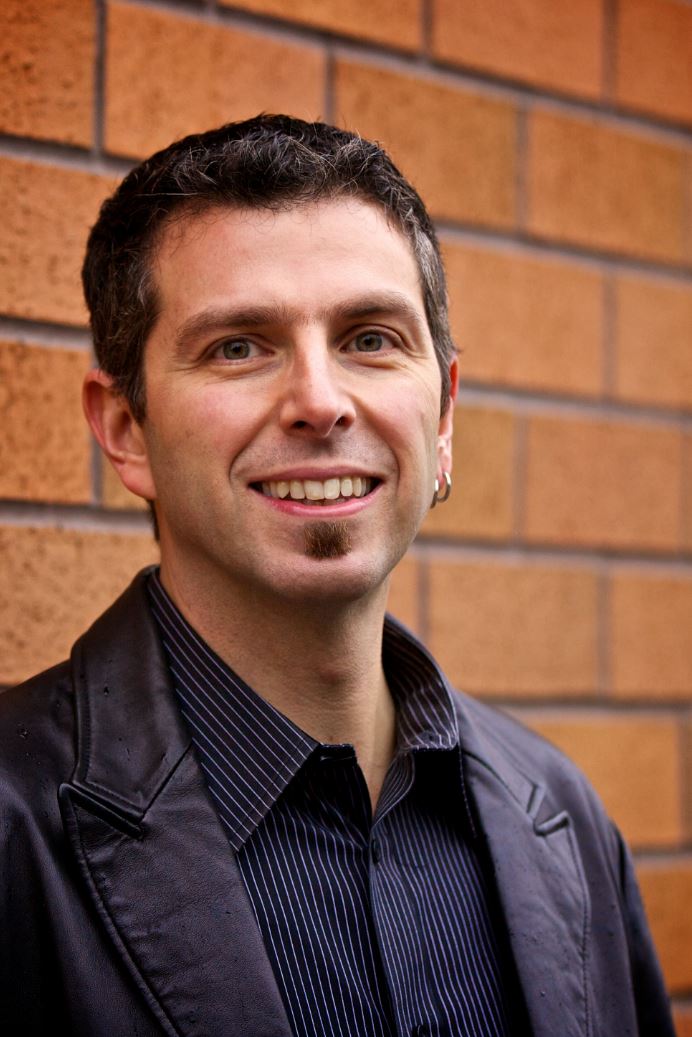
 Welcome to SFFWorld, and thank you for your time, it is very appreciated! To get things started, tell us a bit about “Kill Process”.
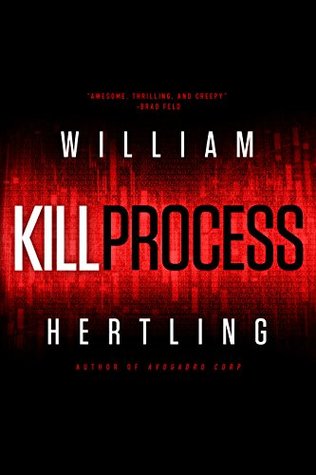
Thanks so much for having me. Kill Process is my fifth novel. It’s a technothriller about a woman named Angie who is a data analyst for the world’s largest social media company. Using her access to company data, she profiles domestic abusers, hunts them down, and kills them via remote computer hacks all while with PTSD from her own abusive past.
Your protagonist, Angie, is a self-proclaimed killer—coming right out in the first line of the book and admitting it. What was it like writing a killer?
The killer aspect was relatively easy for me to write because her actions as a killer are always morally right. It mostly became problem-solving exercise in using technology to achieve her objectives. I compensate for what could be morally repugnant behavior on her part by going deeper into her character, her motivations, and her emotions.
It’s many of the other things she does, as an entrepreneur and as an employee, that felt morally gray and required deeper ethical consideration, as well as keeping in mind how she would appear to the reader.
Probably the most difficult thing to write about was Angie’s experience as a survivor of domestic abuse, and the myriad aftereffects. It was really important to me to get her experience as correct as possible. At the same time, abuse and PTSD affects people in different ways, so there is no one “right” experience. In the end, it was about making Angie internally consistent.
 Angie is also an amputee. Where did you get that idea?
My friend Mike and I have worked together since 2000. He lost his right arm in a car accident in his twenties. When we first met, I was fascinated that he did essentially everything a two-armed person could do. Curious about how, I spent the better part of a week using only one arm, just to see what the experience was like and to figure out how to do some of the things he did. One thing I learned that week was not to wear button-fly jeans.
Seeing as you are not an amputee yourself, what was it like researching and writing that?
It took a long time before I felt up to the task of writing a one-armed character. If I’d known Mike even for five years, I don’t know that I’d have made the attempt, because it’s not enough to merely make surface observations about something so essentially a part of who someone is.
Mike has beta read all my novels. With Kill Process, he provided feedback on Angie’s character. There were several cases where I attributed actions to certain motivations, such as assuming Mike’s work ethic was tied to a need to prove himself, which turned out to be motivated by completely unrelated reasons. Even fifteen years isn’t enough to get fully inside someone’s head.
Of course, Angie’s a woman, not a man, and YouTube was a great help in figuring out female-specific activities such as putting on a bra with one hand. Ninety percent of this research doesn’t make it into the book, of course. There’s no description of her putting on a bra, but I had to be sure it was possible without an extraordinary effort, otherwise it would be included in her narrative.
Before this you were working on The Singularity Series, also near-term science fiction but focused on the idea of AI. What was it like switching to “Kill Process” after having worked on those for so long?
When I made the final edits to the last book in the Singularity series, it was a very emotional moment, because I was saying goodbye to those characters who’d lived in my head for five years. I still miss them to a certain degree.
At the same time, the characters in Kill Process are more fully realized than the characters of my previous novels, and I quickly became immersed in their lives. There’s also more of myself in Kill Process than in anything else I’ve written.
A key part of this story is Tomo, a social media company of your creation, which is described by Angie as “another evil abuser”. That being said, what is your view on the current social media landscape?
Six or seven years ago I attended a talk at SXSW about the curation and preservation of digital content on the web. Our writing, photographs, and videos are valuable to us individually, and to researchers collectively. Want to know what a particular subculture was doing and talking about in 2009? It’s right there on the Internet, and a few searches will turn it up. Imagine that power being available to future anthropologists studying past cultures.
The problem is that web hosts go away. The SXSW talk was made in the context of Geocities shutting down the previous year, and 38 million web pages disappearing as a result. It was suddenly obvious that our online memories don’t really belong to us. They belong to corporations who can go out of business or simply shut down services that are no longer of interest to them, such as when Google discontinued iGoogle, Google Reader, Knol, or Orkut
The current social media landscape is doing a better and better job of hosting our writing, photos, and videos in ever more accessible ways, but the cost is the loss of our control over our own content.
And that’s just one issue. Another major concern is the way that social media shapes how we are able to portray ourselves, and as a result, changes who we are. Photo-focused services, for example, favor the photogenic, promote a narrow definition of beauty, and encourage people to spend more time cultivating an image rather than having any real experiences.
Compare this to the web of twenty years ago: while it was far less accessible and had many disadvantages, everyone was welcome to create content in any form they wanted. Age, sex, and attractiveness were all irrelevant, because profile photos weren’t required, and there was no biographical form that had to be filled out. It was literally the age of “On the Internet, nobody knows you’re a dog.” You didn’t have to fit into any mold.
Amber Case talks about the rise of the templated identity, meaning that users of social media today can only interact by filling in the boxes and forms provided. They have to select from the genders provided, are given a constrained set of reactions to choose from, have to provide photos where they are needed, but can’t provide photos containing prohibited content, and so on. As more and more interactions move online, then who we are as people is limited to how we express ourselves with the tools provided.
At the beginning of the book we’re introduced to paranoia-inducing, and rather accurate, descriptions of Tomo’s collection of user data; however, we are quickly shown how Angie is using this for good. Do you think this current onslaught of user data collection can be used for good?
Absolutely. I see both the benefits and costs of social media. For all of my complaints, I’m still an active social media user. Data collection and analysis provides tangible benefits to all of us today: More convenient experiences getting information on our phones and the web. More of the stuff we want to read. More helpful tools. Better research into health issues. The benefits are huge.
But protecting user ownership and control over our own data doesn’t have to be at odds with getting useful benefit from the analysis of data. It has more to do with how that functionality is delivered. Here’s a spectrum that goes from little end-user control to maximum end-user control:
• Typical closed eco-system cloud application
• Cloud application with data import/export
• Open eco-system cloud application with standard full-access APIs
• Traditional closed-source software
• Open source software
Software tends to provide more user-control than cloud services because the data is stored locally, within your control, and because you own the software, it can’t stop working. Open source, obviously, gives you the ultimate assurances over user control because you’ve got a community of users who all work to ensure openness and user control.
Besides being an award winning author, you’ve also had a successful career in tech, which allowed you to be very accurate to the real technology industry. Was it ever tempting to set aside that technically accuracy to take the story in a direction you wanted, but knew was far-fetched?
It wasn’t necessary in Kill Process. I did it in The Last Firewall when a certain character is rebuilt using nanotechnology. It was my one big violation of my own rules for only using technology plausible for the timeframe. What I did in The Last Firewall will eventually be possible, but probably in 2065, not 2035.
But I just couldn’t resist the idea.
Being a tech veteran, do you have any advice for people living in this current slew of social media, corporate control of the internet, and surveillance?
As Cory Doctorow says, privacy is like clean drinking water. It’s possible to create your own safe water supply, but only at great cost. It’s far more effective to get it as a service from the government.
So while there are some basic security steps to take (two-factor authentication, use a password manager, keep software up to date with patches) the real thing to do is fight for change. Support the Electronic Frontier Foundation, and support politicians who will fight for better privacy. Use open source software whenever possible. Educate your friends about these issues. Tape over the cameras on your phone and laptop – not so much for the privacy it buys you, but for the conversations it will provoke with others who will ask you why.
What’s next for you? Will we be able to read another story in this world, or do you have some other near-future ideas you’d like to explore?
I’m tentatively exploring a sequel to Kill Process that looks more directly at how social media shapes who we are and how we think. I’m still very early in the process, so I’m not sure if this will be a direct sequel, another book in the same universe, or a standalone. I hope to have this book out by the end of 2017.
Thank you again for your time!
Thanks for having me! This was great fun.
More information about William Hertling at his website http://www.williamhertling.com/
* * * * * * *
Interview by Adam Ganong – SFFWorld.com © 2016