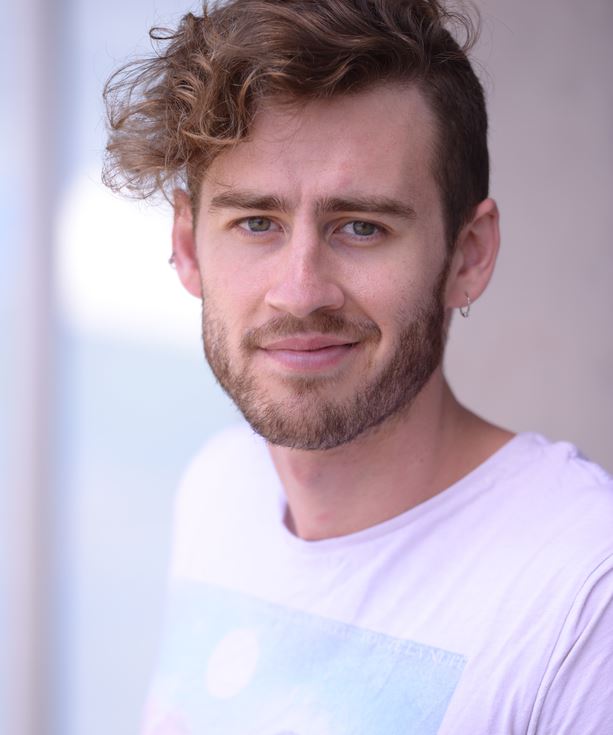
 Henry Madison is an apathetic young man with little to no ambition, but when a doctor creates clones of Henry the havoc starts. A Fistful of Clones is Seaton Kay-Smith’s debut novel.
First of all can you tell us a bit about your new novel, A Fistful of Clones?
A Fistful of Clones is a sci-fi western comedy about an apathetic guy, Henry Madison, who becomes desperate, winds up being cloned, then when his clones escape the lab they were grown in, is hired to hunt them down and kill them. For anyone else it would be murder, for henry it is suicide. Basically, A Fistful of Clones looks at what makes us who we are, is it genetic, or is it our experiences?
Can you give us some insight into your main character, Henry Madison?
Henry Madison is someone who has been through troubling times in his past and in an effort to not find himself back in that dark place, he has consciously, and subconsciously, stopped himself from feeling too many emotions. Once bitten, twice shy, if you will. He’s made an effort not to emotionally connect for fear of opening himself up to the depression and self-loathing he once felt. He’s nice and he’s pleasant, and more or less functional as a human being, but he’s all very surface level, internalising most things and living most of his life in his own head.
What goals might you have set for yourself when writing A Fistful of Clones and how do you feel about the end result?
My biggest goal was to make it an easy read, something exciting and fun that people would enjoy reading. There are books out there that are dense and harrowing and tough, and they’re extremely rewarding to read, but with A Fistful of Clones I really wanted the pacing and humour to carry it from page to page and hopefully have people wanting to just read it cover to cover. There are a lot of ideas in there and serious questions, but above all I wanted people to read it and be entertained. I’ve gotten some good reviews so far, with a couple claiming to have read it in one sitting, which is very positive, especially in terms of what I wanted to achieve. I’ve always enjoyed books that felt like I was gliding through them, and I wanted that smooth kind of read with A Fistful of Clones.
What is it with the concept of clones you find fascinating?
The most interesting thing about clones to me is their ability to mirror. Because when you’re looking at clones, you’re not just looking at the clones, they provide the perfect excuse to look at yourself.
How did you start writing? Was there a particular book or moment in your life that spurned you on?
I’ve always loved writing. Whether making home videos with my brothers and friends, or short stories, pages of jokes and lists at school, whatever. I’ve always enjoyed it. Whether there was a specific moment in my life, I’m not sure. My dad was a playwright a way back, so I guess writing was probably alive in the family growing up and I kept with it and pursued it. There was a diversion where I got a degree in Sport, but then I came back.
Who or what has influenced your writing, and in what way?
Books like Catcher in the Rye, The Outsider and American Psycho for the internal monologues and existential narratives; Catch 22 for the humour and TV shows like the Twilight Zone for their speculative worlds and strong themes underlying the stories. I’m inspired by just reading good books or graphic novels and watching good films and television. Seeing good comedy. Often I’ll watch something or read something and I’ll stop half way through, because reading the book has made me think, “This is great! What am I doing reading!? I want to be writing!” I think I have a little bit of trouble focusing sometimes. I don’t know.
What sort of challenges, as a writer, might you have faced before your first book was published? Any insights you would be able to share for those aspiring writers seeking advice?
I spent a lot of time unsure of the quality of the book, heaped in self doubt. I’d read it so many times, made so many adjustments, I just didn’t know if it was good. I couldn’t even tell whether it was funny. At times I was certain there weren’t actually any jokes in it. But then out of the blue, after a few rejections, I got an email from Harper Collins saying they wanted to read the rest and then I got published. So I guess the lesson is, don’t trust yourself. Never trust yourself. More specifically, never trust yourself when you think something’s not good because you’re too close to the project and you just don’t know. Make it the best it can be, and then let others decide. Is that good advice? Who knows? Maybe.
What is the hardest thing about writing?
The hardest thing about writing is finding the time. I’m one of a group of directors at Paper Moose, a creative design agency, I’m an actor, I’m temping in an office a lot of the time, I’m doing stand up comedy, I’m writing on stage shows and radio shows as well as trying to live a life socially and not be working all the time. Finding moments to sit down and write for any length of time can be tough. You have to take what moments you can and that can be tricky to get into any kind of flow, when you’ve got a whole day that’s the best, but that’s rare. So the hardest part of writing is finding the time amidst all the other stuff you do because you love it and the stuff you do because you have to.
What are your thoughts on good/bad reviews?
My thoughts are, good reviews are great! Bad reviews are not so great, but at the end of the day, if someone gives you a good review and a couple of people a bad review, that still means that someone really liked your book. Which is great! I’ve been lucky and so far, all the reviews I’ve gotten have been very positive. Which is really cool. But even in them, there are criticisms, but I’m reading the criticisms and I’m thinking, ‘Yeah, that’s probably true.’ Which is handy for when I’m working on the next one.
How do you define success as an author?
If I can sell a good amount of books to people who I don’t know and sell enough that I can do another book, that’s success. Hell, just getting published felt like success. Maybe I’m easy to please. I don’t know.
For your own reading, do you prefer ebooks or traditional paper/hard back books?
I prefer paperback books just because I love the way a bookshelf looks in a house. That said, I used to be a huge DVD collector and now I haven’t bought a DVD in a long time I’ve been using Video on Demand services. So perhaps the tide is shifting, we’ll see.
What kind of books do you read, any favourite authors?
I’m a big fan of autobiographies. (Not biographies, I’m as interested in the way a person writes about their life as the life itself), I especially like to read about comedians. I’m also really getting into graphic novels and am enjoying X-Men quite a bit. Especially “God Loves Man Kills”. I like reading the classics and I read a lot of books about screenwriting and TV, and that industry in general, but that’s more educational than anything. But still very interesting.
What do you do when you’re not writing, any hobbies?
Acting and stand up comedy are the two hobbies I pursue with the most vigour, hoping to take them out of hobby status.
What’s next, what are you working on now?
I’m working on another science fiction book, as well as a couple of TV concepts and a feature film which I have in development.
* * * * * * *
Interview by Dag Rambraut – SFFWorld.com © 2015