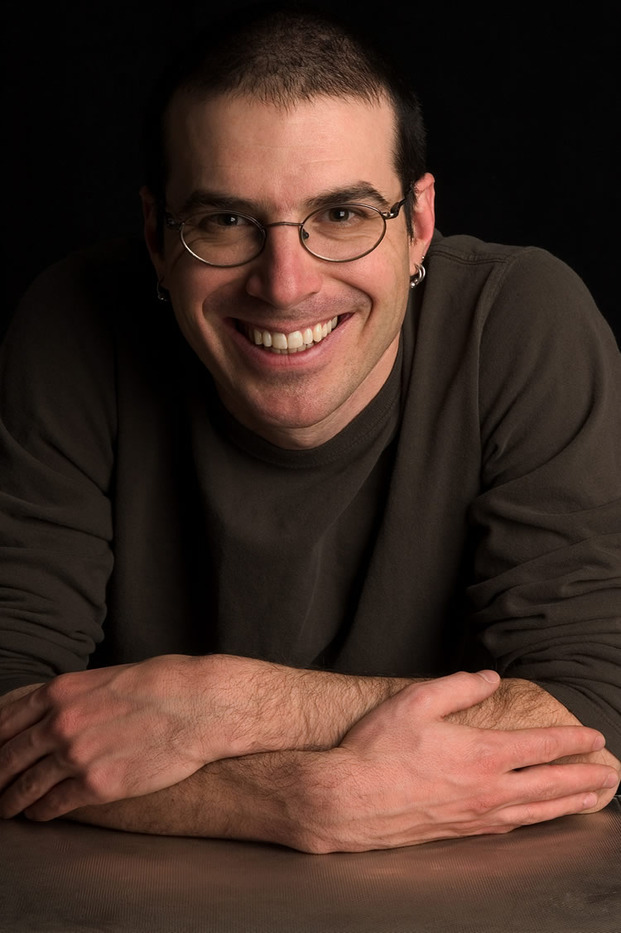
 I am writing following the release of your latest novel The Water Knife, which I was lucky enough to read and review for SFFWorld thanks to the kind people at Orbit.
The Water Knife is a science fiction thriller set in a near future where climate change has resulted in water scarcity in the South-western US, and the states of California, Nevada and Colorado are fighting a war over water rights.
I described The Water Knife in my review as having narrative drive like a V8 engine (ironically, not a very environmentally friendly comparison). I admired the efficiency of your prose in the book and you manage to convey a lot of information about your speculative future setting without relying on long exposition or sacrificing narrative pace. Is this something you were conscious of and how did you achieve this?
You’re always conscious of wanting to tell a good, ripping story, and I think that has to drive everything else. It dictates how much room you have at any given time to spend on explication. You have to serve your reader’s interest. So you look for as many different angles into the larger world and its themes as you can find: the professions of the characters their backgrounds, the plot itself, the settings, etc. all yield opportunities to drop in more information about how the world works and what drives the characters. if you do it right, the world feels lived in, whole, and complex, but the story will still feel lean. It helps to have come to this work from writing short stories, where you have even less space to try to pull of the same kinds of effects.
The Water Knife is told from the perspective of three characters: Angel Valasquez, the titular Water Knife, Lucy Monroe, a Pulitzer prize winning reporter, and Maria Villarosa, a young Texas refugee and orphan. And off to the side we have Catherine Case, the Nevada water baroness, who is perhaps the most interesting character of all. What were you trying to achieve by telling the story through these perspectives and were any of the characters more challenging to write than others?
I wanted a lot of different perspectives so that I could illuminate the larger story of winners and losers with something like drought and climate change. People who have been completely disenfranchised. People who are “winning” the water wars. People who approach it from an intellectual distance. When you have all those perspectives on the page, it yields a richer and more nuanced world. I think Angel was actually the hardest character for me. It took me a while to find his voice.
At an early point in the novel a character comments to Lucy that the subject of climate change isn’t a matter of belief, but an objective matter of fact proven by scientific data. He states it was a tragic point in history when society collectively decided to ignore this data. Do you think we have passed this point of no return in real-life and what needs to be done now to avoid the future you imagine in The Water Knife?
I think every day we continue to miss critical opportunities to fix the mess we’re heading for. I’m not sure that we’ve missed all opportunities, but it would be nice to see us all wake up and take some responsibility for our carbon burn.
Personally, at this point the two things I’d very much like to see–but which both feel like unrealistic fantasies–are that I’d like for us to nationalize our oil companies, and use their profits only for global warming mitigation, climate damage reparations, and alternative energy development. And ultimately, I’d like to see Big Oil obsoleted and managed out of existence.
The other, much simpler thing I’d like to see is a carbon tax that increases with regularity and predictability, so that our marketplaces will know and recognize that they can plan on gas being more and more expensive every year, and that it will never get cheaper, ever again. With the right price signals, I think we could work wonders.
I guess this next question is related to the above. You write about the future, but much of the poverty and deprivation you describe in your novels is a current reality for many people in the world. Phoenix, as depicted in the novel, reads like a depiction of an impoverished population centre in drought-stricken parts of, say, many African nations today. Aside from a warning about our future trajectory in the developed world, were you aiming, with The Water Knife, to bring the contemporary challenges facing developing countries closer to home and how do you avoid falling into the trap of didacticism in your fiction?
Hm. I get the impression some people think that my writing is painfully didactic, so that’s probably a YMMV sort of issue, but broadly, I aim to tell stories about the future that don’t spend a lot of time placing “good” values with the “good” people, and “bad” values with the “bad” people. All the people in the story are just trying to survive as best they can given the terrible world they’ve inherited. That takes care of most of the problem of preachiness, I find.
As for the larger question of the deprivation that many people experience today… yes, most of what I model in the book comes from real, current examples. For a western reader, growing up in significant luxury, this looks like a horror story. For some people, it’s part of life. I wasn’t necessarily trying to highlight this, but it’s definitely there.
I understand you have another Shipbreaker novel left to write for Little Brown. What’s next on the horizon after this and do you see yourself returning to adult science fiction again soon?
Yes, I’ll be writing SEASCAPE next. After that, I’ve got a few projects in mind, but nothing I’m ready to talk about yet.
Thanks again for your time, Paolo. It is very much appreciated.
* * * * * * *
Interview by Luke Brown – SFFWorld.com © 2015