

 Since my novels started to be read outside Australia, I’ve noticed something very odd: very few people are worried by the local colour. My novels are full of it. When I first wrote for a US market, everyone was worried. “Will readers understand?” “Are you sure it’s international enough?” Other writers have advised me to dull things down or to make them more US, since ‘US’ is the international common ground. I didn’t. And I still have readers. It’s about time I explored how it’s possible to turn a very local book into an international affair without weakening it.
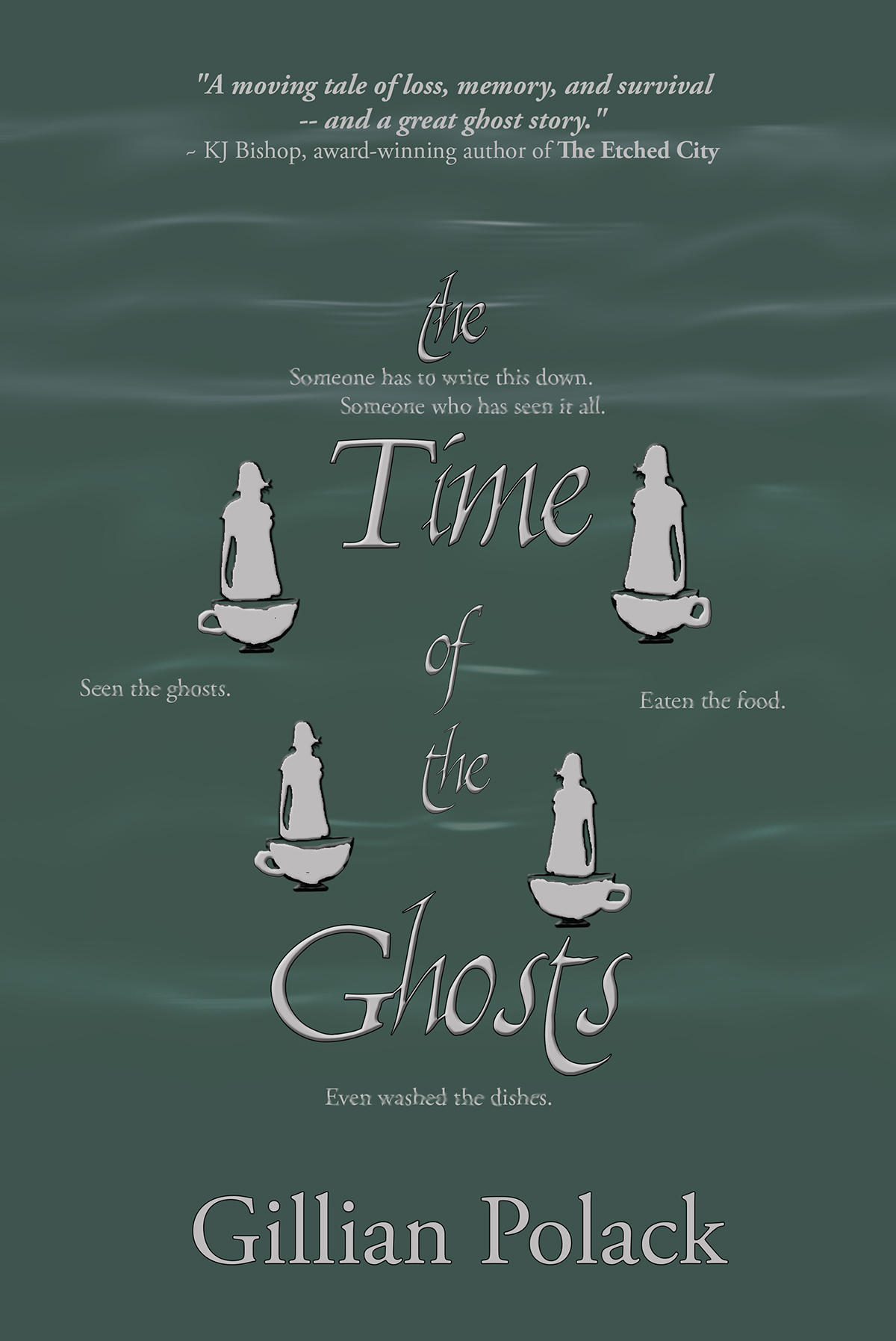
This is not a universal approach. It’s what I do. Specifically, it’s what I did in my new novel The Time of the Ghosts. This gives me an excuse to give you the cover of my book, for I really do love this cover. It gives an important hint. One of the things that makes my book readable across countries is the cover: it says “This is a novel about the private lives of individuals. With ghosts. And maybe werewolves.” A character-driven novel has leeway for eccentricity and local colour. In fact, we expect authenticity in local culture when the novel is primarily about the lives of individuals. We want to get to know them and love them and complain about them and to wonder why they’re being such idiots. We need to see how they fit into their world. Their world doesn’t need to be ours.
My rule #1 therefore, is to know what type of novel you’re writing. Different types of novel require different types of colour. Sometimes a city is a generic template in urban fantasy, for example, and sometimes it’s a character of its own. Urban fantasy such as Tom Pollock’s* requires London to appear as London, not as an anyplace city. It needs the local colour.
My rule #2 then, is whether the setting is a character or backdrop. If it’s backdrop, then too much local colour will annoy readers; if it’s a character then local colour is part of what makes the story work. This means I’m going to annoy many Australians with my new novel. Australia has a cultural preference for hating Canberra and regarding it as a city without soul. And I’ve gone and made it a character… Oops.
It’s perfectly fine to have a different view of the culture and the place and the time to the one the masses hold. I see Canberra s complex and haunted, so I wrote it that way. This is the city of my novel, not the city others see. Which brings me to rule #3: the local is created by the writer. It’s not an exact copy of a place, but an interpretation.
A writer’s voice counts. What counts for my shaping of Canberra is how well I do it, not whether it matches the national pastime of being rude about our nation’s capital.
 I can use as much colour and detail as I like in bringing the city to life, as long as I do it in the voice of the novel and as long as the novel has a strong voice. This is how many readers accept detail that’s alien to them: it’s part of the reality of the novel. I shouldn’t be talking about the squid on the roof of a major monument (although I’ll give you a picture of it, just to prove it exists) to demonstrate that Canberra has its eccentricities, for the squid doesn’t relate to the story at all. I need to find the detail that will bring my story to life.
The local is terribly important for that. Canberra is a city where people get lost. Our roads loop and go in circles and head in the wrong direction for kilometres at a stretch. When students are late to class “I got lost” is a typical excuse. I used this for the novel, because it was far more useful to a story about shifting realities than the giant squid would be. This is a great shame, but there it is.
Rule #4 is therefore to choose your telling detail wisely and make sure it echoes at all levels of the novel. It’s not the amount of local information and dialect you give that makes the local strong, it’s how well it’s used.
That brings us to #5, which is the final rule just now: making the local work for international audiences is all about good writing. Good writing strengthens the reader’s understanding of the setting while it tells a fine story about interesting people. If the writing is bad, then rules #1-4 are moot.
*I use him as an example because of the near-perfection of his surname, of course.





Good for you not getting side-tracked into the US market. I think every reader wants to pick up a book and go on journey…hopefully somewhere they have not been or if they know the place, to see it with fresh eyes.
Thank you! I worked out who I was writing for: I write for readers who want that journey and are willing to take it with me, so I use my own interests and my own voice. I love my readers – they tell me all about their journey with me!