For those who don’t know (or don’t care to remember), the 1970’s and 1980’s were a seminal moment in Horror fiction. This book celebrates this – the lurid covers, the bizarre plots and, yes – the sheer horror of that time. Grady (author of such books as Horrorstor and the recently reviewed My Best Friend’s Exorcism) is a genially entertaining host who writes about such things with glee and amusement, personal reflection, wry humour and just the right amount of bemused attachment, throwing light on what was a very odd time in publishing.
Although Horror had been a staple of publishing for decades, its market in the 1930’s until the late 1960’s, was what we would call ‘niche’ today. There were devoted fans, but to the general public it was the genre that, like science fiction, was regarded as “the thing in the closet”, the embarrassing relative that everyone knows of, but does not talk about. It was often regarded as something for children that they then grew out of.
So what changed it? Grady first makes the point that, although there were Gothic Romances from the 1930’s, it was the publishing of three books in the late ‘60’s and early ‘70’s – Ira Levin’s Rosemary’s Baby (1967), Thomas Tryon’s The Other (1971) and William Peter Blatty’s The Exorcist (1971) which led to a broader acknowledgement (and best seller status!) of Horror. Along with books such as Peter Benchley’s Jaws (1972) and eventually Stephen King’s Carrie (1974) this growing acceptance led to the deluge of simulacra that broke the genre again into the mainstream and made the genre once again wider read.
The natural economic consequence of this was that publishers, sensing a good thing (ie: the books sold), and combined with this growth of interest from an eager readership, did their best to supply readers with more material, to slake the thirst for “more like this”. It also helped that a resurgence in horror movies (again, The Exorcist movie (1974), perhaps also assisted by the latest technology, the VHS video recorder in the early 1980’s, allowed those with an interest to pursue it further. (The first video tape hired by my parents to watch was Poltergeist (1982), for example.)
For both the movies and the books, the target audience was teenage readers, summer high-schoolers and young graduates who wanted books that they could relate to, were accessible and ‘easy reads’. There was a feeling that they wanted stories where this could happen to them, that could be enjoyed without thinking about them too much. This was not about style, or literature. It was about ‘gross-out’, about readers feeling a chill, whilst safe in their own environment.
Grady points this out in his Introduction:
“When’s the last time you read of Jewish monster brides, sex witches from the fourth dimension, flesh-eating moths, homicidal mimes, or golems stalking Long Island?”
At the same time there was a darker side. Adults found that they liked the social commentary inherent in Stephen King’s stories but wanted things darker, nastier and more extreme.
And eager to please, the publishers unleashed a deluge of trashy, seemingly superficial horror novels, each one determined to out-do the previous and be more shocking, more edgy, more extreme than ever before. They revelled in their “Bet you can’t read this one!” taglines and their extremely outlandish nemeses.
Grady takes a knowledgeable and yet amused look at such books. At times it is purely anecdotal, whilst at others he gives reasoned responses to the key aspects of the genre at that time – how Jaws led to a whole miscellany of wayward creatures, for example. Who knew that there were quite so many nasty, vicious animals out there – not just sharks, but crabs and rabbits? And pigs?
Grady’s purpose here is to examine and enlighten, often with amusement, much of this going-on, and celebrate, not just the well-known examples, but the unknown ones as well. The book sets out its reason d’etre from the first few pages:
“These books, meant to be sold in drugstores and supermarkets, weren’t worried about causing offense and possess a jocular, straightforward “let’s get it on” attitude toward sex…Though they may be consigned to dusty dollar boxes, these stories are timeless in the way that truly matters: they will not bore you….it’s not just the covers that hook your eyeballs. It’s the writing, which respects no rules except one: always be interesting.” (page 9)
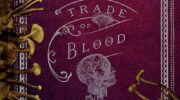
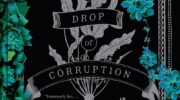
Of course, much of the fun of the book can be found whilst looking at these often frankly bizarre covers. One of the book’s strengths is the wide variety of covers used to illustrate the text, printed in high quality colour on glossy stock paper. Whilst at times some better referencing would be useful, there will no doubt be more than one reader who will be inspired to go and find some of these books, now only to be found in the second-hand shops – me included.
There are occasionally times when such enthusiasm leads to hyper-ventilating generalisation – “Horror is a woman’s genre” (page 147) and “There are two types of creature in this world – Americans and inhumanoids.” (page 171) are just two examples – but the book is written in such a manner of breathless eagerness that the reader can forgive such crass statements. After all, in a book titled “Paperbacks from Hell” it is sort of a given that the book will ramp up the tone in the manner of those paperbacks, most of which seem to say, “Better than The Exorcist” or “The New Stephen King!”
However, Grady is to be commended in summarising a time which otherwise would be forgotten – and gains further kudos for doing so with respect rather than with distain. He’s clearly had a lot of fun finding these books and reading them. It is an old adage that for the 1960’s “you had to be there to know what it was like.” This book serves a similar function for the Horror boom of the 1970’s and 80’s – for those that remember, it’s a fond (and not so fond!) reminder of old memories, whilst for those reading that are too young to remember, it’s more of a case of “What were they thinking?”
As a summary of ‘a certain time’, and as an answer to why all those books that proudly exhibited the word “Horror” on their covers eventually disappeared to the remainder shops, Paperbacks From Hell is a great account of those now seemingly-crazy days, when books seemed more lurid than today and less motivated by morals or social outrage.
It’s a book to read a chapter at a time, or dip into (as some of us at SFFWorld have been doing for a few months now!)
It might even work as a coffee-table book – or perhaps not, when the parents or grandparents are due around.
Recommended.
Paperbacks From Hell: The Twisted History of ’70’s and ’80’s Horror Fiction by Grady Hendrix
Published by Quirk Books, September 2017
256 pages
ISBN: 978-1594749810
Review by Mark Yon