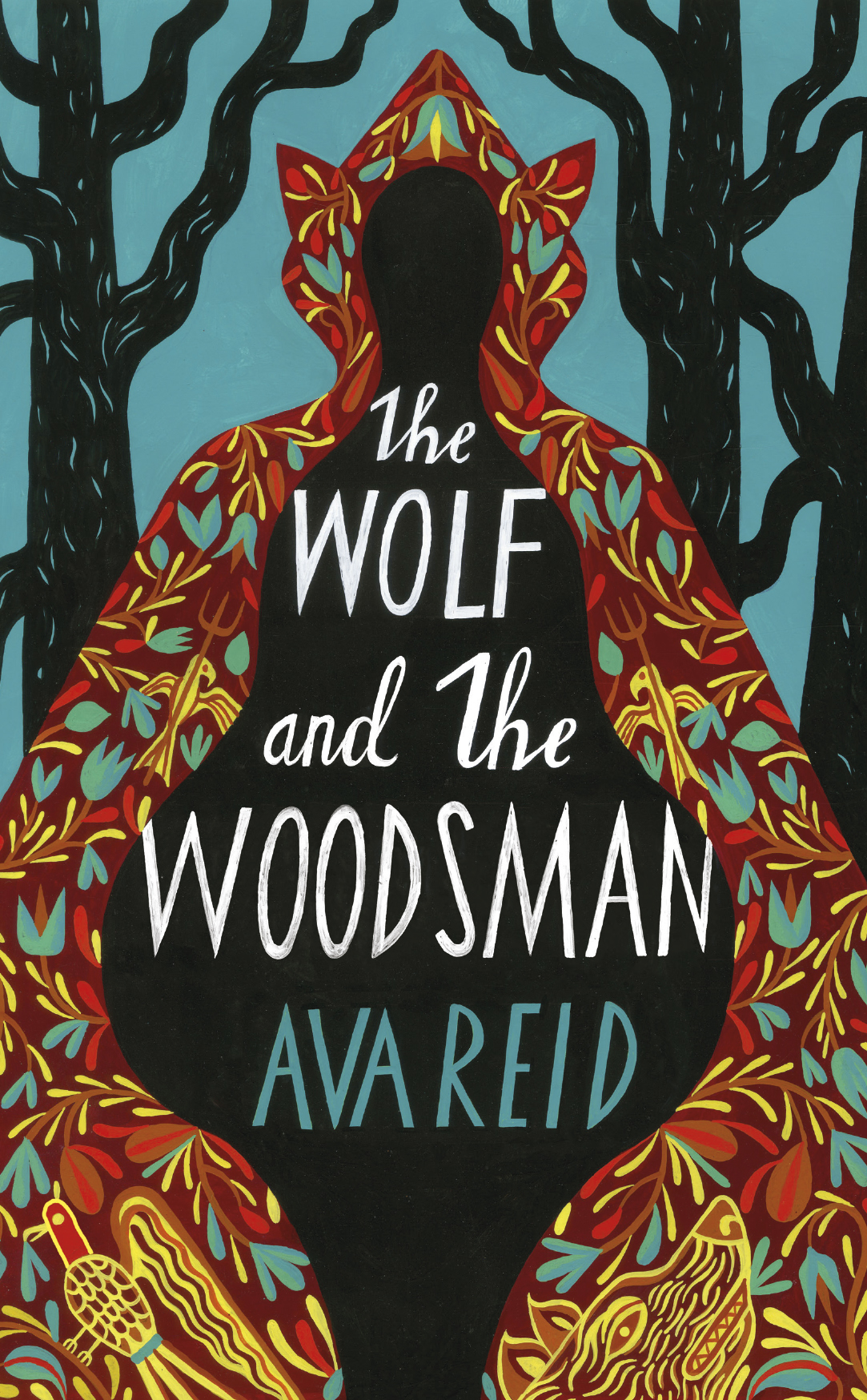
Today we’re very pleased to present our interview with Ava S. Reid, whose debut novel The Wolf and the Woodsman publishes on June 8th, 2021. We will post the review of The Wolf and the Woodsman on June 8th, 2021.
 Congratulations on your debut novel, The Wolf and The Woodsman being published. Would you mind giving readers of SFFWorld.com a brief summary of the book and a bit about yourself?
Thank you! The Wolf and the Woodsman is a literary-leaning adult epic fantasy novel inspired by Hungarian history and Jewish myth. It’s about a pagan girl who is forced to ally herself with her enemy—a member of the Woodsmen, a militarized religious order dedicated to exterminating pagan beliefs—so they can defeat a tyrant who threatens them both.
As for me, I’m a native New Yorker currently living in aggressively sunny California. I’ve worked at an AI robotics startup, a refugee resettlement organization, and as a congressional intern. I studied religion and ethnic nationalism at Columbia, which heavily influenced my writing of this book.
What was the first thing that came to you for The Wolf and The Woodsman a character or characters? The world?
The world definitely came to me first. Early on in my research I stumbled upon an anecdote about Saint Stephen, the first Christian king of Hungary. He was born under the pagan name Vajk and changed it later in life when he converted. His sons all died tragically, so his heir apparent was his nephew, Vazul. But because Vazul was a pagan, Stephen desperately did not want him to inherit the throne. So, he did what any medieval Christian king would do and had Vazul’s eyes stabbed out.
When I read that, I instantly knew that I wanted to write a book about religious persecution, about ethnic nationalism, about nation-building, about violence and belonging and blood. I knew this would be a world where any perceived “impurity” would be viciously stamped out, so I created two characters who, in their own ways, challenged and threatened the alleged purity of the burgeoning nation-state.
While the setting fantastical, the setting seems to be inspired by some real-world locations and I’m guessing inspired by your Hungarian background. The novel has a wonderful sense of place, the world feels vibrant and alive, in fact, at times it feels plain dirty and lived in. Did you visit Hungary or any of the surrounding areas to get a first-hand look at the locales?
I’ve been to Hungary before, yes—and any Hungarian will instantly recognize that many of the places in the book have real-world analogues. The cave-church that the king, Gáspár, Évike, and Nándor visit is inspired by Gellért Hill Cave, which is in Budapest. Budapest also has the largest Jewish synagogue in Europe, the Dohány Street synagogue, which serves as the inspiration for the temple that Évike visits with her father.
I desperately wanted the book to have a deep and unique sense of place. Very often Eastern Europe is painted with a broad brush—as homogeneously Slavic, first off, as well as cold and forested. But Eastern Europe is climatologically and geographically diverse. Hungary is rather famous for its plains and grasslands, and obviously Évike and Gáspár spend a decent amount of time in the plains. Because it’s landlocked, rivers and lakes are particularly important, and I wanted to reflect that, too. I very much did not want this to feel like the sort of generic Eastern Europe-inspired setting that’s become quite common in SFF.
There’s also a great deal of resonance between Nándor and let’s say, other very recognizable imperialistic real-world leaders who manage to generate fervor over people who don’t fit in his box of acceptance. How did Nándor’s character emerge for you?
It’s very hard to write a villain that’s a character in their own right and not just a mouthpiece for the author’s politics. But this is also an undeniably political book, and I know it’s inevitable that Nándor will draw comparisons to real political figures, living or dead. I will say that I didn’t base him off of anyone in particular (if I wanted to write a hit piece on Viktor Orbán I’d be a lot more blatant about it).
Instead, I focused on what Nándor represents in the book: beautiful and beguiling, he’s the symbol of what the nation of Régország wants to be. Untainted and whole, religiously and ethnically “pure.” The picture that he paints of a homogenous nation-state can be very appealing if you aren’t trained to see the ugly underbelly of it (and don’t understand what kind of violence, both actual and rhetorical, it takes to create and maintain such a state). So Nándor is more than a character: he’s a concept, a symbol, one that’s both aspirational and impossible.
Évike seems to have surprised herself along the way and she and Gáspár certainly surprised each other (and it was wonderful!) throughout the novel. What surprised you the most upon finishing the novel?
Early drafts of this book weren’t actually particularly romantic—the romance was there, but it wasn’t nearly as fleshed out or central as it is now. I didn’t think about myself as being particularly good at writing romance so I was hesitant about fully committing to that.
But, as my editor pointed out, the romance is really the heart of the book. I was surprised by how much of that came out while I was editing. It’s fundamentally a book about belonging, and in the end, Évike and Gáspár belong to each other.
Would it be too much of a spoiler to reveal which character or element of the story underwent the least amount of transformation from first draft to final, published novel.
The first three chapters are pretty much the same from the initial draft (with some improvements to the prose). The dialogue from the “kneeling” scene is also virtually unchanged. J
 The Wolf and the Woodsman seems to be as much about the characters as it is about the power of story and specifically stories handed down trough oral tradition. Clearly, story is important to you, were stories handed down in your family and if so, did any specifically influence Évike and Gáspár’s story?
No stories in particular, though I will say that the subplot of Évike’s learning to read and write is the most personal and closest to my heart. Literacy and education are such important parts of Jewish culture, history, and religious practice, and I wanted to reflect that in the book. On a personal level, my grandmother is a schoolteacher. She’s the one who taught me how to read and write (and double-checked all my Hebrew transliteration!) The fact that learning to read and write gives Évike power (both actual and symbolic) was my way of honoring her.
You’ve revealed a world with depth, both in its myth and magic as well as the characters. Will readers see more if the world or these characters in the future?
The Wolf and the Woodsman is definitely a standalone, but I wouldn’t be opposed to writing more about this world in the future! In fact, my second book (out in 2022) is technically set in the same universe, though displaced in setting and time period. TWATW isn’t a fairytale retelling but I wanted it to have the feel of one, to be wrapped up neatly in a single book.
The standard question for fantasy writers (or any writers, really): which writers influenced you the most?
Obviously there are shades of Leigh Bardugo, Naomi Novik, and Katherine Arden, but I’m probably most influenced by the genre-bending speculative works of writers like Kelly Link, Carmen Maria Machado, and Karen Russell. I love their wit and strangeness. I also love the works of Catherynne Valente and Margo Lanagan. Their prose is hyper-stylized and exceptionally skillful. I can only hope to one day have such a strong, unique sense of voice.
If you could physically hand a copy of your book to any writer, which writer would you be most proud to say, “Here’s my first novel, please read it?”
Well, I would rather take a dip in freezing water than do that to anyone, but if I had to, it would probably be Naomi Novik (and then I’d promptly run off to a hermitage and live the rest of my life in anonymous obscurity).
Have you taken part in any real-life writer’s groups or online writer’s groups?
I actually came up through Pitch Wars, and most of my close friends and CPs are people I met in that program. My mentor, Isabel Ibañez, is pretty much the only reason that TWATW got published, and I’ll never stop being grateful to her for teaching me so much and holding my hand through the throes of the publishing process.
Thanks for taking the time to answer some questions for the readers of SFFWorld.com, do you have any last words you’d like to share?
Of course! Thanks so much for having me. Uh, I guess buy my book if you’re interested in body horror, enemies-to-lovers romance, and people eating things they shouldn’t?
I can only agree with Ava, buy her book! It is a fantastic novel.