The empire, like a garden, must be watered.
With aid to the people in their time of need.
With redress to their grievances in time of struggle.
Without these things, the nation becomes dry and brittle,
And the fire of rebellion, stoked from a single falling spark,
Will rise up and consume all that is good.
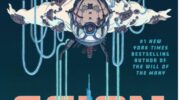
The first book of this series, The Hand of the Sun King, was reviewed by me in July last year. (LINK.) It finished on a cliffhanger, with our protagonist Wen Alder (also known secretly as his Nayeni tribal name of Foolish Cur), who was involved in a rebellion against the Empire and attempted to take on the Emperor at the end of The Hand of the Sun King.
Much of the second book deals with the consequences of Wen’s actions. In fact, most of this book is about consequences. Wen is having to deal with what to do next to free his family tribe from the despotic Empire determined to wipe away all traces of their past, as well as gain a greater understanding and better control of his newly-found magic powers. Despite losing a hand, (Star Wars fans, note!), Wen must again face and try to defeat Emperor Tenet – which based on his last encounter is not an easy or sensible thing to do.
Koro Ha also has to deal with the consequences of having tutored Wen Alder. Given an offer, he leaves his present post to return home to Toa Aloni and establish a new school there. Not everyone is pleased by this action. Koro’s family in Toa Aloni feel that he has picked up too many of the Southern ways, whilst others believe that the tutor who raised an Emperor’s Hand to rebel cannot be trusted and watch his every lesson.
In terms of the bigger picture, we have a concern that Emperor Tenet is wanting more than just the curbing of unrest in his Empire. Whilst most humans are content to live below the attention of the gods, there is a worry that the Emperor’s actions may have apocalyptic consequences by bringing humans to the gods attention once more. After all, the last time the gods appeared, much of the world was destroyed…
When I reviewed the first book, The Hand of the Sun King, I was impressed by the level of detail given to this Asian-inspired world. And as this is the second book, I expected the story to be raised in its consequences, which it is. There’s a lot more worldbuilding here, with a bigger view of the world and more background about the cultures of the Sienese and the Nayeni, ancient stories and the gods. The battle scenes as the book progresses are both wincingly cruel and pleasingly epic.
As you can therefore tell from this, the plot this time around is deeper and more complex. The pacing of the book is generally very good, with a fairly slow start to a real page-turner climax. Greathouse knows how to tell the tale, combining narrative drive with flashback sequences and little snippets of ancient mythology in this world of magic. This makes things seem more real, but with added magic, of course.
Most importantly, Greathouse knows how to show nuances of character. Throughout all of this, Wen is a troubled soul. He realises that whatever he does will involve rebellion, blood and death for many, This makes him very wary of making decisions, and yet at the same time Wen is aware that he must make difficult choices, if things are to change. Wen wants to bring down the Empire, because of all of its injustices and atrocities, many of which are shown here.
By contrast Hand Pinion, acting on behalf of the Emperor as an Emperor’s Hand, wishes to preserve the Empire for the greater good, even though he has issues with it. He believes, at least at first, that the only way to do this is to stop the rebellion, which means stopping Wen, who many see as the traitor that is the focus of that rebellion. There is also a personal element to this as, lest we forget, Wen also killed Pinion’s brother Oriole in the first book.
One of the elements that makes this evolving plot interesting to me is that Wen is not a perfect hero, and he does make mistakes. There are aspects of his character shown that are worrying, even disturbing, yet make Wen a richer character.
Similarly, Hand Pinion, Wen’s nemesis, who as a Hand is doing the Emperor’s bidding, is not the all-out villain he could be in a simpler, less complex novel. It would be easy to make the Emperor a Darth Vader or Palpatine style villain, but even he is shown a degree of sympathy, and there’s some interesting character development towards the end of the novel, which would be wrong of me to give away here.
In fact, the ending of the novel has some major revelations I didn’t see coming. These may alter your perception of the novel, and what you think about some of the characters may change, but they are understandable.
In short, The Garden of Empire is a worthy read for those who like their fantasy epic. I think it is one of the best fantasy series I have read recently, and is therefore worthy of your attention.
Unsurprisingly, this book is not the end of the series. Like me, I suspect many readers will want to read what happens next as soon as possible – although we have to wait! Nevertheless, I look forward to continuing the story in the next.
The Garden of Empire by J. T. Greathouse
Book Two of the Pact and Pattern series
Published by Gollancz, August 2022
ISBN: 978 1 473 23291 4
468 pages
Review by Mark Yon