Here’s our now traditional Review of the Year, pointing out what we liked most. This time, it’s:
Part 2: Horror Books
(Part 1 looked at Fantasy Books, Part 3 will look at SF Books, Part 4 will look at Film and TV.)
————————————————
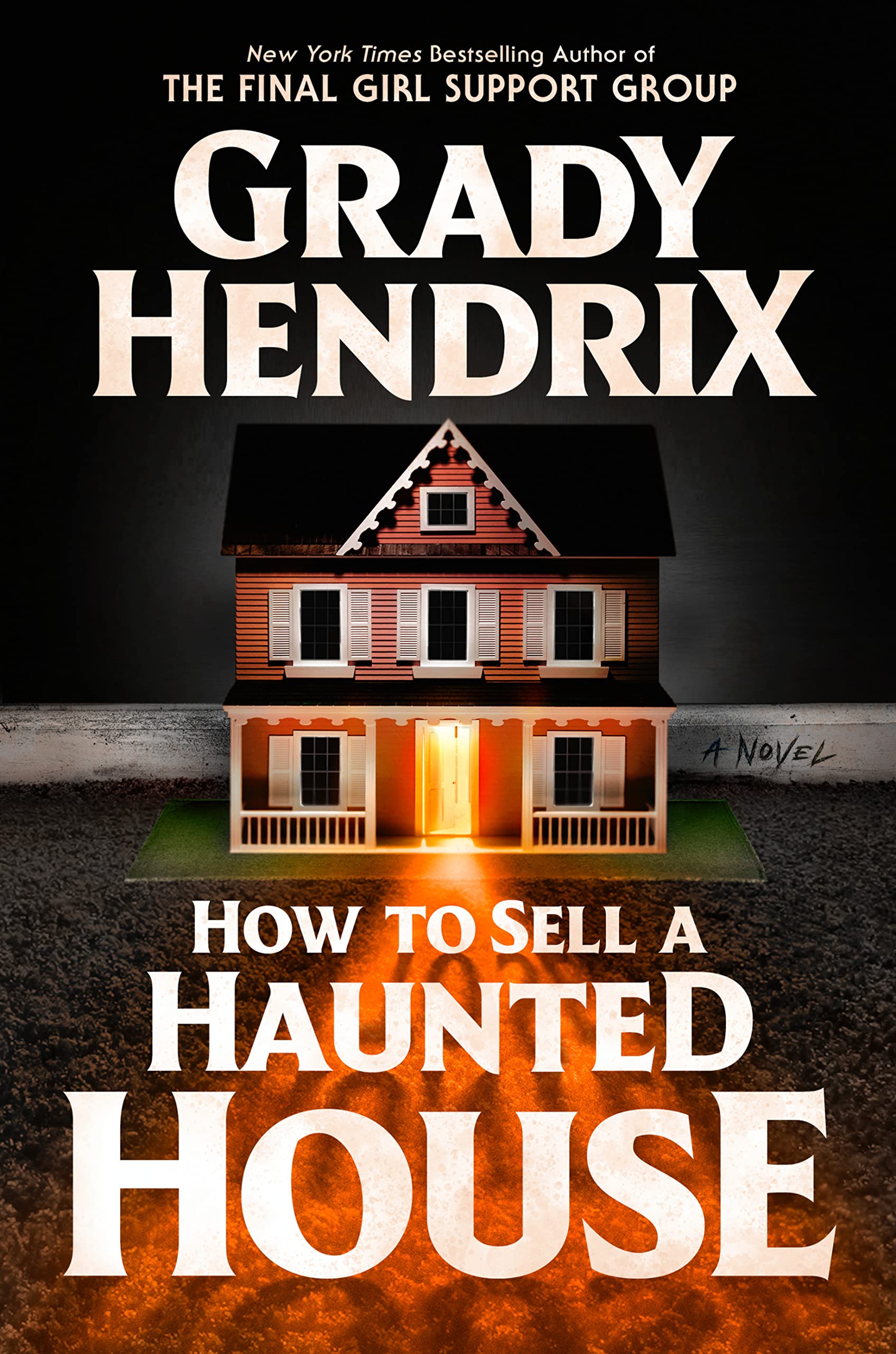 How to Sell a Haunted House by Grady Hendrix – With How to Sell a Haunted House, Grady tackles (in full) maybe the top of horror trope mountain – haunted houses. There’s more than that, too, haunted people, family secrets and some of the creepiest puppets I’ve ever read. Balancing out the creeps is another thing that Hendrix has excelled at portraying in his previous novels: relationships, family or close friends (who might as well be family). Family is an important part of this novel, not just the siblings, but the extended family who reside in and near Charleston, SC. Louise and Mark’s aunts and cousins who are wonderfully drawn supporting characters help to provide some humor and idiosyncrasies that help to make the family unique.
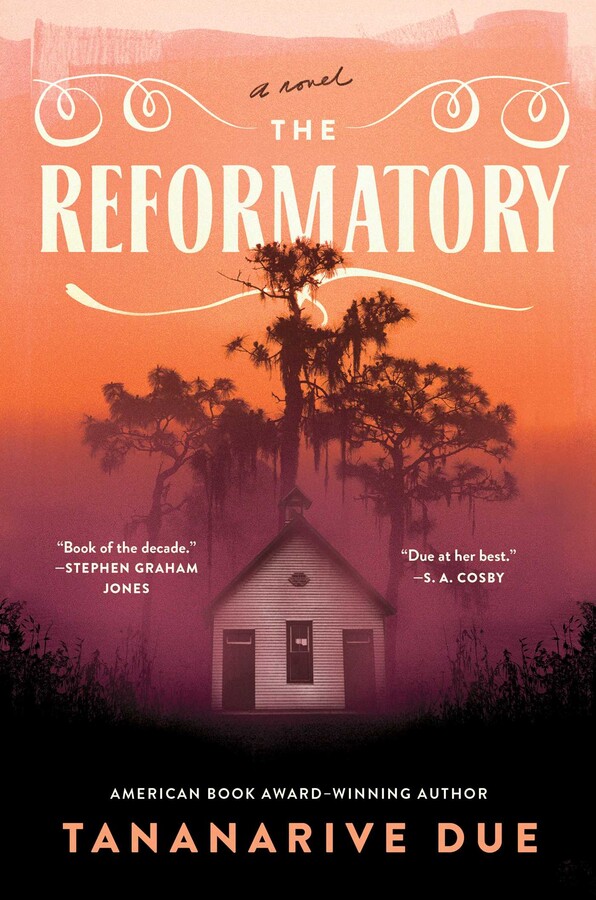
The Reformatory by Tananarive Due – For as well-respected as Due has become over the years, The Reformatory will likely go down as her Magnum Opus, her defining work. Set in Florida in Jim Crow 1950s, the novel focuses on Robert Stephens, Jr., an African-American boy who is forced into a prison camp as a result of a minor scuffle with a white neighbor. The novel is a tale of racism (duh), family bonds, ghosts, the dead, and the dark underside of our country. … Due has a very personal connection to the history that informs the backdrop of the novel. Without knowing that, the novel feels intimate and personal. Knowing the connection only hammers home that part even more. Her prose and storytelling is gut-wrenching, addictive, and powerful.

Night’s Edge by Liz Kerin – It isn’t often a book takes me by surprise and utterly captivates me the way this one did. Night’s Edge also gets the nod as my top debut (any genre) of 2023. Some novels just tear you apart. They get into your veins, into your soul, into your mind and wreck you. Night’s Edge by Liz Kerin is a book like that. Kerin painfully depicts the co-dependent bordering on parasitic relationship dynamic in Night’s Edge. I’ve had family members who found themselves in a familial caregiver type of relationship and damage and negativity can grow over the years… even when the caregiver and caretaker love each other like family. Night’s Edge is a gripping, raw, emotional and un-put-down-able novel.

Camp Damascus by Chuck Tingle – Tingle’s “mainstream” debut (by mainstream I mean books not focusing on butts, inanimate objects/concepts, and pounding) is incredibly assured. Rose is a fully-realized, believable, multi-dimensional, empathetic character. As Rose reveals more of her personality, it becomes clear she is neurodiverse. It is that element of her character that forms her core and her inquisitive nature. Her focus on the missing parts of her past drive her forward, despite her father and her psychiatrist’s protestations to the contrary. Camp Damascus works as a gripping horror novel as much as it has a message. It is a thrilling story and it is the kind of story that just may help people suffering in some of the same ways as Rose is suffering.
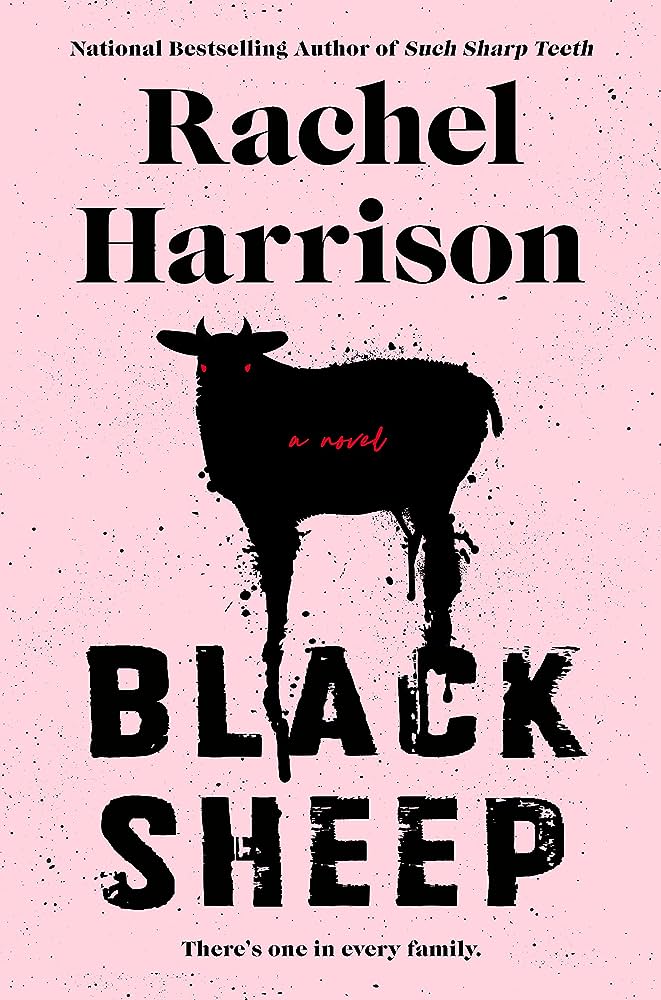
Black Sheep by Rachel Harrison – Harrison has become one of my must-read horror writers over the last couple of years. Harrison has proven to be very incisive with her ability to marry horror tropes with societal challenges like werewolves and sisterly love/competition in Such Sharp Teeth, friendship (ranging from true friendship bonds and toxic friendship) and supernatural/demonic possession. Here, Harrison takes her writerly scalpel to cultish religions and familial relationships. There’s a point, about 1/3 into the novel that is one of those “kick wham” moments that is best enjoyed without knowing it, and even that is too much of a spoiler. I’ll just say that I had to re-read it a couple of times.

Special Mention: 101 Books to Read Before You’re Murdered by Sadie Hartmann – I say special mention because this is a non-fiction book, but it should be on every horror readers shelf. … a definitive look at horror fiction in the early 21st Century by a smart and engaging voice who has her finger on the pulse of the genre.
Honorable Mentions: Black River Orchard by Chuck Wendig, The September House by Carissa Orlando, The Handyman Method by Nick Cutter and Andrew F. Sullivan
Randy Money:
In 2023 I probably could have – should have? – challenged myself more, but on the whole, it’s been an enjoyable year for reading, and the books I enjoyed most include:
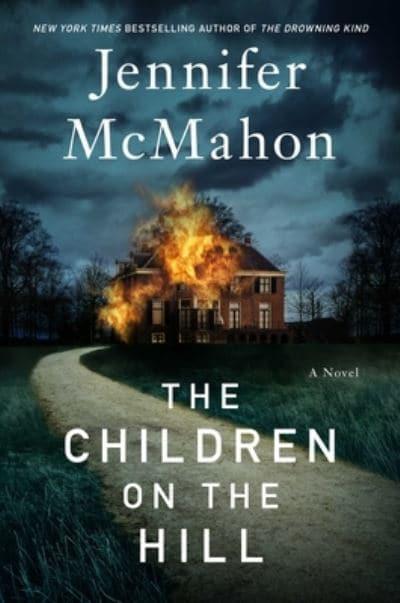
The Children on the Hill by Jennifer McMahon. My wife finally convinced me to read a novel by McMahon, and this one from 2022 turned out to be a terrific psychological thriller: In 1985 two girls bond over their love of the 1931 movie, Frankenstein and the 1935 movie, Bride of Frankenstein, seeing something of themselves in the monster, and which oddly aligns with secrets kept by their Gram. As adults in 2019, the events of 1985, Gram’s secrets and their shared bond still direct their lives as one becomes the monster. I intend to read more by McMahon.
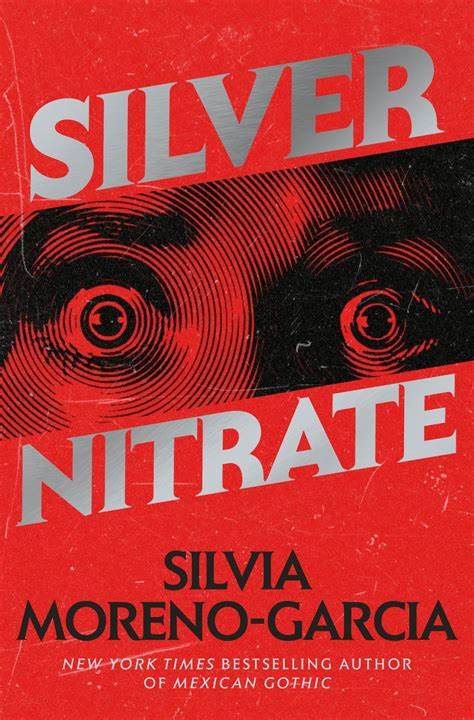
Silver Nitrate by Silvia Moreno-Garcia. An aging director, a cursed film, a Nazi sympathizer, black magic, the atmosphere of 1980s Mexico City, what more could you ask? My favorite read of the year, followed closely by ,,,
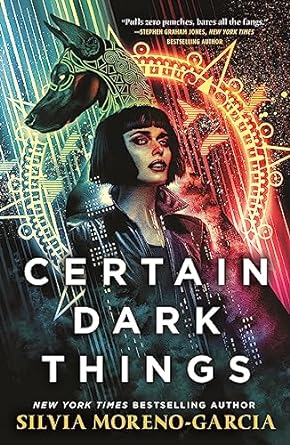
Certain Dark Things by Silvia Moreno-Garcia. Vampires in Mexico City. Horrific moments, but more of a dark fantasy/film noir development. Moreno-Garcia is gradually developing Mexico City as her own private Derry.
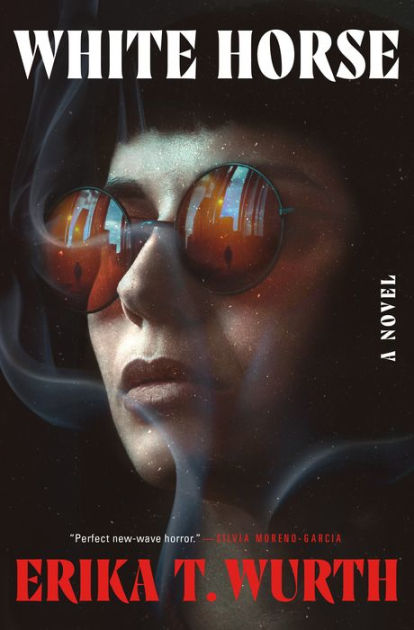
White Horse by Erika T. Wurth. Kari hates her mother for leaving her as a child. The problem is a cousin has given Kari a piece of jewelry owned by Kari’s mother and haunted by her mother’s spirit. Native American ghost story, thriller, mystery, all wrapped around a story of familial love and disfunction and offered in one neat and well-written package. Well worth your time.

Other books I read this year that I enjoyed included mystery/thillers like Death in La Fenice by Donna Leon and The Last Time I Lied by Riley Sager, and the s.f. collection American Hippo by Sarah Gailey plus Tananarive Due’s first novel, The Beyond. But there were two books that especially delighted me, both from outside the s.f./f/h genre: Murder After Christmas by Rupert Latimer, the 2022 reissue of a 1944 mystery comedy in which the most obstinately eccentric English family deals with a murder at their home shortly after Christmas; and the magisterial A Life of Crime by Martin Edwards, a massive history of the mystery/detective/crime genre, detailing its origins and development. Given the size of the subject, the book can be criticized for what it doesn’t cover, but still provides a healthy overview and a list of works beyond what most of us could hope to read in a lifetime. Further, and no mean feat, Edwards’ writing never becomes stuffy or academic, instead offering information and anecdotes about specific writers in remarkably readable prose.
Mark Yon:
I haven’t read quite as many Horror books as I thought I had this year – I’ve certainly bought more than I’ve read. Nevertheless, I would suggest the following, in alphabetical order.
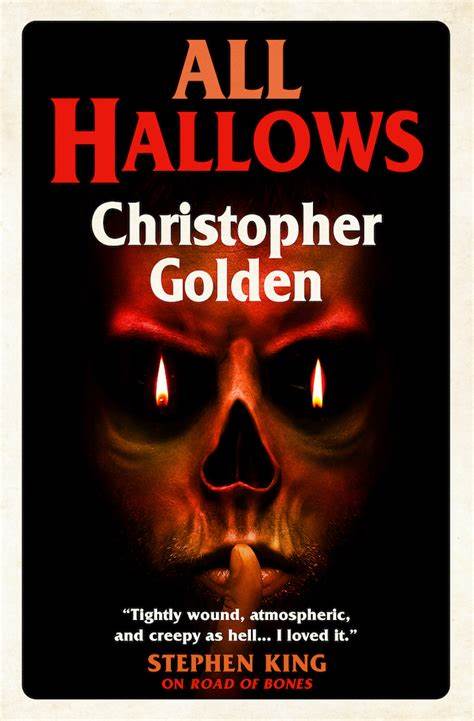
All Hallows by Christopher Golden
For the Horror books this year, I’m starting with a book that’s a real old-fashioned style Horror novel. It was a great read for Halloween this year that delivered traditional Horror vibes in a US setting. One that Stranger Things fans will appreciate, I think. I said that “…it helps that Golden’s an old hand at this sort of thing. With some lovely descriptions, characters you get to know and root for, and a typical setting for Halloween the readers pretty much get what they hope for. The important thing is that it doesn’t let you down as a reader, and the good news is that All Hallows doesn’t. All Hallows is a very readable, pleasingly creepy kind of novel that pretty much delivers what it promises, an American Halloween horror – and thus recommended for you at Halloween.”
101 Horror Books to Read Before You’re Murdered by Sadie Hartmann
A non-fiction book! Rob’s mentioned this one already. It’s not one I’ve reviewed in detail, although I did say on Goodreads that “… if the point of this book is to make you want to read more and ends up with you buying more books, then it is an absolute success – as rather expected, I bought more to add to my already ridiculously big to-be-read pile.” Like Grady Hendrix’s Paperbacks From Hell, I’ve kept this one close to be dipped into on a regular basis for inspiration.
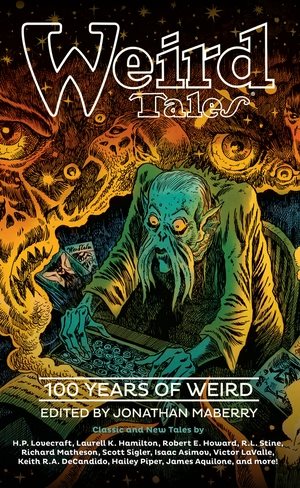
Weird Tales: 100 Years of Weird Edited by Jonathan Maberry
This one scores most, not so much for its contents but for its presentation, as with its combination of pictures and prose it is gorgeous. In terms of prose, the contents are more variable. There’s lots of good articles, and it’s good to see stories from Lovecraft, Bradbury, Robert E Howard, and C L Moore, but there’s some very noticeable omissions – Clark Ashton Smith, and Seabury Quinn, the magazine’s most published author are two – and some not always good modern stories and poetry instead. It does give the reader a valuable look into the eclectic range of a classic magazine through time, with adverts and clips from some of those issues. Even with my grumbles, it shows that Weird Tales is more than H P Lovecraft and is worth celebrating.
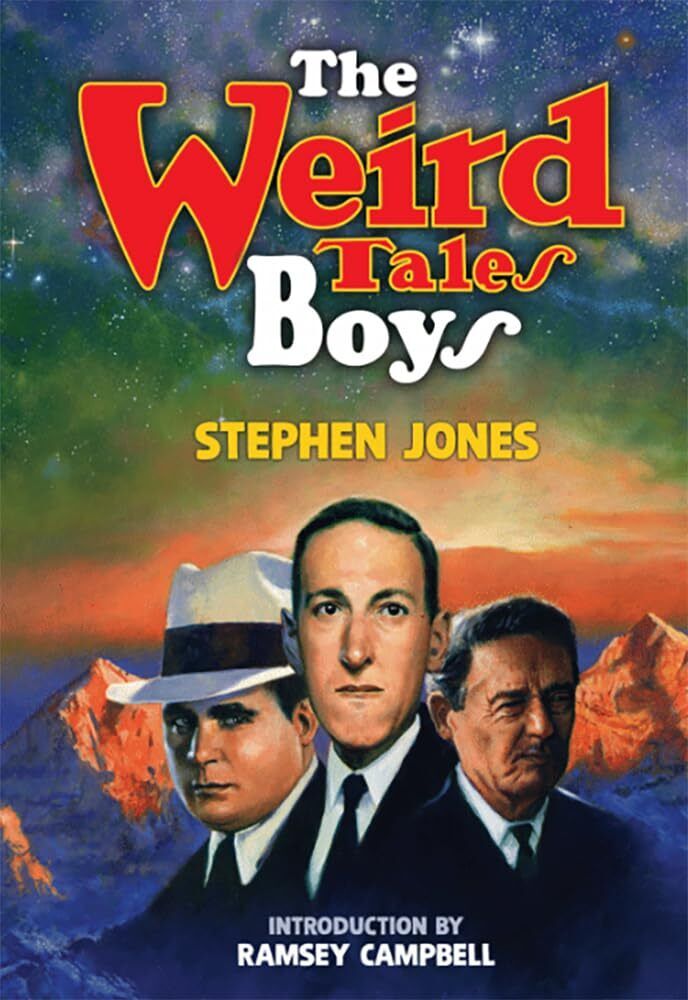
At the same time, I’d thoroughly recommend Stephen Jones’s The Weird Tales Boys,, which is a lovely non-fiction book about Weird Tales and the magazine’s stalwarts of H P Lovecraft, Robert E. Howard and Clark Ashton Smith. It has even more illustrations than the 100 Years of Weird, and is written in that well-researched, knowledgeable style that only comes with experience. Les Edwards’ new artwork and an introduction by Ramsey Campbell tops this one off. For anyone interested in the genre’s past (as I am) this is a great read.

The last in my horror selection is also one of the last I’ve read this year – a last-minute read of something that has been in the ‘to-read’ pile for a while – simply because I wasn’t sure about it. Once I started reading though, I was very pleasantly surprised. With its mixture of 1940’s Battle of Britain resolve, country-folk characterisation and ancient witchcraft-ery folklore, I really liked this one, and galloped through in a couple of sessions. Warning – contains scary scarecrows.
And that’s it for now. Part 3 will be up in a couple of days and will look at SF Books, Part 4 will look at Film and TV.