
20th Century Fox has produced and distributed some of the best science fiction screen entertainment ever seen. It has distributed such classic hits as Aliens (1986) and Independence Day (1996), the latter of which featured Will Smith who went on to star in Men in Black the next year. But these are definitely not the earliest or the latest science fiction films that 20th Century Fox has had a hand in making or promoting. It has had a long history in the realm of sci-fi entertainment. This article reviews the four decades in which Fox produced the most classic sci-fi: the 1950’s to the 1980’s.

One of the earliest sci-fi masterpieces from 20th Century Fox was The Day the Earth Stood Still in 1951. It starred Michael Rennie as the extraterrestrial named Klaatu who came to Earth in a flying saucer in order to inform the Earthlings that if they continue to war amongst themselves and eventually take their hostilities to the stars (that is, beyond their own world), then they can expect to be deliberately wiped out since they would be considered a threat to universal peace. So this film gives the audience a negative view of war in general. Apparently, the story was an excellent one because the old classic was remade in 2008 under the same title.
Bernard Herrmann’s eerie musical score for The Day the Earth Stood Still would later be used in the 20th Century Fox shows Voyage to the Bottom of the Sea and The Time Tunnel. It also influenced some of John Williams’ music that he wrote for the Lost in Space TV show. Stock footage of the Klaatu’s flying saucer was also used in the Voyage to the Bottom of the Sea and Batman series.
Michael Rennie, the star of the original movie, went on to star quite a few other Fox productions. He played Peter the Apostle in the 20th Century Fox films The Robe (1953) and Demetrius and the Gladiators (1954), and he went on to portray the wealthy Lord John Roxton in The Lost World (1960), a movie directed by Irwin Allen. As noted here, the sixties were a golden age of science fiction. It was during this decade that Allen teamed up with 20th Century Fox studios to produce four individual sci-fi TV shows. Rennie was a guest star in two of them, playing The Keeper in Lost in Space and the captain of the Titanic in The Time Tunnel.
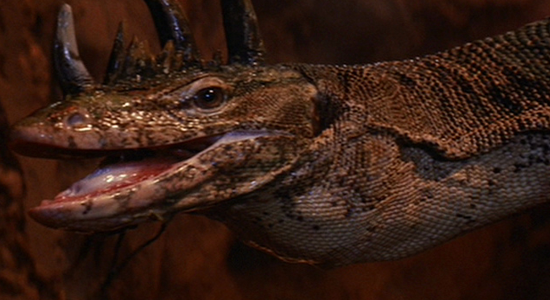
Irwin Allen’s The Lost World, based on Arthur Conan Doyle’s novel, featured reptiles made up with fake frills, horns, and plates to give them an appearance resembling that of dinosaurs. This procedure saved the studio a lot because claymation dinosaurs would have cost more time and money. Allen had gotten the idea from a Fox film which had been recently made, Journey to the Center of the Earth (1959), based on Jules Verne’s book of the same title. The film-makers had attached fake features to some lizards. Boom! There were their giant, prehistoric-looking reptilians. Allen then had similar methods employed for The Lost World‘s dinosaurs.
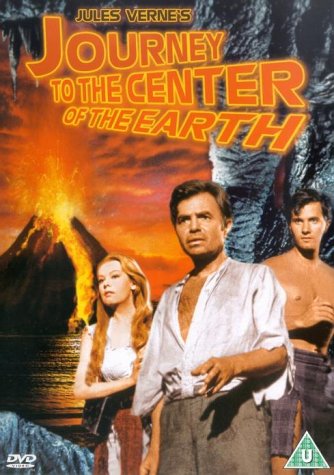
Both Journey to the Center of the Earth and The Lost World were stories of adventures that were undertaken to further scientific knowledge, and both are classic science fiction. The year prior to Journey to the Center of the Earth was 1958. In that year, another Fox sci-fi classic was born, The Fly, a tale of a scientist whose peculiar experiments result in transforming him into a half-fly, half-human mutant. It was enormously popular, bringing two sequels within the following eight years, and it was also remade in 1986. The original starred David Hedison as the scientist and featured Vincent Price; Hedison also co-starred in Allen’s The Lost World.
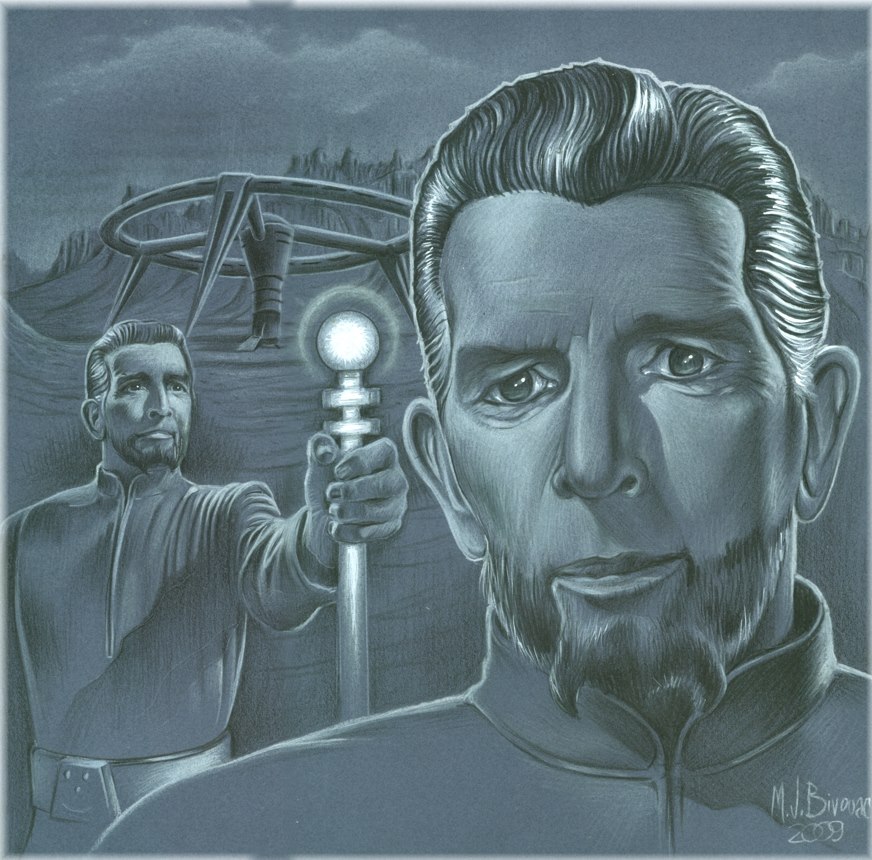
In 1964, Allen’s sci-fi/action series Voyage to the Bottom of the Sea began to be aired. It revolved around the maritime and even extraterrestrial adventures of the atomic submarine Seaview and her crew. It starred Richard Basehart and David Hedison and lasted until 1968. Allen’s three other sci-fi series started to air after the first season of Voyage to the Bottom of the Sea: Lost in Space (1965-68), The Time Tunnel (1966-67), and Land of the Giants (1968-70).
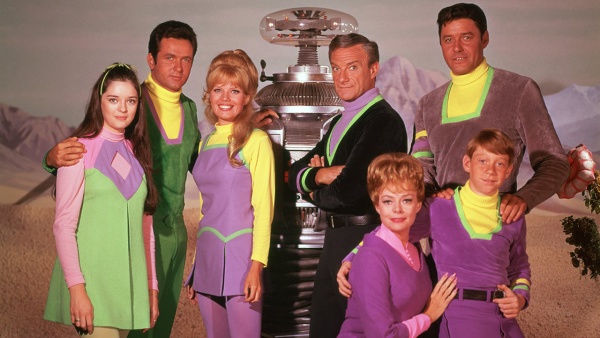
Lost in Space was based around the Robinson family being lost in space and encountering numerous aliens. The Time Tunnel, which ran just one season, was the ongoing story of a pair of scientists stuck traveling into the past as well as the future. Land of the Giants featured a ship of Earthlings getting caught in a space warp, thereby transporting the ship and her passengers to a planet inhabited by giant humanoids. All of the series were produced by Irwin Allen.
20th Century Fox had hit sci-fi feature films in the 1960’s as well. Fantastic Voyage was released in 1966 and Planet of the Apes in 1968. As you probably know, the Planet of the Apes franchise is still going strong today, the latest installment being 2017’s War for the Planet of the Apes.
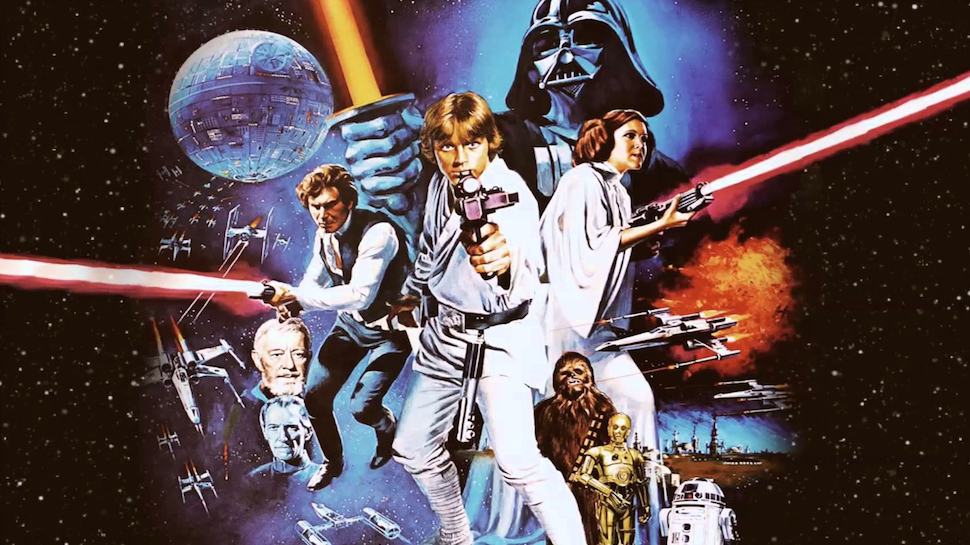
Land of the Giants brought us into the early seventies. It was this decade that gave way to one of (if not the first) best sci-fi film saga(s) ever. 20th Century Fox brought the universe of George Lucas’s Star Wars onto the big movie screen for the first time in 1977. John Williams, who had composed the themes for three of Irwin Allen’s sci-fi series, composed the epic soundscape of Star Wars. The following Star Wars films of the original trilogy went into the early 1980’s, and like Planet of the Apes, Star Wars is still going strong. Star Wars: The Last Jedi, which is to be released later this year, is widely being anticipated.
There is no doubt in my mind that 20th Century Fox will continue to produce amazing entertainment and especially sci-fi entertainment that will thrill, scare, fascinate, and astound audiences far into the future.
– John Tuttle




“Classic” sci-fi? Perhaps. Good sci-fi? Well…
Journey to the Center of the Earth (http://galacticjourney.org/may-11-1960-spelunkers-unite-journey-to-the-center-of-the-earth/) was pretty good, albeit cruel to birds.
Lost World (http://galacticjourney.org/july-17-1960-lost-time-the-lost-world/) was lousy.
Voyage to the Bottom of the Sea (http://galacticjourney.org/august-20-1961-sub-mediocre-voyage-to-the-bottom-of-the-sea/) was wretched.
Voyage to the Bottom of the Sea, like any sixties TV show, had its corny and unbelievable episodes, yet it was a traditional sci-fi/action series with natural cataclysmic events, extraterrestrial invasions, cyborgs, and man-made mutants which made the series quite enjoyable at times.