
 I was a teenager when I first read Graham Masterton’s ‘The Pariah.’ Young, innocent (or so some would have you believe) and very much naïve to the world of horror, save fuzzy VHS copies of ‘Alien’ and ‘IT’ taped off the TV.
When I first read that tale of an ancient demon trapped in a shipwreck off the New England coast, I literally shuddered with fear at each turn of the page. Such subtle imagery that served to build fear; the ship, the David Dark, steadily and impossibly growing closer in the painting. Images of deceased loved-ones coming back to fill the protagonist with doubt and hesitation. Graphic sexual imagery that served not romance, but to instil a sense of vulnerability. And of course, deaths, always sudden, invariably violent.
When time came for me to start writing my own novels, albeit fantasy, I wondered to myself, how can I at least attempt to capture some of those almost physical sensations of dread?
Most fantasy series I’d read prior to writing the Graeme Stone Saga (discounting Pratchett, who is inimitable for many and obvious reasons) had followed similar themes; good against evil, heroes from a humble background, gifts of mystical weapons and the blossoming of dormant talent. Good themes, time-honoured, ones I must admit to applying to my own characters. But few fantasy books I read had exuded the sense of fear and desperation so prevalent in a good horror. Tolkien’s orcs, for all their numbers, were mere fodder for Aragorn and his Anduril. What I sometimes felt lacking was a sense of doom. Of odds too great, foes too dire. A future too terrible to comprehend. Obviously, there’s a limit; who wants a novel where the heroes inevitably lose? But that’s not the point. The point is to make it feel like that’s the case. And how could I hope to achieve that? By taking a leaf from Masterton. From Herbert. From Lovecraft.
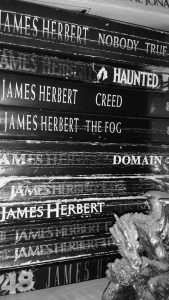
The first technique I noticed rife in their works, that of the subtle cue of something being amiss. Not a slap in the face, rather a vague sense that something is watching. Something is coming. Think Iron Maiden’s classic ‘Fear of the Dark.’ Masterton achieved this with his masterful (hah) depiction of the ever-approaching David Dark. Herbert with practically every strange interaction in The Magic Cottage; the cultish village-folk; the queer antics of the local fauna. Lovecraft, with the steady onset of irrational dread as his unwitting explorers drew nearer the Mountains of Madness.
The horror masters taught me that sexuality, too, could be a potent tool. At no point are we as vulnerable as in the throes of passion. At no point more base or human. Wholesome sexual scenes bring characters together, adding motivation, a possible future relationship to fight for. But when corrupted such scenes can produce immense feelings of shame and violation. Look no further than the graphic beginning of The Pariah for an example. And such moments are invariably heralded by the introduction of a pale, raven-haired beauty, the wiles of whom our heroes are all-but powerless to withstand. In my books, Ceceline the Seeress takes the mantle of arch seductress, her beguiling powers fooling both man and woman alike. One of her many inspirations was Herbert’s own Nell, the beautiful, ultimately evil, wiccan from Once. Again, all were easy prey to her dark glamour. The horror kings had taught me that evil never seems more insidious than when it comes from a pretty face.
But perhaps the greatest lesson I learned, was the use of brutal, graphic death. Nothing snapped me from my reverie like a sudden dismemberment. It’s all too easy to fall into the trap of believing the heroes surrounded by some impenetrable shield of destiny and when that shield falls it’s often shocking. Look at the staggering success of Game of Thrones; the feeling that a character might reach a grisly end at any point keeps people on tenterhooks. But making that end sudden, unexpected and visceral has long been a preserve of horror. A gruesome, surprising death with no chance for heroic last words is a scene that can linger in a reader’s mind. And shatter instantly any notions of invulnerability surrounding the main characters.
I’m as guilty as anyone of creating such notions about my characters. It’s easy to get swept up in epic scale, to gift, like manna from heaven, sorcerous weapons and instil hero courage into all our characters. What is Graeme Stone himself but a walking plot-device at times, with limitless physical power? Hence I use him sparingly, focusing, once past the opening stages, on the mortal men and women of his band. Heroic, yet soft, spongy, and easily snuffed out as they, in true horror tradition, get caught up in terror way beyond their pay-grade.
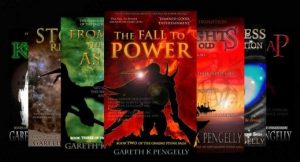 The horror writers who so wonderfully haunted my nights as a teen taught me many lessons that I strive to implement in my writings today; that a whisper can carry as much menace as a five-storey demon; that an impromptu disembowelling is worth ten lines of dialogue. And that when it comes to grounding a high-fantasy saga, a little fear can go a long way.
About the Graeme Stone Saga
What happens when you take away a man’s past, and gift him ultimate power?
Snatched from Earth by powers unknown to land in a far-flung world of magic and violence, Graeme Stone must decide whether to use his rapidly growing abilities for good or ill. But caught up in a plot vaster than he can comprehend and with no memories of his former self, perhaps the choice was made for him all along.
Now on its fifth instalment, The Graeme Stone Saga follows Stone and his troupe of heroes, as they wield elemental magic and sheer guts, in a fight to save Earth from dark gods that seek only to extinguish all mortal life. But not before making it suffer.
About Gareth K Pengelly
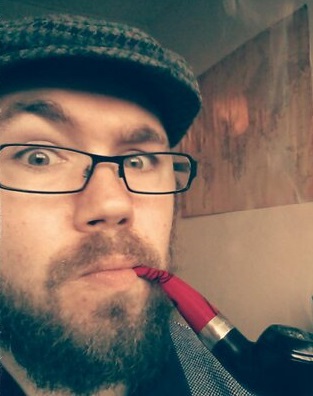
A self-confessed nerd of the highest order, Gareth, when not playing video games, painting Warhammer, or working on his latest novel, can often be found blitzing about the British countryside on a clapped-out Kawasaki sport bike. It is said that he runs and lifts weights, because if he can’t be tall then he can at least be in good shape. And rumour has it he once came eighth in the British Pipe Smoking Championships…




Solid artilce. I enjoyed reading it and it made me want to check out the horror novels you referenced. And I think more writers should take to heart the challenge of presentin the reader with a real sense of dread. I would enjoy the books more.
But you did ask one question I think I can answer.
“Obviously, there’s a limit; who wants a novel where the heroes inevitably lose?”
Herman Melville?
Thanks for the feedback amrowe!
And very fair point with the Melville reference, haha!