 As a breakout author, I’m often asked about how one makes the transition from hobbyist to full time fantasy writer. Thus, I’ve compiled my top 5 tips to making that transition.
1) Find Out What the Agents Want: You could do a ton of market research, spending time, money, and energy polling fantasy fans in order to discover what they’re buying. Or you could just cheat and find out from the professionals who have to eventually sell your manuscript. By searching the web for ‘fantasy literary agents’, you’ll be able to find out exactly what they’re asking for. You’ll also see what markets they prefer to work in. At the time of writing, the biggest market is Young Adult / New Adult fantasy.
2) Treat Fantasy Writing Like a Job: Excuses are the number 1 slayer of fantasy authors. If you don’t treat it like a part time or full time job, you’ll never get anything done. This means you set aside a block of hours, and you only take mandatory lunch, dinner, or 15 minute breaks as appropriate. Writer’s block? Switch to another story or genre, but you have to keep writing. Favourite show on the tube? Too bad, record it. Treat your writing space as a professional environment. If you need more detailed guidance, Stephen King’s fantastic book ‘On Writing’ explains a lot of the specifics.
3) Map Your Fantasy World: In order to be consistent about environment, travel times and methods, seasonal changes, and place names, a world map is almost required. Area maps are also desirable if you’re creating complex and lengthy scenes within a single area. I suggest checking out Inkarnate ( inkarnate.com ), and if you decide to publish the map that you create in your book, get one of their very reasonable commercial licenses at $25 a year.
4) Don’t Stop Being a Fan and a Student: Just because you’re writing, that’s no excuse to stop reading. Try to read at least one fantasy book a season, or four in a year. At no point do you become so good at writing that you can stop learning from others. Fantasy writing is a craft, and perfection of a craft requires study. So set aside some extra time, outside of your ‘office hours’, to read a mix of classic and contemporary fantasy.
5) Create Character Sheets for Every Important Character: You don’t need to use any specific gaming system or statistics. But every character should be well documented outside of the story itself. You can use this as a reference sheet if you’re unsure how they’ll react to a situation, a question, or confrontation. At minimum, you want to list their physical attributes, their background prior to the start of the story, their goals, their mental state, typical inventory, and what they believe in. If a character appears for a significant number of chapters, they need a sheet of their own.
I hope that these tips set you on the road to productive fantasy writing! They really helped me to transition from a fantasy lightweight to a middleweight contender with more than just a puncher’s chance.
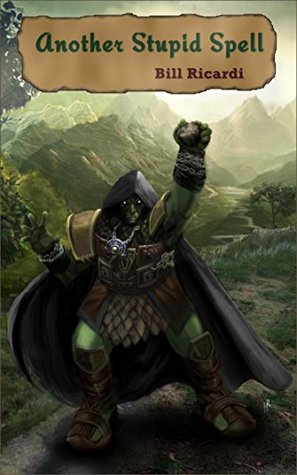
Bill Ricardi’s debut fantasy novel, ‘Another Stupid Spell’ broke 100,000 Kindle page-reads in 27 days, and is currently rated 4.42 / 5 on Goodreads. You can get it exclusively on Amazon.