Over time, I have discovered many inseparable musical associations with books. For example, I discovered the work of British electronic music pioneer John Foxx at the same time I was reading The City and the Stars by Arthur C. Clarke for the first time, around 15 years ago. The stark electronic landscape of Foxx’s 1980 début album Metamatic gelled perfectly with the futurism of Clarke’s writing, and the cityscape in which the early part of the book is based. It even matched the Chris Moore cover art of the Gollancz edition of the book, and even today, I’m unable to disassociate the two.
When commuting to work, I would read while listening to music – mainly to drown out the sound of my surroundings – but I gradually found that certain albums just seemed to “fit” with certain books, and with that came the discovery that the books I was reading would help shape the music I was making.
Perhaps this is because books are just that bit more personal than a film. You interpret the characters and worlds in your own way, seen through the mind’s eye, and we all react differently to the various scenarios or atmospheres in whatever we’re reading. As an artist, this naturally becomes a source of inspiration – sometimes it’ll inspire a digital painting, or it will inspire a piece of music (one often leads to the other!). Sometimes even a short phrase will stand out from the page and become the basis of a song title, and the music goes from there – I always like to start with a title.
Ever since first hearing Jean-Michel Jarre’s Oxygène as a child, I have been captivated by the notion of instrumental music being able to transport the listener to other worlds and times. With no lyrics to distract or send the listener down a specific path, instrumental music works as a blank canvas for the imagination – and I think we all need that escape.
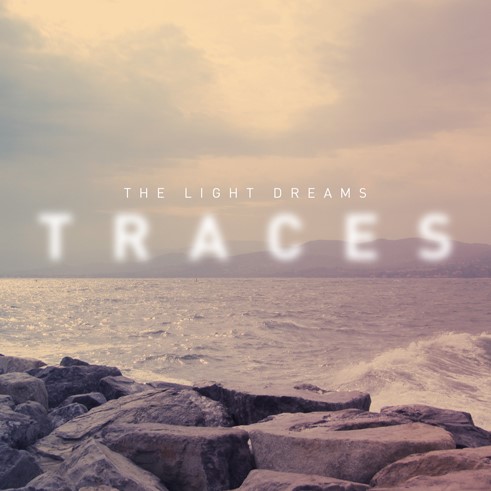 In 2013, I started an album project called Traces. This began with the concept of looking back down our own invisible timelines; thinking of the places and people of our own past – this soon merged with the crossover into dreams and memories, where these same things can be revisited on a more vivid scale. The dream state has always been a source of fascination for me and is a recurrent underlying theme in my work.
At that time, I was reading The Glamour and The Dream Archipelago by Christopher Priest; an astounding writer whose work quickly became my favourite. Priest takes very believable everyday characters and situations and gradually twists them into dark, haunting often Kafka-esque scenarios. In many of his books there is a crossover into a parallel existence, which to me was very reminiscent of the way we dream. Another book that I read whilst working on Traces was The Machine by James Smythe – a haunting tale about machines that could record, preserve and restore our memories. This all came during a difficult personal period where I was grappling with my own memories and emotions, and channelling all of that, combined with the literary influence, into the music.
Although I only release my music in a digital format, I always design a PDF booklet to accompany the release, not only to give that little extra value for money, but to allow the listener to learn a little more about the album if they wish and to enjoy the artwork as you would with an LP or CD. While I was designing the artwork for Traces, a friend suggested using the James Joyce quote from Ulysses, “Shut your eyes and see”, which was absolutely perfect for the project.
Traces was a very personal album, but at that point, I felt my greatest achievement, musically. The concept of timelines and memories would inspire a further two projects, Timeshift (2015) and Legacy (2016).
In 2012, I was invited to become an honorary musician and artist for the Initiative for Interstellar Studies (i4is.org). My aim to promote their vision through my art and music, which also meant I was in a position to realise one particular ambition, and that was creating a space travel concept album.
In recent years, science fiction in cinema has undergone a long overdue healthy revival. Granted, while ever we have big, gushing Hollywood endings, us literary SF fans will always be left moaning and preferring to stick to our books – but there’s no denying the fact that we are also seeing more contemporary adaptations hitting the big screen, such as The Martian, Arrival and Passengers.
With the welcome return of the Star Wars franchise in recent years as well as films like Ridley Scott’s Prometheus, space travel on the silver screen has never looked more epic and exciting. Taking the crowning glory, was Christopher Nolan’s masterful Interstellar, which perhaps remains the most impressive and believable SF film in a long, long time. We’ve finally reached an era when once again science fiction film has taken its rightful place, providing fantastic adventure, escapism and inspiration. Of course, in all of these films the music plays such a pivotal role in the cinematic experience, and needless to say, is a big inspiration to my own work, especially when composing an album that is designed to evoke images of space and space travel.
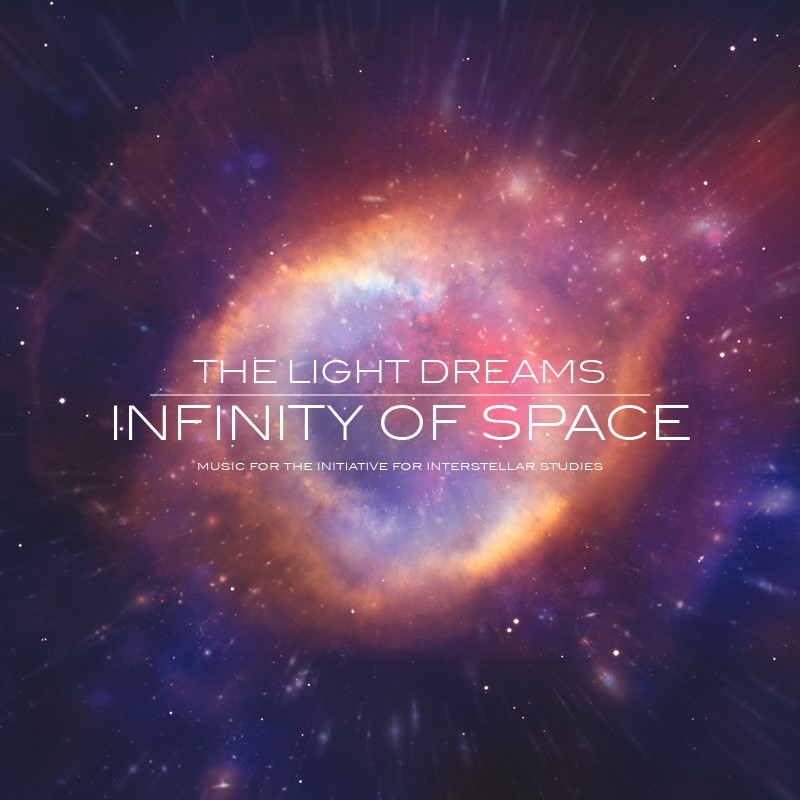 When composing Infinity of Space, the imagery of so many science fiction films and books was in my mind. When watching a film, there’s nearly always a part of my brain that’s listening to the music and assessing it, and thinking about what kind of music I would make for a certain scene.
With that in mind, I wanted the album to work like a film soundtrack, but that also tells a story. Each track describes a different scenario, as part of an ongoing space mission. But rather than the album reflecting the beginning, middle and end of such a voyage, I decided to treat it like a snapshot of a much longer journey; perhaps that of a generation starship.
Infinity of Space was a long, slow and difficult project, but one that I was ultimately very satisfied with. I worked with a guitarist on two tracks, which brought a new dimension to the music, but I feel I created an album that brings together familiar influence from SF literature and film, that fans of the genre will appreciate.
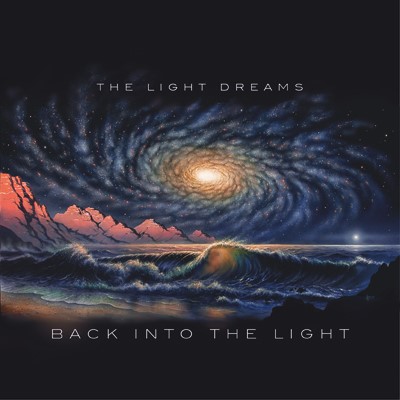
One of the starting points for my latest release, Back Into the Light, was the stunning David A. Hardy painting, Ocean of Space. A framed canvas print of this particular piece hangs in my home studio, and I found that the fusion of the fantastical and reality really matched the mood and atmosphere of the new music I was working on.
Hardy had kindly allowed me the use of one of his paintings as the cover art to my 2007 début, Into the Light, so it seemed appropriate to once again feature one of the artist’s works as the cover for the follow-up. The crashing waves in Hardy’s Ocean of Space inspired one of the first tracks I started for the project, which I called The Water’s Edge. From there, I just knew it had to be the album cover.
 From an early age, I found myself captivated by space, science fiction and fantasy art, by the likes of David A. Hardy, Chris Moore, Chris Foss, Time White, and many more (in a very long list!). The re-kindling of my passion for this art coincided with my first ventures into music making and also the production of my own science fiction artwork. For me, music is also a very visual thing, and the process not unlike that of creating artwork – one uses sounds, the other uses colour; both are built up of many layers.
Back Into the Light returns to the world of my first album, but in a more refined and accomplished sense – evoking that same feeling you get when you revisit a favourite place after many years, and find that it’s still the same, yet, different.
Like the original, the music of Back Into the Light is open to a wider interpretation, not being strictly science fiction or fantasy-themed, but more about the world around us and – again – dreaming and the exploration of the human mind.
Ten years on from composing Into the Light, and five years on from feeling confident enough to self-publish my music via Bandcamp, Back Into the Light feels like a personal achievement and celebration on many levels. In some respect, it feels like the album I have been striving towards since 2007, blending a rich range of influences from everyday existence to science fiction and fantasy – ultimately culminating in a musical journey that the listener can interpret as they wish.
I’d love to think that one day, somebody somewhere might be listening to it while they’re reading or even writing a book…
Back Into the Light is available now via Bandcamp
Thelightdreams.bandcamp.com
thelightdream.net