

 Thought you might want to have a look at this. I wrote it after my book club asked me to. Even though it is written for non-genre readers, and we don’t do “five-star” ratings at SFFWorld, I thought you might find it of interest.
Mark
———————————————————————————————–
Recently I was asked: “You read and review a lot of books. What makes something worth a ‘five-star’ review for you?”
It gave me pause for thought. After all, I am known for being a little cautious in my comments. Rarely is there a book that I find something I’m totally happy with. My reviews usually have a “Good, but…” element to them, things that I’m less pleased with overall as well as what I liked. If given a choice between “four-star” and “five star” I tend to give the book 4 (or perhaps 4.5!)
Key point before I start: In case you didn’t know, most (but not all!) of my reading is fantasy, science fiction and horror based, so most of my thoughts, experiences and examples below come from that background. BUT I do read other material (I will read just about anything!) and I am sure that you could apply these to any kind of fiction reading, whether it be crime, romance or historical saga.
So, what would a book (or its writer!) have to do to make it worth five stars from me?
Hmm.
There are lots of elements to various degrees that can play a part. I am very aware that the reading of a book can in part be affected by my mood. Do I want excitement, passion, romance, action? Or do I want deep, thoughtful contemplative material full of concepts that makes me question, makes me think?
Well – yes. All of the above, and more, but perhaps not always at the same time.
Sometimes I want books that I keep thinking of after I’ve read them, points where I suddenly go “Oh, that’s what that is about.” Or ones that make me go – “Well, what happens next?”
There are those that involve lots of complex ideas, deep dives into major themes in science and society in time and space. Those whose form is deliberately non-linear, exercises in form and structure, as much as plot and setting. These are the ones that make me go “Huh?” and often feel beyond me, yet I come back to.
Incidentally, there have been favourite books that have taken more than one read before I get them (Gene Wolfe’s The Shadow of the Torturer, I‘m thinking of you most recently.) Dune took me three goes back in the 1980’s, I think*. Sometimes you want that.
Other times I just want something that’s fun, exciting, easily accessible and non-demanding – the equivalent of a Hollywood blockbuster, that entertains and engages me before I move onto weightier stuff. Spaceships, dragons, alien worlds – the usual stuff that I am accused of reading and nothing else.
A reread can provide nostalgic feelings or a sense of wellbeing – sometimes (I’ll talk about that later.)
Really what I want is a book that does ALL of that – a difficult task, perhaps near-impossible.
But I have noticed a number of things that my choices do have in common, so let me highlight those, in no particular order.
Setting. I like them to ‘feel real’, even if imaginary or a little out of the ordinary – a contradiction in terms if ever there was one! But I guess that what I mean by that is whether they are fictional or real I like the setting to make me feel like I’m there and that I can imagine the characters being there, whether in outer space, or in a Tolkienesque fantasy – or something weirder. Fantasy readers will, of course, tell me how important a map is; personally I like them, although I find them non-essential. It’s the details in the text that’s important to me. A good book allows me to immerse myself into it and feel that I know the setting, the people/creatures and their motivations.

A Good Plot: A big part of a ‘good book’ for me. Basically, the plot has to feel natural, or rather, logical in its place, and not feel contrived. All too often when reading I notice the mechanics of a plot – how Part A is connected to Part B in order to create tension, or create a twist which isn’t one really, or even come up with a solution that seems to come out of nowhere and makes nonsense of what has gone before.
If it feels false (and yes, even in a fantasy!) or I feel that I can tell where the joins are, I lose my sense of disbelief, and therefore my interest in the book or story. Even when things are fantasy-based, they must hold their own internal logic.
Caveat – There are times when reading a good book you know how it is going to end, and it does end as expected, but it is still good, because the entertainment is how you get to that point. Crime or thriller readers seem to be most prone to accepting this one, or those of a fantasy quest, perhaps.
Good Characterisation – I like a range of characters, both heroes and villains. Someone/something with morals and ethics are good, although I like villains with no morals and bad ethics nearly as much. Better characterisation in my opinion goes beyond the superficial stereotype and adds a bit of depth to the person, alien, dragon or thing. Deliberately stupid characters doing stupid things for the sake of a plot or an attempt to create a situation do little for me.
Non-Repetitiveness – There are a number of authors, who despite having excellent editors, tend to repeat things in their book for little apparent reason, or perhaps just remind readers of what has gone before a few pages back. I’m particularly reminded of some writers of BIG fantasy novels, who seem to be afraid that readers may have forgotten what a character did or what was said a few chapters ago.
Rightly or wrongly, I think of this as ‘the Netflix disease’, where the need to recap previous events/episodes/series seem to be essential. (Other streamers are just as bad, by the way – and don’t get me onto documentaries!) Anyway, my point is that a good book in my opinion lets the reader think for themselves and recaps points judiciously and sparingly. If you’re following the book you shouldn’t need them, although reading a series with each book published a few years apart is acceptable.
One side point – summaries/synopses. Now there are times when these things are useful – readers starting with Book 5 in a series, for example, may find this useful (but why haven’t you started with Book 1?), but in my opinion, it should always be optional and the reader should be able to avoid them if they wish.
Originality – This may be near the top of the list, up to a point. I know that there are readers that only read certain types of books and are very happy with that. Whether it be Cold War thrillers, Star Wars or ‘books with dragons’ in, they are quite happy to keep reading stories like that. Nothing wrong with that, of course – there are plenty of books around to keep those readers happy. I can’t deny that there is a certain comfort in reading certain types of books that are similar (See The Lord of the Rings/Wheel of Time/Sword of Shannara/Game of Thrones, for example.)
Allowing for that, I do think that there is something exciting about a book that you’ve never read quite like before and where you don’t know where it’s going, but you want to find out.
This makes the book stand out from the mass and makes it memorable. I found this with the subgenre of Grimdark, for example – this gritty, dark, sweary type of violent fantasy with antiheroes and involving dubious morals and ethics was quite refreshing when it appeared in the late 1990s -early 2000’s, as it was quite different. Of course, once something becomes successful, you then get a lot of similar books appear, to the point where such books now seem the norm. See also romantasy at the moment, perhaps.
I don’t usually have an issue with tropes – those cliches that persist. Mind you, I come from a place where I’m often told that all science fiction is spaceships like Star Wars, all fantasy is dragons like Game of Thrones and all horror is ghosts and vampires like Dracula! It can be difficult to persuade non-genre readers otherwise (but I’m working on it!) But it must be said that there are books out there that take the tropes and do something different with them – it is just finding them that’s the difficulty.
Re-readability – Now this doesn’t work for every book. How many books have you reread that were favourites years ago but now seem dreadful? But there are books that I can read more than once and even though I know the general plot, the setting and the characters, I still get something new from. Perhaps it’s the description of a place or a scene, perhaps it’s the vocabulary and language that inspires me, perhaps it’s a meaning I didn’t get the first time, perhaps it’s something that reads differently now I’m older. A book that you can read more than once and get something new from it every time is one to be treasured. I don’t have many, but perhaps Tolkien’s Lord of the Rings is my personal best example for me – even when I still don’t love the poetry!
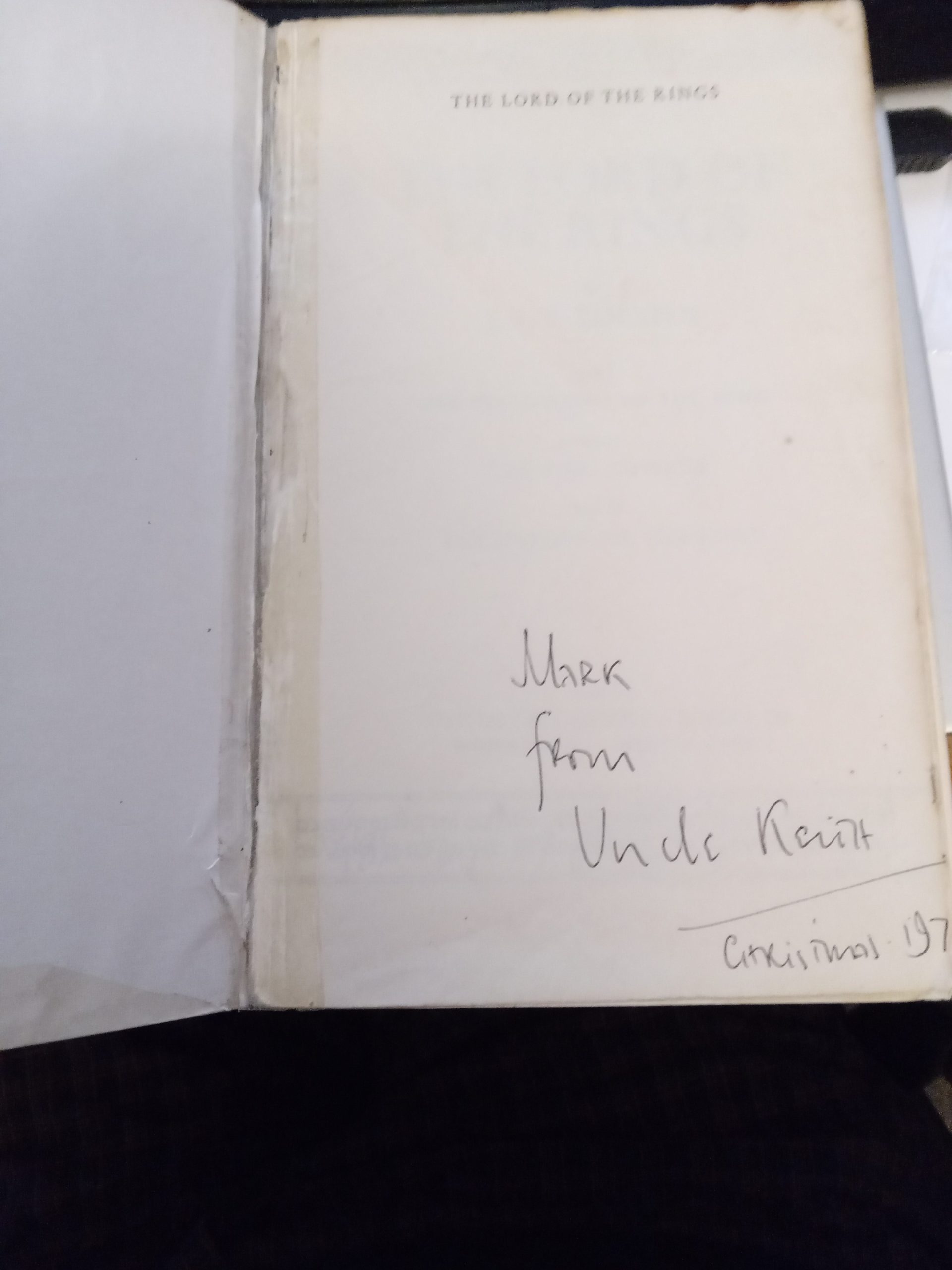
Comfort reading – As much as I like a book to be original, edgy, complex, and even difficult, I am aware that there is a time and place where books can be a comfort. I’m sure I can’t be the only person who finds that stories involving books (or a library!), cats (other animals are available) or tea (other drinks are available) are often moved up my pile of things to be read, appreciated and adored. I’m pretty sure this was a thing for readers before it became included in ‘cosy crime’, romance, ‘cosy fantasy’ or just something that provides ‘hygge’. Some books just give you a big warm hug by being read, a warm glow of recognition or a sense of calm and comfort – and that’s nothing to be sneezed at!
Conclusion
So, having thought all that through – what would I want a five-star book to be?
Be long enough to immerse you in, but not too long so that you become bored and lose the will to finish the book. Have characters that you like or can appreciate, that you care about or hate, who are identifiable and yet complex and nuanced. Have a setting that feels real whilst you are reading, so much so that you want to be there – or want to escape from. Have complexity without becoming inaccessible or needlessly obtuse. Have elements that excite, scare or just make you feel uncomfortable, and yet at another time or on another page can make you feel safe and contented. Genuine peril. Genuine emotion. A plot that feels logical with its setting.
In short, a book that you can’t put down, and yet if you have to, will keep thinking about until you are able to pick it up again at the earliest opportunity. A book that you don’t want to finish, that you sigh at the end of when you’ve finished, having enjoyed the journey and has felt worth reading. A book that you know you’ll want to pick up and read again, for pleasure, for comfort, even when you know what is going to happen. A book that you find something new in it each time you reread.
That’s not asking for much, is it? (It might also explain why I don’t give many five-star reviews!)
Finally, it would be remiss of me to at least try and list some of my favourites, so I have done so at the end.
Please note – I am totally aware that these will not be for everyone, and some of them are here for odd reasons, reminding me of a place, a time, a moment, as well as the book itself. They are ABSOLUTELY NOT ‘the best books ever’. And (like most readers) I am always looking for the next book to add to the list!
- Lord of the Rings by J R R Tolkien
- ASH A Secret History by Mary Gentle
- Dracula by Bram Stoker
- ‘Salem’s Lot by Stephen King
- The Heroes by Joe Abercrombie
- Collected Stories by M R James
- Magician by Raymond Feist
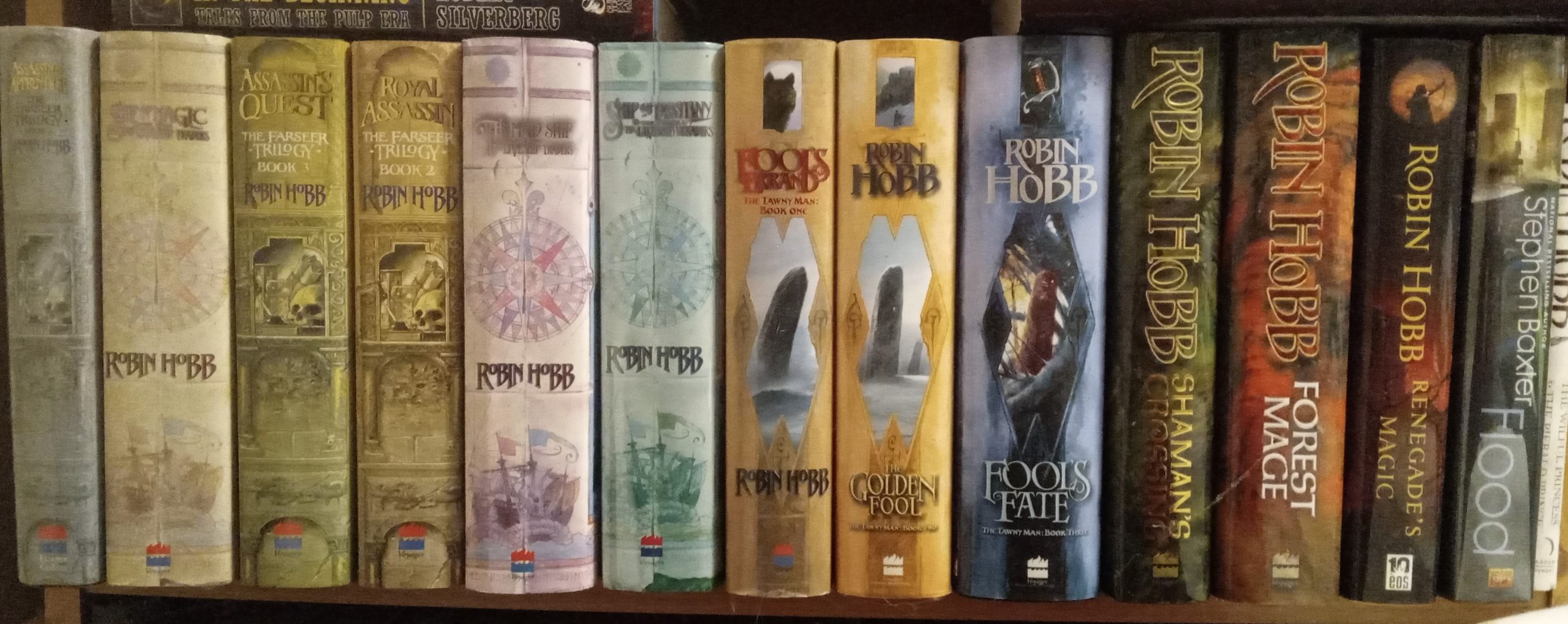
- Assassin’s Apprentice by Robin Hobb
- The Dragonbone Chair by Tad Williams
- Empire of Silence by Christopher Ruocchio
——————————————————————-
Please also note:
- * I have 12+ copies of Dune; (I know!) I didn’t include it, because I was trying to include less known work;
- I realise that these are generally not recent material, because in my experience they have stood the test of time (ie: rereading, often more than once.)
- I also realise that many of these are the first book in a series. This ‘may’ be deliberate (see what I’ve done to get people in?), although there is an argument that suggests that books in a series often don’t stand alone…
- I didn’t include George RR Martin’s Game of Thrones series, because as good as it is, it is UNFINISHED.
- This list may have changed in the time you’ve taken to read this. Or… tomorrow….next week…. etc. You might remember I had a list of 60 for my sixtieth….
Thanks for reading.
© 2025 Mark Yon


As a writer myself, Mark, as well as a reviewer, I agree with you on the craft aspects. The books where the setting feels like scenery flats left over from a production of a previous story, or where people do obviously nonsensical things because the author must have their plot work out a certain way, are offputting because I see the craft, and it isn’t good craft. Then there are the ones that are like sitting down on a well-made chair: You don’t notice how well made it is because it just supports you comfortably and doesn’t draw attention to itself.
Also, like you, I prefer characters to be more than just their archetype plus their role in the plot. They need something inessential to make them real, something that makes them different from other orphan blacksmith Chosen Ones (not that I would read a book with that horrible cliche). And they should want something, and that thing they want should be hard to obtain, and this should drive, and in fact create, the plot – without requiring fortunate coincidences or convenient eavesdrops.
Thanks, Mike! Good to read that we seem to think alike.