Current Non-Genre Reading III

"North-Westerly Gale by Lucien Chauvet"

About to launch myself into a small book I just picked it up at one of my village's honesty-box, pick up a book leave some cash in the tin, bookshelves. Plain cover hardback. No blurb. I know nothing about it
and, it would appear, hardly anyone else does either. A search for "North-Westerly Gale by Lucien Chauvet" on Google brings up ZERO results. A long time since that has happened to me. Broken down into title and author it still only clocks up a dozen or so. The author doesn't even have an entry in Wikipedia. (There is a Lucien Chauvet but it's a different one.) I hope I've discovered a long-lost masterpiece. Odds are I haven't. But the anticipation is fun.
 
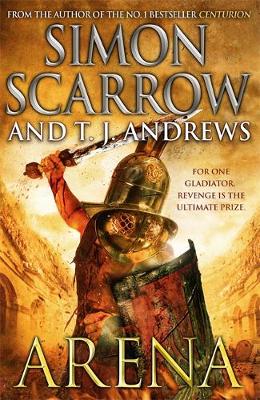
Just abandoned Arena by Simon Scarrow and T.J.Andrews

9780755398225.jpg


Well, this is the first book I've given up on in years. The actual item is hardback and looks handsome enough, but I should've heeded the old adage: Never judge a book by its cover. That's not quite true, though, because I've read Simon Scarrow before; in fact, I've still got a copy of The Fields of Death which charts Napoleon's and Wellington's viewpoints through the Peninsular War up to where they met at Waterloo, and it's a decent enough read. When seeing the cover I suspect you'd be reminded of the Starz TV series Spartacus, and you'd be right, because the first 100 pages do resemble or echo many scenes from the series. However, it would be a disservice to compare the book favourably with the Spartacus series, despite the latter's weaknesses.

So, the book itself...is not very well written, has one-dimensional characters who start off as (at best) semi-believable but soon degrade into woodenness by halfway through the book, has implausible moments where the protagonist wins against impossible odds and, if the authors used the phrase steely determination one more time I would have slit my wrists.

Not recommended.
 
Last edited:
Re-reading The March of Folly, by Barbara Tuchman. It deals with four instances where not only did leaders act against the self interest of their peoples, but where critics at the time saw where the bad choices were leading.
Troy, the Renaissance popes who split Christianity, The British folly that lost America and the US in Vietnam.
Fascinating detail, profiling the characters involved, including critics, descriptions of the milieu where they lived and of the choices that were not made.
The Popes were more than just venal, the six focused on were morally unqualified to be dog catchers. (edit: Not fair to dog catchers. Should have said not morally qualified to rob widows and orphans.)
Many of the British pols were dilettantes, often totally unqualified & more interested in their pleasures than any idea of service or duty. There were actually a few competent Brits in office or service, but they were emeshed in the morass bequethed to them. The British viz the American revolution and the Americans viz Vietnam were generally caught in the hubris of thinking themselves superior to critics or opposition.
Some reviewers loved the detail and descriptions of the complexities of the various eras in the book. At least one thought that Tuchman committed the sin of assuming that her 20-20 hindsight passed for analysis.
Me? as a dilettante historian myself, I am glad to re-read it after 35 years. Fascinating detail. Perspectives that are still relevant in today's world.
 
Last edited:
Finished The Whistler

9781444791099-uk.jpg


Think I must have picked this one up a few years ago when hunter-gathering at Sainsburys, most likely when I didn't have anything in the house to read (I know this pretty much for certain as most of the Grisham books I've read have been impulse supermarket buys). It's not a bad read, but not Grisham's best by any means. By half-way through I felt it was pretty good but it generated into a kind of case file - especially the ending. It's not quite a potboiler though it gets close.
 
Finished The Cartel by Don Winslow

9780434023554-uk.jpg


I'm not big on crime stories or thrillers, even though I've dipped into a fair few of the popular ones over the years. Of the modern crime or thriller writers, I've read one or two of James Patterson, Lee Child and a few (forgettable) others, usually finding them clichéd and predictable. The best I recall are The Axeman’s Jazz by Ray Celestin, Stieg Larsson's Dragon Tattoo trilogy (avoid the David Lagercrantz sequels) and Perfidia by James Ellroy, though his written style takes some getting used to. Mustn't forget The Godfather by Mario Puzo, either.

But this book, and the rest of the trilogy that began with The Power of the Dog, is something else. In terms of the impact the book has, I think the nearest thing to it that I’ve ever read is Heroes by the journalist, John Pilger. Heroes, by the way, is not a novel, but a collection of Pilger's insights and scathing truths (and the heroes he met) whilst working as a correspondent around the world, including in Vietnam and Latin America. The Cartel and the rest of the trilogy are novels but contain that same uncompromising viewpoint about the way things really are. In this case, the US war on drugs beginning in the 1970s up to the present day.

The Cartel doesn't shirk from portraying explicit violence but always justifies it from the viewpoints of the perpetrators, however wrong those justifications may appear to the reader, and those same acts of violence are placed in context with the policies of governments and their agencies. Arthur Keller, a DEA agent, is our guide and conscience (most of the time) through this and the other books, and he fights equally against the drug cartels and his own government. But Keller's story is one of many in the books. Some of them are horrific, others are heartbreaking. Yet, like Pilger's, they're all stories that have truth in them.

I read The Border first, the final part of the trilogy, then worked through the others. To be honest, I don’t think it matters which you read first as they’re equally powerful.
 
Last edited:
Just finished "Under Heaven" by Guy Gavriel Kay. There are fantasy elements in the book, but mostly it is a strong character driven historical fiction novel set in the 8th century Tang Dynasty. I'm a huge Kay fan anyway, but this book is simply stunning.


Can't recommend it enough.

Started reading the 2nd novel in the series this morning. "River of Stars". Seems to be taking place some years after the events in "Under Heaven".
 
Started reading the 2nd novel in the series this morning. "River of Stars". Seems to be taking place some years after the events in "Under Heaven".

I have River of Stars in my TBR read pile. Haven't read Under Heaven but from what I gathered River of Stars seemed to be pretty much a novel in its own right.
 
I have River of Stars in my TBR read pile. Haven't read Under Heaven but from what I gathered River of Stars seemed to be pretty much a novel in its own right.

Yes, there seems to be no connection to Under Heaven's characters. River of Stars seems to be about the consequences of the dynasty war started in Under Heaven.
 
I have been recommending Mark Haddon's The Curious Incident of the Dog in the Night Time to my English students for a while now, but had not actually read it in full myself, until this week. A really nice book, satisfying and interesting, also quite sad, and maybe with more than a hint of Adrian Mole about it. I really enjoyed it! And, yes, I highly recommend it to those of any age learning English!
 
Just finished "River of Stars" by Guy Gavriel Kay. Chinese historical fiction series of 2 novels. "Under Heaven" and "River of Stars". River of Stars takes place some 400 yrs later than Under heaven. There are a couple of references to the previous novel in the form of relating historical figures from the apex of the 8th century dynasties prior to the An Li revolution that destroyed that society. But that is about it. There are a few fantasy elements that play into the story as is usual for this author.

That said, I far preferred the story in Under Heaven. It was focused with strong leading characters. It also told a great deal of the story via conversation between characters. The lack thereof being a pet peeve of mine.

River of Stars characters spent an inordinate amount of time in self reflection about the world and their place in it. It just got worse as the story proceeded. Beast of a book...almost 700 pages. All in all though, River of Stars is a decent book.

Where as I thought Under Heaven was stunning.
 
Last edited:
The Thousand Autumns of Jacob de Zoet

The_Thousand_Autumns_of_Jacob_de_Zoet_%28cover%29.jpg


My second David Mitchell read doesn't appear to have any fantasy content as yet. Only a hundred or so pages in at the moment. It's full of fleshed out characters, set in a Dutch trading post in 18th century Japan and I'm enjoying it as a classy read.
 
The Thousand Autumns of Jacob de Zoet

The_Thousand_Autumns_of_Jacob_de_Zoet_%28cover%29.jpg


My second David Mitchell read doesn't appear to have any fantasy content as yet. Only a hundred or so pages in at the moment. It's full of fleshed out characters, set in a Dutch trading post in 18th century Japan and I'm enjoying it as a classy read.

I like Cloud Atlas quite a bit. The movie, not so much. Will have to check this one out then.
 
Finished The Thousand Autumns of Jacob de Zoet. Excellent novel, so beautifully written it's almost poetic at times. Mitchell takes you to Japan, hidden from the rest of the world by self-imposed isolation in the late 18th and early 19th centuries. Hidden, apart from a small Dutch trading post on a small island outside of Nagasaki. Even this small outpost is denied access to the rest of the country, all part of Japan's efforts to keep Christianity from staining its cultural identity.

Incidentally, earlier this year I watched a film set in Japan during this or an earlier period, in which a Catholic priest smuggles himself into the country to locate a missing missionary. Catholic priests, if or when apprehended, were executed. At the time, the Japanese authorities reacted strongly to the spread of Christianity and had actively done so for over 100 years. They even formed an inquisition to sniff out Christians, with the goal of forcing them to convert to Shintoism or face the threat of execution. To demonstrate their non-Christianity, whole villages would be lined up to scrub their feet over an image of Jesus.
If you've seen the film or know what it's called, please let me know.

The story is told from several viewpoints, which I know if done poorly can spoil the flow of a book, but Mitchell handles it with the same ease I witnessed in The Bone Clocks. Also, his knowledge of Japan, its history and customs is excellent. I read on Wiki that it took him four years to complete this novel, with some sentences taking a half-day to complete due to the research he painstakingly undertook for even the most insignificant details. This dedication to his art comes through on every page of the book.
Highly recommended.
 
Sounds like you're becoming a fully fledged Mitchell fan like me! Would be interesting to see if you like his latest Utopia Avenue - it's different again, set in the late-60's music scene in London (I thought it was great, and again, very well-researched).
 
Hehe.. I guess I am. Not too hard though as he's an excellent writer whose every page is a joy to read. I bought a few more after reading The Bone Clocks - The Thousand Autumns... and Cloud Atlas. Think I might check out the used book sites for some others. If I see Utopia Avenue, I'll pick up a copy. Thanks, Westy.
 
I started a new historical fiction series. "Sea of Poppies" by Amitav Ghosh. About the Opium Wars in the 1830's. 3 Novel series recommended to me by a friend. The first third of the first novel bracketed conversation by the use of apostrophes (i.e. ' text ' )

Further into the book, the author abandoned that usage for colons. (i.e. Parimal said: text). When it segued into this form, I thought the characters had become telepathic or something, then realized what was happening. Not sure if this was intended or if ir was just a bad job of editing.

I guess I'm just old fashioned, but this use or non use of commonly accepted punctuation is bothering me a bit.

Has anyone here run into this with novels from authors from other countries?
 

Sponsors


We try to keep the forum as free of ads as possible, please consider supporting SFFWorld on Patreon


Your ad here.
Back
Top