Current Non-Genre Reading III

I liked the film quite a bit. It constantly surprises me how film makers can see potential in even the dullest of books.
 
  • Like
Reactions: Raf
Started Charles Frazier's "Cold Mountain". Highly panned Civil War story published in 1998. Didn't care for the 2003 movie with Jude Law & Nicole Kidman. But thought I'd give the book a chance.

Having a hard time getting into it. Only 2 characters so far and an inordinate amount of navel gazing. As these 2 characters question how the circumstances of their lives have lead them to this moment of time.

Gonna plug on...give it a chance. Slow start for sure. But it is an odd book. The author uses almost no punctuation. Conversation is denoted by a hyphen. And some of the flowing prose...uh...overlong description of the most mundane things are in dire need of a period. Or, at the very least, a comma.

Well, this is going to be a DNF for me. It is a truly boring read.

Thankfully, I had downloaded another John Gwynne (Malice...1rst in the "The Faithful & Fallen series) novel just in case Cold Mountain didn't work out. So, at least, I had something decent to read during lunchbreak at work, lol.
 
Well, this is going to be a DNF for me. It is a truly boring read.

Thankfully, I had downloaded another John Gwynne (Malice...1rst in the "The Faithful & Fallen series) novel just in case Cold Mountain didn't work out. So, at least, I had something decent to read during lunchbreak at work, lol.

FYI: I do not normally DNF something I start. I DNFed Cold Mountain after about 50 pages thinking, if this guy didn't want to say anything why did he need so many words? I can read a lot of the Southern writers, but this guy and William Styron write dense, interminable paragraphs that read like they don't want you to read them. So I don't.

For myself, I just started a story collection by Peter Robinson, a mystery writer, Not Safe After Dark.
 
  • Like
Reactions: Raf
FYI: I do not normally DNF something I start. I DNFed Cold Mountain after about 50 pages thinking, if this guy didn't want to say anything why did he need so many words? I can read a lot of the Southern writers, but this guy and William Styron write dense, interminable paragraphs that read like they don't want you to read them. So I don't.

Totally agree. I made about a third of the way into the book , trying to finish, before giving up. I mean, Frazier taught college level English at 2 universities? Being my first foray into Frazier's work...and probably my last. I was just expecting something better.
 
Read The Secrets of Summer House by R. Burton; from the past and present, secrets and lies etc subgenre, but well done with characters that you care about, intriguing setting and moving fast and with energy; recommended and plan to check up the author's upcoming novel when published

Blurb:

1976. Rushing out of the University Library, undergraduate Alice Kenzie bumps straight into PhD student Tristan Somers. There begins a whirlwind romance, and Alice falls pregnant and gives birth to a baby girl. Then Tristan is killed in a car accident. Unable to cope, Alice takes her baby to Summer House, Tristan's family home in Suffolk, leaves her there and disappears.

2018. Olivia Somers has always been told that her mother died in the same accident as her father. But when she finds a bundle of old letters in Summer House, everything she ever believed about her mother is called into question. Can she find her – and even more importantly, forgive her?
 
At around 0935 this morning, 17 Nov 2022, I concluded an initial read of Stephen Fry's Greek Myths, book 2: Heroes. A good read. While passingly familiar with isolated events related to a few heroes mentioned, I knew none of their life stories in full, some not at all. I do now, though the vast number of heroes, gods, demigods, titans, other mythological creatures, and their associates/relations was more than my decrepit brain could absorb. There's one further volume in the series, Troy. I'll likely read it at some point but am in no great hurry.

The below "spoiler" mentions something book-related in my local area that, while peripherally book/reading related, doesn't really belong in this sub-forum. Not knowing of a more proper place to put it, I reckon this as is good as any:
"Alas, a Nov 2022 ballot initiative to slash city/county public library funding in half passed. :( It surprised me, though in hindsight it probably shouldn't have. I refer here to the city nearby. The little town I live in is far too small to sport a library of its own. That city, a University City with a population of some 80K, now has no general-purpose or used bookstores and, thanks to the initiative, will soon have reduced library functionality. Admittedly, I've not visited the library in years. But I fully appreciate them.

(At the moment, the library is trying to figure out what it will have to cut to operate within the new funding, but can't rule out that it might not be possible to remain in operation.)"
 
Sharpe’s Trafalgar

s-l1600.png


The fourth book in the series chronologically, Sharpe’s Trafalgar sees Sharpe returning home from India to join the 95th Rifles. After aiding and befriending Chase, the captain of a 74 gun warship, he embarks for England on an East Indiaman captained by Peculiar Cromwell, a man who has treacherously agreed to hand his ship over to a French warship off the coast of Africa. Sharpe helps in returning the ship to the British and joins Chase as he pursues the French ship into the Atlantic. Off the coast of Spain they encounter the British fleet on its way to do battle with the combined French and Spanish fleet out of Toulon and Cadiz. When Admiral Nelson co-opts them into the fleet, they sail into battle off Cape Trafalgar.

Apart from the main event of the Battle of Trafalgar, a few other subplots keep Sharpe busy during the voyage: firstly, the retrieval of his wealth from the treasonous Cromwell and, secondly, a secret romantic interlude with the wife of snooty diplomat, Lord William Hale. Overall, it was another very entertaining episode in Sharpe’s story, all framed in a mix of real and imagined events. The sea setting was a nice change of scenery, and as usual Cornwell’s attention to detail brought the book to life.
 
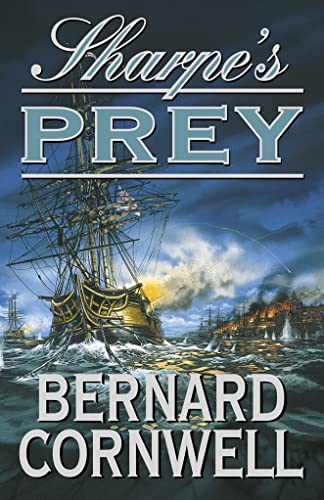
Sharpe’s Prey

9780007130559-uk.jpg


After the loss of many French ships at the Battle of Trafalgar, the French looked to the powerful Danish fleet to make up their losses. Worried that a recent treaty between France and Russia contained a clause granting them the right to take the Danish fleet (with or without Denmark’s permission), in 1807 Britain decided to act, and sent its fleet to Copenhagen with the intention of either taking the Danish ships for itself or destroying them in order to prevent them falling into the hands of the French. Sharpe’s role in all of this is to protect an ambassador to the Danish Crown Duke and to deliver a bribe of gold in an effort to persuade him to release the fleet to British control, which is total fabrication but provides a role for Sharpe in the bigger picture about the Battle of Copenhagen, which actually took place.

Not, perhaps, one of the best of the Sharpe books, but it was still an entertaining and enjoyable read. It also educated me on a historical event that I was aware of but knew little about. Chronologically the next book in the series is Sharpe’s Rifles, which marks Sharpe’s entry into the Peninsular War against the French in Portugal and Spain (and was also the first episode in the TV series, if I remember right). Read it many years ago but am looking forward to reading it again.
 
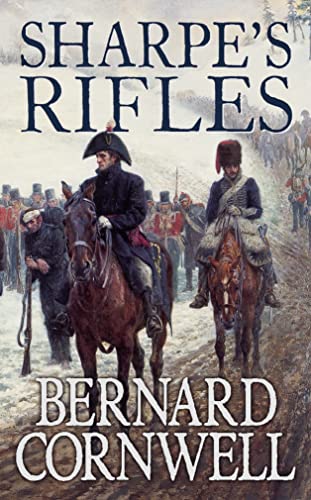
Sharpe’s Rifles

9780006176978-uk.jpg


This the sixth book chronologically in the series marks Sharpe’s acceptance as an officer (by his men) and his adventures during the withdrawal of the British army to Portugal after Napoleon’s invasion of Spain, and if you’ve watched the TV series, the book provides the plot for the first episode. It was another enjoyable read and one that Cornwell wrote at the request of the Spanish backers of the TV series who rightly wished to see more involvement by the Spanish themselves, hence the storyline of a Spanish noble uniting the country by raising the flag of Saint James in Santiago de Compostela. It’s still Sharpe’s story though, with the usual mix of action and period detail to keep you entertained.
 
Amongst recent Project Gutenberg acquisitions is the title The Blue Castle, by Lucy Maud Montgomery. It is high on the list of PG's "most popular downloads". Having no prior knowledge of the author, I assumed the book to be an obscure work by and obscure writer, that for some reason has become popular with the PG crowd.

Looking for something to read after finishing Feist's Master of Furies, I sampled Blue Castle's opening. I liked what I read. Ms. Montgomery obviously knows her craft. I decided to give it a go. Cut to the chase, I am highly impressed. It's very well written, with interesting characters, character interactions and a compelling storyline. I finished it at 2004 yesterday, 27 Nov 2022. Despite being a genre I'm not normally drawn to, I enjoyed it start to finish. And as I found out after the fact, Ms Montgomery and her books are far from obscure. Very far.

All that said, I don't know that I will seek out more of her output any time soon. As to what I'll take up next, I've no idea. Between Master of Furies and Blue Castle, both of which I devoured, I assumed my reading slump at an end. It isn't. I've not been able to focus on anything I attempt, abandoning book after book, with no end in sight.
 
Finished Not Safe After Dark a collection of mystery/crime stories by Peter Robinson. My first by Robinson, and, if this is any indication, he had (he passed away in October) a deft hand with mysteries. While all are written in a similar brisk style, there's still a variety of subject and narrator in these stories, some 1st person and some 3rd person. Four, including the concluding novella, feature his recurring character, Inspector Alan Banks; the novella, "Going Back," is probably the best of them, giving a glimpse into how Banks thinks and his family relations and how he grew up.

My favorite stories are the two featuring Frank Bascombe, veteran of WWI who survived a mustard gas attack with relatively minor damage, and who during WWII acts as a local amateur cop. (There's an official title I'm forgetting and the book is not at hand.) Both stories, "Missing in Action" and "In Flanders Field," begin with the best Golden Age jauntiness, Frank admitting he's nosy and not liking to leave unanswered questions unanswered, and the conclusions of both stories demonstrate the corrosive results of prejudice. Nearly as good, though a bit lighter, is "Some Land in Florida," featuring a Toronto P.I. on vacation drawn into a murder investigation. And "Memory Lane" features two first person narratives that don't exactly merge, but do echo off each other in an affecting way.

There are no stinkers in the book, just a couple I like less than the others, which made this a good read.
 
Finished The Mongol Storm: Making and Breaking Empires in the Medieval Near East by N Morton

Covering the impact of the Mongol Empire in the Middle East from the early 1200's to the mid 1300's the book is a pleasure to read and very informative. Empires and kingdoms fell and others rose in their stead while the Mongols came like a storm and were seen as invincible until the usual dynastic in-fighting stopped them, so by the end of our period the Mamluk empire and the rising Ottoman state were the inheritors, the Crusaders a memory and Byzantium while it recovered from the Crusader sack and almost 60 year of occupation partly due to the Mongol Storm, was a shell of itself and destined to last only another century or so

By the end of our period and seemingly among the big winners of all, the Italian maritime powers Venice and Genoa were in what they thought to be secure and remunerative positions as enablers of the East-West commerce the Mongols facilitated, but the untold riches of the East and the vast territories revealed by enterprising Europeans, whether merchants like Marco Polo or missionaries only whetted the appetite of the West for them and the technology that made its way from China to Europe during this time, most notably the guns which will be developed in the endless wars between European powers of the 14th and 15th centuries will lead, well we know how it went...

Highly recommended
 
Just started a collection of three Nero Wolfe "novelettes" by Rex Stout, Three for the Chair, after finishing The Final Solution by Michael Chabon. About the latter, I posted the following at GoodReads:

A reread, this remains the best Sherlock Holmes pastiche I've read. Chabon conjures a British style of writing without falling into parody of Arthur Conan Doyle, and the aging Holmes is still acerbic and does not suffer fools gladly, while his moments of doubt that he retains the intellectual powers of his past humanize and soften him, and open him to an empathy with a small, lost, probably orphaned Jewish boy near the end of WWII. The multiple meanings of the title conjure both the last hurrah of Holmes, and the horrors of the Nazi concentration camps the boy has escaped, something Chabon doesn't dwell on, but does allude to and underscores in a final image of a parrot singing.

A much recommended read.
 
The Ashes of London

71xzl54Wu3L.jpg


As the title and cover suggest, the setting of this historical murder investigation is set in 1666 during and immediately after the Great Fire of London. James Marwood, a jobbing reporter who scrapes a living to support himself and his father (a former Fifth Monarchist recently released from prison for his part in the execution of King Charles I) finds himself investigating several murders during the time of the fire. The other storyline centres on Catherine Lovett, a young woman who is promised to a man she hates but then escapes from her uncle’s household after her brutish cousin rapes her. Cat’s own father also has links to the Fifth Monarchists and is a wanted regicide.

What I liked most about the book was the picture it painted of life at the time. Like all good historical fiction, the minutiae of everyday life was what lifted the story out of the ordinary and set it firmly in a specific time and place. Both James and Cat face challenges and ordeals and have equally interesting yet different stories; one about finding the truth; the other about remaining hidden. I enjoyed the book very much and wasn’t at all surprised to discover that several other stories of Cat Lovett’s and James Marwood’s adventures have been written. If I come across any of them, I’ll definitely be looking at them.
 
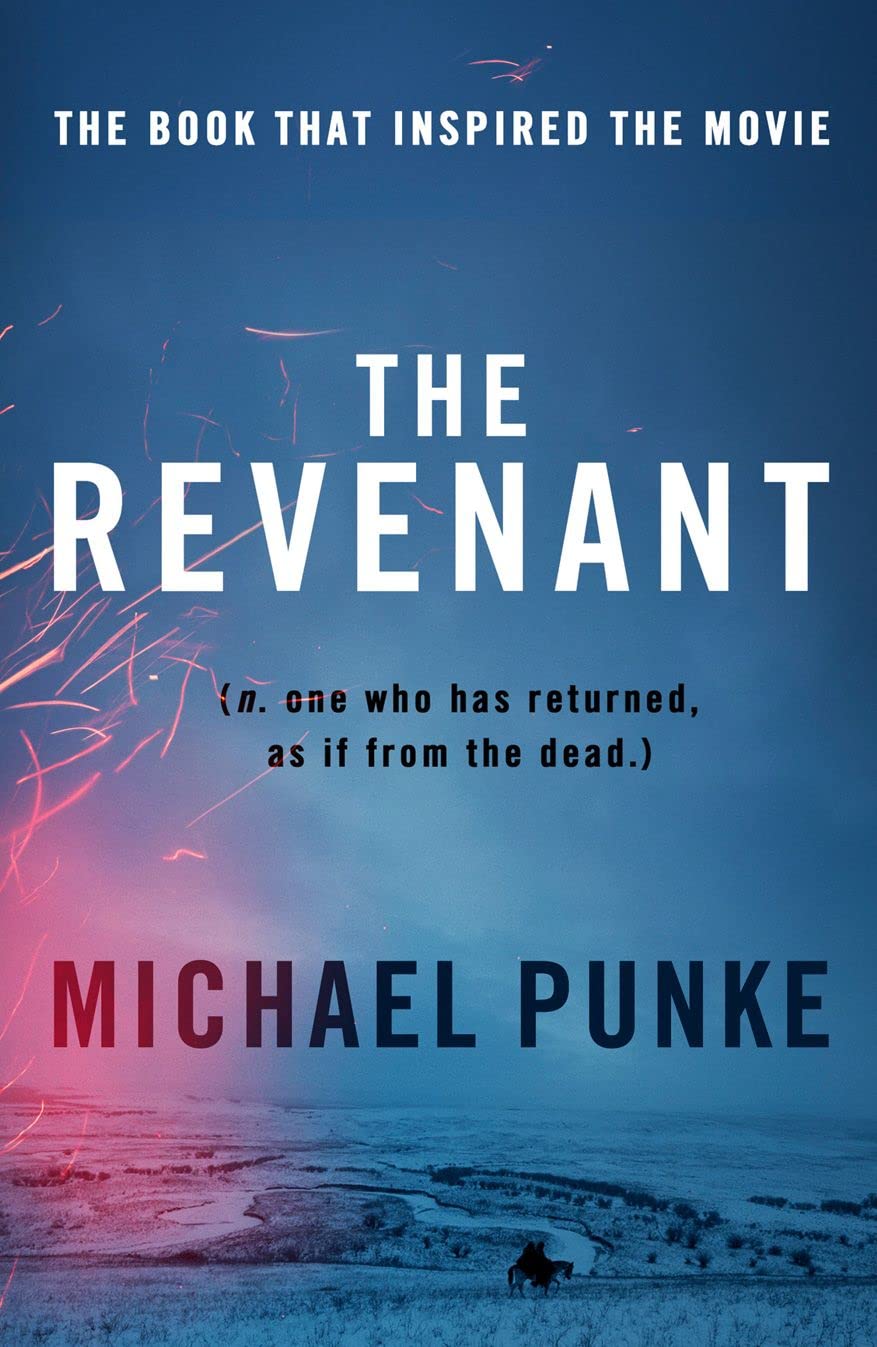
The Revenant

61Jy8mnIyEL.jpg


I picked this book up thinking it was going to have some supernatural content, but instead I found it was a story based on the frontiersman, Hugh Glass, who survived being mauled by a grizzly bear and near death to track down the two men who stole his belongings and abandoned him in the wilderness. First and foremost the book was a remarkable tale of survival at a time when much of North America was still uncharted, and that alone was a compelling read. I don’t think I’ve read anything like it since I read Jack London as a boy, and just like then I gobbled The Revenant up in a few sittings.

I don’t know how the book compares to the film (which I haven’t seen) but I really enjoyed it for its change of setting and genre. Essentially it’s an adult boys’ own story and very much none the worse because of that. Very enjoyable and well worth a read imo.
 
AC, if you liked the Hugh Glass story, you might keep an eye out for "Mountain Man" by Vardis Fisher. It is the basis for the movie "Jeremiah Johnson" with Robert Redford. Was a good read, as I remember. Years ago though.
 
Last edited:
At 1427 this afternoon, 12/14/2022, I concluded an initial read of the Project Gutenberg e-book download of Franz Kafka's Metamorphosis, as translated by David Wyllie. I settled on the Kafka after DNF'ing three or four titles in a row for inability to focus. Metamorphosis captured my interest from the start and held it until the end. This is another title, like Hemingway's The Sun Also Rises, that, aside from being well written, I can't quite pin down why I enjoyed it as much as I did and do. On the surface, it doesn't seem the sort of book I cotton to. Whatever its appeal, I'm glad to have read it.
 

Sponsors


We try to keep the forum as free of ads as possible, please consider supporting SFFWorld on Patreon


Your ad here.
Back
Top