Current Non-Genre Reading III

Started Christian Cameron's "Killer of Men". A first person narrative to his grand daughter by an old man ( Arimnestos). About his life before and during the early years during when the various greek city states begin to throw off the yolk of Persia. In between warring with each other.

Enjoying it quite a bit so far. Looks to be the 1rst in a 6 book series.

Finished this one last night. Really entertaining read during a time of history that I was somewhat vague about. So pretty educational too. A fictional story set in a time of historical significance. From farmer to bronzesmith, slave, soldier & sometime pirate, Arimnestos the Elder relates his life and times to a family member, scribes & friends.

Continuing onto the 2nd book of the series, "Marathon".
 
Finished this one last night. Really entertaining read during a time of history that I was somewhat vague about. So pretty educational too. A fictional story set in a time of historical significance. From farmer to bronzesmith, slave, soldier & sometime pirate, Arimnestos the Elder relates his life and times to a family member, scribes & friends.

Continuing onto the 2nd book of the series, "Marathon".
Glad to see that you too enjoy the series. I've finished book three and expect to resume reading the series early next year at the latest.
 
Finished "Marathon" by Christian Cameron. Continuing on with the story of an elder Arimnestos as he relates his experiences to an ever growing audience of young people. This book continues on with the Greek revolution against the Persians culminating in the Battle of Marathon.

Which was the first time the combined tribes and cities of Greece won a battle against the Great King of Persia. I'm enjoying this series quite a bit. The historical detail of not just the battles, but the daily life of the main characters and the historical figures says something for the amount of research these books must have required.

The sea battles in particular. I'm not a sailor, so many of his references there send me googling, lol. All in all though, it is really good story.

Next up in the series. "Poseidon's Spear ".
 
Last edited:
Finished "Poseidon's Spear" by Christian Cameron. The 3rd novel of "The Long War" series

After fighting and winning at the battle of Marathon, Arimnestos heads home to find his wife that his wife has died in childbirth. In a funk of guilt and bereavement, he climbs the highest peak in his homeland and flings himself from the cliff.

Only to land in the sea. After finding it is much harder to drown oneself than you would think? He flounders (bad pun alert!) his way to shore and into the arms of phoenician slavers. Thus setting the scene for a new chapter in the life of Arimnestos as he is yet again enslaved, fights for his freedom and becomes a successful pirate preying on phoenician & carthaginian shipping.

I really like this story and this author. Though told in first person through out much of the tale? The author segues smoothly into conversation that lets the characters tell the story through their words and actions. Too many first person narratives fail to do this well, imo.

Started the 4th novel "The Great King".
 
Read Harlem Shuffle by Colson Whitehead, author of The Underground Railroad.
In addition to the Pulitzer for Railroad, he has also won about every possible prize available including the Arthur C. Clarke award for best novel in its year and another Pulitzer for a later novel.

Shuffle is a novel of Harlem USA in the 60s.
The hero is an upstanding citizen in that he owns and operates an increasingly prosperous furniture store. He also, due to heritage and environment, increasingly participates in the fringes of crime by fencing, trying to help a relative and to right some wrongs.
Many people in the city are admirable but they all must survive brutal cops, persistant racism, organized and not so organized crime, all kinds of corruption, and the wave of addiction that swept Harlem, NYC, and my country in the 60s. The Harlem riots of 1964 near the end of the book, occasioned by cops murdering a teenage boy, cannot but sound familiar, no matter how much the reader is familiar with US racial history.
As one would expect from this author, the prose is clear and forceful, the impact of race is never far from the events and the lives of the characters portrayed and there is a sense of despair barely assuaged by some excellent people -and the portrayal of numerous rogues.
 
Last edited:
For some light reading I am working my way through the Montmorency series by Eleanor Updale . They are set as late Victorian espionage tales of the height of the British empire. Nicely done and they seem to be well researched…. I wonder what happened to the author she published 5 bestselling novels in this series between
 
Marathon (no pun intended) read of the last 3 books of Christian Cameron's "Long War" series. 'The Great King", "Salamis" & "Rage of Ares".

Damn, what a fine tale. Even as the work segued back into a highly narrative style (a pet peeve of mine), I was so engrossed with the story and the characters that it didn't even matter. This story...well, six novels of it... is one of the best pieces of historical fiction I've ever read.

Thank you, D&S for putting me onto this author.

Just purchased the first novel of his medieval "Chivalry" series..."The Ill made Knight". $0.99 on Kindle too...great price. Will start it tonight.
 
Last edited:
51WODpqSBRL.jpg


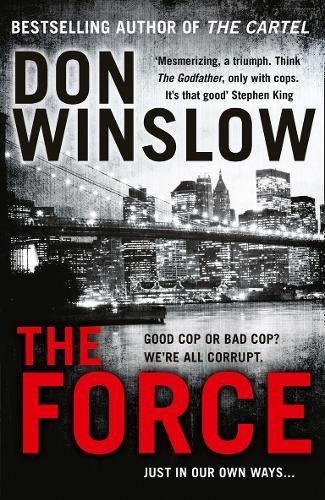
Got halfway through The Force by Don Winslow, whose Power of the Dog trilogy I rate highly. However, its realism and grittiness was more than I was looking for and I put it down for now. When I'm in the right frame of mind I'll come back to it.
 
Finished up Christian Cameron's "The Ill Made Knight" and the "The Long Sword". Books 1 & 2 of his 5 novel series dealing with the life and times of Sir William Gold. Man at arms, brigand then eventually squire, Knight and Knight of the Rose (Hospitalliers)...so far anyway. Taking place in England, France, Italy and The Holy Land in the 1300's.

Like his Greek novels, the combat descriptions are incredible. The author continues his first person narration style. Not one of my favorite style's of storytelling. He does do a good job using it though. .

This series is good, so far. But it hasn't had the same effect on me as the Greek novels. Probably going to put this series down for awhile. Come back to it after a bit of good scifi and/or fantasy.
 
Last edited:
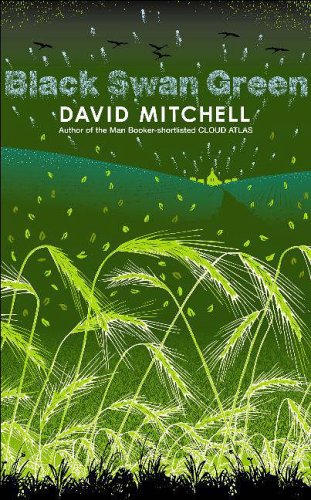
Black Swan Green

5150PH0NG0L.jpg


Relating a key year in 13 year-old Jason Taylor’s life, Black Swan Green is a rites of passage tale that reminded me very much of The Shadow Year by Jeffrey Ford, mainly because of its references to the politics and popular culture of the time; in this case, the early 1980s. Like all good rites of passage stories this is semi-autobiographical. Jason stammers (as does Mitchell) and his attempts to disguise or manage it affect much of his daily life. Sadly, yet inevitably, he goes through periods of bullying that make his life a misery, but countering Jason’s resultant despondency and fatalism is a story with an inspirational message running through it, especially when Jason fights back. As you would expect in a David Mitchell novel, there is a sprinkling of characters who will likely stick in the memory for some time after. Some of them are minor characters, such as some of Jason’s friends, family or teachers, whilst others like Madame Crommelynck play a brief but more influential role.

Overall, I enjoyed Black Swan Green for its sense of time and place. Also, many of Jason’s experiences struck a chord inside me. Its change of pace was just what I needed, too. Though perhaps not as impressive as Cloud Atlas or The Bone Clocks in scale, I still rate Black Swan Green a 4 star read.
 
Magpie Murders by Anthony Horowitz

A book about books, a story within a story, and I'm already drawn in, make both stories murder mysteries and I can't put the book down. I found Magpie Murders engaging enough that I greatly anticipated getting back to it when I had to set it aside. Horowitz's prose is smooth and pushes the story along at a rapid clip, his insights into the cathartic qualities of mysteries interesting and nicely offset by contrasting fictional murders against real-life murders.

I went into this mostly blind on what the book was about except for the cover copy. I also didn't care much for Horowitz's House of Silk, a Holmes and Watson novel. So I was pleasantly surprised to find this an elegant and neatly orchestrated mystery novel.
 
Reading "Death in Londinium" by John Drake currently. A murder mystery set during the time of ancient Rome's rule of Britain. Little bit of a slow start, but coming along nicely now. It looks to be a 2 book series. Will review after I finish.

 
Never

810h48SI0kS.jpg


Just finished this latest 800 page thriller by Ken Follett and I find myself in a sober mood. Whilst the first half of the book is chiefly about a CIA anti-terrorism operation based in Chad, by the end of the book things have escalated to a terrifying state of affairs between two world powers. It is this, and the all too likely chain of events that lead to the book's scary ending, that put me in a reflective frame of mind.

Follett charts the events that lead to this using the viewpoints of Pauline, the US president; Tamara, a female CIA agent in Chad; Kiah, a young widowed Chadian woman who embarks on a journey across the Sahara to reach Europe; and Chang Kai, the Chinese Vice-Minister for Intelligence. The story is told in a brisk, matter-of-fact style, much like Forsyth and Clancy often use/d. Some may dislike the style but for me it works well in this kind of story. Also, the personal side of things is still effective, especially in the case of Pauline, the US president, whose marriage is breaking down and whose daughter is in trouble at school. Overall, I enjoyed the story and was constantly drawn back to find out what happened next. At times I found myself shaking my head at some of the decisions being made by the major players on the world stage; not because of their unlikelihood, but because of their inevitability given the political responsibilities of the people charged with making them (or, in some places, self-given responsibilities). It made me wonder if the SF pipe dream of an egalitarian society with collective decision making, such as the Edenist one in Hamilton's The Night’s Dawn trilogy, is the only hope for the future of humankind.

The book isn't perfect. For example, the two storylines that dominate the first half of the story sort of fritter away into nothing when world events take over. Even so it’s a good read. It made me think, which is also a good thing.
 
Golden Age Detective Stories ed. Otto Penzler

Published under the American Mystery Classics imprint. 14 stories from the mid-1920s through the mid-1950s. During that era mystery writers focused mainly on plot, so these read quickly and efficiently as carriers of plot, and whether you like them or not probably depends on how you react to the writer's style and how tolerant you are about toward the implausible. Of the 14 I didn't care for "The Enemy" by Charlotte Armstrong -- a bit too stylized, much too earnest, but given the premise she sticks the landing pretty well. Also, "Locked Doors" by Mary Roberts Rinehart which felt creaky in the telling, though the strong-willed heroine felt a bit more modern than most women in the fiction of the time. I enjoyed the shenanigans of Craig Rice's "Goodbye, Goodbye" with its quick-talking lawyer, the convoluted story in Erle Stanley Gardner's "The Enchanted Gardner," the sprightliness of "Puzzle for Poppy" by Peter Quentin, and the harsher, grungier world implied by Cornell Woolrich in "The Mystery in Room 913". The other stories were agreeable time passers.

I was a bit surprised to find I had already read two stories in this one, first, "The Stripper" by Anthony Boucher, one Penzler's anthologized before -- it's fun, even though the solution relies on a bit of academic knowledge most readers wouldn't have, and features the sleuths from his novel, A Rocket to the Morgue, of at least tangential interest to sf/fantasy readers. Second, "There’s Death for Remembrance" by Frances and Richard Lockridge which I'd read just a month earlier in an old anthology with the title, "Pattern for Murder." Given I've never read anything by them before, it was an odd coincidence.
 

Sponsors


We try to keep the forum as free of ads as possible, please consider supporting SFFWorld on Patreon


Your ad here.
Back
Top