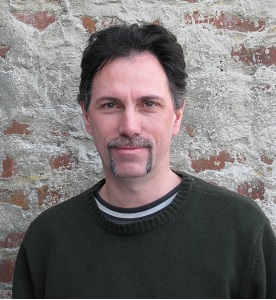
 Hello Paul. Let’s start with your new novel: The Watchmen of Eternity.
Q: It’s been a little while (at least two years by my reckoning) since the first book in the series, The Emperor of All Things. How does the new novel move things on?
Well, that would be telling, wouldn’t it! And then no one would buy the book. But I assure you that things do move on – from England to France . . . and to places even stranger!
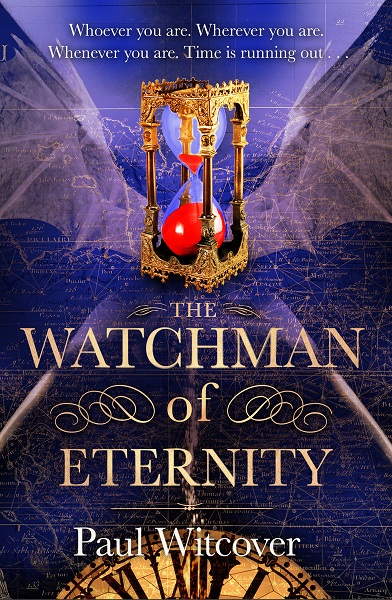
Q: Was it difficult to write a book that returned to the world of Daniel Quare and the Worshipful Company of Clockmakers?
Not at all. I feel like this world – an 18th century England and Europe that never quite existed, or perhaps only existed between the lines of the history we know – is now a part of me, or I of it. I enjoy exploring it: it still surprises me at every turn!
Q: Have you always planned these books as part of a series?
Yes, this book began as a two-book series. It’s now a three-book series. There it shall end.
Q: What made you want to write The Emperor of All Things in the first place? Can you tell us a bit about the process that led to the first book being published?
These novels originated in a novella I wrote back in the early 1980s. But the subject was just too big for me then. I didn’t have the chops as a writer to pull it off. So I set it aside. I never really planned to come back to it, but it kept nagging at me over the years, and finally, about four years ago, I realized that buried in that old novella was a novel that I now thought I could tackle. In a way, I was right, because I have written two novels about Daniel Quare and his world, with a third to come. But really, I was totally wrong, because in fact I’ve had to figure out how to write these books on the fly. I guess the difference is that I’ve developed the confidence as a writer to set a course into the unknown, with faith that I’ll reach my destination . . . or some destination, at any rate!
Q: I understand the new book was originally to be called Eternity in Love. Can you say why the title changed? Was it as a result of the writing of the book?
It was a marketing decision, frankly. My publishers felt it sent mixed signals. This has happened to me a few times in my career. Every time, I was initially resistant, but then realized the publisher was right. I think the final title of this novel, The Watchman of Eternity (which I cribbed from William Blake), is much stronger than my original choice.
And now some wider issues:
Q: To me, your world is a fantastic combination of steampunk and Regency baroque. To get that impression across, I suspect, is a lot of hard work. What sort of research did you do for your books?
I read a lot about horology, first of all. And did research in the life of London in the mid-to-late 18th century. Boswell and Johnson’s writings were especially helpful in this regard. So were Peter Ackroyd’s histories of London. And some research into the Seven Years War, of course. But I try not to get too bogged down in research.
Q: Who or what has influenced your writing, and in what way?
One of my favorite rock and roll lines comes from the Replacements: “One foot in the door, the other one in the gutter.” That pretty much sums up the spectrum of my influences. In these particular books, though, my literary models have been two great writers: Susanna Clarke and Dorothy Dunnett.
Q: Do you consider yourself a genre reader?
Absolutely.
Q: How did you start writing? Was there a particular book or moment in your life that spurred you on?
As far back as I can remember, I wanted to be a writer. But it was poetry that really grabbed me, up until I was in college and met some real poets. Then I realized that a certain facility with language doth not a poet make. At roughly the same time, I was introduced to the work of writers like Michael Moorcock, Samuel Delany, John Crowley, Angela Carter, and others, and I realized that speculative fiction and literary ambition were not mutually exclusive.
Q: Have you ever struggled between what you would like to happen to a character and what you considered more sensible to occur? Can you tell us when and what did you do in the end?
I let the character inform me. If the character doesn’t know, then I wait for the story to tell me.
Q: What, for you, is the hardest thing about writing?
Finding the time to actually do it. I’m struggling with that a lot right now.
Q: For your own reading, do you prefer – e-books or traditional paper/hard back books?
Perhaps this will earn me the scorn of your readers, but for the past five years or so, my reading habits have turned from the printed page to the Kindle. For me, its convenience just overpowers every other objection.
Q: What kind of books (e-books or otherwise!) do you read, any favourite authors?
I love history. Anything by Peter Ackroyd is a must-read for me (I think he’s a wonderful novelist as well). And like the rest of humanity, I wait with bated breath for the next instalment of George RR Martin’s A Song of Ice and Fire. Right now I’m making up for lost time by reading my way through Terry Pratchett’s Discworld books and just enjoying and admiring the hell out of them.
Q: What do you do when you’re not writing, any hobbies?
I try to run every day – that’s body and brain exercise for me. Living in Brooklyn, NY, I have a lot of opportunities to see live music, and I try to avail myself of as many as possible. Otherwise, hanging with friends and enjoying the company of my wife, Cynthia, and stepdaughter Gracie are my chief occupations.
Q: What’s next, what are you working on now?
I have a few projects in the works, including two tie-in novels that I can’t talk about in more detail at this point. And of course, the final volume of this series, which is titled The Year of Miracles – at least until my publisher tells me to come up with a better one!
Ha ha! I look forward to that one. Many thanks for this interview, Paul!
Thank you, Mark!