 When you outline a fantasy story, you tend to create a cast of characters that will be memorable, will have the ability to move the plot along, and will match up well (or at least interestingly) against the ‘big evil’. Then you outline everything from start to finish, and you start writing.
But during the course of writing, you’re going to find plot holes. Some of these plot holes can only be fixed by adding more characters. The easiest way to do this is with temporary, or ‘throw away’ characters. They come on stage, do whatever tasks or plot exposition that they need to do, and then either get killed or are suddenly needed elsewhere.
In my debut novel, my cast of characters was done. Written in stone. We had the hero, his best friend/father figure, his two new adventuring friends, his love interest, and a couple of teachers. The regular adventuring group was going to be three mages and a rogue, the idea being a combination of defensive magic and the rogue’s agility would be enough to make most encounters fair.
It didn’t work out at all.
Combat didn’t feel at all realistic. I kept thinking to myself: If these guys just charge the mages, one rogue isn’t going to be able to stop them all. No magic shields are going to hold back trained warriors for very long. Brute force slaughters this adventuring party.
So I came up with a funny idea. Make a race of warriors that was big, dumb, always happy, and disposable. The ultimate cannon fodder. If you lost one, you went back to town and grabbed another.
That didn’t work either. The comedic factor quickly wore thin, and it wasn’t the message I was trying to send. Slapstick and humorous violence was not what this story was all about.
I tinkered with the concept. What about a race that had binary emotions? Everything fell onto a scale of happy or sad. That was interesting. Now make them big enough and dangerous enough so that if you saw one of them crying, only an idiot would mock them. Give them something to express that happiness outside of combat: Acting, singing, the arts.
I quickly realised that I was no longer designing a throw away character. I was designing a race, and the character that I pulled from this race was going to be far too interesting to be a one-shot. It meant a major rewrite. I weighed the pros and cons. In the end I templated up the character to see what he might look like.
—
Name: Toby McGoldberg
Species: Minotaur
Age: 67
Birthplace: Ice House
Sex: Male
Profession: Paladin
Deity: Aro-Remset
Physical Notes: Golden brown fur, thick black horns, well groomed hooves. Brown eyes.
Toby is a minotaur, one of the long lived bull people, ancient allies to the elves. They are emotionally binary, feeling only degrees of happiness or sadness. Passion would be reflected as happiness to be with another, rage expressed as sadness for an event.
The man-bull was born in Ice House, became a Paladin of the Order of the Snow, and travelled all over the elven and orc lands in the service of the old gods. Recently he bought a house in Ice House, so he’s happy when his adventures bring him home.
Toby, like all minotaurs, loves acting, drama, parades, and grand displays. He carries no prejudice in his heart, allowing actions to define how he feels about someone.
—
After looking at what I had created, I asked myself three questions:
1) Did this character plug the plot hole? Well, he was a massive, imposing physical presence. He was armored and carried a shield. He was a paladin, which brought some healing to the party, making them less reliant on tropes such as potions. The likelihood of people charging by both him and the rogue and surviving was very slim. Yes, the plot hole was plugged.
2) Was he relatable? Because people would be asking him to clarify his emotions, not wanting to assume why he was happy or sad, suddenly we had a mirror that we could hold up to the other characters. It would show that they cared about their friend and ally, and it would expose the reader to Toby’s mindset and emotional state. He also represented all that was good and right in the world, and yet he would never judge our main character, an orc, by the color of his skin. Absolutely, Toby was relatable.
3) Could he bring something unique to the table? Being from a long-lived race and having seen the world, we have introduced a character who could do plot exposition in a subtle and learned way. And since he was from a race of actors, singers, and drama, Toby loved to tell stories. He was the perfect window into the world of Panos.
It was settled. Toby got a full character sheet and his own subplots. In two days, the story went from a party of four to a party of five, and the reader would benefit in the long run. In a week, the new character was fully woven into the fantasy world, and I could continue to write in earnest.
When I think about how close the story came to being less believable, less relatable, and more slapstick, I shudder. I would hope that one of my proofreaders would have slapped some sense into me, but there’s no guarantee of that.
I love the likes of Pratchett, and the original ‘disposable warrior’ concept might have been a nod to his type of humor, but my world simply wasn’t set up that way. In the end, the character who almost wasn’t ended up being the character that pulled the entire book together.
—
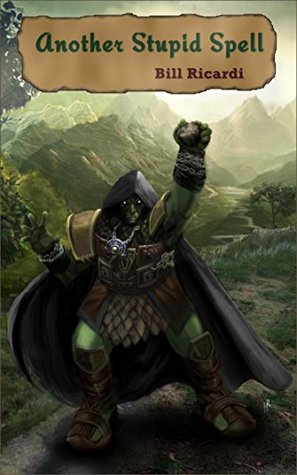
Bill Ricardi’s debut fantasy novel, ‘Another Stupid Spell’ broke 165,000 Kindle page-reads in its first month, and is currently rated 4.5 / 5 on Goodreads. You can get it exclusively on Amazon: https://www.amazon.com