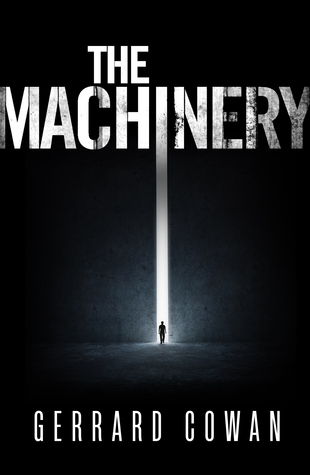
 When I decided to write my first novel, The Machinery, I only had the central idea of the book: what if there was a machine that selected the leaders of society? And what if this machine broke? How would people cope? Apart from that, I didn’t have much to go on.
I did know one thing for certain, however. The book was going to be a fantasy novel. The idea of a machine selecting leaders might give it a kind of dystopian, sci-fi feel, but the Machinery is depicted as a kind of religious concept, rather than a physical, computer-like entity. This seemed to chime better with fantasy than sci-fi.
But what kind of fantasy would it be? That was the tricky part. The Machinery has been around for ten millennia, bringing great success to the Overland, as the country at the centre of the book is called. However, there is a prophecy that it will break in its ten thousandth year of existence; we have now reached that point. So the people of the world are fearful, and are living at a time of turmoil and great change. I decided that the social and cultural backdrop would have to reflect this.
This led me to the Early Modern period. This was of course a time of religious, cultural and technological upheaval in Europe; elements of that seemed a perfect fit for the narrative of The Machinery.
I wanted to convey a sense of outside influences both inspiring and frightening the citizens of the Overland. It has developed a curiosity about the world beyond its shores, and has opened trade routes with at least one other land. Only a small number of people have ever sailed on these expeditions, and they have now all vanished: this is a key element of the narrative.
Trade has had a great influence on the technological development of the country, which is grappling with many of the same discoveries that European states faced. It has learned the uses of gunpowder. In fact, one of the main characters of the novel is a military general who is trying to incorporate cannon into his medieval hordes. People have started smoking tobacco, and there have been great developments in the arts. The printing press has emerged, and the authorities struggle to keep it under their control, without too much success.
 There have been great developments in the arts, as there were in the Early Modern period. The richest part of the city is a world of marble halls and frescoes. Likewise, the economic system is becoming more sophisticated, with major projects and trade routes managed and funded by great financial houses.
As I said, the Machinery is depicted as a kind of religious concept, and the people of the country are experiencing religious upheavals. The worst crime is to doubt the decisions or existence of the Machinery. A shadowy group of police/intelligence agents called the Watchers enforce conformity, and ruthlessly suppress anyone accused of being a Doubter. If you are guilty, you are sent off to a Prison in the desert. No one knows much about this place, as no one has ever returned from it.
Doubting has been a problem throughout history, but is reaching its zenith now that the ten thousandth year is approaching. In effect, the people are engaging in a bloody religious debate; this was a good fit with the Early Modern period.
This is not to say that I strove to recreate Renaissance Europe in any exact form. The Overland processes all these discoveries in a very tight timeframe: twenty or thirty years. Its development of gunpowder-based weapons is very quick, and it makes advances in handguns (called handcannon in the novel) at a lightning pace. Additionally, the world of The Machinery takes many of its cues from Ancient Rome, with purple the colour of empire and entertainment taking place in thundering Circuses.
Still, I hope that the novel conveys something of the excitement that must have been felt by people in this period of history as they stood on the threshold of a new world, and the fear and turmoil they must have experienced as the certainties of the old world melted away.
*******
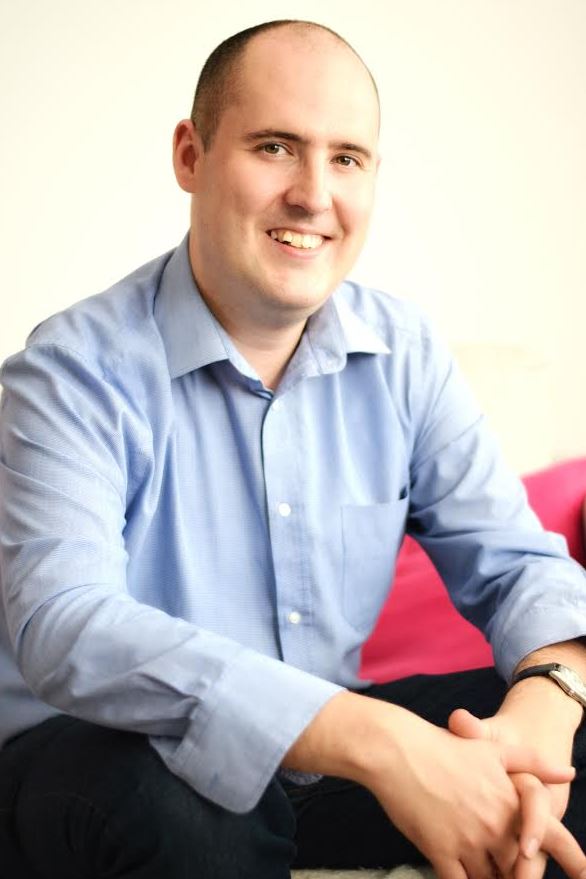
Gerrard Cowan is a writer and editor from Derry, in the North West of Ireland. His debut fantasy novel, The Machinery, will be published by HarperVoyager UK on 10 September 2015. It is the first in a trilogy.
His first known work was a collection of poems on monsters, written for Halloween when he was eight; it is sadly lost to civilisation. He can be found at gerrardcowan.com, at facebook.com/